Connect with us

உலகம்

Trinidad and Tobago police uncover 56 bodies, mostly children, at cemetery

Published

on

Police suspect the grim discovery in the city of Cumuto may be a case of ‘unlawful disposal of unclaimed corpses’.

Law enforcement officials in the Caribbean nation of Trinidad and Tobago have launched an investigation after 56 bodies, mostly of children, were found abandoned at a cemetery.

On Saturday, the Trinidad and Tobago Police Service (TTPS) announced the discovery in a statement. The bodies of 50 infants were recovered, as well as those of four adult males and two females.

At least one of the adult women and one adult male showed signs of having undergone a post-mortem examination. All the adults had identification tags, similar to what is often used at morgues.

“Preliminary indications suggest that this may be a case involving the unlawful disposal of unclaimed corpses,” the police service said.

“Further forensic analysis is underway to determine the origin of the remains and any associated breaches of law or procedure.”

The discovery took place in the town of Cumuto, some 40km (25 miles) from the capital, Port of Spain.

After the remains were discovered at the cemetery, Cumuto police secured the scene and began a forensic examination. Specialised units, including homicide experts, have also been deployed to the site.

In Saturday’s statement, Police Commissioner Allister Guevarro acknowledged how disturbing the discovery was.

“The nature of this discovery is deeply troubling, and we understand the emotional impact it will have on families and the wider national community,” Guevarro said.

“The TTPS is approaching this matter with urgency, sensitivity, and unwavering commitment to uncovering the truth. Every cadaver must be handled with dignity and lawful care. Any individual or institution found to have violated that duty will be held fully accountable.”

The improper disposal of human remains is a criminal offence in Trinidad and Tobago, as it is in other parts of the world.

The island nation, located north of Venezuela, has also struggled with an uptick in organised crime in recent years.

In December 2024, Trinidad and Tobago declared a state of emergency to combat gang violence, and while its initial duration was only 15 days, the emergency declaration has remained in place, for the most part, ever since.

As recently as March, the country’s House of Representatives voted to extend the state of emergency by an additional three months.

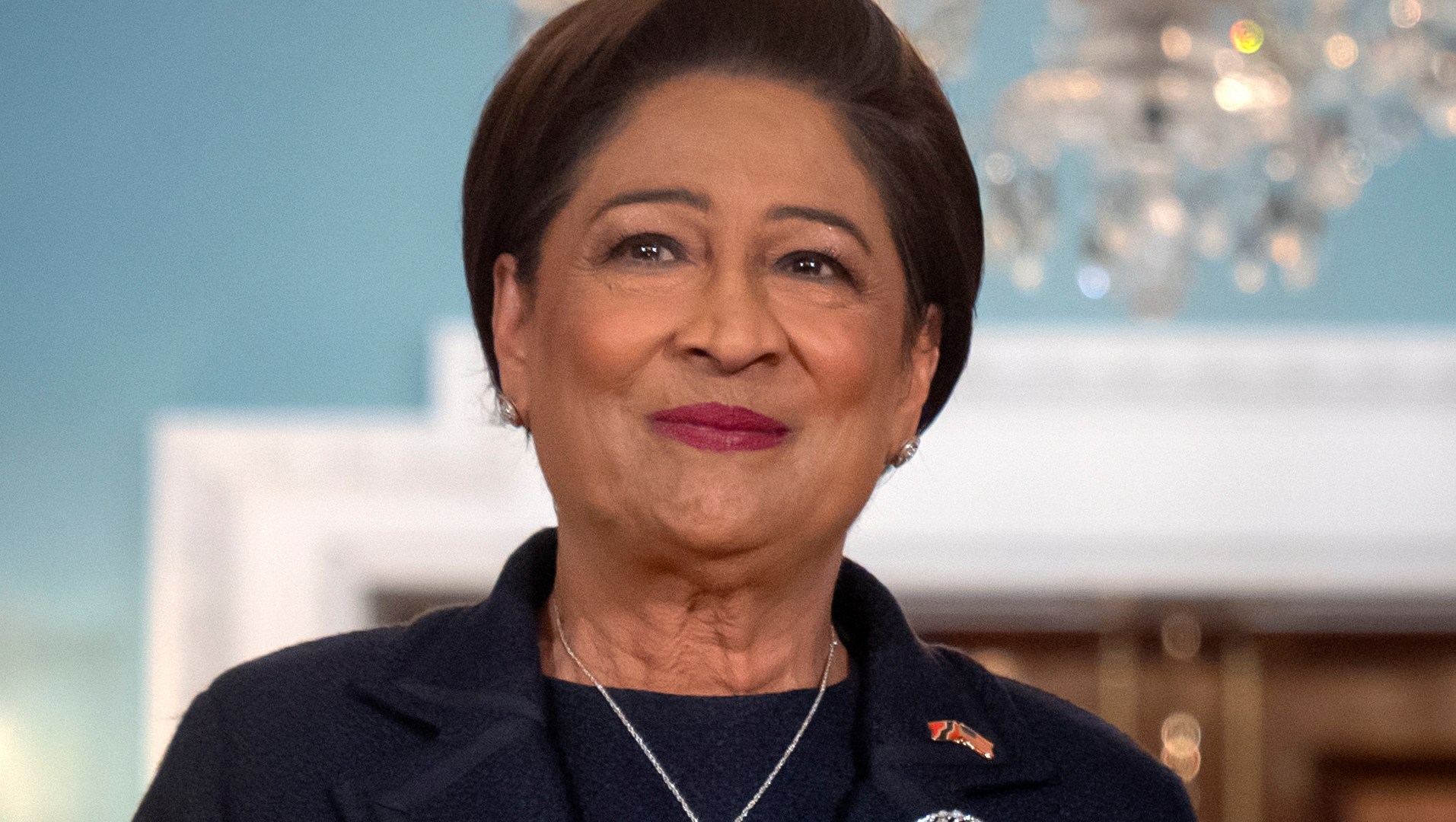
At the time, Prime Minister Kamla Persad-Bissessar said 373 people had been detained under the emergency proclamation, which expanded the powers of law enforcement to make arrests and enter public and private premises.

She said her government would continue its “zero-tolerance approach to crime and criminal gangs”.

“I had previously warned the criminal gangs and detainees released from prison that decent law-abiding citizens are fed up with their criminality, and if they cannot behave themselves, I would have no hesitation in having another SoE [state of emergency] declared,” she said in a statement in March.

“If criminals want to terrorize law-abiding citizens and their families, I will do everything legally possible to terrorize criminals and those who aid and abet them.”

Since the COVID-19 pandemic in 2020, Trinidad and Tobago has seen a sharp increase in its homicide rates.

That year, there were about 20 homicides for every 100,000 people, but the number rose to 45.7 homicides for every 100,000 in 2024, a record high.

The homicide rate, however, declined in 2025 to about 27 for every 100,000 people.

📰 மூல செய்தி (Source): https://www.aljazeera.com/news/2026/4/18/trinidad-and-tobago-police-uncover-56-bodies-mostly-children-at-cemetery?traffic_source=rss

உலகம்

Mazzucato on the Iran war’s economic shock: Who pays the price?

Published

on

Redi Tlhabi speaks to economist Mariana Mazzucato on the Iran war’s economic fallout and who’s really paying the price.

The world is reckoning with the biggest oil supply disruption in history, one that has sent energy prices soaring, rattled stock markets and exposed the deep vulnerabilities of economies still hooked on fossil fuels. While millions face higher fuel and energy bills, top oil and gas companies are reportedly profiting about $30m per hour since the war began.

This week on UpFront, Redi Tlhabi speaks with renowned economist Mariana Mazzucato about what a genuine green industrial strategy looks like, why the World Bank has fallen short, and how her concept of the “common good economy” offers a new compass for governments navigating crises.

📰 மூல செய்தி (Source): https://www.aljazeera.com/video/upfront/2026/4/18/mazzucato-on-the-iran-wars-economic-shock-who-pays-the-price?traffic_source=rss

Continue Reading

உலகம்

Will Keir Starmer resign?

Published

on

The Mandelson scandal has resurfaced in the United Kingdom, and Prime Minister Keir Starmer is in the line of fire again.

This time, it’s because he appointed Peter Mandelson as ambassador to the United States – even though he failed the government’s security clearance.

Starmer says he did not know. But the opposition isn’t convinced.

As the fallout deepens, the calls for him to step down are growing.

Mandelson’s links to the late sex offender Jeffrey Epstein have cast a shadow over Starmer’s government.

So, will the prime minister survive the crisis?

Denis MacShane – Former UK Foreign Office Minister of State and Labour MP

Jennifer Nadel – Cofounder of the cross-party think tank Compassion in Politics

Giles Kenningham – Founder of Trafalgar Strategy and former communications director for the UK Conservative Party

📰 மூல செய்தி (Source): https://www.aljazeera.com/video/inside-story/2026/4/18/will-keir-starmer-resign?traffic_source=rss

Continue Reading

உலகம்

Israel says established a ‘yellow line’ in Lebanon, as it has in Gaza

Published

on

It is the first time Israel has referred to such a ‘yellow line’ in Lebanon, after using a similar measure in Gaza.

Israeli forces say they have established a so-called “yellow line” in southern Lebanon, similar to an Israeli military measure in the besieged Gaza Strip.

The Israeli military said in a statement on Saturday that over the previous 24 hours, its forces “operating south of the Yellow Line in southern Lebanon identified terrorists who violated the ceasefire understandings and approached the forces from north of the Yellow Line in a manner that posed an immediate threat”.

It is the first time the Israeli military has referred to such a “yellow line” in Lebanon, and comes after a 10-day ceasefire between Israel and Lebanon came into effect on Thursday.

Since a “ceasefire” in Gaza took effect in October, Israel’s so-called “yellow line” has divided the Palestinian territory into separate zones, with an eastern area controlled by the Israeli military and a western area where Palestinians face fewer restrictions on their movement.

Israeli troops routinely fire on anyone approaching the line, and they have demolished hundreds of homes in the zone under their control. Israeli attacks have killed at least 773 people and wounded more than 2,000 since the start of the “ceasefire”.

Reporting from Ramallah, in the occupied West Bank, Al Jazeera’s Nour Odeh said the Israeli military’s announcement of a “yellow line” in Lebanon appeared to represent the “continuation of the ‘Gazafication’ of southern Lebanon”.

“Israeli Minister of Defence Israel Katz had said that the army has been instructed to demolish the Lebanese villages on the border based on the Beit Hanoon and Rafah models, and we know exactly what that looks like because there’s nothing left there,” she said.

“In Lebanon, it may not be, at least for now, to expand the area occupied in southern Lebanon. But, certainly, the demolition of Lebanese villages continues, and the minister of defence has also drawn an equivalence between Shia villages and Hezbollah infrastructure in the same way he considered Palestinians in Gaza to represent Hamas and to be an equal threat to Israel,” she added.

Despite the ceasefire, Israel has continued to carry out attacks in southern Lebanon. Israeli artillery attacks on Saturday hit the southern Lebanese towns of Beit Leif, Qantara and Touline, while the military has continued razing homes across several areas.

In a statement, the military said it waged the attacks in response to fighters approaching areas where Israeli soldiers are still stationed in southern Lebanon, claiming they posed “an imminent threat”.

“Actions taken in self-defence and to remove immediate threats are not restricted by the ceasefire,” the military added.

Later on Saturday, Hezbollah Secretary-General Naim Qassem said that the ongoing 10-day truce with Israel cannot continue unless both sides uphold it.

“A ceasefire means a complete cessation of all hostilities. Because we do not trust this enemy, the resistance fighters will remain in the field with their hands on the trigger, and they will respond to violations accordingly,” Qassem said in a statement read out on TV.

“There is no ceasefire from the side of the resistance only; it must be from both sides.”

Qassem also demanded that Israel completely withdraw from Lebanon.

The next steps, Qassem said, would focus on the release of prisoners and the return of residents to their homes in the border areas.

A final step, he said, would involve a significant reconstruction campaign, coupled with international Arab support.

He also added that Hezbollah is “open to cooperation with the [state] in Lebanon on a new page” based on achieving their “national sovereignty and preventing strife”.

Thursday’s ceasefire between Israel and Hezbollah comes after a previous one, which had ostensibly been in effect since November 27, 2024. But the United Nations has counted more than 10,000 Israeli ceasefire violations since then, as well as hundreds of Lebanese deaths.

Israel has repeatedly told the Lebanese government that Hezbollah must be disarmed for any truce to last.

For its part, Hezbollah has said that Israel needs to withdraw from the country’s southern region first as part of the 2024 ceasefire deal agreed between the armed group and Israel.

The Lebanese government has been uneasy about Hezbollah’s influence in the country. Last December, the government said it was close to completing the disarmament of Hezbollah south of the Litani River before a year-end deadline as part of the 2024 ceasefire deal with Israel.

At the start of the latest conflict, the Lebanese government also outlawed Hezbollah’s military wing. But the government has also always been apprehensive of Israel’s actions. Lebanon’s President Joseph Aoun also previously refused to speak directly with Israeli Prime Minister Benjamin Netanyahu about their differences.

On Thursday, while announcing the ceasefire between Lebanon and Israel, US President Donald Trump revealed that Israel’s Prime Minister Netanyahu and Lebanon’s President Aoun could meet ⁠in Washington over ⁠the ⁠next week or two for negotiations on ending the fighting.

📰 மூல செய்தி (Source): https://www.aljazeera.com/news/2026/4/18/israel-says-established-a-yellow-line-in-lebanon-as-it-has-in-gaza?traffic_source=rss

Continue Reading

Trending

Copyright © 2024 by 7Tamil Media, All rights reserved.