Connect with us

உலகம்

Slavery reparations are just, but who exactly owes whom?

Published

on

Some African elites benefited from slave trade and colonisation. This must be taken into account in reparation debates.

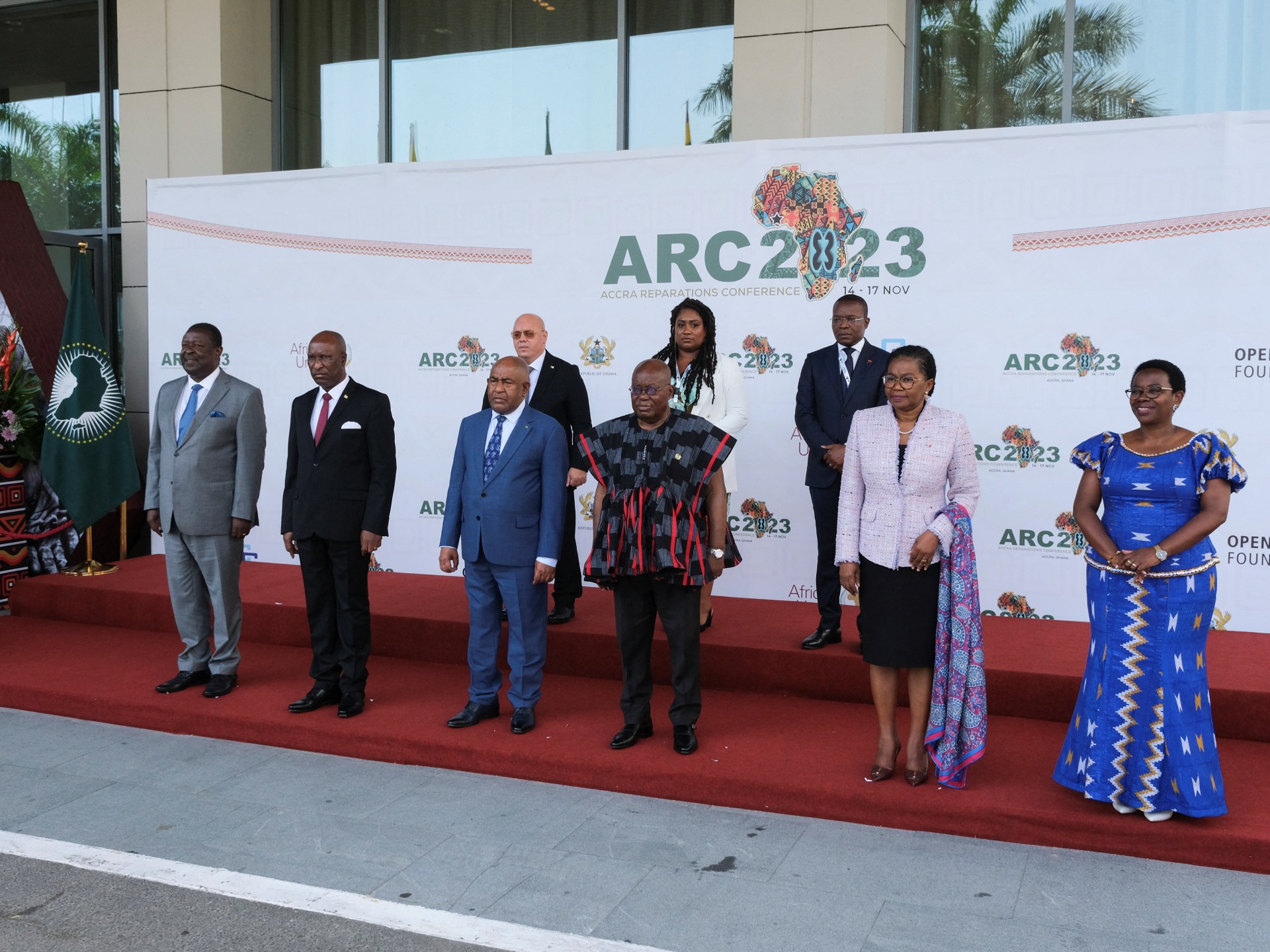
On March 25, the International Day of Remembrance of the Victims of Slavery and the Transatlantic Slave Trade, the United Nations General Assembly passed a landmark resolution. Proposed by Ghana, it recognised the transatlantic slave trade as the “gravest crime against humanity” and called for reparations. A total of 123 countries supported the resolution; three opposed it, including the United States and Israel, while 52 abstained, Britain among them, and several European Union countries.

The UN’s slavery resolution is a historic moment, but what comes next is even more important. Leading up to the resolution, the African Union urged its 55 member states to pursue slavery reparations through formal apologies, the return of stolen artefacts, financial compensation, and guarantees of non-repetition.

This raises a question the resolution does not directly ask: reparations from whom, and to whom? If the answer is simply from European governments to African governments, then the reparations movement risks ignoring the long history of European engagement with Africa, and in doing so delivering justice to the wrong people.

The contemporary framing of the reparations debate is seductive in its simplicity: Europeans arrived in Africa, Africans were enslaved, Europeans grew rich, and Africans became impoverished. Therefore, Europe owes Africa. This narrative carries moral force, but it risks flattening the complex history of European engagement with the continent.

While European actors undeniably drove the demand for enslaved labour, African political and economic elites were not passive victims. They played a significant role in capturing, transporting and selling enslaved people to European traders.

In some cases, African states, seeking to expand their treasuries and consolidate territorial power, preyed on neighbouring communities, condemning them to enslavement for profit. The Oyo Empire, a powerful Yoruba state in what is now south-western Nigeria, expanded significantly in the eighteenth century through its participation in this commerce. Across the region, African elites who had the means sustained the system by exchanging enslaved people for European goods such as alcohol, textiles and other manufactured commodities.

None of this diminishes European culpability in the slave trade. The demand was European. The ships were European. The plantation system was European. The racialised ideology constructed to justify slavery was European. But it does complicate the story.

The transatlantic slave trade was not solely a narrative of African victimhood and European perpetration. It is a story of elite collaboration, which did not end when the slave ships stopped sailing.

The historical argument: three phases, one logic

European encounter with African societies can be understood in three broad phases, each distinct in form but similar in the underlying logic of collaborative extraction.

The first phase was slavery. Europeans extracted human labour from Africa, often with the active participation of African political rulers. Britain emerged as the world’s leading slave-trading country, transporting roughly 3.4 million Africans across the Atlantic between 1640 and 1807. The abolition of the British slave trade in 1807 marked the formal end of this phase. But abolition did not disrupt the underlying logic of the elite collaboration. It reshaped it.

The second phase was colonialism. A less understood aspect of European domination in Africa is how seamlessly some African rulers transitioned from collaborators during the slave trade to intermediaries in the colonial period.

In Nigeria, for example, regional African rulers became intermediaries for British administrators. As Nigerian historian, Moses Ochonu, demonstrates in Emirs in London, a study of Northern Nigerian Muslim aristocrats who travelled to Britain between 1920 and independence in 1960, these African figures were far from passive subjects of British rule. They actively leveraged their relationship with British authorities to reinforce their own authority at home. Such sponsored travel to the imperial centre helped solidify personal ties between Nigerian elites and British administrators, reinforcing the system of indirect rule.

The third and current phase is the postcolonial era. While formal empire has ended, the structure of elite alignment endures. In countries such as Nigeria, the majority of citizens remain largely excluded from political and economic power. The institutional successors of intermediaries and collaborators during the eras of slavery and colonial rule are now running the African postcolonial states.

Rather than dismantling extractive systems, many have repurposed them. Similar patterns of exclusion and extraction that defined earlier periods have been reproduced, leaving the majority of Africans short-changed by a system that continues to serve elite interests.

Nigerian President Bola Tinubu’s state visit to the United Kingdom last month – complete with royal ceremony, photo opportunities and symbolic gestures – reflected this relationship whose origins lie in the very history the UN resolution condemns. While the majority of Nigerians face difficult socio-economic conditions, the British government announced that Nigerian companies would create hundreds of new jobs in the UK.

This is not an anomaly but a continuation of the extractive logic that shaped the slave trade and colonialism. It endures, now recast in the language of diplomacy and partnership.

Reparations are just, and Britain’s debt is undeniable. But direction matters. If compensation flows from one set of elites to another, the oppressed majority of Africans will once again be excluded. True justice must run in two directions: from European states to formerly colonised societies, and from African elites to the citizens they continue to exploit.

The views expressed in this article are the author’s own and do not necessarily reflect Al Jazeera’s editorial stance.

📰 மூல செய்தி (Source): https://www.aljazeera.com/opinions/2026/4/18/slavery-reparations-are-just-but-who-exactly-owes-whom?traffic_source=rss

உலகம்

Mazzucato on the Iran war’s economic shock: Who pays the price?

Published

on

Redi Tlhabi speaks to economist Mariana Mazzucato on the Iran war’s economic fallout and who’s really paying the price.

The world is reckoning with the biggest oil supply disruption in history, one that has sent energy prices soaring, rattled stock markets and exposed the deep vulnerabilities of economies still hooked on fossil fuels. While millions face higher fuel and energy bills, top oil and gas companies are reportedly profiting about $30m per hour since the war began.

This week on UpFront, Redi Tlhabi speaks with renowned economist Mariana Mazzucato about what a genuine green industrial strategy looks like, why the World Bank has fallen short, and how her concept of the “common good economy” offers a new compass for governments navigating crises.

📰 மூல செய்தி (Source): https://www.aljazeera.com/video/upfront/2026/4/18/mazzucato-on-the-iran-wars-economic-shock-who-pays-the-price?traffic_source=rss

Continue Reading

உலகம்

Will Keir Starmer resign?

Published

on

The Mandelson scandal has resurfaced in the United Kingdom, and Prime Minister Keir Starmer is in the line of fire again.

This time, it’s because he appointed Peter Mandelson as ambassador to the United States – even though he failed the government’s security clearance.

Starmer says he did not know. But the opposition isn’t convinced.

As the fallout deepens, the calls for him to step down are growing.

Mandelson’s links to the late sex offender Jeffrey Epstein have cast a shadow over Starmer’s government.

So, will the prime minister survive the crisis?

Denis MacShane – Former UK Foreign Office Minister of State and Labour MP

Jennifer Nadel – Cofounder of the cross-party think tank Compassion in Politics

Giles Kenningham – Founder of Trafalgar Strategy and former communications director for the UK Conservative Party

📰 மூல செய்தி (Source): https://www.aljazeera.com/video/inside-story/2026/4/18/will-keir-starmer-resign?traffic_source=rss

Continue Reading

உலகம்

Israel says established a ‘yellow line’ in Lebanon, as it has in Gaza

Published

on

It is the first time Israel has referred to such a ‘yellow line’ in Lebanon, after using a similar measure in Gaza.

Israeli forces say they have established a so-called “yellow line” in southern Lebanon, similar to an Israeli military measure in the besieged Gaza Strip.

The Israeli military said in a statement on Saturday that over the previous 24 hours, its forces “operating south of the Yellow Line in southern Lebanon identified terrorists who violated the ceasefire understandings and approached the forces from north of the Yellow Line in a manner that posed an immediate threat”.

It is the first time the Israeli military has referred to such a “yellow line” in Lebanon, and comes after a 10-day ceasefire between Israel and Lebanon came into effect on Thursday.

Since a “ceasefire” in Gaza took effect in October, Israel’s so-called “yellow line” has divided the Palestinian territory into separate zones, with an eastern area controlled by the Israeli military and a western area where Palestinians face fewer restrictions on their movement.

Israeli troops routinely fire on anyone approaching the line, and they have demolished hundreds of homes in the zone under their control. Israeli attacks have killed at least 773 people and wounded more than 2,000 since the start of the “ceasefire”.

Reporting from Ramallah, in the occupied West Bank, Al Jazeera’s Nour Odeh said the Israeli military’s announcement of a “yellow line” in Lebanon appeared to represent the “continuation of the ‘Gazafication’ of southern Lebanon”.

“Israeli Minister of Defence Israel Katz had said that the army has been instructed to demolish the Lebanese villages on the border based on the Beit Hanoon and Rafah models, and we know exactly what that looks like because there’s nothing left there,” she said.

“In Lebanon, it may not be, at least for now, to expand the area occupied in southern Lebanon. But, certainly, the demolition of Lebanese villages continues, and the minister of defence has also drawn an equivalence between Shia villages and Hezbollah infrastructure in the same way he considered Palestinians in Gaza to represent Hamas and to be an equal threat to Israel,” she added.

Despite the ceasefire, Israel has continued to carry out attacks in southern Lebanon. Israeli artillery attacks on Saturday hit the southern Lebanese towns of Beit Leif, Qantara and Touline, while the military has continued razing homes across several areas.

In a statement, the military said it waged the attacks in response to fighters approaching areas where Israeli soldiers are still stationed in southern Lebanon, claiming they posed “an imminent threat”.

“Actions taken in self-defence and to remove immediate threats are not restricted by the ceasefire,” the military added.

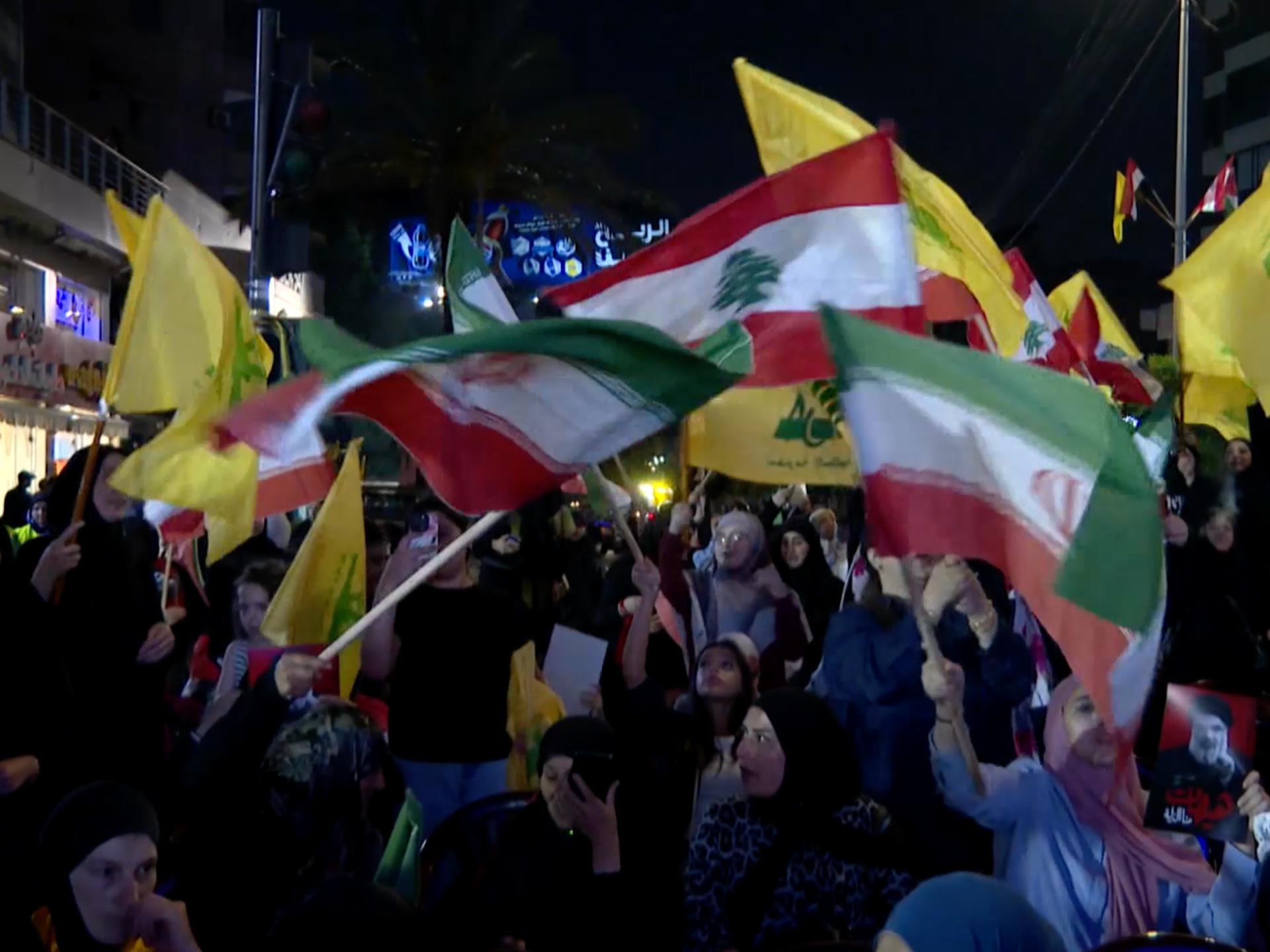
Later on Saturday, Hezbollah Secretary-General Naim Qassem said that the ongoing 10-day truce with Israel cannot continue unless both sides uphold it.

“A ceasefire means a complete cessation of all hostilities. Because we do not trust this enemy, the resistance fighters will remain in the field with their hands on the trigger, and they will respond to violations accordingly,” Qassem said in a statement read out on TV.

“There is no ceasefire from the side of the resistance only; it must be from both sides.”

Qassem also demanded that Israel completely withdraw from Lebanon.

The next steps, Qassem said, would focus on the release of prisoners and the return of residents to their homes in the border areas.

A final step, he said, would involve a significant reconstruction campaign, coupled with international Arab support.

He also added that Hezbollah is “open to cooperation with the [state] in Lebanon on a new page” based on achieving their “national sovereignty and preventing strife”.

Thursday’s ceasefire between Israel and Hezbollah comes after a previous one, which had ostensibly been in effect since November 27, 2024. But the United Nations has counted more than 10,000 Israeli ceasefire violations since then, as well as hundreds of Lebanese deaths.

Israel has repeatedly told the Lebanese government that Hezbollah must be disarmed for any truce to last.

For its part, Hezbollah has said that Israel needs to withdraw from the country’s southern region first as part of the 2024 ceasefire deal agreed between the armed group and Israel.

The Lebanese government has been uneasy about Hezbollah’s influence in the country. Last December, the government said it was close to completing the disarmament of Hezbollah south of the Litani River before a year-end deadline as part of the 2024 ceasefire deal with Israel.

At the start of the latest conflict, the Lebanese government also outlawed Hezbollah’s military wing. But the government has also always been apprehensive of Israel’s actions. Lebanon’s President Joseph Aoun also previously refused to speak directly with Israeli Prime Minister Benjamin Netanyahu about their differences.

On Thursday, while announcing the ceasefire between Lebanon and Israel, US President Donald Trump revealed that Israel’s Prime Minister Netanyahu and Lebanon’s President Aoun could meet ⁠in Washington over ⁠the ⁠next week or two for negotiations on ending the fighting.

📰 மூல செய்தி (Source): https://www.aljazeera.com/news/2026/4/18/israel-says-established-a-yellow-line-in-lebanon-as-it-has-in-gaza?traffic_source=rss

Continue Reading

Trending

Copyright © 2024 by 7Tamil Media, All rights reserved.