Connect with us

உலகம்

Palestine weekly wrap: No respite for Eid as Israel kills dozens in Gaza

Published

on

As international isolation deepens over reports of sexual abuse and the widening seizure of Gaza, Israel presses on with strikes, demolitions and settler attacks through the Muslim holiday.

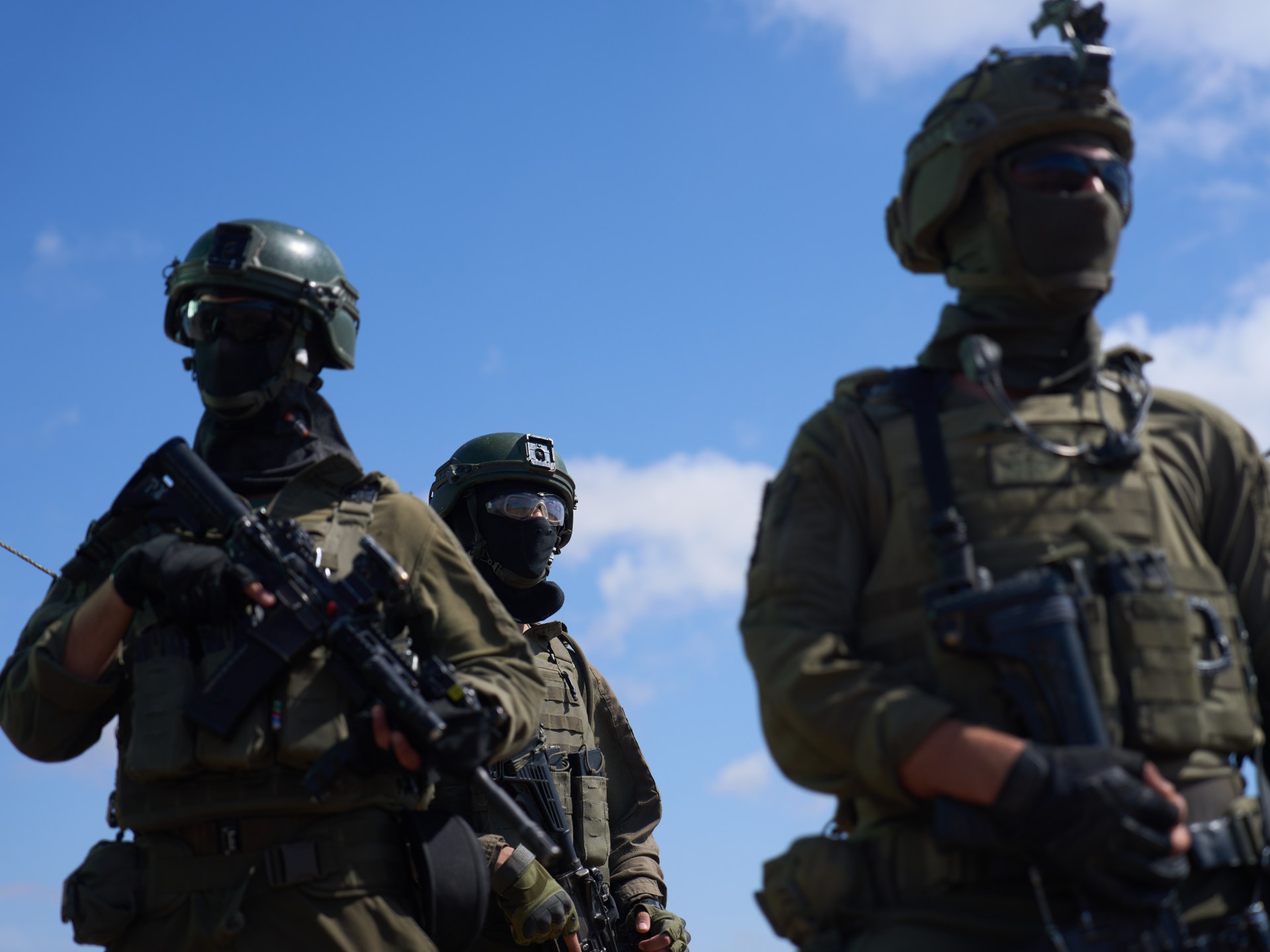
Even Eid al-Adha — one of the two major holidays of Islam, which took place last week — has not been able to stem a relentless tide of Israeli attacks, demolitions and incursions across occupied Palestine.

At least 33 Palestinians were killed and more than 130 wounded over the four days of Eid, from May 27 to May 30, according to the Gaza Ministry of Health, despite a ceasefire covering the enclave.

Among the dead was Ahmad Ali Helles, 37, who was reportedly the sole surviving member of his immediate family and was killed in a drone strike on Shawa Square in Gaza City. Dr Jamal Abu Aoun, head of anesthesia at Yafa Hospital, was also killed by Israeli forces near Al-Aqsa Martyrs Hospital in Deir el-Balah.

In Khirbet Masoud, near Jenin in the occupied West Bank, a settler torched a Palestinian home and car. “Mazel tov” — Hebrew for “congratulations” — was spray-painted across the walls in apparent mockery of Eid holidays.

Israeli soldiers also fired tear gas at families visiting relatives’ graves in Jenin, a common custom during Eid Al-Adha, while Israeli security forces pulled the headscarf off a woman visiting Jerusalem’s Al-Aqsa Mosque.

Several Israeli entities were added on May 28 to the annual blacklist of parties maintained by United Nations Secretary-General Antonio Guterres, following credible suspicions of patterns of rape and conflict-related sexual violence. The same list also includes the Palestinian armed group Hamas.

Guterres’s accompanying report, covering 2025, documented UN-verified cases affecting 14 men, seven women, nine boys and one girl from Gaza and the West Bank. These cases were attributed to the Israeli military, the Israel Prison Service and special police units.

The notorious Sde Teiman military camp and several facilities used to detain Palestinians have also been cited as sites of abuse. Israel responded by cutting ties with Guterres.

The report coincides with growing international outrage over the Global Sumud Flotilla scandal, in which Israeli forces violently detained activists travelling onboard ships attempting to provide Palestinians in besieged Gaza with essential humanitarian aid.

France this week asked prosecutors to open a criminal investigation into the treatment of its citizens detained from the flotilla.

The European Union sanctioned four additional entities and three individuals who it described as extremist settlers. Those sanctioned included Nachala and its director Daniella Weiss, as well as Regavim, another settler movement co-founded by Israel’s Finance Minister Bezalel Smotrich.

Nonetheless, Israeli Prime Minister Benjamin Netanyahu signalled an intent to entrench Israel’s hold over Gaza in a direct contravention of the October “ceasefire”.

On May 28, he publicly directed the army to expand its control of the Gaza Strip from approximately 60 to 70 percent in footage aired by Israel’s Channel 12. When an audience member shouted that Israel should take the whole of Gaza, he replied: “We are going in order — first 70 percent.”

Netanyahu’s declaration was just a semiformal acknowledgement of creeping Israeli expansionism in Gaza. In mid-March, the Israeli army quietly sent maps to aid organisations showing it had pushed roughly 11 percent beyond the “yellow line” of demarcation agreed under the October ceasefire. This brought 64 percent of Gaza, rather than the 53 percent stipulated in the October agreement, under direct Israeli control.

In response, Germany’s Foreign Ministry expressed opposition to any permanent division of the enclave, according to the Times of Israel, while Hamas called the order a “dangerous escalation”, according to AFP.

Two Likud Party ministers in Netanyahu’s cabinet, May Golan and Amichai Chikli, separately called for Israeli settlements to be rebuilt inside Gaza, according to the Times of Israel.

In Gaza, Israel has intensified an assassination campaign against the Hamas leadership amid growing fears of a return to full-blown war.

On May 26, Israel killed Mohammed Odeh, the newly appointed head of Hamas’s armed wing, along with his wife and children in a strike on Gaza City. This came just 11 days after the killing of his predecessor, Izz al-Din al-Haddad.

Israeli military radio has framed the assassinations as preparation for “the resumption of fighting”. At the same time, footage released this week showed an anti-Hamas militia in Gaza operating military drones. Some believe these drones could have been provided by Israel. If this is true, it would mark an escalation in the direct armed support that Israel provides to such groups.

Hours after Odeh’s funeral on 27 March, an Israeli air raid on a residential building in Gaza City killed at least 10 people, including four children.

A day earlier, a drone strike on a gathering in eastern Maghazi killed five — reportedly targeting a group of Palestinians planning to confront one of the Israeli-backed militias.

On May 31, an Israeli helicopter struck a crowded cafe near Gaza City’s fishermen’s port, where people had gathered to escape the heat. The attack killed at least two Palestinians and wounded around 18. On the same day, a drone strike on the Abu Dhaher family home in Bureij refugee camp killed Khaled Abu Dhaher and wounded four people, including a child who is in critical condition, according to Gaza activist Hamza al-Masri.

Meanwhile, the Palestinian enclave’s humanitarian situation continues to deteriorate, with aid inflows severely restricted by Israel. The director of Al-Aqsa Martyrs Hospital — the only government hospital in central Gaza, which serves half a million people — announced that operating rooms had ceased functioning after a fourth backup generator failed, with the dialysis, neonatal and intensive care units at risk of shutting down.

Eight months into the ceasefire, reconstruction efforts by the Board of Peace appointed by US President Donald Trump remain stalled. The Financial Times reported that none of the $17bn pledged has reached the board’s World Bank fund, with the fraction of funds actually delivered routed to a private JPMorgan account outside UN oversight.

Since the October 11 ceasefire, as of June 1, at least 932 Palestinians in Gaza have been killed, according to Gaza’s Ministry of Health. At least 72,941 have been killed since October 7, 2023, with many other bodies still buried under the rubble.

In the West Bank, the Eid holiday saw a surge of settler violence, concentrated in the south and the villages around Ramallah and Nablus. The most serious attack came on May 30 in Madama, south of Nablus, where dozens of settlers from a newly established illegal outpost shot and wounded seven Palestinians.

Three brothers were hit by live fire, and a 72-year-old was shot in the foot. Settlers stole more than 100 sheep, according to separate reports from the Palestine Red Crescent Society, Wafa and Israeli field monitor Jonathan Pollack. Israeli soldiers reportedly fired alongside them and blocked Red Crescent crews from reaching the wounded.

On May 31, Israeli forces also killed 26-year-old Imad Ishtayeh as he attempted to cross Israel’s separation barrier near ar-Ram in search of work. Videos that circulated on social media showed his limp body being carried down from the wall.

Elsewhere, field reports described settlers torching homes and vehicles — including one filmed incident in which settlers pushed a Palestinian’s car off a cliff near Deir Abu Mash’al after the owner, who survived the ordeal, refused to hand over the keys of his car.

Reports from Wafa and local activist networks described repeated settler raids on Bedouin communities across Masafer Yatta, including the assault of a woman and her grandson in Khirbet al-Markaz. There were also reports of soldiers detaining shepherds, in

📰 மூல செய்தி (Source): https://www.aljazeera.com/news/2026/6/2/palestine-weekly-wrap-no-respite-for-eid-as-israel-kills-dozens-in-gaza?traffic_source=rss

உலகம்

Protesters torch cars, buildings in Belfast after knife attack

Published

on

Unrest comes after a Sudanese man was arrested over a stabbing attack in north Belfast, UK.

Belfast plunged into chaos as vehicles set ablaze following stabbing attack

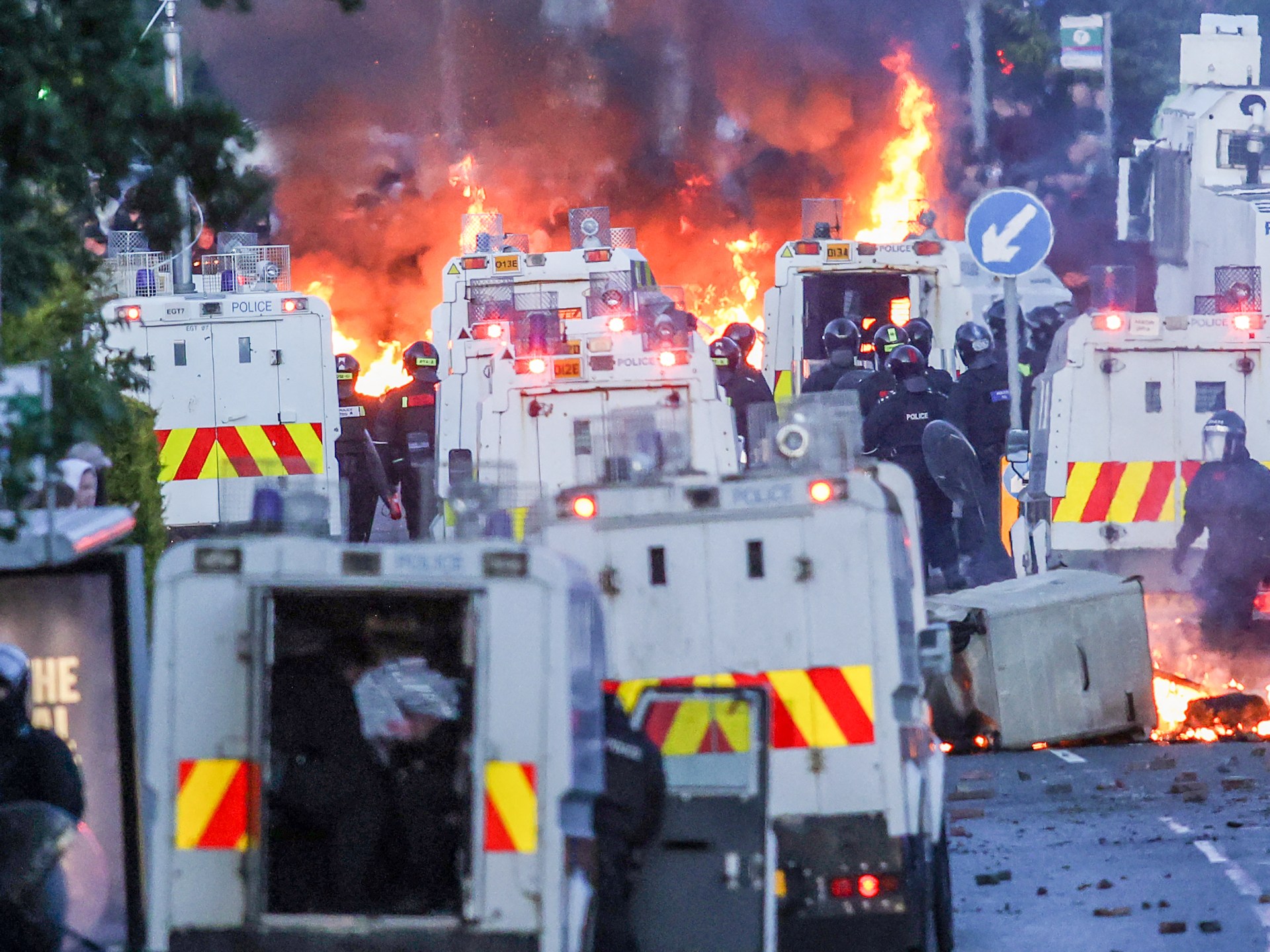
Anti-immigrant protesters in the city of Belfast in the United Kingdom have torched vehicles and buildings after a Sudanese man was arrested over a knife attack that left one person with serious injuries.

Hundreds of protesters, many of them masked, gathered at several locations across the city on Tuesday, setting fire to a bus and several cars.

A building near the city centre was also set alight, with residents telling the AFP news agency that the protesters started a fire in the bins and went on to throw petrol bombs.

Crowds also gathered in Antrim, about 25km (15 miles) west of Belfast.

Michelle O’Neill, the first minister of Northern Ireland, slammed the protests and urged calm.

“Groups of masked men burning families out of their homes is nothing less than disgusting cowardice,” she wrote on X.

“Racism, intimidation and violence are wrong wherever they occur. There can be no excuse and no justification for these attacks tonight. No one wants to see this on our streets and I again appeal for calm”.

The suspect in the knife attack, which took place in north Belfast late on Monday, was charged late on Tuesday with attempted murder, possession of a bladed weapon in a public place, and making threats to kill.

The 30-year-old man, whose name has not been released, is due to appear in court on Wednesday.

The victim, a man in his 40s, suffered significant injuries to his eyes and slash wounds to his face and back during the attack with a kitchen knife found at the scene, police said.

“I understand that last night’s attempted murder will leave people feeling a range of emotions, from fear to anger,” Northern Ireland’s Assistant Chief Constable Ryan Henderson told ⁠a news conference, as he declared the unrest a “critical incident”.

“I appeal for calm and the safety of all of our communities in ⁠response to this”, he said.

Footage of the knife attack in north Belfast showed several members of the public trying to fight off the ⁠attacker before police arrived, and they were credited by senior officers with saving the man’s life.

UK Prime Minister Keir Starmer called the attack “horrific” and “sickening” on X. “I have absolutely no tolerance for abhorrent scenes of violence like this on our streets,” he said.

His office said that “it is time for calm”, adding: “It’s important that police have the time and space to investigate appropriately.”

The attack, which is ⁠not being treated as terrorism, comes at a time of heightened tensions in the UK following the murder of a student in Southampton who was handcuffed by police as he lay dying from stab wounds after his killer, a Sikh man, had falsely alleged a racist attack.

Although the victim and convicted killer were both British, protesters on Tuesday stood outside a Southampton hotel that had housed asylum seekers, holding signs that read, “Illegal Migration Is Destroying Our Civilisation”.

The attack in Belfast, meanwhile, sparked immediate questions about the suspect’s immigration status, including from some politicians.

Gavin Robinson, the leader of the Democratic Unionist Party, urged authorities to curb “uncontrolled immigration”, while anti-immigration figures, including Reform UK party leader Nigel Farage and Restore Britain leader Rupert Lowe, demanded details about the attacker.

Northern Ireland’s chief constable, Jon Boutcher, told reporters that the suspect was living in the UK on a five-year visa granted in September 2023.

Boutcher said he was believed to have travelled from Sudan to Paris and Dublin before claiming asylum in Belfast.

“There is no trace of this suspect on any of our national security databases, and he was not known to the Police Service of Northern Ireland,” he added.

Northern ‌Ireland’s ‌main political party leaders jointly condemned the knife attack, calling it “horrific” and saying that “there is no place in our society for this kind of brutality”.

They also called for calm, saying that disturbances would only damage their communities.

📰 மூல செய்தி (Source): https://www.aljazeera.com/news/2026/6/10/protesters-torch-cars-buildings-in-belfast-after-knife-attack?traffic_source=rss

Continue Reading

உலகம்

Iran attacks Bahrain, Kuwait, Jordan in retaliation for US strikes

Published

on

Strikes come after US attacked Iranian ports and islands in the Strait of Hormuz over the downing of a helicopter.

Iran’s Islamic Revolutionary Guard Corps (IRGC) has claimed attacks on United States military bases in Bahrain, Kuwait and Jordan in retaliation for US strikes on Iranian ports and islands in the Strait of Hormuz.

In a statement carried by state media on Wednesday, the IRGC said it launched drone attacks on the US Fifth Fleet in Bahrain and the Ali Al Salem airbase in Kuwait, as well as a long-range missile strike on an airbase in Azraq, Jordan.

It said it attacked 21 US targets and destroyed four of them, including an F-35 fighter jet hangar at the base in Jordan.

It also claimed to have shot down a US MQ-9 drone in the skies over the Iranian city of Jam.

The latest flare-up comes after the US military attacked Qeshm Island and ports along the Iranian coast in the Strait of Hormuz after blaming Iran for downing a US Apache helicopter earlier on Tuesday.

The IRGC said the US’s attacks had caused damage to a telecommunications tower in the town of Sirik and destroyed two water tanks there.

It warned that its forces remain fully prepared to deliver a “crushing and decisive” response to any US military actions and that Washington would bear full responsibility for the consequences of further escalation.

There was no immediate comment from the US.

In Jordan, the military said it intercepted and shot down five missiles launched from Iran towards Azraq, adding that the operation “resulted in the fall of shrapnel without any human injuries or material damage”.

The attacks prompted air raid alarms in Bahrain and Kuwait.

The Kuwaiti military said earlier that it was intercepting “hostile aerial targets” in the country’s airspace, without elaborating further.

Trita Parsi, executive vice president of the Quincy Institute for Responsible Statecraft in the US, said Iran’s swift response to Washington’s attacks signalled a new doctrine.

“They believe they have to respond proportionately, but very harshly and swiftly, against any American attack. Because otherwise, a new normal is established, one in which the United States can strike at Iran with more or less impunity,” he said.

The Iranians, he said, were making clear that any attack on them would be responded to, regardless of the size and the scope.

“But at the end of the day, every time these different types of events have occurred, the sense I have gotten from both sides is that their confidence and their trust in the ability of reaching a deal is starting to diminish,” he added.

This new round of strikes came a day after Iran and Israel exchanged fire in their most serious escalation since a ceasefire took effect in April. The war began with US and Israeli strikes on Iran on February 28, and has shaken the global economy and driven up the cost of fuel and food.

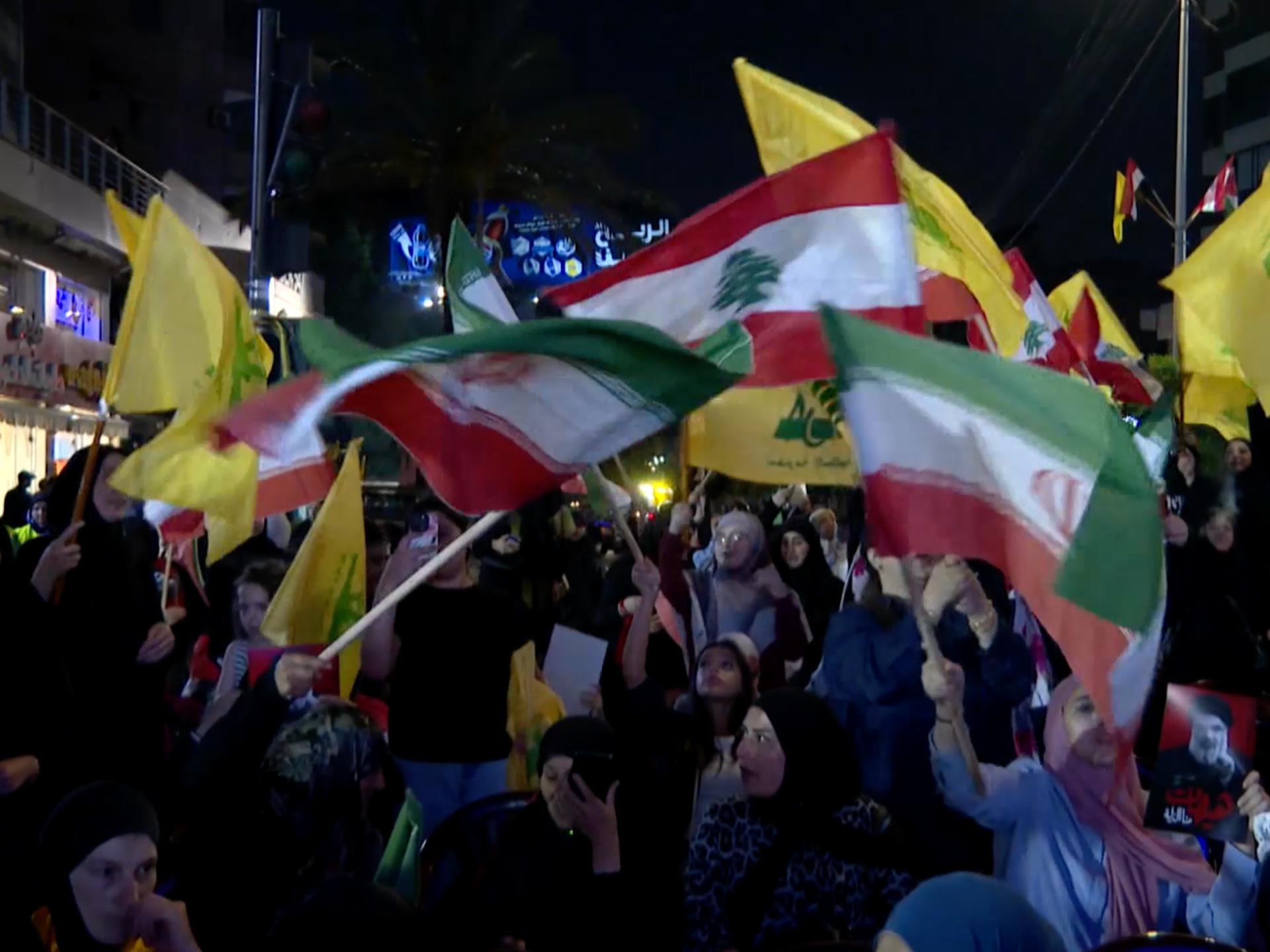
Progress towards a peace deal remains slow, complicated further by Israel’s intensifying campaign in Lebanon against the Iranian-backed Hezbollah.

Al Jazeera’s Mohamed Vall, reporting from Tehran, said that despite the latest strikes, neither side wanted a return to full-scale war.

“Whether the Americans are going to absorb this latest retaliation from the Iranians and end their operation or whether there will be new attacks will become clear in the next few hours,” he said.

“But the understanding is that both sides would like to go back to negotiations, even though the Iranians say they don’t trust any American initiative with regards to peace.”

📰 மூல செய்தி (Source): https://www.aljazeera.com/news/2026/6/10/iran-strikes-bahrain-and-jordan-in-retaliation-for-us-attacks-in-hormuz?traffic_source=rss

Continue Reading

உலகம்

Bolivia approves military measures against nationwide protests

Published

on

Bolivia approves military measures against nationwide protests

Bolivian President Rodrigo Paz has authorised military force against protesters amid the country’s worst economic crisis in 40 years, after roadblocks paralysed the nation. At least 10 people have been killed since the unrest began.

📰 மூல செய்தி (Source): https://www.aljazeera.com/video/newsfeed/2026/6/10/bolivia-approves-military-measures-against-nationwide-protests?traffic_source=rss

Continue Reading

Trending

Copyright © 2024 by 7Tamil Media, All rights reserved.