Connect with us

உலகம்

Palestine weekly wrap: No respite for Eid as Israel kills dozens in Gaza

Published

on

As international isolation deepens over reports of sexual abuse and the widening seizure of Gaza, Israel presses on with strikes, demolitions and settler attacks through the Muslim holiday.

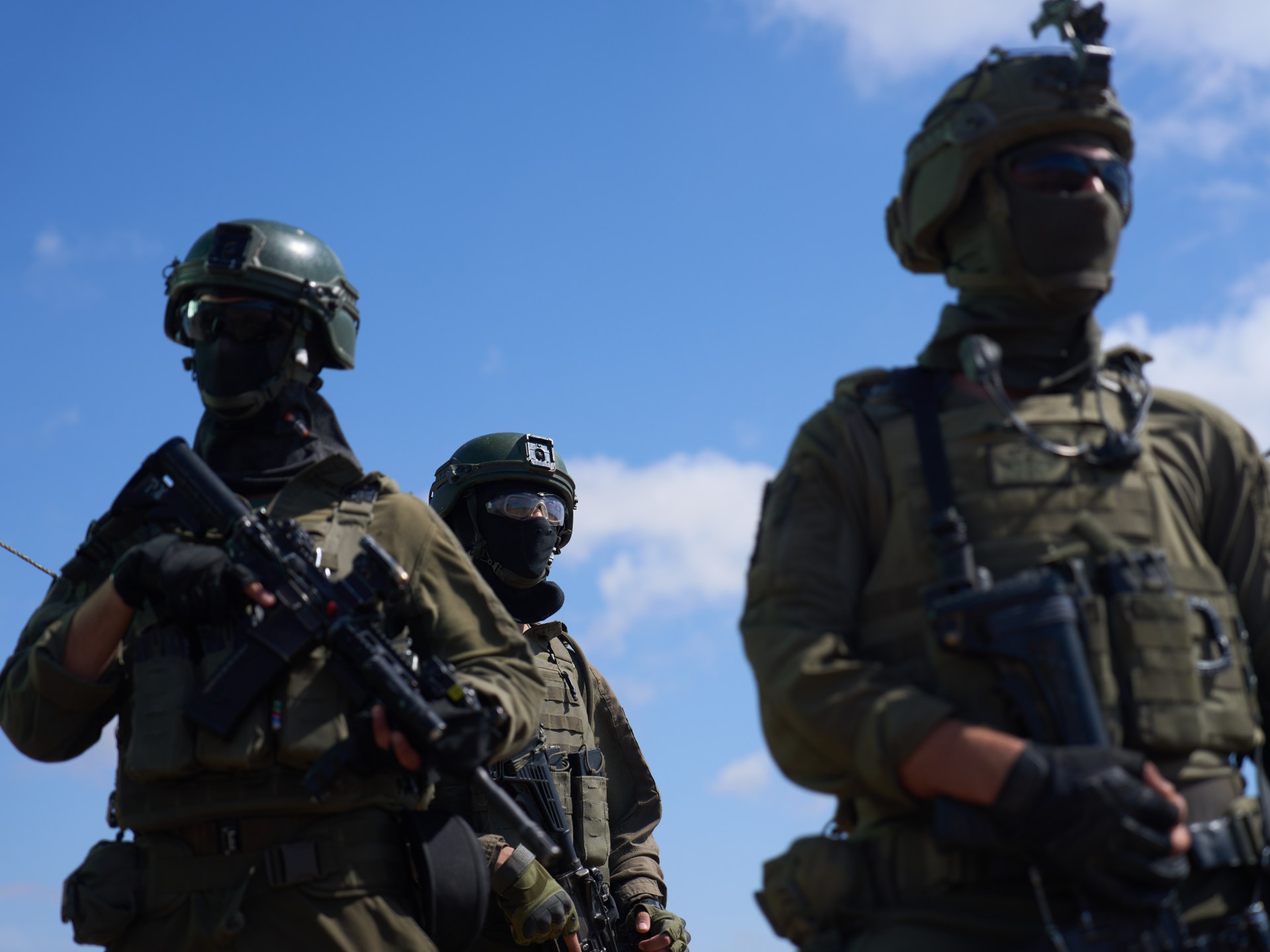
Even Eid al-Adha — one of the two major holidays of Islam, which took place last week — has not been able to stem a relentless tide of Israeli attacks, demolitions and incursions across occupied Palestine.

At least 33 Palestinians were killed and more than 130 wounded over the four days of Eid, from May 27 to May 30, according to the Gaza Ministry of Health, despite a ceasefire covering the enclave.

Among the dead was Ahmad Ali Helles, 37, who was reportedly the sole surviving member of his immediate family and was killed in a drone strike on Shawa Square in Gaza City. Dr Jamal Abu Aoun, head of anesthesia at Yafa Hospital, was also killed by Israeli forces near Al-Aqsa Martyrs Hospital in Deir el-Balah.

In Khirbet Masoud, near Jenin in the occupied West Bank, a settler torched a Palestinian home and car. “Mazel tov” — Hebrew for “congratulations” — was spray-painted across the walls in apparent mockery of Eid holidays.

Israeli soldiers also fired tear gas at families visiting relatives’ graves in Jenin, a common custom during Eid Al-Adha, while Israeli security forces pulled the headscarf off a woman visiting Jerusalem’s Al-Aqsa Mosque.

Several Israeli entities were added on May 28 to the annual blacklist of parties maintained by United Nations Secretary-General Antonio Guterres, following credible suspicions of patterns of rape and conflict-related sexual violence. The same list also includes the Palestinian armed group Hamas.

Guterres’s accompanying report, covering 2025, documented UN-verified cases affecting 14 men, seven women, nine boys and one girl from Gaza and the West Bank. These cases were attributed to the Israeli military, the Israel Prison Service and special police units.

The notorious Sde Teiman military camp and several facilities used to detain Palestinians have also been cited as sites of abuse. Israel responded by cutting ties with Guterres.

The report coincides with growing international outrage over the Global Sumud Flotilla scandal, in which Israeli forces violently detained activists travelling onboard ships attempting to provide Palestinians in besieged Gaza with essential humanitarian aid.

France this week asked prosecutors to open a criminal investigation into the treatment of its citizens detained from the flotilla.

The European Union sanctioned four additional entities and three individuals who it described as extremist settlers. Those sanctioned included Nachala and its director Daniella Weiss, as well as Regavim, another settler movement co-founded by Israel’s Finance Minister Bezalel Smotrich.

Nonetheless, Israeli Prime Minister Benjamin Netanyahu signalled an intent to entrench Israel’s hold over Gaza in a direct contravention of the October “ceasefire”.

On May 28, he publicly directed the army to expand its control of the Gaza Strip from approximately 60 to 70 percent in footage aired by Israel’s Channel 12. When an audience member shouted that Israel should take the whole of Gaza, he replied: “We are going in order — first 70 percent.”

Netanyahu’s declaration was just a semiformal acknowledgement of creeping Israeli expansionism in Gaza. In mid-March, the Israeli army quietly sent maps to aid organisations showing it had pushed roughly 11 percent beyond the “yellow line” of demarcation agreed under the October ceasefire. This brought 64 percent of Gaza, rather than the 53 percent stipulated in the October agreement, under direct Israeli control.

In response, Germany’s Foreign Ministry expressed opposition to any permanent division of the enclave, according to the Times of Israel, while Hamas called the order a “dangerous escalation”, according to AFP.

Two Likud Party ministers in Netanyahu’s cabinet, May Golan and Amichai Chikli, separately called for Israeli settlements to be rebuilt inside Gaza, according to the Times of Israel.

In Gaza, Israel has intensified an assassination campaign against the Hamas leadership amid growing fears of a return to full-blown war.

On May 26, Israel killed Mohammed Odeh, the newly appointed head of Hamas’s armed wing, along with his wife and children in a strike on Gaza City. This came just 11 days after the killing of his predecessor, Izz al-Din al-Haddad.

Israeli military radio has framed the assassinations as preparation for “the resumption of fighting”. At the same time, footage released this week showed an anti-Hamas militia in Gaza operating military drones. Some believe these drones could have been provided by Israel. If this is true, it would mark an escalation in the direct armed support that Israel provides to such groups.

Hours after Odeh’s funeral on 27 March, an Israeli air raid on a residential building in Gaza City killed at least 10 people, including four children.

A day earlier, a drone strike on a gathering in eastern Maghazi killed five — reportedly targeting a group of Palestinians planning to confront one of the Israeli-backed militias.

On May 31, an Israeli helicopter struck a crowded cafe near Gaza City’s fishermen’s port, where people had gathered to escape the heat. The attack killed at least two Palestinians and wounded around 18. On the same day, a drone strike on the Abu Dhaher family home in Bureij refugee camp killed Khaled Abu Dhaher and wounded four people, including a child who is in critical condition, according to Gaza activist Hamza al-Masri.

Meanwhile, the Palestinian enclave’s humanitarian situation continues to deteriorate, with aid inflows severely restricted by Israel. The director of Al-Aqsa Martyrs Hospital — the only government hospital in central Gaza, which serves half a million people — announced that operating rooms had ceased functioning after a fourth backup generator failed, with the dialysis, neonatal and intensive care units at risk of shutting down.

Eight months into the ceasefire, reconstruction efforts by the Board of Peace appointed by US President Donald Trump remain stalled. The Financial Times reported that none of the $17bn pledged has reached the board’s World Bank fund, with the fraction of funds actually delivered routed to a private JPMorgan account outside UN oversight.

Since the October 11 ceasefire, as of June 1, at least 932 Palestinians in Gaza have been killed, according to Gaza’s Ministry of Health. At least 72,941 have been killed since October 7, 2023, with many other bodies still buried under the rubble.

In the West Bank, the Eid holiday saw a surge of settler violence, concentrated in the south and the villages around Ramallah and Nablus. The most serious attack came on May 30 in Madama, south of Nablus, where dozens of settlers from a newly established illegal outpost shot and wounded seven Palestinians.

Three brothers were hit by live fire, and a 72-year-old was shot in the foot. Settlers stole more than 100 sheep, according to separate reports from the Palestine Red Crescent Society, Wafa and Israeli field monitor Jonathan Pollack. Israeli soldiers reportedly fired alongside them and blocked Red Crescent crews from reaching the wounded.

On May 31, Israeli forces also killed 26-year-old Imad Ishtayeh as he attempted to cross Israel’s separation barrier near ar-Ram in search of work. Videos that circulated on social media showed his limp body being carried down from the wall.

Elsewhere, field reports described settlers torching homes and vehicles — including one filmed incident in which settlers pushed a Palestinian’s car off a cliff near Deir Abu Mash’al after the owner, who survived the ordeal, refused to hand over the keys of his car.

Reports from Wafa and local activist networks described repeated settler raids on Bedouin communities across Masafer Yatta, including the assault of a woman and her grandson in Khirbet al-Markaz. There were also reports of soldiers detaining shepherds, in

📰 மூல செய்தி (Source): https://www.aljazeera.com/news/2026/6/2/palestine-weekly-wrap-no-respite-for-eid-as-israel-kills-dozens-in-gaza?traffic_source=rss

உலகம்

UK-China ‘ice age’ thaws: Why the West needs Beijing

Published

on

British Foreign Secretary Yvette Cooper hails ‘candour and respect’ in new ties with Beijing, despite differences.

Eight years after a British prime minister and foreign secretary made back-to-back visits to China, the Keir Starmer government is once again trying to reset relations with Beijing after a long period of what Starmer had in January described as an “ice age” in relations.

Prime Minister Starmer went to Beijing in January, and Foreign Secretary Yvette Cooper is currently visiting on a three-day trip, as the United Kingdom and China try to revive economic and diplomatic ties despite lingering differences over security, human rights and the Russian war on Ukraine. Former PM Theresa May and her Foreign Secretary Jeremy Hunt made similar visits to China soon after each other in 2018.

The UK isn’t alone. Cooper’s visit to Beijing this week is the latest in a string of visits by global leaders and officials seemingly eager to engage with the second-largest economy in the world at a time of heightened global instability.

During her trip so far, Cooper has called for the two nations to work together to confront a host of global challenges, including conflicts in Iran and Ukraine and the Ebola outbreak in the Democratic Republic of the Congo.

“It is in our shared interest to have a rules-based international order and to find ways to reduce rising geoeconomic tensions,” the foreign secretary said on Tuesday as she met Chinese Vice President Han Zheng at Beijing’s Great Hall of the People at the start of her visit.

While acknowledging “areas of disagreement” between London and Beijing, Cooper insisted that approaching discussions with “candour and respect” would help to increase mutual understanding.

“Those frank and constructive discussions can help us make meaningful progress for the benefit of our two countries and the wider world,” she said.

The rhetoric about a “rules-based order” comes at a time when, under President Donald Trump, the United States – the country that led the creation of the post-World War II global architecture – increasingly faces accusations of ripping apart the international laws that were its foundation. China has in recent years positioned itself as a grown-up, responsible and stable global power, in contrast to the US.

But behind Cooper’s comments, say analysts, is also a deeper, more pragmatic acknowledgement: Western nations like the UK need China now more than ever.

The West has come to rely heavily on China, especially when it comes to the production of advanced goods – like semiconductors, medical instruments and aerospace components – as well as its stranglehold on many of the earth’s critical natural resources required to manufacture them all, said John Minnich, assistant professor in the Department of International Relations at the London School of Economics.

“This dependence is growing by the day,” Minnich told Al Jazeera. “Whether this is a good thing for the West or this trajectory is politically sustainable is another matter.”

Getting on a better footing with Beijing is a priority now, say observers. “The UK cannot afford a purely adversarial relationship with China,” Jing Gu, director of the Centre for Rising Powers and Global Development at the Institute of Development Studies in the UK, said.

“It’s a pragmatic response to the UK’s own global economic position and needs, and to the changing winds of US-China relations under the second Trump administration,” Minnich said.

This rapprochement has been in the works since the UK’s governing Labour party swept to power in July 2024. Former Foreign Secretary David Lammy travelled to China for a two-day diplomatic trip in October that year, as part of initial efforts to thaw what Starmer would dub a diplomatic “ice age” between the two countries. Starmer’s own trip in January, to meet President Xi Jinping, laid the groundwork for deeper economic engagement, including a $15bn investment by British pharmaceutical company AstraZeneca and visa-free travel for Britons.

On Tuesday, China’s Vice President Han gave Cooper a warm welcome, along with a cultural visit to the Forbidden City, where she was shown around the world’s largest imperial palace complex by a tour guide before meeting her counterpart, Wang Yi, for talks at Diaoyutai State Guesthouse.

In his address at Beijing’s Great Hall of the People, Han stressed the need to “intensify interactions and strengthen dialogue and cooperation for the sake of world peace and stability and for the growth of our respective economies”.

“Currently, the ongoing geopolitical conflicts are dealing a heavy blow to world peace and stability and affecting the prospect of the world economy,” he continued. Addressing Cooper, he said her visit would help “move our relations steadily forward along the strategic direction established by the leaders of our two countries”.

It’s not just the UK. A growing number of Western countries are seeking to reset ties with China at a time when global geopolitical tensions are causing havoc with supply chains and huge market volatility. This year, leaders and officials from the US, Ireland, Spain, Germany, Canada and Finland are just a number of those who have travelled to China in a flurry of diplomatic engagement.

US President Donald Trump’s trip to China last month signalled a shift in direction after last year’s “trade war”, in which the two sides slapped each other with tit-for-tat tariffs and China threatened to restrict exports of most of its rare-earth metals. Those tensions had been rising since Trump’s first term as president until he and Xi called a temporary truce late last year to allow for trade talks.

Also notable, however, was that Washington’s rapprochement with Beijing coincided with a tense period in US-UK relations.

Trump publicly took Starmer to task over his refusal to assist in the US-Israel war on Iran or to send naval backup to help the US reopen the strategic Strait of Hormuz. Similarly, Trump’s outbursts over the Western response to the war generally have depicted the EU as a foe and NATO as obsolete.

For the UK, Trump’s unpredictability is what has tipped the balance in favour of reinforcing bilateral cooperation with Beijing, as Britain struggles with sluggish economic growth and global energy price shocks triggered by the war on Iran.

And there is “plenty of room for mutual beneficial economic cooperation” between the two countries, Minnich said. “The UK is unusual among major Western countries in that its economic strengths complement rather than compete with China’s.

“Unlike Germany, the UK is not heavily dependent on high-value-added manufacturing, where China is increasingly competitive. Instead, it specialises in things like high-value financial and other services in which China remains relatively weak,” he added.

Cooper is expected to fly to Shenzhen, a major technology hub, to discuss trade links as well as “the challenges of the future of AI as it rapidly changes our world”. This is significant because China is outpacing almost every country in the world in producing ideas and innovation in areas that matter to the UK, including renewable energy.

Last year, the UK and China signed a partnership agreement on clean energy covering academic, regulatory, industrial and commercial partnerships. During Starmer’s visit to China earlier this year, the prime minister announced that Octopus Energy, the UK’s largest electricity supplier by market share, had formed a joint venture with China’s PCG Power to trade renewable energy in the Asian country.

Access to affordable, clean technology – which China has bundles of – could help the UK reduce the cost of decarbonisation and accelerate the energy transition. “But this cannot mean passive dependence,” Gu, at the Institute of Development Studies, said. “Middle powers such as the UK are not simply choosing sides; they are trying to buy time – time to support growth, accelerate the green transition, re

📰 மூல செய்தி (Source): https://www.aljazeera.com/news/2026/6/3/uk-china-ice-age-thaws-why-the-west-needs-beijing?traffic_source=rss

Continue Reading

உலகம்

Hezbollah video shows attack on Israeli troops at Lebanon’s Beaufort Castle

Published

on

Hezbollah video shows attack on Israeli troops at Lebanon’s Beaufort Castle

Hezbollah has released drone video showing attacks targeting Israeli forces occupying Beaufort Castle in southern Lebanon. Israeli troops seized the medieval fortress on May 31.

📰 மூல செய்தி (Source): https://www.aljazeera.com/video/newsfeed/2026/6/3/hezbollah-video-shows-attack-on-israeli-troops-at-lebanons-beaufort-castle?traffic_source=rss

Continue Reading

உலகம்

How social media changes the way we see war

Published

on

We see war now as we see everything else – through a screen. Genocide, displacement and mass violence are livestreamed to our phones, tucked between cat videos and advertisements for products designed to distract us.

We don’t choose to be spectators, we become them almost unconsciously – scrolling, watching and moving on. In the age of digital spectatorship, the key question is no longer whether we see human suffering, but what, if anything, we choose to do once we have.

Join Ali Rae in Episode Five of All Hail The Military – a five-part series that reveals the systems, power and hidden complicities that sustain global militarism – and the profound impact it has on us all.

📰 மூல செய்தி (Source): https://www.aljazeera.com/video/all-hail/2026/6/3/how-social-media-changes-the-way-we-see-war?traffic_source=rss

Continue Reading

Trending

Copyright © 2024 by 7Tamil Media, All rights reserved.