Connect with us

உலகம்

Mexico, Spain and Brazil call for Cuba’s sovereignty to be protected

Published

on

The three countries pledged more aid to Cuba and said Cubans must decide their own future amid an ongoing US pressure campaign.

The leaders of Mexico, Brazil and Spain have pledged more aid to Cuba, while appealing for the island nation’s sovereignty to be respected amid an ongoing pressure campaign from United States President Donald Trump.

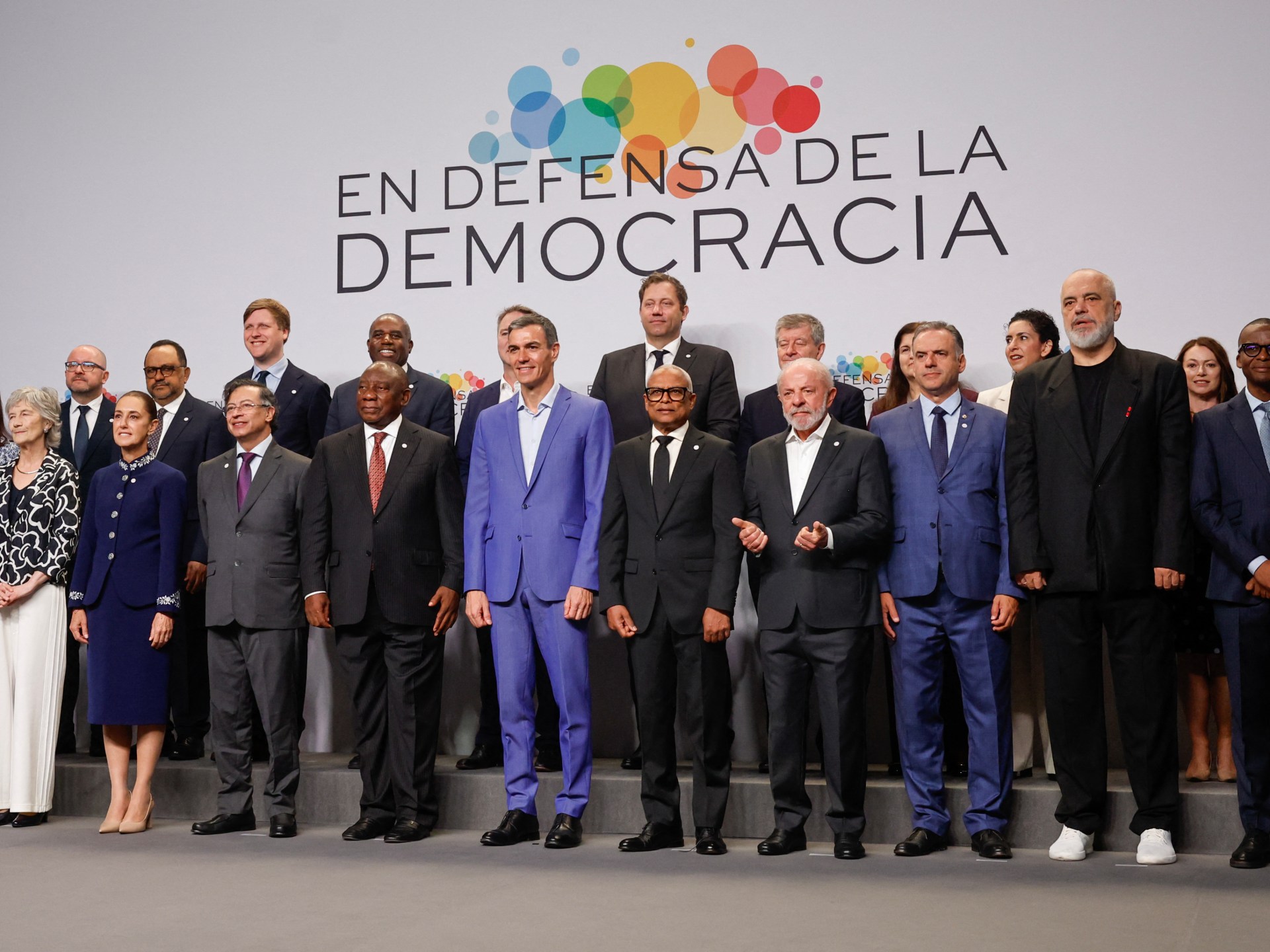
The joint statement on Saturday was released as leftist leaders from across the globe met in Barcelona.

The three countries expressed “great concern about the serious humanitarian crisis that the people of Cuba are going through”.

The US has imposed a trade embargo on Cuba since Cold War tensions emerged in the 1960s.

But the Trump administration has ratcheted up pressure on the island’s communist government, in an apparent attempt to prompt leadership change.

Since January, Trump has barred the import of oil from Venezuela. He also threatened other countries with sanctions if they deliver oil to Cuba, leading to fuel shortages and energy blackouts.

The campaign against Cuba’s government follows similar pressure tactics against Venezuela’s former President Nicolas Maduro, who was abducted and imprisoned in a US military operation on January 3.

Trump, meanwhile, has floated the removal of Cuba’s President Miguel Diaz-Canel.

In Saturday’s statement, the governments of Mexico, Spain and Brazil — represented by President Claudia Sheinbaum, Prime Minister Pedro Sanchez and President Luiz Inacio Lula da Silva, respectively — warned against any actions that run “contrary to international law”.

“We are committed to coordinating an increase in our humanitarian response, aimed at alleviating the suffering of the Cuban people,” the trio said.

While the statement did not directly reference the US, it called for respect for “territorial integrity, sovereign equality and peaceful settlement of disputes”, as outlined in the United Nations Charter.

The three countries further said that any solution in Cuba must “ensure that it is the Cuban people themselves who decide their future in full freedom”.

Earlier this week, Trump again suggested the US could use military force against Cuba, saying his attention could turn to the island following the conclusion of the US-Israel war against Iran.

“We may stop by Cuba after we finish with this,” he said.

The Trump administration has repeatedly denied US policy has contributed to the humanitarian situation in Cuba, instead framing the crisis as the product of decades of economic mismanagement.

Diaz-Canel, meanwhile, was defiant as he spoke on Thursday during a gathering marking the 65th anniversary of Fidel Castro’s declaration on the socialist nature of the Cuban Revolution.

“The moment is extremely challenging and calls upon us once again, as on April 16, 1961, to be ready to confront serious threats, including military aggression,” Diaz-Canel said.

“We do not want it, but it is our duty to prepare to avoid it and, if it becomes inevitable, to defeat it.”

Saturday’s joint statement came as leaders gathered in Barcelona to portray a united front in support of the multilateralism Trump has long railed against.

Spain’s Sanchez, an outspoken critic of Trump, did not mention the president by name as he railed against right-wing populism.

“They know their vision of how the world should be ordered is falling apart due to the tariffs and wars,” he said. “Their embrace of climate change denial, of xenophobia, or of sexism is their greatest error.”

“They have tried again and again to make us embarrassed of our beliefs. That ends now. From now on, they can be the ones who feel ashamed.”

Trump, meanwhile, took aim at Sanchez in a post on Truth Social. The president has repeatedly criticised Spain for not allowing the US military to use its bases in the US-Israel war with Iran and for not increasing its defence spending.

“Has anybody looked at how badly the country of Spain is doing. Their financial numbers, despite contributing almost nothing to NATO and their military defense, are absolutely horrendous. Sad to watch!!!” Trump wrote.

📰 மூல செய்தி (Source): https://www.aljazeera.com/news/2026/4/18/mexico-spain-and-brazil-call-for-cubas-sovereignty-to-be-protected?traffic_source=rss

உலகம்

Mazzucato on the Iran war’s economic shock: Who pays the price?

Published

on

Redi Tlhabi speaks to economist Mariana Mazzucato on the Iran war’s economic fallout and who’s really paying the price.

The world is reckoning with the biggest oil supply disruption in history, one that has sent energy prices soaring, rattled stock markets and exposed the deep vulnerabilities of economies still hooked on fossil fuels. While millions face higher fuel and energy bills, top oil and gas companies are reportedly profiting about $30m per hour since the war began.

This week on UpFront, Redi Tlhabi speaks with renowned economist Mariana Mazzucato about what a genuine green industrial strategy looks like, why the World Bank has fallen short, and how her concept of the “common good economy” offers a new compass for governments navigating crises.

📰 மூல செய்தி (Source): https://www.aljazeera.com/video/upfront/2026/4/18/mazzucato-on-the-iran-wars-economic-shock-who-pays-the-price?traffic_source=rss

Continue Reading

உலகம்

Will Keir Starmer resign?

Published

on

The Mandelson scandal has resurfaced in the United Kingdom, and Prime Minister Keir Starmer is in the line of fire again.

This time, it’s because he appointed Peter Mandelson as ambassador to the United States – even though he failed the government’s security clearance.

Starmer says he did not know. But the opposition isn’t convinced.

As the fallout deepens, the calls for him to step down are growing.

Mandelson’s links to the late sex offender Jeffrey Epstein have cast a shadow over Starmer’s government.

So, will the prime minister survive the crisis?

Denis MacShane – Former UK Foreign Office Minister of State and Labour MP

Jennifer Nadel – Cofounder of the cross-party think tank Compassion in Politics

Giles Kenningham – Founder of Trafalgar Strategy and former communications director for the UK Conservative Party

📰 மூல செய்தி (Source): https://www.aljazeera.com/video/inside-story/2026/4/18/will-keir-starmer-resign?traffic_source=rss

Continue Reading

உலகம்

Israel says established a ‘yellow line’ in Lebanon, as it has in Gaza

Published

on

It is the first time Israel has referred to such a ‘yellow line’ in Lebanon, after using a similar measure in Gaza.

Israeli forces say they have established a so-called “yellow line” in southern Lebanon, similar to an Israeli military measure in the besieged Gaza Strip.

The Israeli military said in a statement on Saturday that over the previous 24 hours, its forces “operating south of the Yellow Line in southern Lebanon identified terrorists who violated the ceasefire understandings and approached the forces from north of the Yellow Line in a manner that posed an immediate threat”.

It is the first time the Israeli military has referred to such a “yellow line” in Lebanon, and comes after a 10-day ceasefire between Israel and Lebanon came into effect on Thursday.

Since a “ceasefire” in Gaza took effect in October, Israel’s so-called “yellow line” has divided the Palestinian territory into separate zones, with an eastern area controlled by the Israeli military and a western area where Palestinians face fewer restrictions on their movement.

Israeli troops routinely fire on anyone approaching the line, and they have demolished hundreds of homes in the zone under their control. Israeli attacks have killed at least 773 people and wounded more than 2,000 since the start of the “ceasefire”.

Reporting from Ramallah, in the occupied West Bank, Al Jazeera’s Nour Odeh said the Israeli military’s announcement of a “yellow line” in Lebanon appeared to represent the “continuation of the ‘Gazafication’ of southern Lebanon”.

“Israeli Minister of Defence Israel Katz had said that the army has been instructed to demolish the Lebanese villages on the border based on the Beit Hanoon and Rafah models, and we know exactly what that looks like because there’s nothing left there,” she said.

“In Lebanon, it may not be, at least for now, to expand the area occupied in southern Lebanon. But, certainly, the demolition of Lebanese villages continues, and the minister of defence has also drawn an equivalence between Shia villages and Hezbollah infrastructure in the same way he considered Palestinians in Gaza to represent Hamas and to be an equal threat to Israel,” she added.

Despite the ceasefire, Israel has continued to carry out attacks in southern Lebanon. Israeli artillery attacks on Saturday hit the southern Lebanese towns of Beit Leif, Qantara and Touline, while the military has continued razing homes across several areas.

In a statement, the military said it waged the attacks in response to fighters approaching areas where Israeli soldiers are still stationed in southern Lebanon, claiming they posed “an imminent threat”.

“Actions taken in self-defence and to remove immediate threats are not restricted by the ceasefire,” the military added.

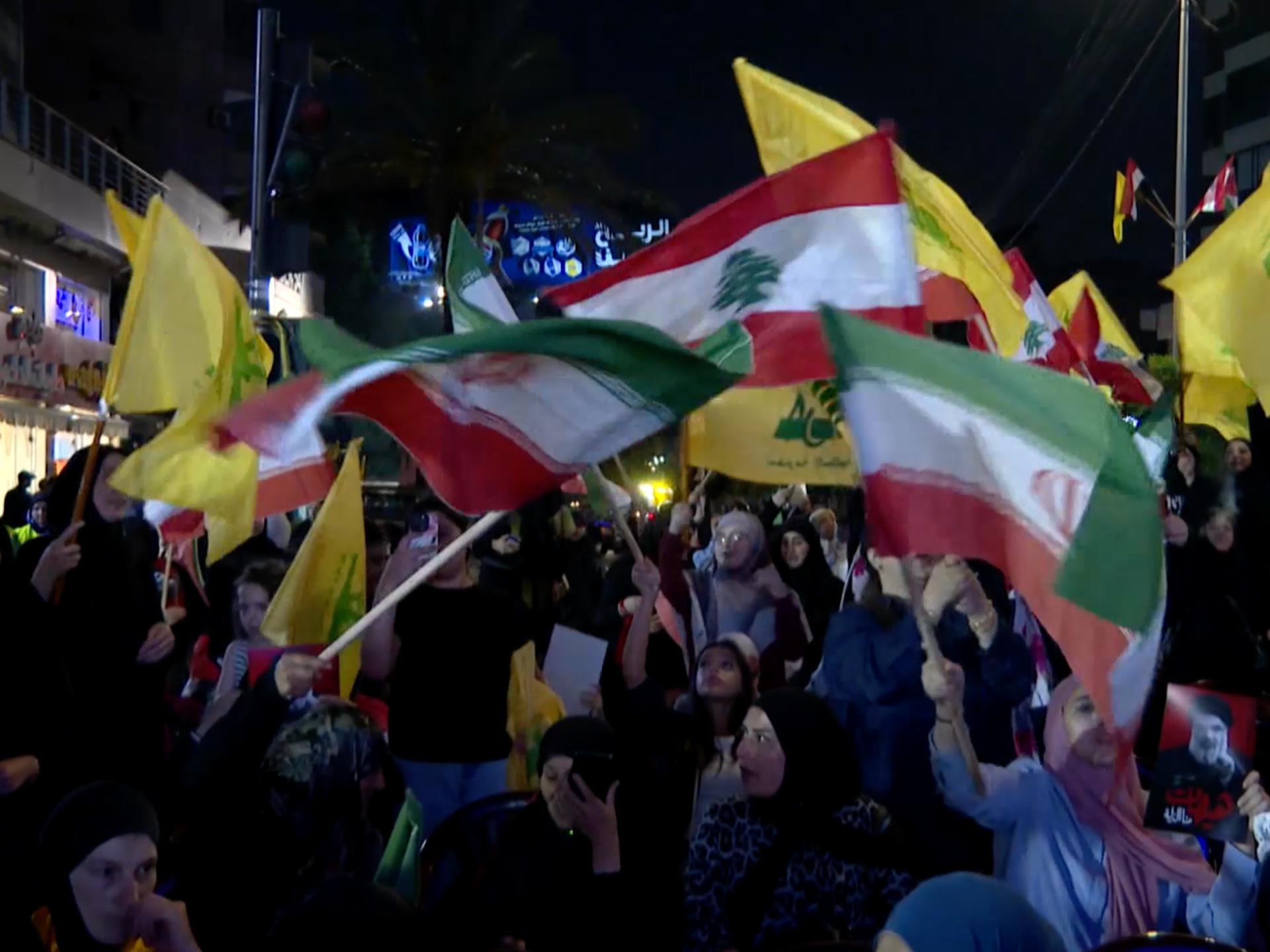
Later on Saturday, Hezbollah Secretary-General Naim Qassem said that the ongoing 10-day truce with Israel cannot continue unless both sides uphold it.

“A ceasefire means a complete cessation of all hostilities. Because we do not trust this enemy, the resistance fighters will remain in the field with their hands on the trigger, and they will respond to violations accordingly,” Qassem said in a statement read out on TV.

“There is no ceasefire from the side of the resistance only; it must be from both sides.”

Qassem also demanded that Israel completely withdraw from Lebanon.

The next steps, Qassem said, would focus on the release of prisoners and the return of residents to their homes in the border areas.

A final step, he said, would involve a significant reconstruction campaign, coupled with international Arab support.

He also added that Hezbollah is “open to cooperation with the [state] in Lebanon on a new page” based on achieving their “national sovereignty and preventing strife”.

Thursday’s ceasefire between Israel and Hezbollah comes after a previous one, which had ostensibly been in effect since November 27, 2024. But the United Nations has counted more than 10,000 Israeli ceasefire violations since then, as well as hundreds of Lebanese deaths.

Israel has repeatedly told the Lebanese government that Hezbollah must be disarmed for any truce to last.

For its part, Hezbollah has said that Israel needs to withdraw from the country’s southern region first as part of the 2024 ceasefire deal agreed between the armed group and Israel.

The Lebanese government has been uneasy about Hezbollah’s influence in the country. Last December, the government said it was close to completing the disarmament of Hezbollah south of the Litani River before a year-end deadline as part of the 2024 ceasefire deal with Israel.

At the start of the latest conflict, the Lebanese government also outlawed Hezbollah’s military wing. But the government has also always been apprehensive of Israel’s actions. Lebanon’s President Joseph Aoun also previously refused to speak directly with Israeli Prime Minister Benjamin Netanyahu about their differences.

On Thursday, while announcing the ceasefire between Lebanon and Israel, US President Donald Trump revealed that Israel’s Prime Minister Netanyahu and Lebanon’s President Aoun could meet ⁠in Washington over ⁠the ⁠next week or two for negotiations on ending the fighting.

📰 மூல செய்தி (Source): https://www.aljazeera.com/news/2026/4/18/israel-says-established-a-yellow-line-in-lebanon-as-it-has-in-gaza?traffic_source=rss

Continue Reading

Trending

Copyright © 2024 by 7Tamil Media, All rights reserved.