Connect with us

முக்கியச் செய்திகள்

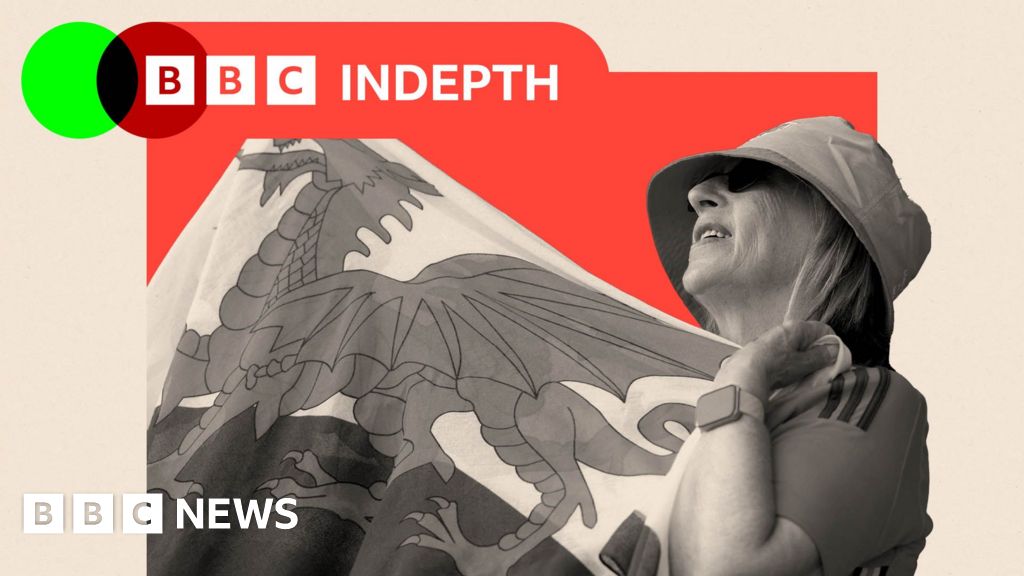
If Plaid win in Wales, that won't mean independence – at least not yet

Published

on

In a further education college in the Pembrokeshire town of Haverfordwest, a studio audience had gathered to hear leaders of Wales' political parties make their pitch at a BBC Wales Ask the Leaders debate.

After an audience member asked Plaid Cymru leader Rhun ap Iorwerth about independence, presenter Nick Servini followed up with a question about whether the party's plans for Welsh independence had been "paused".

Ap Iorwerth replied: "Do I sound as if I've paused on my ambition for Wales or my belief that this isn't as good as things could be for Wales? No, my situation on this has been the same, life-long. It's a question for the people of Wales.

"How brave we want to be, how far we want to go."

Take a closer look at the question and a closer look at the answer.

The question is about independence; the answer does not include that word.

The polls suggest that two diametrically opposed parties – Plaid Cymru and Reform, who are pro and anti-independence respectively – are vying to lead the Welsh government for the first time.

During this election, independence has certainly been part of the conversation – with claims that it is "the normal state for any nation", or "unaffordable", bandied about by either side. But it has not dominated the campaign. And there is an odd dynamic at play: the Welsh pro-indy parties tend to be talking about it less than those who are against it.

On the campaign trail, the parties are weighing up whether the issue of Welsh independence is a vote winner or loser.

As far as independence is concerned, the big question is: what would happen to the cause if Plaid Cymru wins and ap Iorwerth becomes first minister? And were that to happen, supposing the pro-indy Greens won enough seats that there became a majority in the Senedd in favour of Wales breaking away from the rest of the UK?

In the hunt for votes, politicians of all stripes are trying to convince the public that their forecast of what would happen or not happen is the correct one.

Plaid's position on independence is clear. The second line of its constitution says: "As the National Party of Wales, the Party's aims shall be: to secure independence for Wales in Europe."

But party figures have consistently said that this is not an independence election.

The word was absent from ap Iorwerth's February conference speech and what was said at April's manifesto launch in Wrexham the morning after the Haverfordwest leaders debate, although a commitment to next steps towards that ultimate goal did appear in the document itself.

Plaid's opponents claim that if it wins, it will pursue independence "by stealth" or through the "back door" and also warn that Wales could not afford it. The Greens also seem reticent to mention the "I" word unprompted. It does not appear in their Senedd election manifesto.

Welsh leader Anthony Slaughter told the BBC that he "won't shy away" from independence but believes the issue is "not front and centre of this campaign". Slaughter suggested that talk of an independence referendum during this campaign would be "divisive" and hand the initiative to Reform.

He added that the cost-of-living crisis had to be the focus of the next four years. Both pro-independence parties also say the NHS, housing and a better deal for Wales under the current constitutional settlement are more important at the moment than the question of independence.

Plaid's next steps involve a National Commission, costing half a million pounds from the Welsh government's £27bn budget, that would "lay the foundation" of a future independence plan.

The party had already decided not to present a formal plan for independence during a first term in office – in contrast to the 2021 campaign, when then-leader Adam Price promised a referendum within five years.

In 2021 Plaid came third behind Labour and the Welsh Conservatives and shortly after taking over as leader in 2023 ap Iorwerth said that there would be no timetable.

But Labour, which argues for a stronger Wales within the UK, insists its rival remains as committed to independence as ever. First Minister Eluned Morgan has warned that "separatism is now very much on the agenda in our nation".

But Labour is facing a threat on all sides, with polling analysis suggesting it is losing voters to Plaid, the Greens and to a lesser extent Reform. In a speech to the Institute for Government in January she said: "Support for independence tends to rise when politics feels stuck or uncertain, and it falls when people see devolution deliver."

"Devolution is the best way to lower the temperature and raise trust."

After more than a century of Westminster and Senedd elections in which it has been the biggest party, Labour is in danger of losing that status.

Now it is facing serious questions about its record, especially on the biggest area of Welsh government spending – the NHS. The health service regularly appears in the top three concerns for voters, according to the You Gov issue tracker.

Shortly after taking over as leader in 2024, Eluned Morgan made cutting waiting lists her top priority and is trying to gain political ground in highlighting that they have been falling for months. Her problem is that they are still high.

As for Labour's handling of devolution, especially since a Labour government took over in Westminster in 2024, there are questions over how well it has lowered that temperature mentioned by Morgan in her January speech.

A long list of Welsh Labour demands for more powers, such as devolution of the Crown Estate – the body that is responsible for much of the seabed around Wales, and vital to the development of floating offshore wind-power – and policing, as well as reform of how Wales is funded, has not been granted by its UK Labour colleagues.

While Welsh Labour is keen to extol the virtues of two Labour governments working together, citing the development of new nuclear power on Anglesey, rail infrastructure spending and what it describes as record levels of funding, its opponents say it does not get a good enough deal out of its colleagues in London – and when it doesn't get what it asks for, its opponents claim it is weak.

A row over the lack of specific Welsh funding from the HS2 high speed rail project has become politically totemic.

Plaid makes much the same demands as Labour but tells voters that it will press for a better deal.

Welsh Labour accuses Plaid of trying to move Wales towards independence by stealth. A source described Plaid's National Commission as "an independence commission in all but name".

So how serious really is Plaid about independence going in to this election?

"I believe that the normal state for any nation is to be independent. I passionately believe that that is true for Wales," ap Iorwerth said.

But in 2026 there is that caveat: not yet. Back in February, Plaid's finance spokesperson Heledd Fychan denied that the party was trying to avoid a debate about independence and said that journalists needed to be "clear" on what the election was about.

Fychan accused Labour and Reform of trying to "scare" people by "shouting independence at us when we talk about a policy because they want to detract from their actual record or their lack of policies".

Given the pro-independence parties' reticence to put it front and centre of their campaigns, could it be that Welsh independence is simply not a vote winner?

Ap Iorwerth said it wasn't a matter of that, but added: "I do not think now is the time to have that referendum because the people of Wales are not telling us that it's that time."

In a recent BBC Radio interview, he conceded that he would not win an independence referendum now.

When I asked him if there was any pushback from Plaid members, ap Iorwerth said: "The answer to that is no, because we share this belief in what Wales can be."

Richard Wyn Jones, director of the Wales Governance Centre at Cardiff University, thinks ap Iorwerth's confidence on the question of inter

📰 மூல செய்தி (Source): https://www.bbc.com/news/articles/c9958227r38o?at_medium=RSS&at_campaign=rss

முக்கியச் செய்திகள்

'My instinct was to help him': Runners help exhausted man finish Boston Marathon

Published

on

Two runners sacrificed personal bests to come to the rescue of an exhausted competitor at the Boston Marathon.

Aaron Beggs was first to stop to pull Ajay Haridasse up off the ground after he fell and could not get up.

With Haridasse still struggling to stay on his feet, another runner, Robson De Oliveira, stepped in and the pair put their arms around Haridasse to help him across the line.

The incident was filmed by several spectators who witnessed Haridasse falling shortly after the 26 mile (41.8km) mark.

On the 85th anniversary of the Blitz and ahead of a new play about it, BBC News NI talks to 93-year-old Reggie who lived through it.

Liz Kimmins acknowledged the decision was taken against a difficult funding backdrop for the public transport company.

Farmers say they are being hit on several fronts, with the price of fuel and fertiliser all facing a hike.

The remains of two adults, a young child and six babies were found during a dig in 2018.

Five people from Northern Ireland are hoping for success at the upcoming European sport stacking championships.

Aimee Oliver's problems began in her 20s following the birth of her first child.

Marie McGrath was diagnosed with bowel cancer at the start of 2026

They are among hundreds of thousands of ship plans and documents made widely accessible.

Drivers caught speeding on a stretch of road outside a rural school are being taught some lessons by the pupils.

He said he would be back and now, decades after he came to Belfast as a young bodybuilder, Arnold Schwarzenegger has returned to the city for a special honour.

There are only fewer than 200 men registered to work as a midwife in the UK and just six in Northern Ireland – and Fraser Morton is one of them.

Natalie McNally was 15 weeks pregnant when she was murdered by Stephen McCullagh in December 2022.

A real estate professor warns property rent rises in Belfast are not sustainable.

Stephen McCullagh has been found guilty of murdering Natalie McNally in her Lurgan home in December 2022.

A woman diagnosed with anal cancer has said Northern Ireland should have a clinic for patients who have had pelvic radiotherapy.

Chris Wynne, from Danske Bank, says scammers pretend to be someone from the fraud team so customers hand over information.

The grandstand at Casement Park is being removed as the demolition of the 73-year-old Belfast stadium enters its final stages.

A total of 42 umbrellas – double the original number – have now been finished to endure the Belfast weather for many years to come.

📰 மூல செய்தி (Source): https://www.bbc.com/news/videos/cj0v65l4y9yo?at_medium=RSS&at_campaign=rss
Continue Reading

முக்கியச் செய்திகள்

Lebanon accuses Israel of targeting journalist killed in air strike

Published

on

Lebanon's prime minister has accused Israel of war crimes after Israeli air strikes killed one journalist and wounded another in southern Lebanon on Wednesday.

The strike killed Amal Khalil, who worked for a Lebanese newspaper, and injured freelance photographer Zeinab Faraj.

Officials in Lebanon say they were deliberately targeted as they sought shelter in a home after an initial air strike hit the vehicle in front of them, killing two men.

The officials also accused the Israel Defense Forces (IDF) of intentionally targeting a marked ambulance as it tried to reach the journalists in the village of Tayri.

The IDF denied that it was preventing rescue teams from reaching the area and said it did not target journalists.

Journalists Khalil, 43, who worked for Lebanese newspaper Al-Akhbar, and Faraj, a freelance photographer, were travelling together. The two men who died have not been named by officials.

Lebanese Prime Minister Nawaf Salam said: "Targeting journalists, obstructing access to them by relief teams, and even targeting their locations again after these teams arrive constitutes described war crimes."

He accused Israel of repeatedly targeting media workers in southern Lebanon in what he described as "an established approach".

Salam offered condolences to Khalil's family and said that Lebanon would "pursue the crimes before the competent international forums".

In a statement, the IDF said it "does not target journalists and acts to mitigate harm to them while maintaining the safety and security of its troops".

The IDF said it identified two vehicles that had "departed from a military structure used by Hezbollah".

One of the vehicles had approached Israeli troops in a manner that was an "immediate threat" after crossing a "forward defence line", violating a ceasefire, the statement said.

The IDF said the Israeli Air Force then struck one of the vehicles, and that the "structure from which the individuals had fled was also struck".

The Lebanese health ministry said the IDF "pursued" Khalil and Faraj, "who had taken refuge from the first raid in a nearby house, targeting the house where they had sought shelter".

When a Lebanese Red Cross ambulance arrived to treat the wounded, Israeli forces directed a stun grenade and gunfire toward it, preventing it from reaching them, the ministry said in a statement.

"This constitutes a blatant double violation: obstructing the rescue efforts of a citizen known for her civic media activism, and targeting an ambulance clearly marked with the Red Cross emblem," the health ministry said.

Clayton Weimer, the executive director of Reporters Without Borders, said the IDF had received messages from the organisation, as well as journalists, asking that it allow ambulances to get to Khalil.

"The Red Cross signalled they were unable to get through because of ongoing Israeli bombardment. So that is callous disregard, on top of what appears to be a deliberate and targeted killing of a journalist."

Faraj was eventually evacuated along with two of the dead, the statement added. Khalil's body was later recovered by emergency teams, according to Lebanon's civil defence agency.

Al-Akhbar said in an article on her death that Khalil "remained steadfast in her humanitarian and professional duty".

The Guardian's William Christou, who covers the Middle East for the paper, described her in a post on X as a "professional, kind and dedicated journalist, and always a pleasure to run into in the field".

The IDF acknowledged reports that two journalists were injured as a result of the strikes, but insisted it was not preventing further rescue teams from reaching the area. It has not acknowledged Khalil's death.

The US-based Committee to Protect Journalists (CPJ) said it was "outraged" by Khalil's death.

"The repeated strikes on the same location, the targeting of an area where journalists were sheltering, and the obstruction of medical and humanitarian access constitute a grave breach of international humanitarian law," said CPJ Regional Director Sara Qudah.

In 2024, Khalil said had been the target of an "Israeli death threat" that warned her to leave southern Lebanon, local media reported. CPJ said the report raised "serious concerns of deliberate targeting".

Earlier this month, two journalists were killed in separate Israeli strikes in Lebanon – Ghada Dayekh, a presenter with privately-owned radio station Sawt al-Farah, and Suzan Khalil, a reporter and presenter on Al-Manar TV, which is affiliated with the armed group Hezbollah.

Last month, three Lebanese journalists were killed in a targeted Israeli strike in the town of Jezzine, their employers said.

Ali Shoeib, a reporter for Hezbollah-affiliated Al Manar TV, and reporter Fatima Ftouni and her brother, cameraman Mohamed Ftouni, both from Al Mayadeen channel, were killed in the strike.

At the time, the IDF confirmed it killed Shoeib and Mohamed Ftouni, describing them as "terrorists" from Hezbollah's military wing, while saying it was aware of reports a female journalist was also killed.

Lebanese President Joseph Aoun called the killings a "brazen crime" that broke the "most basic rules" of international law by targeting reporters, "who are ultimately civilians performing a professional duty".

At least 2,475 people have been killed in Israeli attacks in Lebanon since the latest war began, and more than 7,500 wounded, according to the Lebanese authorities, whose figures do not differentiate between civilians and combatants. The number includes at least 274 women and 177 children.

The Lebanese health ministry said last week that at least 100 medical workers had been killed in Israeli attacks during the war, and that more than 120 Israeli attacks have been recorded on ambulances and medical facilities. Israeli attacks have killed seven journalists In Lebanon, according to the CPJ.

Israeli authorities say Hezbollah attacks have killed two civilians in Israel since 2 March, and that 13 Israeli soldiers have been killed in combat in Lebanon.

Both Hezbollah and Israel have accused each other of violating the ceasefire agreement. The IDF said earlier on Wednesday that Hezbollah launched an attack on Israeli forces in southern Lebanon.

On the same day, Hezbollah issued four statements saying it had struck Israeli targets in south Lebanon, "in response to the Israeli enemy's violation of the ceasefire", according to the AFP news agency.

Last week, a meeting hosted by US Secretary of State Marco Rubio brought Lebanese and Israeli envoys together for the first direct, high-level contact in three decades between the two countries.

Following the talks, their governments agreed to implement a 10-day cessation of hostilities that began on Friday in order to "enable good-faith negotiations toward a permanent security and peace agreement", the US state department said.

Ahead of Thursday's follow-up talks in Washington, Lebanon's president confirmed that efforts were under way to extend the ceasefire.

Aoun said preserving Lebanese sovereignty over all of its territory was his top priority, and that Lebanese negotiators would seek an end to Israeli attacks, the withdrawal of Israeli troops from Lebanon, release of Lebanese prisoners in Israel, deployment of Lebanese troops along the Israeli border, and the beginning of reconstruction process, according to a statement from his office.

A Lebanese official told AFP news agency that Lebanon would request a one-month extension of the ceasefire at the talks.

In a speech to Israeli diplomats, Israel's foreign minister said the two countries should "work together against the terror state that Hezbollah built".

📰 மூல செய்தி (Source): https://www.bbc.com/news/articles/c5yvn036evlo?at_medium=RSS&at_campaign=rss

Continue Reading

முக்கியச் செய்திகள்

US Navy chief leaving post 'effective immediately', Pentagon says

Published

on

US Navy Secretary John Phelan is leaving the Trump administration, the Pentagon announced on Wednesday.

His departure will be "effective immediately", Pentagon spokesman Sean Parnell said in a social media post.

Navy Undersecretary Hung Cao will serve as acting secretary, Parnell added.

Phelan is the latest high-ranking military leader to leave the administration in recent months. His departure comes amid the US-Israel war with Iran and the continued US blockade of the Strait of Hormuz.

"On behalf of the Secretary of War and Deputy Secretary of War, we are grateful to Secretary Phelan for his service to the Department and the United States Navy," Parnell wrote. "We wish him well in his future endeavors."

The Navy did not provide a reason for Phelan's departure.

It comes just weeks after US Defense Secretary Pete Hegseth asked Army Chief of Staff Randy George to step down from his post.

Two other Army officials, Gen David Hodne and Maj Gen William Green, have also been removed from their roles recently.

Since entering the Pentagon, Hegseth has fired more than a dozen senior military officers, including the chief of naval operations and the Air Force's vice chief of staff.

The secretary's role is largely administrative and includes formulating policies, recruiting, training and equipping the Navy, as well as overseeing budgeting and logistics like construction, and repair of naval ships and facilities.

Phelan, a civilian who had not previously served in the military, was sworn in as Secretary of the Navy in March 2025 after being nominated by President Donald Trump in 2024. The businessman was a major donor to Trump's campaign.

The two appeared alongside one another at Mar-a-Lago last December when Trump announced that the US would commission a new series of heavily armed Navy "battleships" named after himself – part of a revamped "Golden Fleet" which Phelan supported.

Andrew Peek, a former State Department deputy assistant secretary, told the BBC that the president was clear that he wanted to expand the country's merchant and civilian fleet.

"Eventually, somebody was going to take the fall for the lack of movement on that. I would bet that's about 30% of this," Peek said.

"The other 70% – Phelan's replacement is very well known to the MAGA base, I would bet it's a simple replacement with someone he likes and trusts better," he added.

Phelan's replacement, Cao, became undersecretary in October 2025 and is a 25-year Navy veteran.

He ran an unsuccessful campaign for the US Senate in Virginia in 2024, endorsed by Trump, against incumbent Democratic Senator Tim Kaine. During a campaign debate, he criticized the military's diversity, equity and inclusion initiatives.

Speaking about Navy recruiting during the debate, Cao said: "What we need is alpha males and alpha females who are going to rip out their own guts, eat them and ask for seconds. Those are the young men and women that are going to win wars," the AP reported.

The Navy's change in leadership comes as Trump said the US blockade of Iranian ports would continue amid a ceasefire in the war. Clashes have continued in the Strait of Hormuz, a vital global shipping route that supplies much of the globe's oil, with Iran announcing that it had "seized" two ships in the strait.

White House Press Secretary Karoline Leavitt said the president is "satisfied" with the ongoing US naval blockade on Iranian ports, and "understands Iran is in a very weak position".

Mohammad Bagher Ghalibaf, Iran's chief negotiator in talks with the US, said on Wednesday that it is "not possible" for the Strait of Hormuz to be re-opened due to "the blatant violations of the ceasefire" by the US and Israel.

📰 மூல செய்தி (Source): https://www.bbc.com/news/articles/ce9ml02g5k7o?at_medium=RSS&at_campaign=rss
Continue Reading

Trending

Copyright © 2024 by 7Tamil Media, All rights reserved.