Connect with us

முக்கியச் செய்திகள்

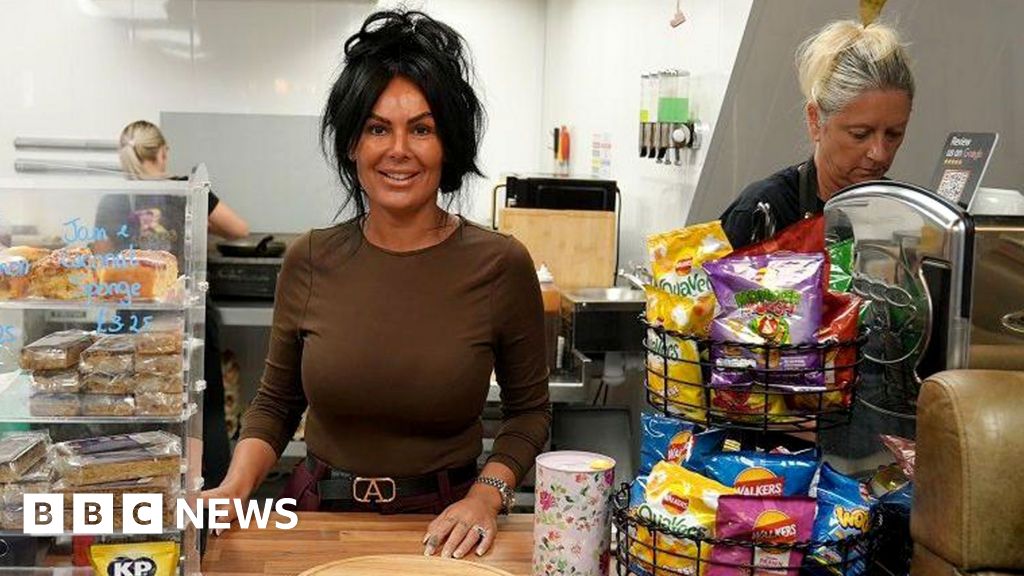
High Street mini-marts selling cocaine, cannabis and prescription drugs, BBC secret filming reveals

Published

on

Cocaine, cannabis, laughing gas and prescription pills are being offered for sale in mini-marts on UK High Streets, a BBC investigation can reveal.

They were readily offered to our undercover researchers who secretly filmed in shops across four neighbouring West Midlands towns.

One street we visited was described as "lawless" by an anonymous law enforcement source.

Just a few miles away, in a town where we found illegal drugs being sold in shops, legitimate businesses told us they had been intimidated by gangs – and witnessed knife and gun violence.

Across the country, shopfronts are being exploited by organised criminal gangs that have gained a foothold pushing illegal drugs, say both the National Crime Agency (NCA) and the Chartered Trading Standards Institute (CTSI).

We analysed dozens of recent local news reports as part of our ongoing investigation into criminal activity on UK High Streets. From Bideford in Devon, to Great Yarmouth in Norfolk, to Belfast in Northern Ireland – we found that drugs, including crystal meth and heroin, had been found in more than 70 shops and linked premises.

Responding to our findings in the West Midlands and more widely, a senior Labour MP is now calling on the government to act urgently. "We can't restore our High Streets unless we take out the cancer of organised crime," says Liam Byrne, chair of the Business and Trade Committee.

The government is working with police, the NCA and Trading Standards to "take the strongest possible action against these criminal businesses", a spokesperson for the Home Office said. West Midlands Police said it would always work with partners "to act on complaints about illegal drugs sales, anti-social behaviour, and crime and disorder".

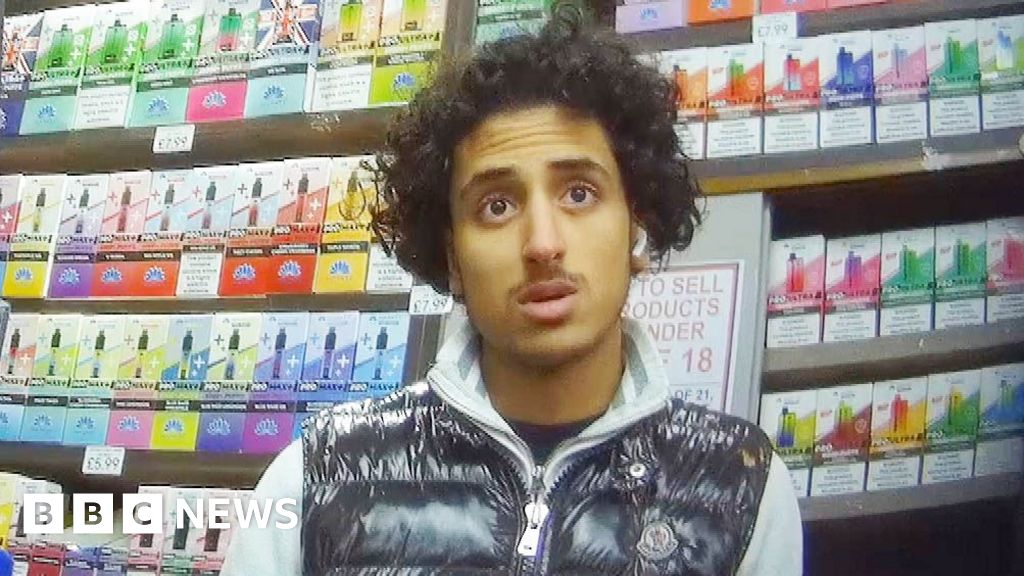
"I've got weed, coke, everything. Whatever you want, I can sort you out," said a man behind the counter at a mini-mart in Cradley Heath.

We had come to the Black Country town as part of our year-long investigation. A law enforcement whistleblower had told us that drug gangs were out of control along its 300m stretch of High Street.

When asked, it took just seconds for the man behind the counter of the shop – called Cradley Market – to supply our researcher with 3.5g of cannabis for £30.

Handing money over to criminals is not something we do lightly – but in this instance we decided there was a public interest in carrying out the test purchases.

Our researcher was able to buy cannabis from the shop on two separate visits.

Past shelves of fizzy drinks, sweets and nappies, he was taken to the back of the shop and handed a small bag of cannabis from a rucksack by the man, who said his name was Akwa.

When our researcher asked if he could buy cocaine, Akwa immediately made a call to get some. A couple of hours later, a gram of cocaine was delivered to the shop which Akwa sold for £95.

While we were in the shop, Akwa showed us a selection of pictures of prescription drugs on his phone for sale – inviting our researcher to take photos in case he knew anyone who might be interested.

The offer included pregabalin, a prescription drug used to treat anxiety, nerve pain and epilepsy. Its misuse has been linked to a sharp increase in deaths.

Akwa denied any wrongdoing when we later confronted him. When asked about selling drugs, he said he did not know what we were talking about, before asking us to leave.

We put our findings to the local authority. A spokesperson said Sandwell Council was working with police to tackle illegal activity.

Less than three miles away, in the neighbouring borough of Dudley, organised crime gangs have taken hold of some of its High Streets, the Trading Standards lead there says.

The sale of illegal drugs, alongside counterfeit cigarettes and illegal vapes, is the worst it has been in 20 years, Kuldeep Maan told us.

During our research in the borough, we observed so-called "spotters" outside mini-marts – on the lookout, we were told, for potential law enforcement raids. Our team was also followed and photographed by mini-mart workers on Dudley High Street.

Maan says he shut down 39 shops for selling illegal cigarettes in Dudley in 12 months, but during raids he also repeatedly found cannabis, cocaine, nitrous oxide, and fake and foreign prescription drugs.

Visits to shops in two towns in the borough, Lye and Brierley Hill, filmed by our undercover researchers, resulted in offers of cannabis, cannabis vapes and nitrous oxide.

A class C drug commonly known as laughing gas, nitrous oxide can cause brain damage when inhaled. It is used legally in the catering industry and other sectors, but is illegal to possess or supply with the intent to inhale it for recreational use.

In Lye, four shops offered us illegal cigarettes and laughing gas. A 10-minute drive away in Brierley Hill we were twice offered cannabis at IK Convenience. A shop worker showed us illegal cannabis vapes costing £20 each.

The shop did not respond to the BBC's request for comment.

When we asked about cannabis in another Brierley Hill shop, called Best Choice, the man behind the counter directed us to a flat above where we were twice able to buy the drug, from a man and woman.

The flat and the shop have the same landlord, we discovered. He told us he was "shocked" to hear from the BBC, had "no prior knowledge of any alleged sale of cannabis" and had notified the police.

The BBC was poised to confront the cannabis sellers in the flat but withdrew for safety reasons when two large pitbull-type dogs without collars or leads appeared.

We approached the tenants for comment and were contacted by someone on their behalf, who denied the allegations.

Maan told us he is investigating increasing numbers of reports of laughing gas being sold to children, across the borough of Dudley.

We found nitrous oxide readily available in the heart of Dudley town centre.

Inside Dawood Grocery store, the shopkeeper asked our undercover researcher how many bottles of gas he wanted, before handing over a plastic bag with some balloons in and being told to wait outside on a nearby street corner. Balloons are filled with the gas, which is then inhaled.

A few minutes later, a hooded man arrived, took our £25 in cash and handed over a nitrous oxide canister without saying a word. We were twice able to buy the gas in this way from the shop.

Another local business owner, who did not want to be named, told us they regularly witnessed people inhaling laughing gas, having bought it from Dawood.

Dawood Grocery denies all the allegations made by the BBC.

"People are scared to come here," says Romanian national Marius Boros, who moved to the UK 13 years ago and now runs a grocery shop on Dudley High Street.

There are "a lot of fights, knives, guns" outside, he says.

Mini-marts selling cut-price, illegal goods – including drugs – are destroying his business, says Boros. "I work really hard, everything I had, I invested here… I'm very close to losing everything."

Meanwhile, hair salon owner Diane Shawe believes local criminals are trying to push her out. Her shop windows have been smashed four times, she says, each time in the middle of the night.

CCTV footage showed how men in hoodies threw bricks at her shop windows in the early hours, shortly after the glass had been replaced.

"They want the shop. They're going to make it expensive for me until they get their own way," says Shawe, whose customers include people with cancer and alopecia

After one of the attacks, she explains, two men called into the shop and tried to intimidate her, saying they wanted the premises to set up a barber shop.

"One guy asked me, am I ready to sell now?"

Dudley Council says it has been working with local police, landlords and businesses "to rid the borough of businesses run by organised crime" through its Operation Clearance campaign, launched in August 2024.

"The council has delivered some of the strongest enforcement outcomes in the country and, to date, 42 shops have been successfully

📰 மூல செய்தி (Source): https://www.bbc.com/news/articles/c62l429w2pko?at_medium=RSS&at_campaign=rss

முக்கியச் செய்திகள்

Farage faces standards probe into £5m gift from crypto billionaire

Published

on

The Parliamentary Standards Commissioner is launching an inquiry into whether Reform UK leader Nigel Farage broke Commons rules by accepting a £5m gift and not declaring it, the BBC understands.

Farage has said he was under "no obligation" to declare the gift from billionaire Reform backer Christopher Harborne because it had been given before he was an MP.

But Reform's opponents say he should have declared it in the MPs' register of interests when he was elected to Parliament in 2024.

The Conservatives wrote to Parliament's standards watchdog, which is now investigating whether the Reform leader broke the House of Commons code of conduct.

A spokesman for Reform UK said: "Mr Farage's office is in communications with the Parliamentary Commissioner for Standards.

"He has always been clear that this was a personal, unconditional gift and no rules were broken. We look forward to this being put to bed once and for all."

Labour Party chair Anna Turley said: "Nigel Farage has been avoiding legitimate questions since news of his billionaire backer's 'gift'.

"It's right that he faces a proper investigation."

A Conservative Party spokesman said £5m was "more than most people will earn in a lifetime".

"Nigel Farage needs to explain how he got it, why he got it, and why he didn't declare it," they added.

"If there is a simple answer then he should welcome these investigations. But like so often with Reform, there is something very fishy about the whole story."

The Commons code of conduct states that new MPs "must register all their current financial interests, and any registrable benefits (other than earnings) received in the 12 months before their election within one month of their election".

The rules say "purely personal gifts or benefits" from family or commercial loans would not normally have to be registered.

The rules also say "both the possible motive of the giver and the use to which the gift is to be put should be considered", adding "if there is any doubt, the benefit should be registered".

MPs who are judged to have broken the code of conduct face a range of punishments from a written or oral apology to suspension from the House or even expulsion, in the most serious cases.

In January, Farage was found to have failed to register £384,000 in interests on time.

He was allowed to update his register via the "rectification" procedure without sanctions, with standards commissioner Daniel Greenberg concluding it had been an "inadvertant" breach.

The Conservatives have also raised concerns about the £5m gift to Farage with the Electoral Commission, which said it was considering the information.

Harborne, a British cryptocurrency investor who lives in Thailand, last year gave a single donation of £9m to Reform UK – the biggest to a UK political party by a living person.

In total, the businessman gave £12m to Reform in 2025 and has donated to the Conservatives in the past.

The separate £5m gift to Farage was made in early 2024 and Reform sources say it was made before he had decided to stand as an MP.

Farage has said Harborne gave him the money to pay for his personal security, adding the gift was "purely private" and "wasn't political in any sense at all".

The BBC has contacted Harborne's representatives for comment.

📰 மூல செய்தி (Source): https://www.bbc.com/news/articles/c0l26g01703o?at_medium=RSS&at_campaign=rss
Continue Reading

முக்கியச் செய்திகள்

Israel's Eurovision contestant 'shocked' by protests during semi-final show

Published

on

Israel's contestant at the Eurovision Song Contest has said he was surprised by protests that disrupted his semi-final performance.

Several audience members – including one with "Free Palestine" written across his chest – were removed from Vienna's Wiener Stadthalle on Tuesday night after chants of "stop the genocide" were heard during the song.

"I was aware," Israel's entry Noam Bettan told the BBC. "I heard there was booing and everything, and there was a moment of, like, a wow effect, you know? A little bit of shock."

Israel's presence at Eurovision has been contentious since the start of the war in Gaza in 2023.

The public broadcasters of five countries – Spain, the Netherlands, Ireland, Iceland and Slovenia – are boycotting this year's event, making it the smallest since 2003.

Irish broadcaster RTÉ said Ireland's involvement was "unconscionable given the appalling loss of lives in Gaza", and Dutch broadcaster Avrotros said the Netherlands' participation was "incompatible with the public values ​​that are essential to us".

Israeli broadcaster Kan has described their absences as a "cultural boycott" which "harms freedom of creation and freedom of expression".

Bettan, 28, said he was hopeful the five broadcasters could return for future contests.

"It's bad for them," he said. "They're losing the opportunity to be in this amazing experience. So I am full of hope that next year they can sing and spread their light."

The five broadcasters' criticisms have been echoed by human rights group Amnesty International, which said the European Broadcasting Union (EBU) had "betrayed humanity" by allowing Israel to compete.

The Gaza war was triggered by the Hamas-led attack on southern Israel on 7 October 2023, when about 1,200 people were killed and 251 others were taken hostage.

Israel responded by launching a military campaign in Gaza, during which more than 72,740 people have been killed, according to the territory's Hamas-run health ministry, whose figures are considered reliable by the UN.

Israel has strongly denied the allegation from Amnesty International and other human rights groups that its forces have committed genocide against Palestinians in Gaza.

After Bettan's initial shock at the chants during Tuesday's semi-final, he said he "looked for the flags of the people who love me and want me to do my best, and that really carried me".

It is not the first time Israel's performance has been disrupted in recent years.

Singer Eden Golan faced a similar chorus of cheers and boos as she sang in Sweden two years ago. Last year in Switzerland, two protesters unsuccessfully tried to storm the stage and throw paint during a song by Yuval Raphael.

Like his predecessors, Bettan practised being booed during his preparations for Eurovision, though he admitted it did not compare to the real thing.

"You can't bring 13,000 people to a rehearsal room and get them to boo. I had a few people in my crew trying to make it hard for me, to practise for this moment – but you can't really prepare for this," he said.

Austria's broadcaster ORF, which is hosting Eurovision, has stated it will not ban Palestinian flags or censor any audience booing at this year's event. The removal of audience members on Tuesday related to more disruptive behaviour.

Despite the protests, Bettan gave a confident performance, and said the song's lyrics gave him strength on stage.

"There's a moment at the end of the song when I sing in Hebrew and it means, 'There's always someone listening'," he said.

"And in that moment, I felt that I was singing my heart out to my people."

He said while this "sounds like a big cliche", he found that moment emotional and was "very proud to be here and very proud to represent my country".

Bettan has been at the centre of a minor controversy, after he asked fans on social media to use all 10 of their votes to support Israel at Saturday's grand final.

That prompted a rebuke from organisers, who said Bettan's post "wasn't in the spirit" of the competition, and demanded that it be deleted.

They also issued a formal warning to Israel's broadcaster, Kan, which organises the country's Eurovision entry.

It followed an Israeli government-backed campaign to boost votes for Yuval Raphael last year, which some countries said tipped the scales in Israel's favour.

Raphael came top of the public vote in 2025, finishing second overall after the jury votes were taken into account. The EBU said at the time it had found no evidence of irregularities.

Bettan told the BBC he had not been aware of guidelines that discourage contestants from campaigning for multiple votes, and had "erased" the post.

Asked whether Israel could be disqualified for further breaches, Eurovision director Martin Green told BBC News: "We're a long way from any of that.

"If there is a problem, we start a conversation and we try and resolve it amicably, without reaching for sanctions.

"We hope, in a way, that you teach the world that you can solve [conflict] by being collegiate right now."

After qualifying from Tuesday's semi-final, Bettan will perform again during Saturday's grand finale – with his song expected to finish in or around the top five.

There are further protests planned outside the event, and the furore over Israel's presence will continue, but he said he was determined to make the most of the opportunity.

"There's a lot of hate outside. I'm not looking at it – I look at the bright side," he said.

"I don't even feel that I'm in a competition. There's such talented artists here, and I'm here to unite. I'm here to spread my light, my colour in this world."

📰 மூல செய்தி (Source): https://www.bbc.com/news/articles/ckgpjx4503zo?at_medium=RSS&at_campaign=rss

Continue Reading

முக்கியச் செய்திகள்

An iron fist joining a broken team: Inside Mourinho's Real return

Published

on

There are press conferences and then there are spectacles, not always matching communication strategies.

What Real Madrid president Florentino Perez staged on Tuesday – emerging after more than a decade without a press conference to rage against journalists, invoke conspiracies and warn that they would have to "shoot him out" of the Bernabeu – was a man in a bunker, surrounded by enemies real and invented.

It was the starting gun of a new era. Because hovering over that entire chaotic hour was the truth everyone in the room already knew: Jose Mourinho is coming back to Real Madrid, 13 years after his previous explosive stint.

And here is the darkly fitting thing: Mourinho's entire managerial philosophy – the siege mentality, the us-against-the-world framing, the weaponisation of grievance, the use of media as the enemies – is perfectly calibrated for the climate Perez has spent years cultivating.

A president who is highly critical of referees, who believes the media wants to destroy him, and that Barcelona are favoured by La Liga has finally found his ideal coach.

Mourinho in final negotiations to become Real manager

Quiz: Name every club Mourinho has managed

Jose Mourinho is returning to Real Madrid after 13 years away

The paranoia runs in the corridors of power at the Bernabeu and will now be in the dugout with Mourinho – although, in fact, predecessor Alvaro Arbeloa has bought that vision of the world already.

That, more than anything, is why this appointment makes sense in Perez's mind.

Madrid's dressing room is fractured. There have been fights between players. Vinicius Jr got what he wanted when Xabi Alonso was sacked as manager. Kylian Mbappe is not loved and seems a strange body in the club.

Then add to that the squad finished a second consecutive season without a major trophy.

Into this chaos walks a man with an iron fist, a famous surname and zero tolerance for insubordination. For a president who cannot control his own stars, the appeal of Mourinho is obvious.

But appetite is not the same as wisdom. And before Madrid celebrates the return of the 'Special One', it is worth asking a harder question: will he make the same mistakes again?

The numbers are not kind. Mourinho has not won a league title in 11 years. He has been sacked – or effectively pushed out – in five of his last six jobs.

At Tottenham, the Amazon documentary All or Nothing captured something instructive. Training sessions were described as tedious. Players disengaged. His half-time team talks veered between indifference and screaming.

After defeats, he blamed his players publicly. By the end, the dressing room had fractured into three camps: a small group of loyalists, a larger group who actively resented him, and a numb majority who had simply stopped caring. He won nothing and left the club worse than he found it.

At the core of those failures was something beyond tactics. It was culture. Mourinho's great blind spot has always been the assumption that his personality – his aura, his force of will – is sufficient to override the values an institution has built over decades.

At Spurs the club's identity, fragile as it was, disintegrated around him. Parts of his diagnosis of the situation, as at Manchester United, were spot on – but he possibly used the wrong medicine.

Real Madrid is not Spurs, not even Manchester United or Chelsea, not Roma. It is a club with its own culture, its own hierarchy of pride, and its own very particular expectations of what winning means.

When Mourinho was last here, between 2010 and 2013, he left behind relationships so damaged that he himself, in January this year, described that period as "almost violent".

The wounds from a spell that brought one league title and Copa del Rey did not heal cleanly. The fans are divided. But Perez, the guiding light, has told them already: we do have enemies and I will fight. Cue Mourinho entrance.

Jose Mourinho with Real Madrid president Florentino Perez

So what would a wiser return look like? The areas where Mourinho must improve are not mysterious.

He needs to recognise that winning is a shared vision, not a slogan he imposes. The bullet points from his Spurs and Manchester United tenure read like a manual of what not to do: failing to fully adapt his methods to his squad, ignoring the needs of some of the people around him, taking credit for victories while offloading blame for defeats.

There is also the matter of an incident that, in Spain, never quite became the scandal it perhaps should have.

Mourinho responded to allegations of racist abuse from Benfica's Gianluca Prestianni directed at Vinicius by invoking Eusebio, arguing, clumsily, that a club whose greatest legend was a black man could not be racist.

It caused a stir and then, remarkably, disappeared. It has barely surfaced in the debate about his return to Madrid, which perhaps tells you everything about the current mood at the club, so desperate for a solution that certain questions get quietly filed away.

At Madrid, with Vinicius and Mbappe already in a fragile coexistence, with a dressing room that has been allowed to run its own politics for two years, any repetition of them falling out might produce a quick catastrophe.

The Vinicius-Mbappe problem deserves more attention. Three managers – Carlo Ancelotti, Xabi Alonso, Arbeloa – have been unable to make them function as a partnership.

The chemistry that was supposed to make Madrid the most feared attack in Europe simply has not materialised. Mourinho's record with difficult combinations or personalities is mixed, but let's go with the hopeful.

He made striker Samuel Eto'o play as a right winger at Inter Milan and they won the Treble. He managed the Cristiano Ronaldo-Karim Benzema dynamic at Madrid, keeping them functional if not always comfortable.

He can do this. But only if he's willing to manage with empathy and communication rather than authority alone.

His demands have already been outlined. He wants input on signings – not names necessarily, but positions, areas of need.

He has identified imbalances in the squad. In his first Madrid spell, he pushed for Luka Modric, Sami Khedira and Mesut Ozil, and history would vindicate all three choices.

He also wants his staff around him, his own people in key roles. The club wants to retain their medical and physical department. Whether Mourinho can not only accept but work with that hybrid structure – his coaches, their doctors – will be an early test of how much he has genuinely changed.

What is also real is the weight of what he is inheriting.

Two titleless seasons and a squad that played without intensity and finished below the top 10 in the Champions League group phase – twice.

Perez's media conference yesterday named none of this. He spoke about the press, about conspiracies, about his enemies. He always does it in private, never so openly before.

He was singing from the Mourinho songsheet. He did not speak about the football.

Mourinho will have to do so. And beyond speaking about it, he will have to solve it by earning trust with his pupils. By managing culture rather than bulldozing it. By understanding that the club he is joining is bigger than any one person.

The press conference yesterday may well have marked the beginning of something. Whether it is a renaissance or a relapse depends almost entirely on whether Mourinho has learned anything from the last decade.

He says he has. Madrid is about to find out.

Listen to the latest Football Daily podcast

📰 மூல செய்தி (Source): https://www.bbc.com/sport/football/articles/clyp4rj9r01o?at_medium=RSS&at_campaign=rss
Continue Reading

Trending

Copyright © 2024 by 7Tamil Media, All rights reserved.