Former detainees tell Al Jazeera they were chained, stripped, sexually abused and filmed, with repeated allegations involving dogs.
Warning: This story contains descriptions of sexual assault that some readers may find disturbing.
He does not begin with the name of the prison. He begins with the dog. In testimony gathered for Bodies of Evidence: Israel’s Darkest Weapon, an Al Jazeera original documentary I directed and executive produced, Mohammed Zaki al-Bakri describes being stripped, restrained and left powerless while Israeli soldiers laughed and filmed.
Al-Bakri, a survivor of the Israeli genocide in Gaza and a former detainee from Khan Younis, says he was held for 20 months and moved through five Israeli prisons.
“They stripped us of our clothes,” he says in the interview. “We are handcuffed … our hands were behind our backs and our legs were bound and we were blindfolded.”
Then came the allegation of violence, almost impossible to describe in words. “I was raped after being stripped of my clothes,” he says, “by a large dog.” In a separate part of the interview, he adds: “The seven of us were sexually assaulted by the dog.”
His was far from the only such allegation.
Across months of reporting, Al Jazeera’s documentary team gathered accounts from former Palestinian detainees who described dogs used not only as instruments of fear, but as part of a ritual of sexualised humiliation: prisoners stripped, blindfolded, handcuffed, forced to lie on their stomachs, beaten, threatened, filmed and attacked. These testimonies form the basis of AL Jazeera’s investigative documentary, Bodies of Evidence: Israel’s Darkest Weapon.
One former detainee from Gaza – we identify him with the pseudonym Job – who moved through eight Israeli detention facilities, describes how dogs were unleashed on prisoners in the same ritualised way when he was held at Israel’s Sde Teiman prison. A third Palestinian survivor from Gaza also describes a dog assault.
The pattern extends beyond the prison wall. Kifaya Khraim, international advocacy coordinator at the Ramallah-based Women’s Centre for Legal Aid and Counselling (WCLAC), tells Al Jazeera about what one family – the Ajlounis – in Hebron faced in July 2023. Israeli forces, she says, forced their way into their home “under the threat of large dogs,” ordered the women to undress and walk naked around the house in front of female soldiers.
Aside from the use of dogs, Shereen, a former detainee and activist whose identity we are concealing, describes repeated stripping and invasive searches. Adnan Hassan, a former child detainee from Jenin in the occupied West Bank, says he was arrested at 17 and held for five months. Mays Abu Ghosh, a former detainee from Jerusalem, describes the prison as a place where humiliation became routine.
Their testimonies do not describe one prison, one guard or one isolated act.
Since 1967, Palestinian official sources estimate that more than 750,000 Palestinians have been detained by Israel. A United Nations-cited figure says more than 800,000 Palestinians were imprisoned between 1967 and 2006. In April 2026, Addameer Prisoner Support and Human Rights Association reported 9,600 Palestinian political prisoners were in Israeli custody, including 3,532 held under administrative detention – imprisonment without charge or trial – alongside another 342 children and 84 women.
For Palestinians, prison is not a marginal experience. It is a generational one.
A detainee can be arrested at home, at a checkpoint, inside a hospital, at a shelter or during a military raid. He or she may then be moved between soldiers, intelligence officers, military detention sites, police custody, military courts and prisons run by the Israel Prison Service.
The names of the facilities change: Sde Teiman, Ofer, Negev, Ashkelon, interrogation centres, checkpoints and military camps.
The details recur. A name becomes a number. Clothes are removed. Eyes are covered. Hands and legs are tied. Food is restricted. Sleep is denied. Dogs are brought in. Prisoners are threatened with rape. Many are raped. Some say they are filmed. Many say complaints go nowhere.
In al-Bakri’s case, he said, the dog was not merely present. It was part of the assault itself. “They walk dogs at you, and then they start kicking you,” he said. “They attacked us from behind using dogs… They attacked us with dogs in a crazy way,” he added in another section of the interview.
Then: “We are all powerless to do anything. They are laughing. And of course they are filming us.” Al Jazeera is not publishing every graphic detail of the testimony. But the pattern is clear: dogs appear repeatedly in accounts of nakedness, restraint, sexual violence and degradation.
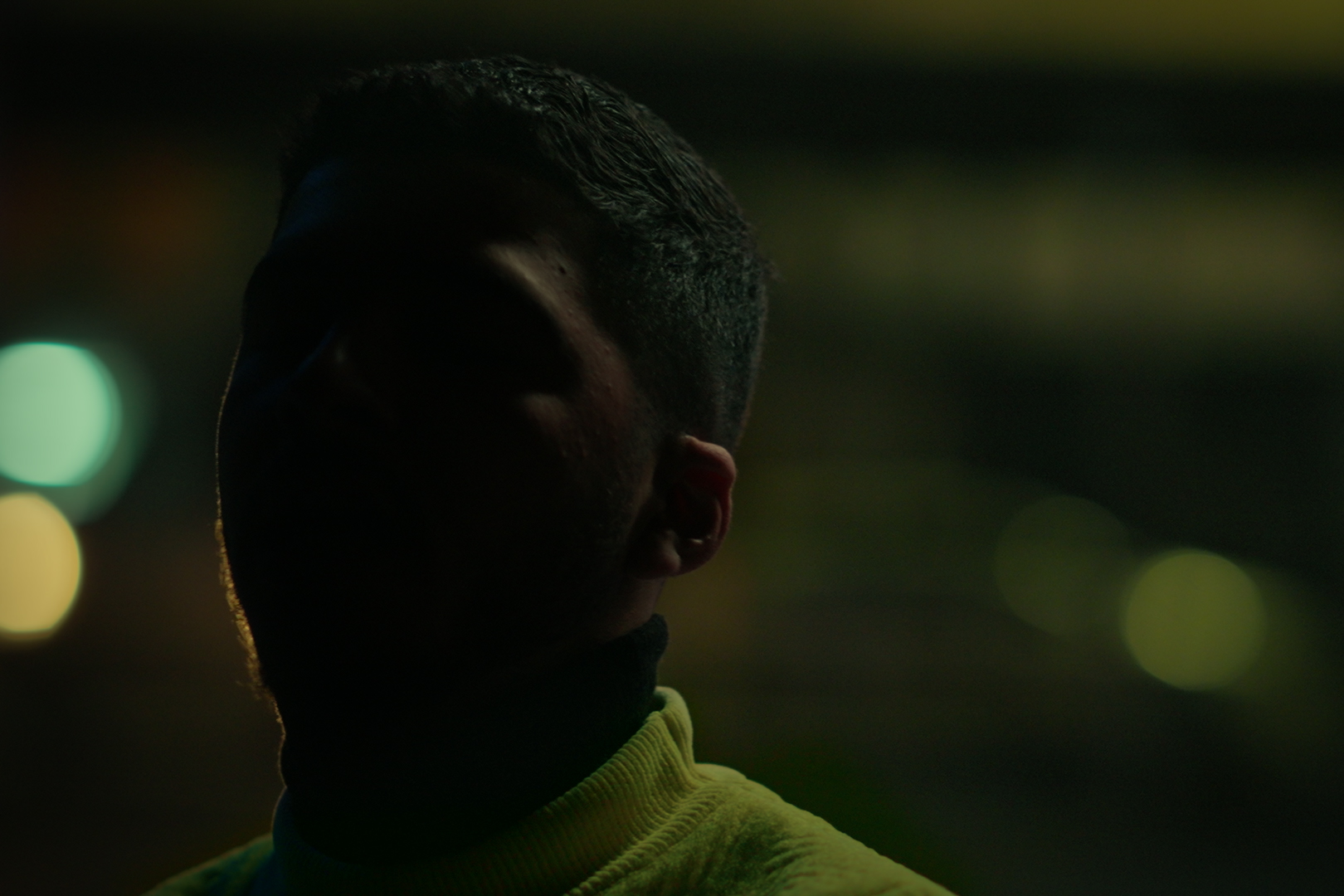
Job, the second Palestinian survivor identified in Bodies of Evidence: Israel’s Darkest Weapon by a pseudonym, his face and voice concealed for his safety, points to how the dogs attacked under verbal instructions from soldiers. “I don’t think it’s a dog. It’s a human being.”
“They unleash the dogs. There’s no way around it; the dog must pass. He [the dog] will either rape you, or he will smash your head with an iron bar in his mouth,” he says. The dog, he tells Al Jazeera, “doesn’t just bark and howl”, it acts on signals from its handler. “The word you give the dog, it will do.”
The allegation that dogs were used in sexual assault has recently entered wider international debate after new reporting on sexual abuse of Palestinian detainees triggered a barrage of Israeli denials and attacks by pro-Israeli commentators. Israeli officials and allied media figures have called the reporting a “blood libel”, focusing especially on claims involving dogs.
But for Palestinians and the organisations that document prisoner abuse, these allegations did not appear overnight.
Francesca Albanese, the UN’s special rapporteur on human rights in the occupied Palestinian territory, says in an interview for the film that Palestinians have long been subjected to “the use of animals, the use of dogs to attack, to abuse, and even to inflict sexual abuse”.
“These are facts that were known,” she says. Albanese describes a broader pattern reported by prisoners: “Shackling until bleeding, beating, dragging, starvation, exposure to cold, denial of medical care, attacks by dogs, solitary confinement, sexual abuse, forced stripping, and threats to rape and kill family members.”
Khraim, the advocacy partner at WCLAC, said sexual humiliation and threats were used to produce silence. Men and boys often do not speak because of stigma. Women fear social punishment. Children carry shame that they do not have the language to explain.
That’s why the testimonies shared by survivors with Al Jazeera matter. These are not lawsuits. They are damaged memories, communicated through fear, anger and survival.
Sde Teiman, the Israeli military detention facility in the Naqab/Negev desert, became a symbol of Israel’s post-October 7 detention regime after reports of blindfolded and shackled Palestinians, medical neglect, torture allegations and sexual abuse emerged.
Five Israeli soldiers were accused of sexually abusing a Palestinian detainee at Sde Teiman. In March 2026, Israeli authorities dropped the charges. But Bodies of Evidence: Israel’s Darkest Weapon shows that Sde Teiman is no exception.
Palestinian detainees can pass through multiple systems: military detention, intelligence interrogation, police custody, military courts and formal prisons. The Israel Prison Service and police fall under the Ministry of National Security, headed by Itamar Ben-Gvir. Military detention sites such as Sde Teiman fall under the Israeli military chain of command. The Shin Bet, Israel’s internal security agency, operates under the authority of the Prime Minister’s Office. The Ministry of Justice oversees state legal policy, prosecutions and government legal defence. Responsibility is fragmented.
A prisoner may be arrested by soldiers, interrog
📰 மூல செய்தி (Source): https://www.aljazeera.com/features/2026/6/9/shackled-bleeding-raped-palestinians-describe-abuse-in-israels-prisons?traffic_source=rss












 உலகம்9 years ago