Connect with us

முக்கியச் செய்திகள்

Epstein housed victims in London flats after Met chose not to investigate him, BBC reveals

Published

on

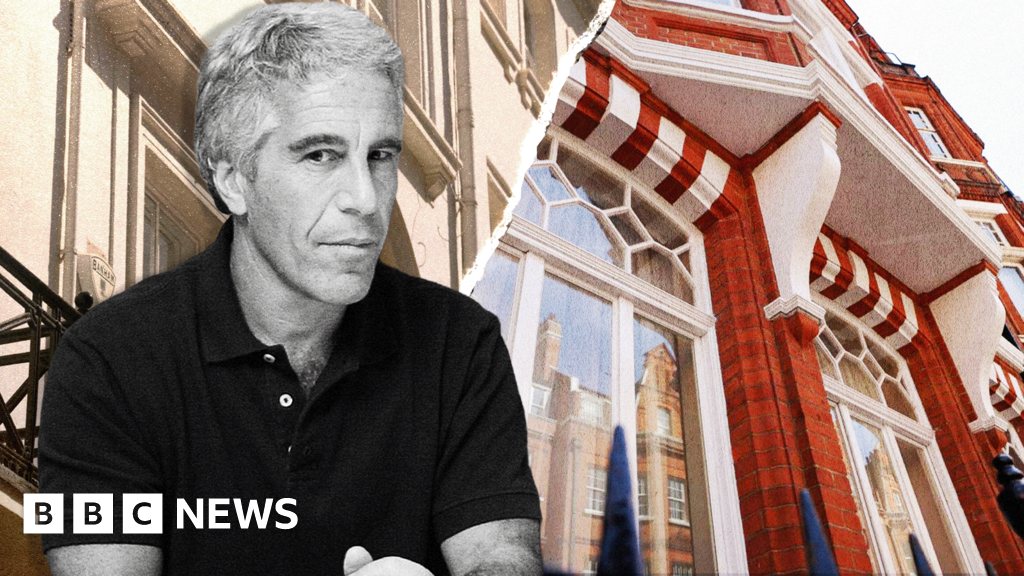
Sex-criminal financier Jeffrey Epstein housed women who say he abused them in several London flats in the years after UK police decided not to investigate him, the BBC can reveal.

We found evidence of four flats, rented in the affluent borough of Kensington and Chelsea, in receipts, emails and bank records contained within the Epstein files. Six of the women housed in them have since come forward as victims of Epstein's abuse.

Many of them – from Russia, eastern Europe and elsewhere – were brought to the UK after the Metropolitan Police decided not to investigate Virginia Giuffre's 2015 allegation that she had been a victim of international trafficking to London.

The Met said it followed "reasonable lines of inquiry" at the time, interviewing Giuffre on multiple occasions following her complaint and co-operating with US investigators.

Some of the women housed in the London flats were coerced by Epstein to recruit others into his sex trafficking scheme, as well as regularly transported to Paris by Eurostar to visit him, according to emails in the files.

The BBC searched through millions of pages of records gathered by the US Department of Justice in its investigation of the disgraced financier, and released as part of the Epstein files, in order to piece together the most detailed picture yet of his operation in the UK.

It shows how the operation grew more extensive than was previously known – with more victims, established infrastructure such as housing, and frequent transportation of women across borders – right up to Epstein's death, despite warnings to UK police.

We are not publishing any details about the young women to protect their anonymity as the victims of sexual abuse.

Our investigation found British police had other opportunities to open an inquiry into the disgraced financier's activities in the UK, in addition to Giuffre's complaint that she had been trafficked and forced to have sex with Andrew Mountbatten-Windsor in 2001. Mountbatten-Windsor has always denied any wrongdoing.

By early 2020, a second woman had complained to the Met that she had been abused by Epstein in the UK, the BBC has established. It is not clear whether this complaint was acted on.

British authorities also knew in 2020, soon after Epstein died in jail awaiting trial, that the financier had rented at least one of the flats identified by the BBC, according to a document in the files.

Tessa Gregory, a human rights lawyer with Leigh Day, told the BBC she was "staggered" no UK police investigation had ever been launched, after we showed her examples of our findings.

"Where there are credible allegations of human trafficking, the UK state, even if no victims come forward, has a positive legal obligation to conduct a prompt, effective and independent investigation," she said.

The Met said: "We recognise our duties within Article 4 of the European Convention on Human Rights and are confident these were fulfilled." Article 4 is the right to freedom from slavery and forced labour.

Kevin Hyland, a former senior detective with the Met Police who was the UK's first Independent Anti-Slavery Commissioner, told us police missed opportunities to investigate the convicted sex offender.

"People are outraged that somebody came forward and said, 'I was trafficked by this man', and yet he was just allowed to carry on. Who in the police made that decision?" he said.

Hyland said that based on his experience investigating human trafficking, officers could have worked with travel companies to keep tabs on the credit cards and IP addresses – the unique identifiers assigned to devices using the internet – of people who frequently booked tickets for groups of single women.

"Epstein's dead. But it's clear that he wasn't acting alone. Who else was involved and what offences could they have committed? And of course, importantly, is this still going on with others?" he said.

Just a few months before his arrest on charges of trafficking children for sex, and his death in jail awaiting trial, our investigation found that Epstein was messaging a young Russian woman on Skype who was living in one of the London flats he paid for.

He sent her an image which is not included in the files but which seems to have been a picture of himself. The woman jokingly asked who the good-looking man in the picture was.

Epstein said it was her landlord – but said that unlike most landlords, he pays rather than collecting the rent.

The woman later went on to ask Epstein for money to pay for her English classes in London and to help buy cutlery and furniture for the apartment. She also asked for visa advice for another Russian woman who was due to come and stay.

The 2019 exchange reveals how Epstein remained in touch with the women he housed in London right up until his arrest and death in jail, and how involved he was in the detail of their lives.

In contrast to the photos released in the Epstein files, which are often decades old, we found the women housed by him in London pictured in Instagram posts, on Russian social media and in high-end fashion shoots.

The exterior of the flat mentioned in the Skype chat is pictured in one of these photographs. In the background a doorbell with the name of the building is visible, which enabled us to find the tenancy agreement in the Epstein files.

A shipment of gifts recorded in the files led us to another apartment. Details of yet another, rented in 2018 and 2019, were buried in a 10,000-page credit card bill. It also recorded the daily living expenses of the woman staying there, who had her own card on Epstein's account with a $2,000 (£1,477) monthly allowance.

The fourth flat was mentioned in emails between Epstein, one of the women and the letting agents.

Despite their desirable addresses, the flats were sometimes crowded, with the women having to sleep on sofas. On some occasions, Epstein responded angrily when the women complained about the living conditions, emails show.

In one case, Epstein said he would pay a woman's rent as a "gift" if she worked for him for six months, but otherwise he would consider it a loan that needed to be repaid. In another message, Epstein swore at the woman, called her "rude" and said she had "disgusting behaviour", telling her she was a "brat who has yet to accept responsibility".

Other women living in the flats were coerced to "work" for him to build his sex-trafficking scheme by recruiting other women, we found.

One sent Epstein pictures of "cute" models she had just met in London. Epstein indicated he approved of their appearance and the woman said she would check if they were suitable for him. It is not clear whether any of these models were eventually introduced to Epstein.

Epstein also paid for at least five women – many of whom were in the UK on student visas – to study in London.

The files show receipts of payments for course fees at English language colleges and discussions with a woman about one of Epstein's companies acting as her financial sponsor for a university-level art course.

Epstein used the Eurostar to move some of these women and others in and out of the UK uninterrupted up until his arrest by US authorities in July 2019. The number of tickets he purchased for young women steadily increased in the final years of his life.

We found Epstein purchased at least 53 tickets to transport women between France and England from 2011 to 2019, sometimes taking advantage of Eurostar's reduced "youth" fares for under-25s.

Receipts in the files show 33 of the tickets were purchased after Giuffre made her 2015 complaint of trafficking. In the last six months of his life, Epstein moved women in and out of London by Eurostar 10 times – with one woman being transported to London just 16 days before his arrest.

Some of the women transported by Eurostar later came forward as victims of Epstein, their lawyers confirmed to us.

In February, the Paris prosecutor's office opened two investigations into Epstein'

📰 மூல செய்தி (Source): https://www.bbc.com/news/articles/cn08j2g9ze9o?at_medium=RSS&at_campaign=rss

Continue Reading
Click to comment

Leave a Reply

Your email address will not be published. Required fields are marked *

முக்கியச் செய்திகள்

Man becomes seventh Millionaire jackpot winner

Published

on

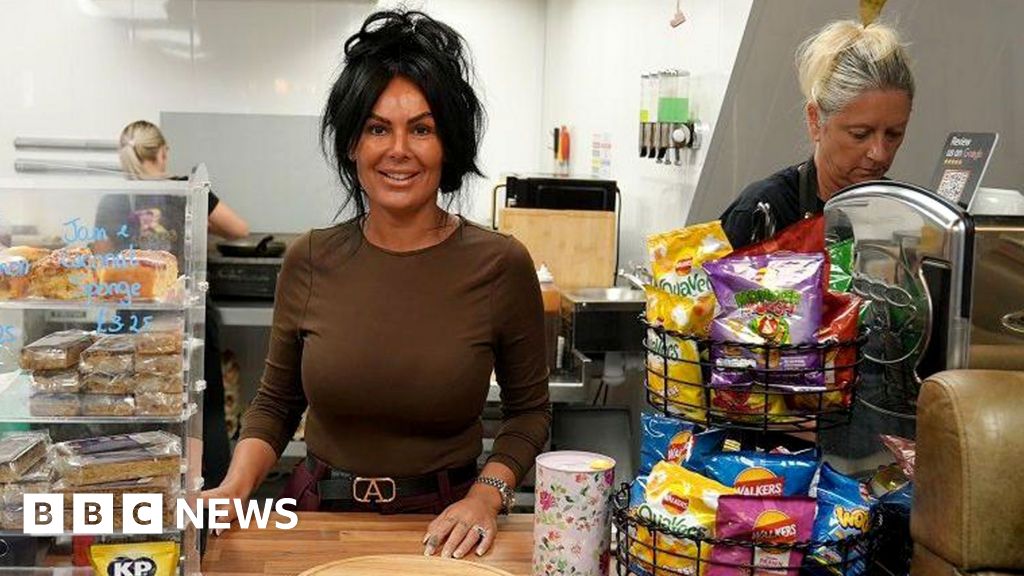
A retired IT analyst has become the seventh person to win the £1m jackpot on Who Wants To Be A Millionaire?

Roman Dubowski said winning the ITV game show, which is hosted by Jeremy Clarkson, was "unreal", adding that he "had to have a cup of tea" afterwards and "let it sink in".

The contestant, who does quizzing as a hobby, is planning on buying a new house with his prize money and also hopes to travel, including trips to New Zealand and South America.

Dubowski, from Stockport, said that when he saw the final question he thought: "I think I know this straight away".

Dubowski correctly answered the final 15th question, which was: "Used since 1876, which trademarked logo is described in the James Joyce novel Ulysses and depicted in works by Manet and Picasso?"

The options were Bass Ale, The Famous Grouse, Coca-Cola and Stella Artois.

Dubowski said: "When it came up… I thought, I think I know this straight away."

He explained that he had seen the Manet painting – called A Bar at the Folies-Bergere – at The Courtauld Gallery in London.

He said he could "distinctly" remember seeing a red triangle on the painting, which "has always been the symbol of Bass beer".

The contestant decided to use the 50/50 lifeline to answer the question and said that when the answers were narrowed down to Coca-Cola and Bass Ale, he thought "well I may as well go for it".

Dubowski, who is originally from Manchester, correctly answered Bass Ale.

Asked to describe how he felt when he answered that final question correctly, he said: "It felt unreal… it didn't feel like the real world, almost, this isn't where I expected to be.

Dubowski said he had experienced a "strange bit of self-doubt" earlier after he was asked what was mixed with vinegar, mustard and oil to make a basic mayonnaise.

The possible answers were plain flour, salted butter, egg yolk and double cream.

He said he made the decision to ask the audience and 93% had chosen egg yolk, and he thought he "might go and walk away with nothing" at that point.

Asked how he celebrated the win, he said: "I did sort of go home quietly, to be honest, I didn't get drunk – I had to have a cup of tea.

"I think it was just sitting in a quiet room and letting it all sink in, and thinking about what happened in the previous 24 hours."

He said the first person he told was his sister, who was "absolutely thrilled" for him and he said he would be giving some of his prize money to his niece and nephew.

Dubowski had applied to go on the show when Chris Tarrant was host but "didn't get a response", and he had applied again after lockdown but was not successful.

"Then in October last year, I suddenly saw an advertisement, or something online saying they're recruiting for new competitors again," he said.

"I thought oh, might as well try again, got nothing to lose, and just from that sort of casual opening, it ended up with the top prize.

Other winners include: Judith Keppel (2000), David Edwards (2001), Robert Brydges (2001), Pat Gibson (2004) and Ingram Wilcox (2006).

Listen to the best of BBC Radio Manchester on Sounds and follow BBC Manchester on Facebook, X, and Instagram. You can also send story ideas via Whatsapp to 0808 100 2230.

📰 மூல செய்தி (Source): https://www.bbc.com/news/articles/cgldlnrdkpro?at_medium=RSS&at_campaign=rss
Continue Reading

முக்கியச் செய்திகள்

Israeli strikes kill 14 in Lebanon amid ongoing ceasefire

Published

on

Lebanon's Ministry of Health has said Israeli strikes on the country on Sunday killed 14 people, including two children and two women, and injured 37.

An Israel Defense Forces (IDF) spokesperson had earlier issued evacuation warnings for several villages in southern Lebanon, writing that residents "must evacuate" immediately, and that staying would be "endangering their life".

The IDF later said it had carried out "artillery and aerial strikes" targeting Hezbollah operatives and sites in southern Lebanon that it claims were used "to advance attacks against IDF soldiers".

It also said a 19-year-old IDF soldier had been killed and six others injured by a Hezbollah drone attack in Lebanon.

Separately, Hezbollah launched three drones towards Israel, the IDF reported, which it said were intercepted by Israel's air force before they crossed the border.

The two countries remain under a precarious semi-permanent ceasefire, which took effect on 16 April and was extended by three weeks on Thursday last week.

Under the deal, Israel retains its "right to take all necessary measures in self-defence, at any time, against planned, imminent, or ongoing attacks".

Speaking at a government meeting, Israeli Prime Minister Benjamin Netanyahu said the IDF is "active, and it is acting with force" in Lebanon, stating Hezbollah's actions are "disintegrating the ceasefire".

"We are acting vigorously according to the rules we agreed upon with the United States, and incidentally, with Lebanon as well. This means freedom of action, not only to respond to attacks, which is obvious, but to thwart immediate threats and also to neutralise emerging threats," he said.

Sunday's activity came after the IDF said it struck Hezbollah "military structures" overnight, and accused the Iran-backed group of launching two explosive unmanned aerial vehicles (UAVs) towards Israel.

Both Israel and Hezbollah have reported attacks from one another since the ceasefire came into place, accusing each other of violating the agreement.

On Saturday, Netanyahu ordered the Israeli military to "vigorously attack Hezbollah targets" in Lebanon.

At least six people were killed in strikes on southern Lebanon on the same day.

Meanwhile Iran's Foreign Minister, Abbas Araghchi, returned to Pakistan on Sunday to set out Tehran's framework for resuming peace negotiations with Washington.

Last week, US President Donald Trump extended a ceasefire between the countries that had been due to expire on 22 April to allow talks to continue.

Araghchi was also in Islamabad on Saturday as part of a regional tour where he held talks with mediator Pakistan. Shortly after Araghchi left for Oman, Trump announced he was cancelling a planned trip by special envoy Steve Witkoff and his son-in-law Jared Kushner to Islamabad.

The White House had said that Iran had wanted to talk, but Tehran insisted that no direct negotiations with the US were ever scheduled.

Araghchi, who on Saturday said Tehran had "yet to see" if Washington was serious about diplomacy, is expected to meet Russian President Vladimir Putin in Moscow on Monday.

📰 மூல செய்தி (Source): https://www.bbc.com/news/articles/c4gxgv8j7zlo?at_medium=RSS&at_campaign=rss

Continue Reading

முக்கியச் செய்திகள்

Korda returns to world number one with Chevron win

Published

on

Nelly Korda has won 17 tournaments on the LPGA Tour

-18 N Korda (US); -13 P Tavatanakit (Tha), R Yin (Chi); -12 I Yoon (Kor), Y Liu (Chi)

Selected others: -6 L Woad (Eng); -5 C Hull (Eng)

Nelly Korda returned to the top of the world rankings after claiming a dominant five-shot victory in the LPGA Chevron Championship.

It is Korda's second Chevron title in three seasons and ensures she leapfrogs Jeeno Thitikul in the rankings, after the Thai missed the cut.

The American equalled the event's 54-hole scoring record on Saturday but fell two shots short of the tournament record of 20 under par.

"That was a hard weekend," Korda told NBC Sports.

"Honestly, having that big of a lead, it's not easy. It was definitely one of the hardest things I've had to do mentally.

"I have an amazing support system. An amazing family who are right behind me. An amazing caddie who is on the bag and I'm just happy to get it done."

Korda takes her tally of majors to three, after also winning the Women's PGA Championship in 2021.

England's Hamilton wins first European Tour title

Korda, 27, made a positive start to the day, with two birdies on the first three holes, but two bogeys on the back nine meant the record slipped away.

After rounds of 65 on Thursday and Friday, Korda followed with successive rounds of 70 over the weekend at Houston's Memorial Park.

Thailand's Patty Tavatanakit began the day five shots adrift in second but was unable to reduce the deficit, having also ended her tournament with a two-under-par 70.

📰 மூல செய்தி (Source): https://www.bbc.com/sport/golf/articles/c9qdqn18741o?at_medium=RSS&at_campaign=rss

Continue Reading

Trending

Copyright © 2024 by 7Tamil Media, All rights reserved.