Connect with us

முக்கியச் செய்திகள்

The Chinese sports brand taking on Nike and Adidas

Published

on

China's economy was just starting to open up in the late 1980s when a determined high school dropout made his way to Beijing with 600 pairs of shoes.

Ding Shizhong had them made in a relative's factory and now he was going to sell them. The money he earned paid for his first workshop where he began making footwear for other companies.

The 17-year-old was one of China's many newly minted entrepreneurs as capitalism took off under the watchful eye of its Communist Party rulers.

But, as it turns out, Ding had much bigger plans.

His business has since grown into a sportswear powerhouse called Anta, which has been building a stable of international brands, including Arc'teryx and Salomon. Most recently it bought a stake in Puma.

Now it is trying to take on the likes of Nike and Adidas, a goal that Ding spelled out in 2005: "We don't want to be the Nike of China, but the Anta of the world."

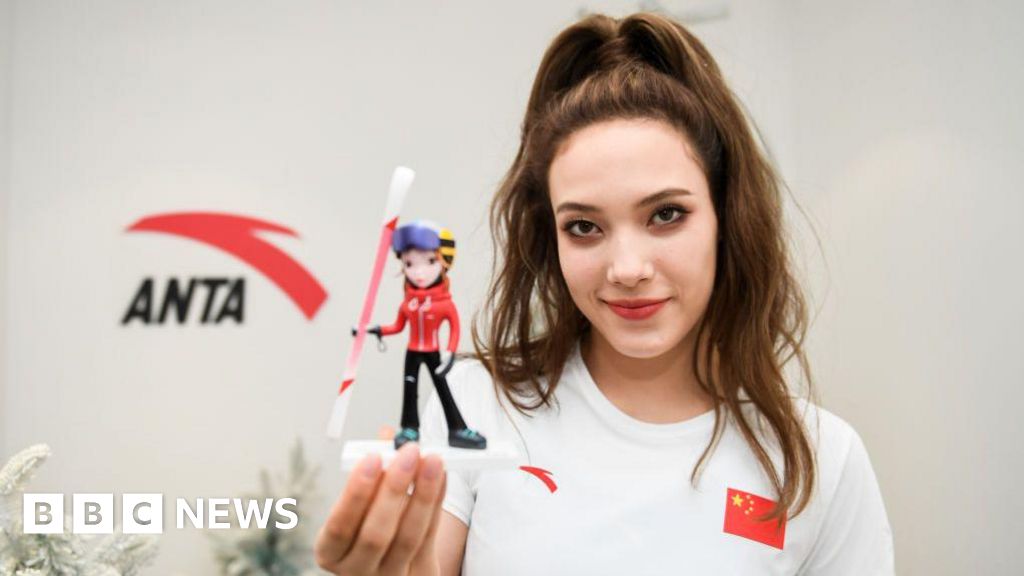
Anta may not be a household name in the West yet, but it has more than 10,000 shops in China and sponsors top athletes like freestyle skier Eileen Gu.

In February, it opened its first US outlet – a flagship store in Los Angeles' upscale Beverly Hills area.

The company's global push, which comes as Donald Trump aims to bring factory jobs back to the US with tariffs, highlights just how essential and competitive Chinese supply chains have become for manufacturing.

The rise of Anta – which means "safe steps" – is not exactly unique. Decades of being the world's factory have given several ambitious Chinese companies the opportunity to take on the very firms they once counted as customers.

Founded in 1991, Anta began far from the glitz and the glamour of Beverly Hills as a small manufacturer in Jinjiang city in the south-eastern province of Fujian.

Jinjiang grew rapidly from a quiet agricultural county into the "shoe capital" of the world as part of the government's plan to create specific industries in different provinces.

Soon, there was an influx of investment from sneaker giants who were in search of overseas factories that could help bring down their production costs.

Several clusters focusing on different sorts of footwear emerged in Jinjiang and neighbouring cities along the eastern coast, each with its own specialised supply chain.

At the Jinjiang hub's core lies Chendai town, an area of around 40 sq km (15.4 sq miles) that is home to thousands of factories and suppliers. The district helped cement the city's reputation making shoes for global brands such as Nike and Adidas.

Each hub brought together suppliers of laces, soles and fabric, as well as logistics firms that help to quickly turn designs into store-ready products and ship them out.

By 2005, Fujian alone accounted for nearly a fifth of the world's shoes, according to estimates by the UN.

As much as a third of Jinjiang's workers are still employed by one of thousands of shoe-makers in the city, which is among the highest-earning economic districts in China.

Something similar has played out in various parts of China – Jinjiang was just one of many manufacturing clusters on the eastern coast alone. The others made clothes or electronics.

This level of specialisation in manufacturing was unseen elsewhere in the world at the time, says University of Bath associate professor Fei Qin, who studied factories across eastern China in the 2000s.

As foreign customers flocked to strike deals with these factories, the country reaped more than income.

"They learned not only how to make more, but how to produce better, faster and more consistently," Fei adds.

It was along these streets that Anta grew, making shoes in bulk and cheaply for global brands.

It established a vast distribution network to retailers across China, which is crucial for manufacturers seeking to expand.

At the same time, Anta was slowly getting its name out domestically, opening new shops and partnering with major sporting events, including national basketball and table tennis competitions.

Firms like Anta know that there is more value in being a known brand rather than a subcontractor, Fei says.

In 2007, Anta listed on the Hong Kong Stock Exchange, raising around HKD3.5bn (£330m; $450m) – a record then for a Chinese sports company.

Branding consultant Wei Kan, who worked with Converse and Nike in China, says Anta had stood out to him because of its fully-fledged production hub that allowed it to design and sell shoes faster than its rivals.

It was also among the few Chinese firms that targeted the same buyers as big Western brands, Kan says.

Companies like Anta, which start off making goods for global brands, gradually learn the fundamentals of managing the business, do well in China and "naturally go on to bigger things", Kan adds.

There are many others such as technology firm Xiaomi, which began as a software developer customising Android-based systems, before making its own phones, electronics and now, electric vehicles (EVs).

Likewise, DJI made gear for cameras and drone components before it became an international drone maker in its own right.

The best-known example is perhaps BYD, once a battery-maker for EV pioneers like Tesla and now the world's top manufacturer for the sector.

"Each of these firms are now giants in their fields," Kan says.

It runs more than 12,000 shops in China. The company also has more than 460 outlets outside of the country, with plans to have 1,000 shops operating in South East Asia alone in the next three years.

But Nike which still has the biggest market share in sports footwear only has 1,000 shops across the world.

Chinese firms have been known to expand quickly within the country, before venturing abroad where they encounter more challenges while scaling up.

For one there is a perception challenge. Chinese products are often viewed as cheap, low-quality or copycat goods.

Anta has tried to beat that with acquisitions, as part of an approach it calls a "multi-brand strategy". The first big move was buying the rights to Fila in China in 2009 and turning the Italy-founded brand into a major earner for its business, says Elisa Harca from Chinese marketing agency Red Ant Asia.

In 2019, Anta bought a controlling stake in Finnish athletics brand Amer Sports. The deal gave Anta control of Amer's companies, which included upmarket brands Arc'teryx and Salomon.

Anta also owns Wilson, the US maker of tennis rackets and balls used by the National Basketball Association. And this year, it bought a 29% stake in Puma, pledging to help the German firm grow in China.

These are moves that help Anta avoid "forcing" its goods into every market and instead use its Western brands as a gateway, says sports business analyst Rufio Zhu from marketing firm IMG.

That way Anta can reach buyers who may be wary of a "made in China" brand, Zhu says.

Celebrity sponsorships are a key commodity for a truly global brand. Nike, for instance, had its groundbreaking deal with Michael Jordan in the 1980s.

Anta has signed basketball players like Klay Thompson and Kyrie Irving but deals of the kind that earned Nike or Adidas their brand are yet to happen.

And being a Chinese brand comes with hurdles given Beijing's rocky relationship with the West and especially the US.

American-born skier Eileen Gu – an Anta brand ambassador – proved a polarising figure after her choice to represent China over the US at the OIympics came under scrutiny.

Companies that grow big need to toe the line between China and the West, Kan says. "Brands like Anta need to be ready for it."

Anta's rise comes as rivals like Nike and Adidas face their own challenges globally and in China.

US tariffs have hit their earnings given they import goods made in Asia. Nike is also fighting to revive sales since its e‑commerce push backfired after Covid-19, and demand in China has slowed as well because of low consumption.

Their struggles put Anta in a favourable position abroad, especially given consumers' gowing appetite for other brands, says sp

📰 மூல செய்தி (Source): https://www.bbc.com/news/articles/c87r2d850q4o?at_medium=RSS&at_campaign=rss

முக்கியச் செய்திகள்

Man becomes seventh Millionaire jackpot winner

Published

on

A retired IT analyst has become the seventh person to win the £1m jackpot on Who Wants To Be A Millionaire?

Roman Dubowski said winning the ITV game show, which is hosted by Jeremy Clarkson, was "unreal", adding that he "had to have a cup of tea" afterwards and "let it sink in".

The contestant, who does quizzing as a hobby, is planning on buying a new house with his prize money and also hopes to travel, including trips to New Zealand and South America.

Dubowski, from Stockport, said that when he saw the final question he thought: "I think I know this straight away".

Dubowski correctly answered the final 15th question, which was: "Used since 1876, which trademarked logo is described in the James Joyce novel Ulysses and depicted in works by Manet and Picasso?"

The options were Bass Ale, The Famous Grouse, Coca-Cola and Stella Artois.

Dubowski said: "When it came up… I thought, I think I know this straight away."

He explained that he had seen the Manet painting – called A Bar at the Folies-Bergere – at The Courtauld Gallery in London.

He said he could "distinctly" remember seeing a red triangle on the painting, which "has always been the symbol of Bass beer".

The contestant decided to use the 50/50 lifeline to answer the question and said that when the answers were narrowed down to Coca-Cola and Bass Ale, he thought "well I may as well go for it".

Dubowski, who is originally from Manchester, correctly answered Bass Ale.

Asked to describe how he felt when he answered that final question correctly, he said: "It felt unreal… it didn't feel like the real world, almost, this isn't where I expected to be.

Dubowski said he had experienced a "strange bit of self-doubt" earlier after he was asked what was mixed with vinegar, mustard and oil to make a basic mayonnaise.

The possible answers were plain flour, salted butter, egg yolk and double cream.

He said he made the decision to ask the audience and 93% had chosen egg yolk, and he thought he "might go and walk away with nothing" at that point.

Asked how he celebrated the win, he said: "I did sort of go home quietly, to be honest, I didn't get drunk – I had to have a cup of tea.

"I think it was just sitting in a quiet room and letting it all sink in, and thinking about what happened in the previous 24 hours."

He said the first person he told was his sister, who was "absolutely thrilled" for him and he said he would be giving some of his prize money to his niece and nephew.

Dubowski had applied to go on the show when Chris Tarrant was host but "didn't get a response", and he had applied again after lockdown but was not successful.

"Then in October last year, I suddenly saw an advertisement, or something online saying they're recruiting for new competitors again," he said.

"I thought oh, might as well try again, got nothing to lose, and just from that sort of casual opening, it ended up with the top prize.

Other winners include: Judith Keppel (2000), David Edwards (2001), Robert Brydges (2001), Pat Gibson (2004) and Ingram Wilcox (2006).

Listen to the best of BBC Radio Manchester on Sounds and follow BBC Manchester on Facebook, X, and Instagram. You can also send story ideas via Whatsapp to 0808 100 2230.

📰 மூல செய்தி (Source): https://www.bbc.com/news/articles/cgldlnrdkpro?at_medium=RSS&at_campaign=rss
Continue Reading

முக்கியச் செய்திகள்

Israeli strikes kill 14 in Lebanon amid ongoing ceasefire

Published

on

Lebanon's Ministry of Health has said Israeli strikes on the country on Sunday killed 14 people, including two children and two women, and injured 37.

An Israel Defense Forces (IDF) spokesperson had earlier issued evacuation warnings for several villages in southern Lebanon, writing that residents "must evacuate" immediately, and that staying would be "endangering their life".

The IDF later said it had carried out "artillery and aerial strikes" targeting Hezbollah operatives and sites in southern Lebanon that it claims were used "to advance attacks against IDF soldiers".

It also said a 19-year-old IDF soldier had been killed and six others injured by a Hezbollah drone attack in Lebanon.

Separately, Hezbollah launched three drones towards Israel, the IDF reported, which it said were intercepted by Israel's air force before they crossed the border.

The two countries remain under a precarious semi-permanent ceasefire, which took effect on 16 April and was extended by three weeks on Thursday last week.

Under the deal, Israel retains its "right to take all necessary measures in self-defence, at any time, against planned, imminent, or ongoing attacks".

Speaking at a government meeting, Israeli Prime Minister Benjamin Netanyahu said the IDF is "active, and it is acting with force" in Lebanon, stating Hezbollah's actions are "disintegrating the ceasefire".

"We are acting vigorously according to the rules we agreed upon with the United States, and incidentally, with Lebanon as well. This means freedom of action, not only to respond to attacks, which is obvious, but to thwart immediate threats and also to neutralise emerging threats," he said.

Sunday's activity came after the IDF said it struck Hezbollah "military structures" overnight, and accused the Iran-backed group of launching two explosive unmanned aerial vehicles (UAVs) towards Israel.

Both Israel and Hezbollah have reported attacks from one another since the ceasefire came into place, accusing each other of violating the agreement.

On Saturday, Netanyahu ordered the Israeli military to "vigorously attack Hezbollah targets" in Lebanon.

At least six people were killed in strikes on southern Lebanon on the same day.

Meanwhile Iran's Foreign Minister, Abbas Araghchi, returned to Pakistan on Sunday to set out Tehran's framework for resuming peace negotiations with Washington.

Last week, US President Donald Trump extended a ceasefire between the countries that had been due to expire on 22 April to allow talks to continue.

Araghchi was also in Islamabad on Saturday as part of a regional tour where he held talks with mediator Pakistan. Shortly after Araghchi left for Oman, Trump announced he was cancelling a planned trip by special envoy Steve Witkoff and his son-in-law Jared Kushner to Islamabad.

The White House had said that Iran had wanted to talk, but Tehran insisted that no direct negotiations with the US were ever scheduled.

Araghchi, who on Saturday said Tehran had "yet to see" if Washington was serious about diplomacy, is expected to meet Russian President Vladimir Putin in Moscow on Monday.

📰 மூல செய்தி (Source): https://www.bbc.com/news/articles/c4gxgv8j7zlo?at_medium=RSS&at_campaign=rss

Continue Reading

முக்கியச் செய்திகள்

Korda returns to world number one with Chevron win

Published

on

Nelly Korda has won 17 tournaments on the LPGA Tour

-18 N Korda (US); -13 P Tavatanakit (Tha), R Yin (Chi); -12 I Yoon (Kor), Y Liu (Chi)

Selected others: -6 L Woad (Eng); -5 C Hull (Eng)

Nelly Korda returned to the top of the world rankings after claiming a dominant five-shot victory in the LPGA Chevron Championship.

It is Korda's second Chevron title in three seasons and ensures she leapfrogs Jeeno Thitikul in the rankings, after the Thai missed the cut.

The American equalled the event's 54-hole scoring record on Saturday but fell two shots short of the tournament record of 20 under par.

"That was a hard weekend," Korda told NBC Sports.

"Honestly, having that big of a lead, it's not easy. It was definitely one of the hardest things I've had to do mentally.

"I have an amazing support system. An amazing family who are right behind me. An amazing caddie who is on the bag and I'm just happy to get it done."

Korda takes her tally of majors to three, after also winning the Women's PGA Championship in 2021.

England's Hamilton wins first European Tour title

Korda, 27, made a positive start to the day, with two birdies on the first three holes, but two bogeys on the back nine meant the record slipped away.

After rounds of 65 on Thursday and Friday, Korda followed with successive rounds of 70 over the weekend at Houston's Memorial Park.

Thailand's Patty Tavatanakit began the day five shots adrift in second but was unable to reduce the deficit, having also ended her tournament with a two-under-par 70.

📰 மூல செய்தி (Source): https://www.bbc.com/sport/golf/articles/c9qdqn18741o?at_medium=RSS&at_campaign=rss
Continue Reading

Trending

Copyright © 2024 by 7Tamil Media, All rights reserved.