Connect with us

உலகம்

What is Hindutva, and what are the roots of this political movement?

Published

on

Hindutva is very different from Hinduism. One is a 20th century majoritarian movement, the other an ancient faith.

On May 14, the high court in the central Indian state of Madhya Pradesh ruled that the centuries-old Kamal Maula mosque in the city of Dhar was actually a temple dedicated to a Hindu goddess. Two days later, saffron flags associated with Hindu far-right groups were all over the site, with supporters celebrating and filming rituals that were carried out.

The Kamal Maula mosque, also known as the Bhojshala complex, has been disputed for decades. And such claims are not unique to this mosque. Far-right Hindutva activists have made similar claims – that a given mosque was built atop a temple – across the country, emboldened by Prime Minister Narendra Modi’s rise to power in 2014.

Modi is a leader of the Bharatiya Janata Party, which follows an ideology known as Hindutva.

But what is the Hindutva movement, and how did it emerge?

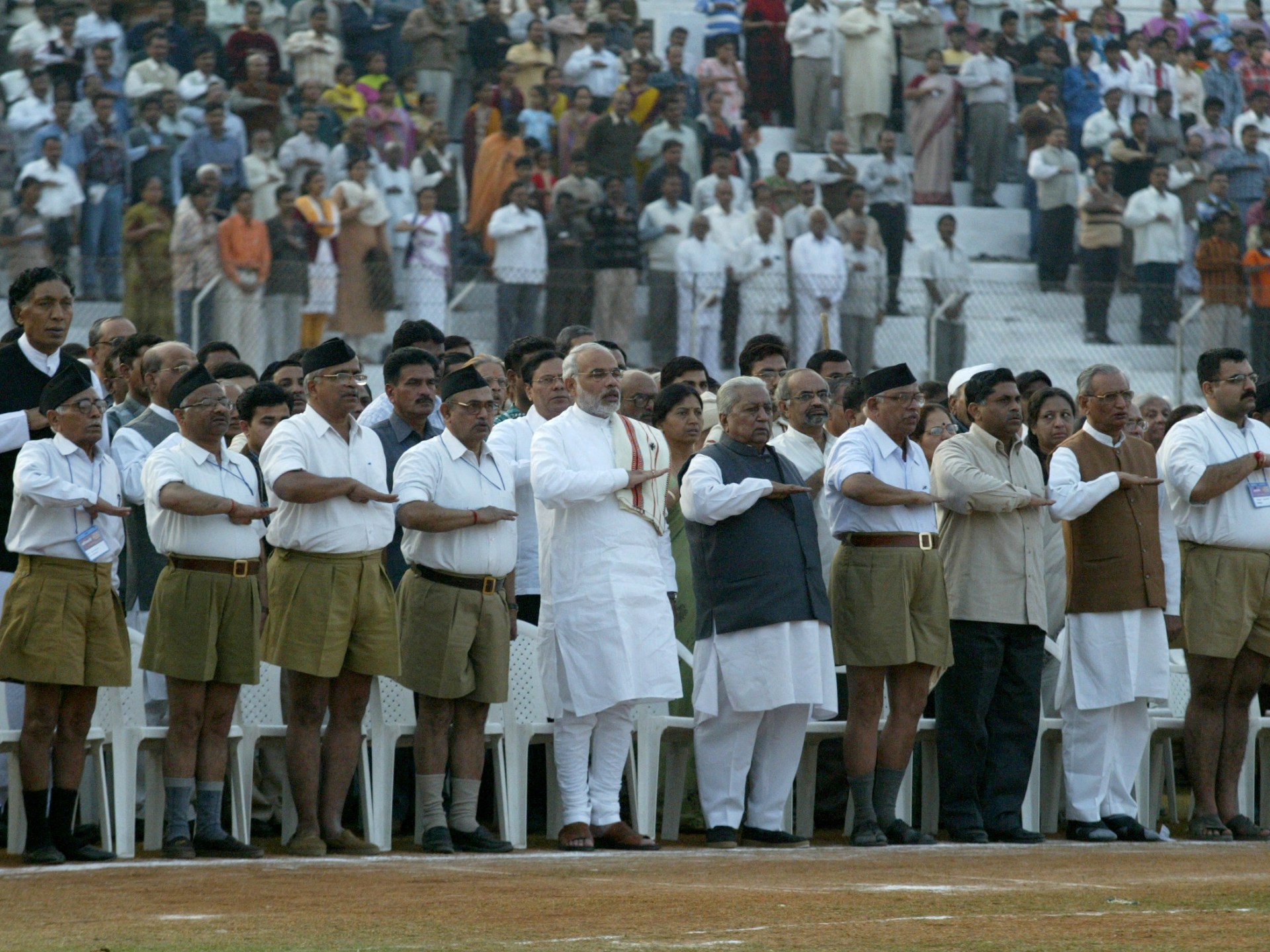
Hindutva is a right-wing political and nationalist ideology that defines the cultural and national identity of India based on a particular interpretation of Hindu values. India is a constitutionally secular state, but advocates of Hindutva want the country to adopt Hinduism as its state religion.

The term Hindutva consists of two linguistic parts: The first is the word “Hindu”, whose origin likely traces back to the Sanskrit word “Sindhu”, the ancient name for the Indus River. With the evolution of linguistic usage, the ancient Persians and others replaced the letter “S” with “H”, and the term “Hindus” came to be used for the inhabitants living beyond the river.

The second part is the Sanskrit suffix “-tva”, which indicates essence or being, meaning that the term literally denotes “Hindu essence” or “Hindu identity or being”.

Hindu nationalism emerged in protest against British colonial notions of the religion, but quickly grew into a majoritarian ideology that viewed the Indian identity through the lens of a specific interpretation of Hinduism.

Its early years coincided with sectarian Hindi-Muslim tensions in the early 20th century under British rule, culminating in the partition of the subcontinent at independence in 1947 and the formation of Pakistan on religious grounds.

Indian freedom fighter and ideologue Vinayak Savarkar coined the term “Hindutva” in his 1923 pamphlet Essentials of Hindutva, presenting a vision of Hindu identity based on the unity of territory, culture, and historical belonging, while considering India as the fatherland and the holy land of Hindus.

Based on this notion, some Hindutva theorists argued that Muslims and Christians do not fully belong to the Indian nation, as their holy places are located outside India – even though India is home to one of the world’s largest Muslim populations, and has more Christians than many European nations such as the United Kingdom.

Savarkar was, and remains, a controversial figure: He infamously wrote letters to the British pleading for his release from a notorious prison in the Andaman Islands.

By 1925, the early Hindutva ideologue Keshav Baliram Hedgewar had founded the Rashtriya Swayamsevak Sangh (RSS) – which loosely translates to National Volunteer Organisation – the mothership of the Hindu majoritarian political movement.

The RSS focused on organising and strengthening the Hindu community through local social and cultural activities. Over time, it expanded to include a network of affiliated institutions and organisations spanning religious activities, education, health, publishing, student politics and even the trade union sector.

Some of its early leaders publicly, in their writings, admired the European fascists and the manner in which they dealt with religious and ethnic minorities.

After India’s independence, the movement faced significant pressure following the assassination of Mahatma Gandhi in 1948: Gandhi’s assassin was a former RSS member. Savarkar, the founder of the Hindutva ideology, was also arrested in connection with the assassination but was eventually acquitted because the prosecution could not present corroborating evidence against him.

Later, the movement shifted towards political action by establishing a party in 1951, which subsequently evolved into the Bharatiya Janata Party (BJP) in 1980.

The party witnessed a remarkable surge in its political influence during the 1980s and 1990s by championing the construction of the Ram Temple in the city of Ayodhya on the site of the Babri Mosque.

In 1992, the demolition of the mosque by activists associated with the RSS and the BJP prompted a widespread wave of sectarian violence. In the wake of that violence, the BJP first came to national power in 1996 as India’s single largest party, but its government collapsed in 13 days after allies it depended on withdrew support. In 1998, it returned to power, but this time lost after 13 months. New elections followed in 1999, and the BJP emerged as the single biggest party again. It led a coalition government for a full five years until 2004, when the Congress party – now India’s largest opposition force – defeated it.

The Congress ruled for a decade until 2014, when Modi stormed to power with the largest mandate any party had received since 1984.

Hindutva ideology posits that Indian identity is fundamentally rooted in Hindu culture and civilisation.

The ideology relies on historical narratives portraying the periods of Islamic and Mughal rule as an era that weakened Hindu heritage, calling for the restoration of Hindu identity and the strengthening of its presence in the public sphere.

Its most prominent ideas include: Rereading history from a Hindu nationalist perspective, viewing India as a sacred civilisational entity, calling for the return of those believed to have Hindu origins to their ancestral religion, and granting national status to symbols such as cows and the Sanskrit language.

Critics differentiate between Hindutva as a nationalist political project and Hinduism as a religion and spiritual philosophy, arguing that the former politicises religion and can contradict values such as tolerance and nonviolence that have long been central tenets of Hinduism, the faith.

Hindutva has gradually transitioned into the political and legislative spheres with the rise of the BJP to power. Its principles have begun to reflect in laws, public policies, and the nature of social debate within the country. Supporters argue that these policies preserve national identity, while critics contend that they undermine religious and cultural pluralism.

The most notable of these measures was the abrogation of Article 370 of the Constitution in 2019, which had granted the Muslim-majority region of Jammu and Kashmir a special autonomous status.

Additionally, the Citizenship Amendment Act (CAA) was passed that year, granting expedited citizenship to certain immigrants from neighbouring countries, excluding Muslims. It officially went into effect in March 2024, accompanied by the National Register of Citizens (NRC), which threatens to strip millions of Muslims of their citizenship and label them as infiltrators.

The impact of this vision has extended to local legislation in certain states, such as tightening restrictions on cow slaughter and enacting laws to regulate religious conversion and interfaith marriages, alongside calls for the implementation of a Uniform Civil Code to replace certain personal status laws for minorities.

Hindutva has also been linked to the emergence of Hindu nationalist groups, such as the Bajrang Dal, which have been implicated in acts of violence and intimidation against Muslims, Christians and marginalised social groups, particularly over issues related to cows or religious conversion.

In January 1999, when the BJP was in power nationally, Bajrang Dal activists burned alive Graham Staines, an Australian Christian missionary, and his two sons, while they were sleeping in their car. And in 2002, while Modi w

📰 மூல செய்தி (Source): https://www.aljazeera.com/news/2026/5/22/what-is-hindutva-and-what-are-the-roots-of-this-political-movement?traffic_source=rss

உலகம்

Hundreds protest Ireland’s ‘George Floyd moment’

Published

on

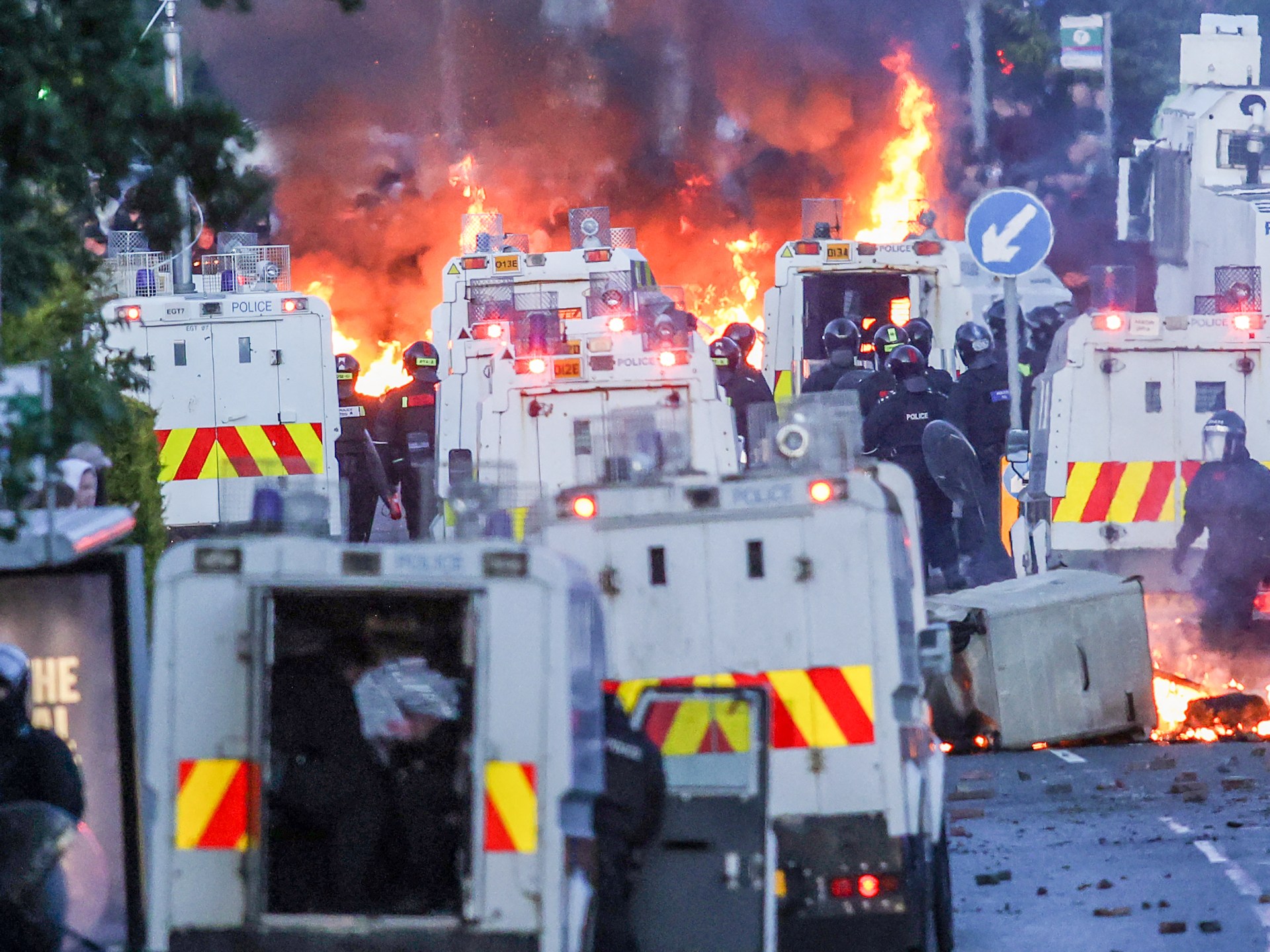
Hundreds protest Ireland’s ‘George Floyd moment’ after death of Congolese man

Hundreds have protested outside the store where a Congolese man in Dublin died after he was restrained by security guards, with video showing one guard kneeling on his neck or head. Protesters say this is Ireland’s ‘George Floyd moment’.

📰 மூல செய்தி (Source): https://www.aljazeera.com/video/newsfeed/2026/5/22/hundreds-protest-irelands-george-floyd?traffic_source=rss

Continue Reading

உலகம்

Man Utd appoint Michael Carrick as permanent manager

Published

on

Carrick steps up from role as interim coach to replace Ruben Amorim on a permanent basis as Manchester United manager.

Michael Carrick never chased the ⁠spotlight as a player, and he has ⁠not suddenly sought it out as a manager.

In a season when Manchester United needed clarity, calm and conviction, it is Carrick – understated, deeply respected and quietly authoritative – who has come to embody all three.

What has followed since his January appointment as interim manager has been more than a managerial bounce, it has ⁠been a transformation. United’s hierarchy took note, awarding him the permanent manager job on Friday.

When Carrick stepped into the role after Ruben Amorim’s sacking, United were drifting, their campaign defined as much by uncertainty as by underachievement.

Within months, they were reborn, climbing to the brink of a third-place Premier League finish and sealing a return to the Champions League with games to spare.

Results ⁠alone tell only part of the story, though they are striking enough. Carrick has won 11 of his 16 league matches in charge, losing only twice, and his team accumulated more league points than any other side during that spell.

United beat Manchester City, Arsenal, Liverpool and Chelsea, rediscovering a competitive edge that had been sorely absent.

“We had two tough fixtures when Michael came in [against Arsenal and City] and I think everyone was probably looking at them thinking ‘Oh no’,” said United centre back Harry Maguire.

“We managed to get six points and from then on everyone has believed in it and ‌we’ve got confidence.”

For a side who finished 15th the season before, the turnaround has felt dramatic rather than incremental.

Yet those inside Old Trafford point to something deeper. Carrick has not only improved performances, he has reset the environment.

Dressing-room morale stabilised and a sense of purpose returned to a squad that had begun to look fractured.

Kobbie Mainoo, a finalist for the Premier League’s Young Player of the Season award, praised Carrick for “all the confidence he gives all the players. You want to follow him and fight for him and die for him on the pitch.”

Amorim had a blind spot where the young midfielder was concerned, but Mainoo’s performances these past few months have been one of the clearest signs of United’s revival under Carrick.

He restored Mainoo to a central role and instilled in him the trust to play with freedom and authority, a shift reflected in his poise and creativity in big moments, including key contributions in wins that secured Champions League qualification.

Mainoo was named to Thomas Tuchel’s England World Cup squad on Friday.

Players have ⁠spoken of clarity, communication, and of a manager who connects rather than commands.

Maguire, a central figure in the revival, summed up Carrick’s demeanour simply.

“He has been excellent with players, communicates really well,” he said.

Bruno Fernandes, who won the FWA Men’s Footballer of the Year award, has also praised Carrick.

“I’ve always said that Carrick could be a great manager,” Fernandes said recently. “When, as a player, you can see and think about the game like him, you can ⁠also do it from the bench.

“Of course, it’s different, but when you have that calmness, that intelligence, you tell yourself there’s potential. He’s done a fantastic job since he arrived.”

That ability to connect is rooted in Carrick’s personality. He is not a grand or demonstrative figure, but rather ⁠one who influences through calmness, intelligence and empathy.

As a player, he was the midfield metronome, dictating tempo without drama. As ⁠a coach, those traits now define his touchline presence.

And his authority comes from within. Few understand United’s identity better. A five-time Premier League champion during his playing career at Old Trafford, the 44-year-old knows both the expectations and the pressures of the role.

That knowledge has informed his decisions. He reverted to a traditional back four after Amorim preferred three at the back, and was harshly criticised for his refusal to be flexible.

He has also restored key players such ‌as Fernandes to their more natural positions. Amorim played the Portugal international in a deeper role as one of two central midfielders, while Carrick has pushed him into an advanced position.

Fernandes has flourished again at the heart of the side in a season where he tied the league’s record for assists in a season with one game remaining.

The noise that once surrounded the club ‌has ‌also quietened, replaced by a sense of excellence rarely experienced in recent years.

That is perhaps Carrick’s most significant achievement. He has not promised revolution, but he has delivered stability – and in doing so laid the foundation for something more sustainable.

For Carrick, the journey carries a certain symmetry.

A player who spent more than a decade orchestrating United’s midfield has been handed the baton to guide their future.

📰 மூல செய்தி (Source): https://www.aljazeera.com/sports/2026/5/22/man-utd-appoint-michael-carrick-as-permanent-manager?traffic_source=rss

Continue Reading

உலகம்

Gang violence kills at least 25 in Honduras

Published

on

The attacks by gunmen come as the government continues a drive to crack down on organised crime.

Gunmen have killed at least 25 people, including six police officers, in attacks across Honduras.

The attacks marked Thursday as one of the most violent days the country has seen in recent years. They came despite ongoing efforts by the government to rein in organised crime and violence.

Nineteen people were killed as gunmen raided a palm plantation in the municipality of Trujillo in the north of the country.

A leader of one rural group told the AFP news agency that those killed were employees of an armed group controlling a plantation.

However, local media indicated that armed suspects had fired indiscriminately on labourers. They reported that the oldest victim was 61.

Photos showed bodies, some wearing thick rubber boots for work, strewn on the ground outside.

Meanwhile, in the west near the Guatemalan border, six police officers were killed in another shooting in the municipality of Omoa.

Police report that the officers had travelled to the area as part of an operation to quash gang activity. However, they were ambushed.

After the two attacks, the National Police issued a statement, saying it “will proceed immediately with a direct intervention in the affected areas”.

“The state will act firmly to capture those responsible, protect vulnerable communities and guarantee comprehensive justice for all affected victims,” it added.

Honduras is struggling to crack down on gang violence. Until January, many parts of the country were under a state of emergency launched in 2022.

That emergency decree ended, however, with the inauguration of right-wing President Nasry “Tito” Asfura, a close ally of United States President Donald Trump, who has prioritised a hardline approach to security in Latin America.

The attacks will, therefore, raise concerns over security, but also civil liberties.

Laws passed earlier this week will allow authorities to designate gangs and drug cartels as terrorist groups. A new anti-organised crime unit has also been created.

The Trujillo shooting occurred near the Aguan River Valley, where armed groups, involved in narcotrafficking and palm oil extraction, have been fighting over land for decades.

Trujillo police chief Carlos Rojas told local media that the groups occupy and illegally exploit several large African palm plantations, using money from the crops to obtain weapons.

Local farmer groups, however, accuse transnational agribusiness corporations of sponsoring the criminal groups to carry out land occupations and prevent residents from reclaiming disputed lands.

According to Reuters, more than 150 people in the area have been killed or disappeared, with environmental and land rights activists a particular target.

Honduras is one of the most dangerous countries in the world for such activists. Earlier this month, police arrested several individuals, including a mayor, for plotting the assassination of a prominent environmental campaigner in 2024.

📰 மூல செய்தி (Source): https://www.aljazeera.com/news/2026/5/22/gang-violence-kills-at-least-25-in-honduras?traffic_source=rss

Continue Reading

Trending

Copyright © 2024 by 7Tamil Media, All rights reserved.