Thousands of Malians have been forced to flee their country as several groups, including the army, assault them.
Note: Al Jazeera is withholding some details of interviewees, such as surnames, to protect their identities.
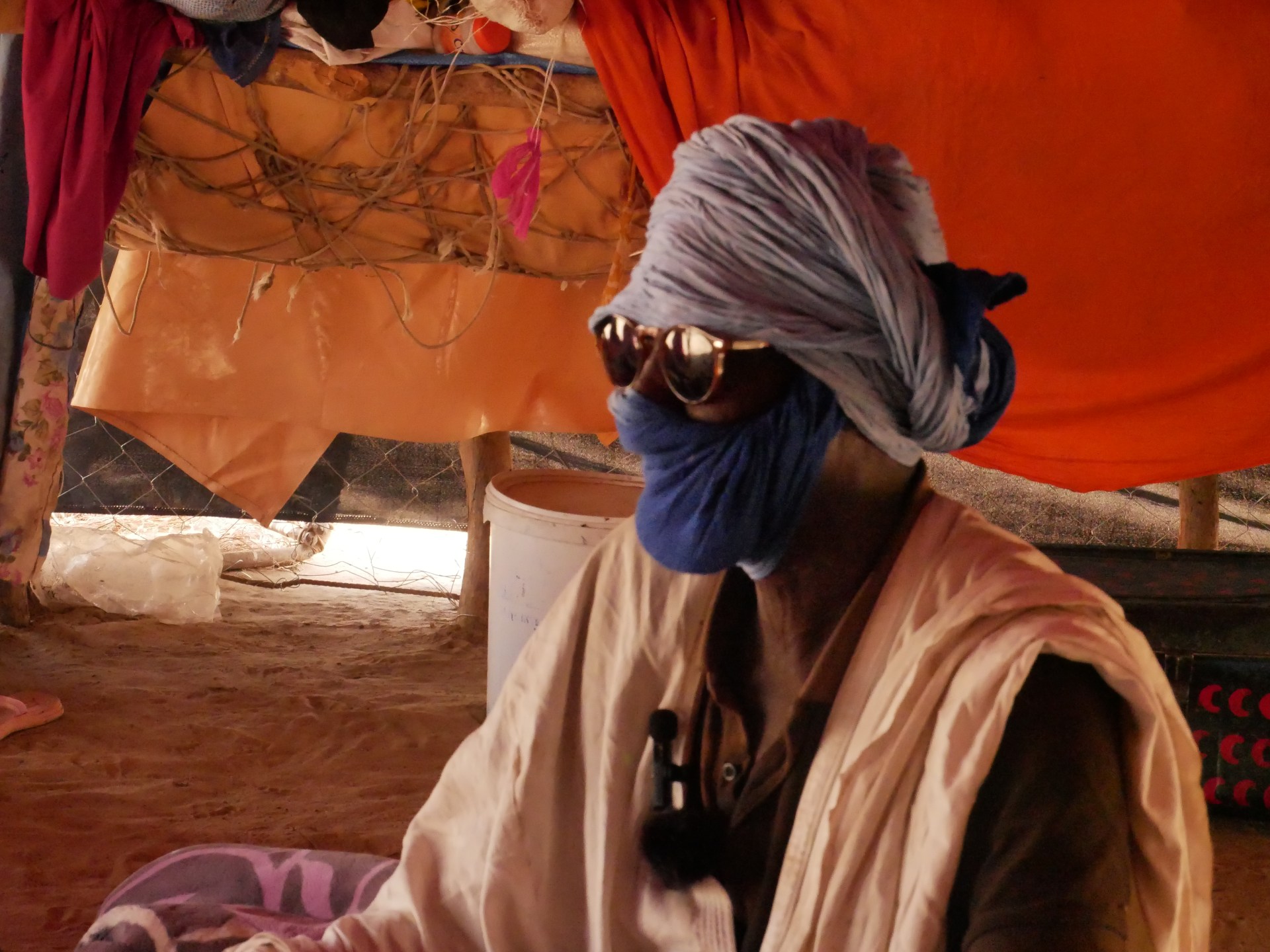
Douankara, Mauritania – One evening in late March, 75-year-old Moctar gathered with his family and friends in Sondaje, a village in northern Mali, to plan their escape. For months, homes had been raided by rival gun-toting warring groups who accused various villagers of collaborating with their enemies. Two of Moctar’s cousins were killed in one such attack. Then one group issued an ultimatum.
“The men came on about 30 motorbikes, observed the evening prayers with us in the mosque and then told us we had 72 hours to leave the village,” Moctar told Al Jazeera in a hoarse and laboured voice. They had no choice but to run that night, trying to avoid daytime patrols.
“We saw terrible things,” Moctar continued, speaking in Tamasheq. “People were decapitated and their heads put on their chests. People were so scared. The fear in their eyes made us even more scared.”
Moctar’s family is one of thousands who have recently fled over the border into Mauritania, traumatised by the violence and abuse they witnessed. Thousands have fled to Douankara and the surrounding area.
Mali is at the heart of spiralling violence in the West African Sahel, a region that accounts for about half the deaths related to armed groups globally, according to Armed Conflict Location & Event Data (ACLED), a conflict think tank.
Mali’s army and allied Russian fighters are locked in conflict with several al-Qaeda- and ISIL (ISIS)-affiliated groups that have seized and controlled swaths of land across rural areas. The groups are also active in neighbouring Burkina Faso and Niger while increasingly pushing into coastal countries like Benin and Nigeria.
They are also battling rebels in northern Mali’s Kidal region who often fight with the armed groups against their common enemy, Mali’s government. Their most recent collaboration was a major weekend offensive that saw the capital and several other cities attacked. Defence Minister Sadio Camara was killed in the assault.
All sides are accused of humanitarian violations. But in the past two years, the Malian army and Russian fighters have inflicted more violence on civilians than the armed groups combined, Heni Nsaibia, senior West Africa analyst at ACLED, told Al Jazeera.
“There are no good sides in this conflict, and collective punishment has been a key feature,” Nsaibia said, adding that the Malian army was more willing to attack civilians because of how much territory armed groups control. “It doesn’t matter which side you are on. If you’re in the wrong place at the wrong time, you are going to get killed.”
On April 20, three rights groups brought a case against Mali before the African Union’s human rights court, accusing the military and its Russian allies of “serious human rights violations”. It is the first known case in Africa that aims to hold a state responsible for hiring military contractors.
For years, a complex network of armed groups and allied militias has seized control of areas in central and northern Mali.
Jama’at Nusrat al-Islam wal Muslimeen (JNIM), a group of about 10,000 fighters that is allied with al-Qaeda and is now pushing into the south of the country, is the most prominent among them.
The ISIL affiliate in Sahel Province (ISSP) is active in northern Menaka.
JNIM, commanded by Iyad Ag Ghali, assaults military bases while punishing communities seen as collaborating with the government. It was JNIM that terrified people in Moctar’s village.
It initially targeted fringe areas with little government control, but as its forces and technical abilities, such as the use of drones, have grown, JNIM has become more daring.
Late in September, its fighters began attacking tankers carrying oil into the landlocked country from neighbouring Senegal, in effect laying siege to the capital, Bamako. The campaign failed after Malian and Russian forces scaled up operations and surveillance targeting JNIM locations, Nsaibia said.
“We haven’t seen an attack on fuel tankers since January. … That shows that the campaign was limited.”
Fighting is ongoing between rebels of the Azawad Liberation Front (FLA), which is fighting for an independent region in northern Mali, and the army and Russian fighters. In June, the FLA partnered with JNIM to ambush an army convoy that resulted in Malian and Russian losses.
On Saturday, the FLA and JNIM confirmed attacks on several Malian military posts. Barracks in Kati outside Bamako, where President Assimi Goita, the head of Mali’s military government, lives were attacked along with the airport that serves Bamako and the northern cities of Kidal, Sevare and Gao. The groups have claimed control of Kidal. At least 16 people were injured, according to Malian authorities. Casualties have not been confirmed.
Up to 2,000 Russian fighters are deployed in Mali.
They were initially from the private Wagner Group, which was largely taken over by the Russian government and transformed into the Africa Corps, which reports to the Russian Ministry of Defence. Although it retains some Wagner mercenaries, the Africa Corps has a less aggressive approach.
The Russians first arrived in Mali in 2021, a year after the military seized power from a civilian government, promising to stop spiralling violence.
After the coup, about 4,000 French soldiers deployed in Mali withdrew as did a UN peacekeeping force.
The use of Russian fighters has had mixed results, analysts said. They have helped push rebels or armed groups back in some areas in northern and central Mali, but the lack of a sustained military presence sometimes means these territories fall again.
Along with the Malian military, the Russians are accused of abusing people perceived to be supporting armed groups or rebels.
Refugees in Mauritania said the Russians, sometimes with their Malian counterparts, executed, raped or tortured victims. Several said Wagner mercenaries arrested suspects in raids during which they lined people up, barked at and hit them. Some said Wagner mercenaries decapitated suspects or buried men alive.
Al Jazeera, which is unable to independently verify these claims, has contacted officials of the Malian and Russian governments for a response. Neither has responded.
“Wagner raped women in a village close to ours, but we decided to run before they came again to ours,” a 49-year-old woman from the Mopti region whose family witnessed Wagner raids before fleeing late last year, told Al Jazeera.
“They came to our village and took everything they could: our jewellery, our blankets,” another woman who lived near the northern town of Lere said.
A villager in Douankara told Al Jazeera he witnessed the shooting of two Malian refugees who had crossed over the border to retrieve some items from their homes. The man said he was part of a group that retrieved the two bodies after Wagner and Malian soldiers withdrew.
Russia appears ready to expand its military presence in West Africa, using its operations in Mali as a springboard, according to the conflict think tank The Sentry. Already, Africa Corps members are active in military-controlled Niger and Burkina Faso.
From October to April, at least 13,000 people fled Mali to settle in communities like Douankara and neighbouring Fassala, according to the Office of the United Nations High Commissioner for Refugees (UNHCR). At least 100,000 people have been confirmed to have crossed into Mauritania since late 2023 after violence intensified although there are likely many more.
“The majority of new arrivals are women and children,” Omar Doukali, the UNHCR’s Mauritania spokesperson, told Al Jazeera, adding that the agency was hampered by recent aid cuts by Western donor countries like the United States.
“We are seeing continued new arrivals across a vast and remote bor
📰 மூல செய்தி (Source): https://www.aljazeera.com/features/2026/4/29/we-saw-terrible-things-mali-refugees-tell-of-atrocities-amid-attacks?traffic_source=rss















 உலகம்9 years ago