Connect with us

முக்கியச் செய்திகள்

We paid our builder £44k – then he had us arrested

Published

on

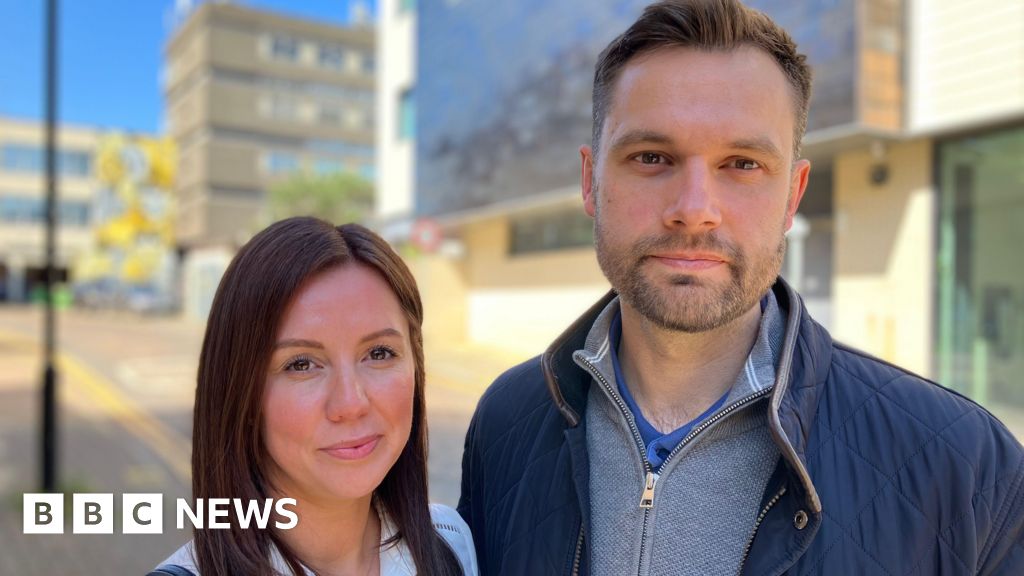
When Rob and Lucy Davies hired builder Steve Figg to construct their dream house extension, they had high hopes.

However, it turned into a nightmare that saw their home wrecked and the couple even thrown into police cells.

Instead of delivering the project, Figg, who already had £44,000 of their money, reported them to Essex Police for "harassing" him over the work.

The dad-of-two also told officers he wanted to kill the couple, but was not arrested.

The 35-year-old builder had been fed up with the couple, of Langdon Hills in Basildon, Essex, asking when he was coming back to finish the job.

They are not the only ones let down by Figg. Other people have told the BBC how he left not just their homes at risk of collapse, but their relationships, too.

One woman even described how Figg turned up at her home with a chainsaw and a sledgehammer and smashed her garden office up in a row over payment.

Figg, of Milton Road, Stanford-le-Hope, Essex, has now been ordered to pay the Davies £85,000 in compensation, having admitted 22 breaches of building regulations at their home.

The couple, and other people who hired Figg, have shared stories of the devastation he left in his wake.

"The only way I could describe how our house looked was like a bomb site," explains Rob Davies, 37.

"There was a huge, gaping hole in the garden where the kitchen was supposed to go and the back of the house was at risk of collapse."

This was the situation in October 2024, a year after Figg started work on the single-storey extension, which was meant to take 12 weeks.

Rats were able to run free and nest in the house due to large gaps in the exposed, unsupported wall, and the property had become impossible to keep warm.

"The only way we got through it was going day by day and saying 'It'll be OK,'" says Davies, who got in touch with the BBC via Your Voice.

"It was a complete nightmare. There were times where we thought we wouldn't get through it together. It tested our marriage hugely."

The couple spent £75,000 on the disastrous project in total, of which £28,000 was repairing the mess left by Figg and £3,000 in legal fees.

A final blow was dealt to them when, after two months of trying to contact him, Figg told the police he was being harassed by the couple and wanted to kill them.

The pair were arrested at their workplaces and spent 22 hours in cells at Grays police station, before later being released with an apology from officers.

It was only when Basildon Council's building control team began collecting evidence against Figg, who ran Figg Construction Ltd, that the full picture emerged.

Davies says: "Hate's a strong word, but I genuinely can't think of another sort of person who would do this. He's the lowest of the low.

"He masquerades as someone who can do all these things, but, when you get under the surface, he's incapable."

While Figg was only sentenced for what he did at the Davies household, the court heard he was being investigated for potential crimes against four other unnamed victims.

Gemma Hemmings says not long after she had given birth, she was confronted by Figg, who was armed with a chainsaw and a sledgehammer.

She could only watch as he destroyed her garden office in a dispute over payment.

Hemmings, 40, and her husband, Steve, 38, had paid Figg almost £100,000 to build the office and extend their house in Leigh-on-Sea, Essex, in 2021.

But they angered him by withholding a final payment, instructing him to first complete his shoddy work to a higher standard.

"We watched while he destroyed everything with a big smile on his face. It was terrifying," Hemmings recalls.

"He was someone who'd been in our house and around our children. We'd let him into our family."

The couple had to stay away from their house with their newborn for 10 weeks while Figg continued to make excuses for the work dragging out over nine months.

Hemmings continues: "I look back and I don't know how Steve and I are still together. It destroyed our marriage.

"The pressure it put on our family life was incredible; it was just incredible and terrifying."

Despite their experience, Hemmings feels they are among the luckier of Figg's victims. Unlike others, their house had been left with windows, walls and a roof.

However, they remember Figg as an intimidating man who made them so paranoid they set up cameras in their home.

"If you'd asked me four years ago, I'd have probably said I wanted him dead," Hemmings says.

"But now I don't think about the man. He's getting everything he deserves for what he did to us and those people after us.

"I think he's one of the worst people I've ever met."

Nick Marns, an insurance broker from Leigh-on-Sea, Essex, does not consider himself lucky.

He paid Figg a "substantial" amount of money to double the size of his two-bed property in 2017, but it was instead gutted and left a shambles.

Marns was left homeless and needing counselling as a result.

"When building control came, he said it was the worst build he'd ever seen in his career," the 41-year-old says.

Pictures of the mess, which included 10 tonnes of rubble, speak for themselves. It was not until June 2018 that Marns could return to his home.

The stressful process put pressure on his relationship and led to him having a mental breakdown, he says.

Marns describes Figg as a "manipulative" man who would lie at any opportunity to cover himself.

"He's a weasel of a man because every time he's confronted, he becomes sick or says one of his family members has died," says Marns, who now lives in Dubai.

"It still turns my stomach with hatred because of what he did to our lives. He dismantled our lives."

Do you have a story suggestion for Essex? Contact us below.

Follow Essex news on BBC Sounds, Facebook, Instagram and X.

📰 மூல செய்தி (Source): https://www.bbc.com/news/articles/cvg09n7gj3lo?at_medium=RSS&at_campaign=rss

முக்கியச் செய்திகள்

Which airlines are cancelling flights to the UK – and what can you do?

Published

on

The price of flights has been rising since the start of the conflict in the Middle East, a worry for anyone planning a summer holiday.

Some airlines are also cutting back the number of flights they are operating, which could mean travellers facing changes to their plans.

Many airlines that serve the UK have said they plan to operate fewer flights.

The following companies have said they don't plan to change their schedules:

While some airlines have cut back on the number of flights to save money, others have said they will start charging more per passenger or will put up charges for luggage.

Overall cancellations will be a very small proportion of the millions of flights in and out of the UK, says Rory Boland, travel editor at consumer publication Which?. Airlines are likely to target cancellations on routes where there are multiple flights a day to make it easier to put passengers on a different flight.

Low-cost Spanish regional airline Volotea has come under fire for saying it will add a surcharge to tickets it has already sold and is being challenged by local consumer rights groups.

An airline or tour operator could only raise the price post-sale if they had a specific caveat written into the terms and conditions, says independent consumer commentator Jane Hawkes, but it is not standard practice.

However, when it comes to package holidays, tour operators can add up to 8% to the cost of your deal after you've booked, based on a "significant rise in fuel costs", says Boland. But Which? found most operators were promising not to add surcharges this year.

A lot of the industry's jet fuel supplies pass through the Strait of Hormuz, which has effectively been closed to shipping since the start of March.

Airlines are not physically running short of fuel currently, but there have been warnings of potential shortages by the summer if the conflict continues.

In the meantime the squeeze on supply has pushed up the price of jet fuel sharply – it roughly doubled during March and the first half of April.

Airlines agree deals in advance that help them lock in a lower price, but longer term they will be paying more for fuel.

The biggest rises in fares have been on long-haul routes via Asia, that have been forced to adapt their flight paths to avoid flying over the Gulf.

Flights from London to Melbourne in June now cost 76% more than last year and a flights to Hong Kong are up 72%, according to consultancy Teneo.

"There's no right or wrong," says Jane Hawkes. It could pay to wait for last-minute deals, or you might want to seize the moment now. She doesn't expect prices to fall over the rest of the year, however, because airlines still need to cover the increased costs.

She suggests being flexible over where and when you travel, including considering switching to road or rail or holidaying in the UK.

Book insurance and check your policy covers you for travel disruption, she adds.

And make sure you have a "contingency pot". Even if your holiday operator or airline is supposed to cover any disruption, you may need to pay upfront and claim it back later, which can take months, she warns.

If your flight is cancelled the airline must get you to your destination or offer a refund.

If you are delayed more than a couple of hours the airline is required to provide food and hotel accommodation.

That is in ordinary circumstances. In cases of war, weather, or other situations that are beyond an airline's control, they do not have to offer compensation.

Airlines are currently pushing for more clarity over whether fuel shortages caused by the current conflict would count as "extraordinary circumstances".

If you have booked your accommodation separately the airline is not required to compensate you for any days you have missed out on.

But if your package holiday travel is disrupted your tour operator should extend your stay, offer you an alternative holiday, or refund you for the holiday, says Boland.

Correction: this article has been amended to remove references to Air Asia and Vietjet as they do not currently fly to the UK. References to Air New Zealand have also been removed as it does not fly directly to the UK, but offers connections through its partners.

📰 மூல செய்தி (Source): https://www.bbc.com/news/articles/cr41yel6v4eo?at_medium=RSS&at_campaign=rss

Continue Reading

முக்கியச் செய்திகள்

Stock markets are too high and set to fall, says Bank of England deputy

Published

on

The Bank of England expects stock markets around the world to fall as share prices do not reflect the many risks facing the global economy, its deputy governor has told the BBC.

Sarah Breeden said: "There's a lot of risk out there and yet asset prices are at all-time highs. We expect there will be an adjustment at some point."

It is unusual for a senior figure at the Bank to be so forthright on market movements.

Breeden, who is also the Bank's head of financial stability, declined to say when she expected markets to fall or by how much, but pointed to a number of factors that markets seemed complacent about.

"The thing that really keeps me awake at night is the likelihood of a number of risks crystallising at the same time – a major macroeconomic shock, confidence in private credit goes, AI and other risky valuations readjust – what happens in that environment and are we prepared for it?" she said.

A sharp fall in stock markets can have a number of effects on the economy. If households own shares, a fall in their value can make people feel poorer which might make them cut back on spending.

It can also make it harder for businesses to raise funds, which means they might reduce or delay investment. Falling markets can also hit confidence, which might lead to companies cutting back on hiring.

The US stock market is home to the world's biggest companies and has set a series of all-time highs recently despite warnings from the International Energy Agency that the world economy is facing the biggest energy shock in history.

Technology firms have poured hundreds of billions of dollars into AI infrastructure prompting some, including Microsoft founder Bill Gates to call it "a frenzy" that resembles the dotcom bubble of the late 1990s, when investors threw money at unproven start-ups that quickly went bust or had billions wiped off their value.

Nvidia boss Jensen Huang, the biggest supplier of chips to AI companies, is among those to dismiss these concerns.

A number of funds that mimic the role of banks and lend privately to businesses have sustained losses and have had to restrict withdrawals from investors, sparking concerns of weaknesses in the financial system.

Breeden said the enormous growth in this so called "shadow banking" system has not been tested.

"Private credit has gone from nothing to two-and-a-half trillion dollars in the last 15 to 20 years. It hasn't been tested at this scale with the degree of complexity and interconnections it has with the rest of the financial system so far," she said.

"It's a private credit crunch, rather than a banking-driven credit crunch, that we're worried about."

The UK stock market does not contain the kind or size of AI companies that have helped drive US markets to records but the FTSE 100 index is also within 5% of its own all-time high.

Breeden said her job was not to predict when and how much the markets fall but to ensure the financial system is ready if it does.

"What we are watching for: is how might those prices fall? Will there be a sharp adjustment downwards? And if there is such an adjustment, how will that affect the economy? I'm not saying it will happen today, tomorrow, in 12 months' time. It's ensuring that if it happens the system is resilient."

📰 மூல செய்தி (Source): https://www.bbc.com/news/articles/c75kp1y43lgo?at_medium=RSS&at_campaign=rss

Continue Reading

முக்கியச் செய்திகள்

US rights groups urge caution for World Cup visitors

Published

on

US President Donald Trump and Fifa president Gianni Infantino have close ties

Rights groups have urged fans, players, journalists, and other visitors to this summer's World Cup to "exercise caution" if travelling to the United States.

More than 120 organisations have collectively issued a 'travel advisory' driven by what they say is "the Trump administration's violent and abusive immigration crackdown".

"The Trump administration's rising authoritarianism and increasing violence pose serious risks to all," the message states.

It adds minority groups in particular are "vulnerable to serious harm", and is critical of Gianni Infantino, president of football's world governing body Fifa, for his close ties to US President Donald Trump.

The coalition, which includes the American Civil Liberties Union, has called on Fifa to put pressure on US authorities "to respect the fundamental human rights of every person visiting and attending the games".

US officials have not yet commented on the groups' travel advisory, but Fifa says it is "committed to respecting all internationally recognised human rights and shall strive to promote the protection of these rights".

Fifa said it has a "commitment to human rights across all key activities and actors connected to the tournament", citing several documents and advisory groups it has set up to address human rights issues.

Trump's foreign policy and what it might mean for the World Cup

Trump and Infantino – too close for comfort?

World Cup risks being 'stage for repression' – Amnesty

The rights groups warn travellers about what they say is the potential for denial of entry to the country and risk of arrest, travel restrictions on citizens from dozens of countries, social media screening, racial profiling, and increased surveillance.

There are travel bans on nationals from four of the countries taking part in the tournament: Iran, Haiti, Senegal and Ivory Coast.

The groups say travellers should take steps including removing sensitive information from phones and keeping friends and family updated about their plans when travelling.

The United States is co-hosting the tournament alongside Canada and Mexico, with 78 of the 104 scheduled matches at the tournament taking place in the US.

The signatories are critical of Fifa, accusing it of failing to issue "concrete guarantees" on safety for travellers "while its president, Gianni Infantino, has aligned himself closer to the Trump administration".

In December, Infantino awarded President Trump with Fifa's inaugural Peace Prize.

An immigration crackdown has been a key focus of the Trump administration, with Immigration and Customs Enforcement (ICE) having its scope and budget significantly expanded.

ICE has faced criticism for its methods – especially following the fatal shooting of two US citizens who were protesting against the immigration crackdown.

US officials have said ICE agents will be part of World Cup security. Earlier this year, fan group Football Supporters Europe (FSE) told BBC Sport it was "extremely concerned by the ongoing militarisation of police forces in the US".

Last month, a report from human rights campaign group Amnesty said the World Cup risked becoming "a stage for repression and a platform for authoritarian practices".

In response to that, the White House's World Cup Task Force said that the tournament will be "the largest, safest, and most welcoming sporting event in history" and that it was working to deliver an event "that highlights America's hospitality, commitment to security, and spirit of excellence".

It promised that fans "can look forward to a smooth, secure, and truly unforgettable tournament".

Listen to the latest Football Daily podcast

Get football news sent straight to your phone

📰 மூல செய்தி (Source): https://www.bbc.com/sport/football/articles/ce3d69wngevo?at_medium=RSS&at_campaign=rss
Continue Reading

Trending

Copyright © 2024 by 7Tamil Media, All rights reserved.