Connect with us

உலகம்

US State Department restricts visas for those who ‘support adversaries’

Published

on

Trump administration says it has taken action against 26 people ‘across our hemisphere’ who allegedly undermined US interests.

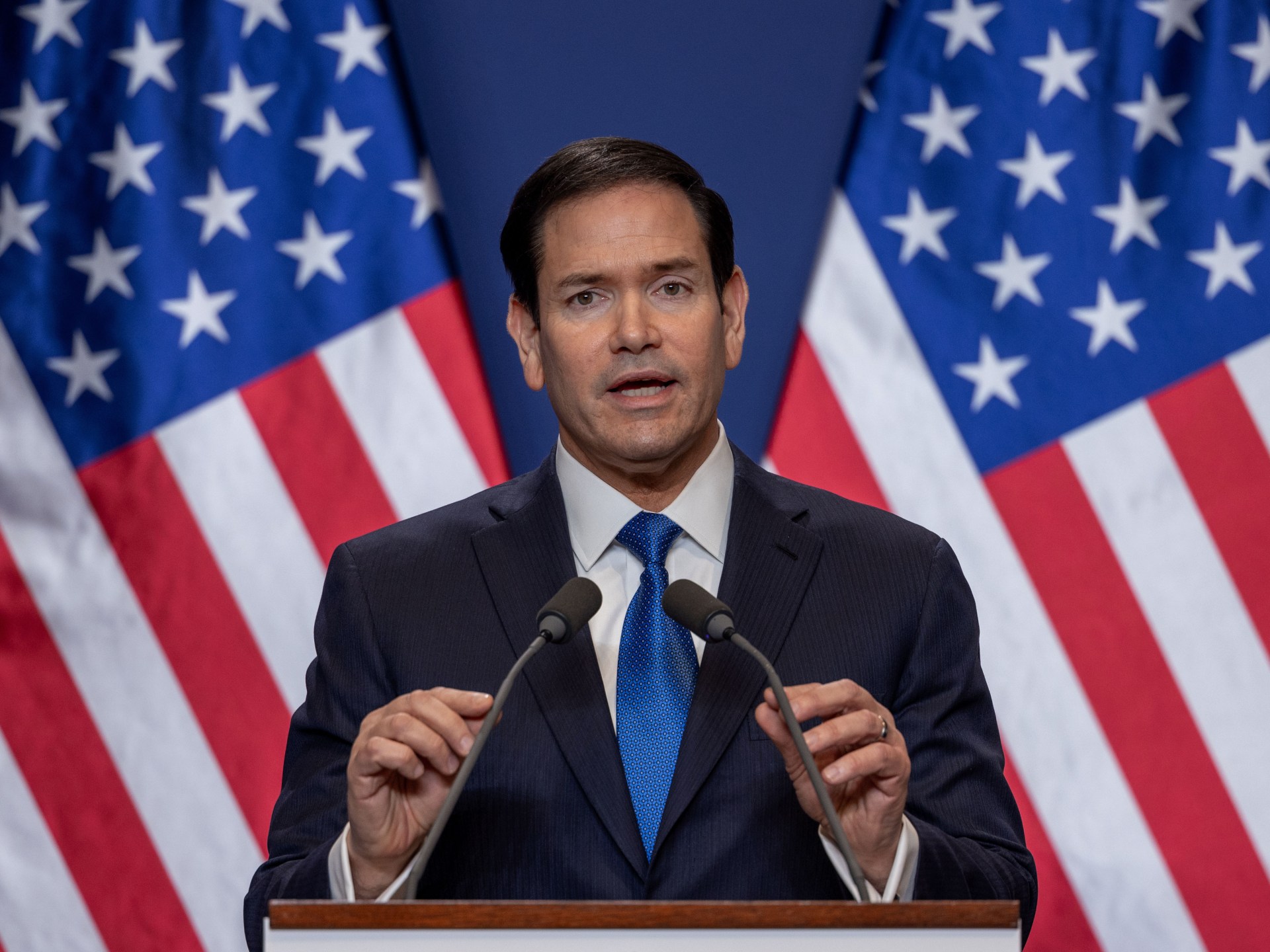
The State Department in the United States has announced it is restricting visas for “individuals from countries in our hemisphere who support our adversaries in undermining America’s interests in our region”.

Thursday’s statement underlined that 26 individuals had already seen their visas stripped as part of the policy.

The State Department’s stance comes as President Donald Trump seeks to expand US influence across the Western Hemisphere, as part of a platform he calls the “Donroe Doctrine”, a riff on the 19th-century Monroe Doctrine.

Since taking office for a second term, Trump has taken an aggressive stance towards stopping drug trafficking across the Americas, threatening economic penalties and military action for noncompliance.

He has also sought to check China’s growing sway over the region, as an increasing number of Latin American countries tighten their bonds with the Asian superpower.

The State Department explained that the expanded visa restrictions would penalise those who “knowingly direct, authorise, fund, or provide significant support to” US adversaries in the Western Hemisphere.

“Activities include but are not limited to: enabling adversarial powers to acquire or control key assets and strategic resources in our hemisphere; destabilising regional security efforts; undermining American economic interests; and conducting influence operations designed to undermine the sovereignty and stability of nations in our region,” the statement added.

The language was vague, never mentioning China or the campaign against drug-trafficking cartels.

But it continues a trend under the Trump administration to revoke visas from foreign critics and political opponents.

Last year, for instance, the administration sought to revoke visas for pro-Palestine protesters, claiming their presence could have foreign policy consequences for the US.

More recently, the administration has terminated the immigration visas for at least seven individuals with familial ties to the Iranian government or individuals connected to the 1979 Iranian revolution.

The statement on Thursday did not identify the 26 individuals facing visa restrictions as part of the expanded policy.

But it cited the same authority under the Immigration and Nationality Act that the Trump administration has used to attempt to deport pro-Palestine student protesters last year.

Under the law, the entry of foreign nationals can be restricted when the secretary of state has reason to believe they pose “potentially serious adverse foreign policy consequences for the United States”.

While the administration has abandoned deportation efforts against some of the targeted individuals, at least two, Mahmoud Khalil and Badar Khan Suri, continue to face expulsion.

More recently, the administration has terminated the immigration visas for at least seven individuals with familial ties to the Iranian government or individuals connected to the 1979 Iranian revolution.

Already, some figures in Latin America have seen their visas revoked over political disagreements with the US.

In July, Brazilian officials involved in the prosecution of former right-wing President Jair Bolsonaro saw their US visas withdrawn. They included Brazilian Supreme Court Justice Alexandre de Moraes, a frequent target of right-wing ire.

Then, in September, the Trump administration stripped Colombian President Gustavo Petro of his visa after he made an appearance at the UN General Assembly that was critical of US policy.

The State Department, at the time, denounced Petro for “reckless and incendiary actions”. He was later invited to visit the White House in February, as part of a detente with Trump.

Visa restrictions have been part of Trump’s larger policy to exert pressure on foreign groups and limit immigration into the US.

Earlier this year, the administration enacted immigrant visa bans on dozens of countries, citing both national security and alleged stresses on social services.

Trump has also sought to take a more militaristic approach towards Latin American governments it deems as adversarial, referring to the whole of the Western Hemisphere as the US’s “neighbourhood”.

In January, the US launched an attack on Venezuela that culminated in the abduction and imprisonment of Venezuelan leader Nicolas Maduro, and it has also initiated an ongoing fuel blockade against Cuba.

Some of Trump’s actions in the region have been deadly. The Venezuela attack left dozens of Cubans and Venezuelans killed. And since September, the Trump administration has conducted at least 51 lethal strikes on alleged drug-smuggling boats in the eastern Pacific Ocean and Caribbean Sea.

The death toll in that campaign has reached at least 177 people. Rights groups have decried the attacks as extrajudicial killings.

But the Trump administration has labelled multiple drug cartels as “foreign terrorist organisations” and has argued they are seeking to destabilise the US through the drug trade.

📰 மூல செய்தி (Source): https://www.aljazeera.com/news/2026/4/16/us-state-department-restricts-visas-for-those-who-support-adversaries?traffic_source=rss

உலகம்

Pope Leo urges peace in visit to Cameroon’s conflict-hit northwest

Published

on

Pope Leo urges peace in visit to Cameroon’s conflict-hit northwest

Pope Leo XIV was in Bamenda in conflict-hit northwest Cameroon, urging peace in a region beset by deadly fighting between separatists and government forces. Al Jazeera’s Nic Haque says worshippers risked dangerous journeys to see the Pope.

📰 மூல செய்தி (Source): https://www.aljazeera.com/video/newsfeed/2026/4/16/pope-leo-urges-peace-in-visit-to-cameroons-conflict-hit-northwest?traffic_source=rss

Continue Reading

உலகம்

US House votes to extend temporary protections for Haitians in Trump rebuke

Published

on

Ten Republicans join Democrats to extend Temporary Protected Status for nearly 350,000 Haitians in the United States.

The United States House of Representatives has voted to extend temporary immigration protections for some 350,000 Haitians living in the country, in a break with President Donald Trump.

Ten Republicans joined the Democratic majority in Thursday’s vote, which passed by a margin of 224 to 204.

The bill would allow Haitians already in the US to keep their Temporary Protected Status (TPS) for three additional years, due to violence and instability in the Caribbean country.

The measure will now proceed to the US Senate, where it faces uncertain prospects. If it passed, Trump would almost certainly veto the bill.

“This is a monumental victory in a long-fought battle to protect the safety, dignity, and humanity of our Haitian neighbors,” Democratic Representative Ayanna Pressley, the co-chair of the House Haiti Caucus, said in a statement.

“Democrats and Republicans alike have come together to support our Haitian neighbors not just because this is good, commonsense policy, but because it is the right, humane thing to do.”

The bill advanced on Thursday through a bipartisan discharge petition, a legislative tool that allows lawmakers to bypass the House’s Republican leadership and force a vote.

But the bill’s progress tees up a potential clash with the White House.

Trump and his officials have repeatedly attempted to roll back temporary immigration protections on the basis that previous administrations had exceeded their authority in granting extensions.

The push comes as part of Trump’s wider effort to restrict immigration into the US.

TPS is designed to shield foreign nationals who are already in the country from deportation. It is granted when their countries of origin are facing temporarily unsafe conditions, including natural disasters and conflicts. It also confers temporary work authorisation to successful applicants.

Last year, the Trump administration made several efforts to end TPS for Haitians, citing US “national interests”.

In June, for instance, it said the designation would expire in August. Then, in November, it renewed its intentions to end the programme, calling the move a “vote of confidence” in Haiti’s government.

The Caribbean nation has suffered from high levels of violence and political instability since the assassination of President Jovenel Moise in 2021.

The period following his death saw powerful gangs expand their influence on the island, seizing control of much of the capital of Port-au-Prince.

The State Department has previously warned US citizens not to travel to Haiti “due to the risk of crime, terrorism, kidnapping, unrest, and limited health care”.

Advocacy groups have warned that the fear of deportation has become a strain on Haitian migrants living in the US. They called on Congress to act to protect the vulnerable group.

“We are asking: Where will you be? On the right side of history? Or continuing to cause trauma to people who are asking for nothing other than safety and protection?” asked Guerline Jozef, the executive director of the Haitian Bridge Alliance, during a news conference outside of the Capitol.

This month, the US Supreme Court is set to consider a fast-track case weighing the administration’s request to move forward with the revocation of deportation protections for Haitians and Syrians.

📰 மூல செய்தி (Source): https://www.aljazeera.com/news/2026/4/16/us-house-votes-to-extend-temporary-protections-for-haitians-in-trump-rebuke?traffic_source=rss

Continue Reading

உலகம்

Turkiye grieves students killed in school shooting

Published

on

Hundreds turned out to the funerals of eight students who were fatally shot at school in Turkiye’s Kahramanmaras on Wednesday, which claimed the lives of 10 people. It was the second school shooting in two days.

📰 மூல செய்தி (Source): https://www.aljazeera.com/video/newsfeed/2026/4/16/turkiye-grieves-students-killed-in-school-shooting?traffic_source=rss

Continue Reading

Trending

Copyright © 2024 by 7Tamil Media, All rights reserved.