Thursday’s polls could deliver a sharp setback for Labour, with Reform UK and the Greens expected to gain, analysts say.
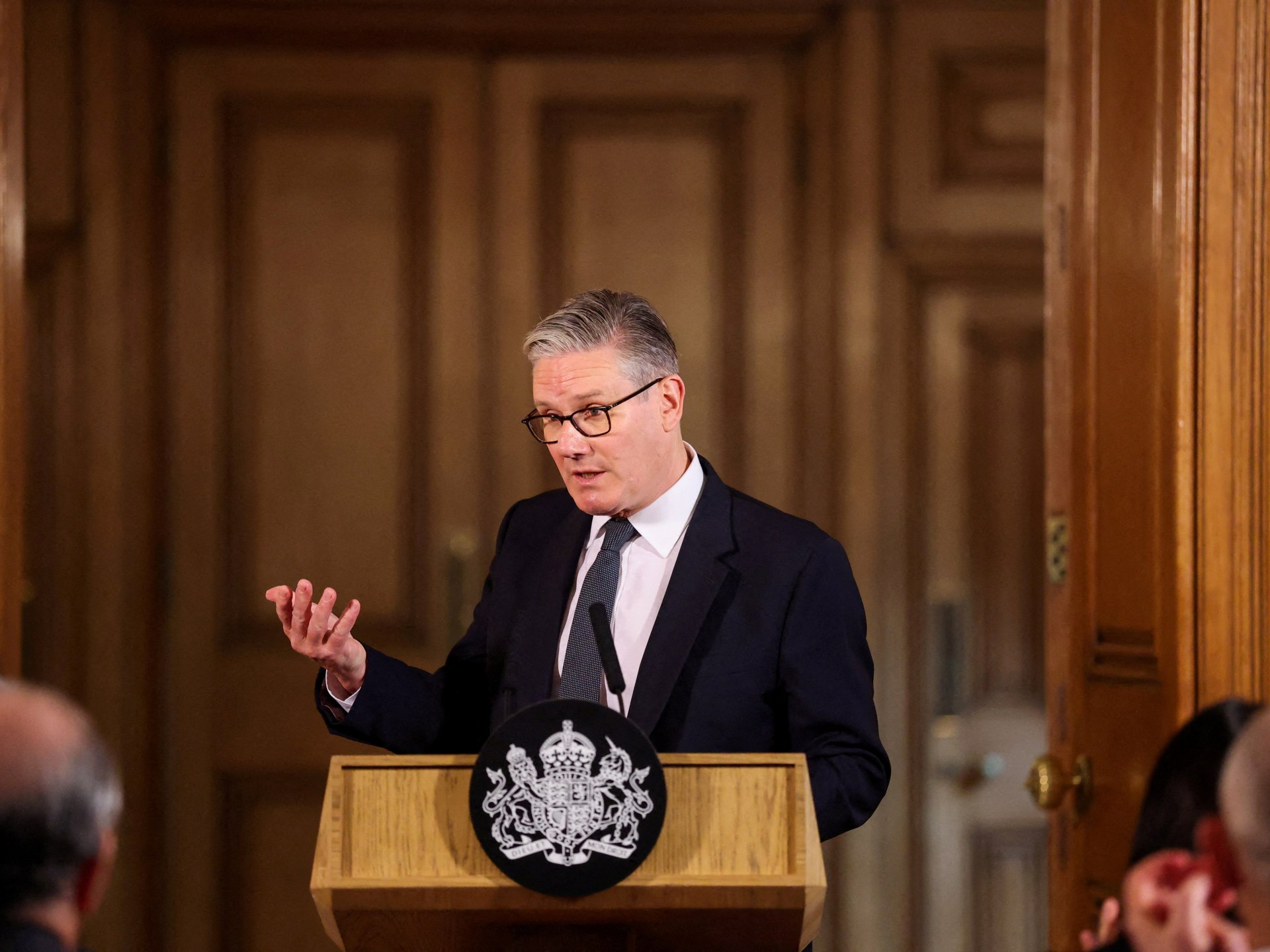
Two years after winning a landslide and ending 14 years of Conservative rule, Prime Minister Keir Starmer is facing a tough stress test.
His Labour Party on Thursday will battle local and devolved elections under mounting political pressure.
Voters across England, Wales and Scotland are expected to deliver Labour their worst results in decades, a sharp reversal of fortunes driven by policy U-turns and political controversies.
Labour is also facing pressure from parties at either end of the spectrum. The hard-right Reform UK is surging while the Green Party is gaining ground on the left.
In Wales, the Welsh nationalist political party Plaid Cymru is polling strongly – an unprecedented challenge in a nation Labour has dominated since the establishment of the Welsh parliament, the Senedd, in 1999.
Analysts say these elections carry more weight compared with previous local contests, as they will signal just how fragmented and volatile the United Kingdom’s political landscape has become.
Voters across England will elect thousands of local councillors, while in Scotland and Wales, representatives of devolved parliaments will be elected.
Typically low-stakes affairs, local elections are shaped less by national politics than by everyday concerns like potholes, bin collections and council services.
But this election cycle, analysts say, could be different. The voting system is designed for a two-party system and not today’s multi-party landscape.
Most of these elections, particularly in England, use the first-past-the-post (FPTP) system, where the candidate with the most votes wins, even without a majority.
The system has traditionally favoured a two-party contest, delivering clear winners and relatively stable outcomes.
With support now spread across multiple parties – including Labour, the Conservatives, Reform UK, the Green Party and the Liberal Democrats – votes are increasingly spread out.
Under FPTP, which can produce outsized swings, candidates can win on relatively small shares of the vote, as support for their opponents splits. The result is that even local contests can take on national significance.
The vote comes as Starmer is politically weakened. A YouGov poll conducted in April suggested that 70 percent of respondents believed Starmer was doing “badly”.
These elections are in many ways seen as a “referendum” on Starmer’s government, Jonathan Tonge, professor of politics at the University of Liverpool, told Al Jazeera.
“There’s going to be a huge amount of losses for Labour as a governing party at these local elections … and it might precipitate a leadership challenge against him,” Tonge said.
Members of Labour’s voter base have criticised Starmer because of the government’s decision to cut the winter fuel allowance – a sum given to people of state pension age to help with the cost of additional heating.
Starmer’s judgement has also been questioned over associations and appointments, especially involving figures linked to the late billionaire sex offender Jeffrey Epstein, Denis MacShane, former UK Foreign Office minister of state and Labour MP, told Al Jazeera.
The premier came under fire in February when revelations from the Epstein files about Peter Mandelson, appointed by Starmer as the UK’s ambassador to the US in December 2024, came to light.
As he faced a barrage of pressure, Starmer apologised to Epstein’s victims and acknowledged it had been a mistake to appoint Mandelson, saying he had been misled about the extent of the diplomat’s relationship with Epstein.
While Starmer has led Labour into trouble, analysts say the firebrand populist figurehead, Nigel Farage, with his anti-immigrant rhetoric, has steered the far-right party Reform UK into an electoral force.
While Reform began with Brexit, it now draws support mainly from voters focused on immigration who want “stricter controls”, Tonge said.
The latest YouGov voting intention poll for The Times and Sky News suggests Reform UK is currently the most popular party if a general election were held now.
Reform’s rise also reflects the decline of the Conservatives and a wider realignment on the right, where it is increasingly “setting the agenda” with a harder line on issues like migration, John McTernan, political secretary to former UK Prime Minister Tony Blair, told Al Jazeera.
“They also have a group of voters who are simply attracted by anti-system politics,” he said.
The Greens are also emerging as a growing party, particularly in cities and among younger voters, capitalising on disillusionment with Labour, analysts say.
While the left-wing force remains far from a national governing movement, its ability to siphon votes in key constituencies could prove decisive under the FPTP system, splitting the left-leaning vote.
In February, the Green Party delivered an embarrassing defeat to Labour in one of its former strongholds, in a closely watched election for a vacant parliamentary seat.
Analysts credit Green Party leader Zack Polanski, who has been vocal in his condemnation of Israel’s genocidal war on Gaza and support for Palestinians, with boosting the party.
“Zach has cornered the market in the widespread revulsion in Britain at the behaviour of [Israel’s Prime Minister] Netanyahu and the horrible things that have been happening in Lebanon [and] Gaza,” MacShane said.
Scotland and Wales are part of the UK but have devolved governments with powers over areas such as health and education, while Northern Ireland uses a different electoral cycle.
In Wales, these elections could mark a “political earthquake”, said Tonge. Polling suggests Labour, which has governed continuously since the creation of the Senedd in 1999, is now under extreme pressure.
A strong performance by Plaid Cymru could push Wales towards a more competitive, multi-party system, where coalition or minority governments become the norm rather than the exception.
In Scotland, all eyes are on the ruling Scottish National Party (SNP) as First Minister John Swinney has indicated a second independence referendum could be held as early as 2028.
A strong SNP performance would bolster that timeline, but anything short of a clear mandate could delay or complicate those plans.
However, YouGov’s Scottish independence tracker suggests another vote could end up close to a repeat of the 2014 referendum, during which 55.42 percent of Scots voted against the country breaking the 300-year-old union with England.
While independence is less central in Wales than in Scotland, a stronger Plaid Cymru showing could still elevate questions about devolved powers and the future of Wales within the UK.
“The very future of the United Kingdom will, at least in a small way, be challenged almost certainly by the results of these elections,” Tonge said.
📰 மூல செய்தி (Source): https://www.aljazeera.com/news/2026/5/5/starmers-referendum-how-local-elections-could-expose-a-fractured-uk?traffic_source=rss


















 உலகம்9 years ago