Connect with us

முக்கியச் செய்திகள்

'Nothing will bring back my son': How 10 minutes of bombing by Israel shattered lives in Lebanon

Published

on

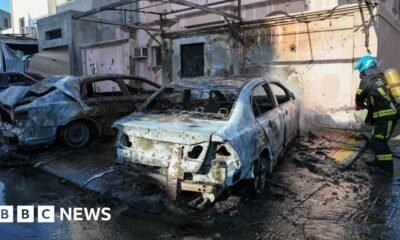
In the southern suburbs of Beirut, the neighbourhood of Hay el Sellom is barely recognisable.

What was once a densely populated, lively community is now a landscape of collapsed concrete, twisted metal and exposed wires. Homes have been reduced to layers of rubble. Staircases lead nowhere. The sounds of everyday life have been replaced by silence.

Despite repeated Israeli attacks since the start of the Iran war on other parts of Beirut's southern suburbs, where Hezbollah holds sway, residents say this neighbourhood remained calm until the afternoon of 8 April.

Beirut's southern suburbs had faced repeated Israeli evacuation orders and air strikes since the start of the war, but residents told us few people left Hay El Sellom, as they had nowhere to go. They also said that this neighbourhood had remained relatively calm.

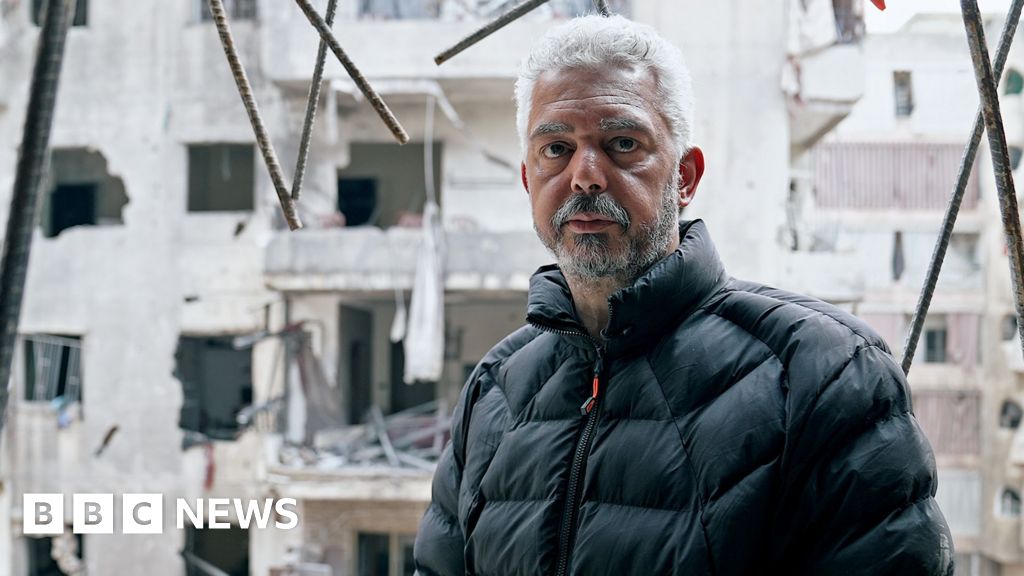
On that Wednesday, Mohammed's son Abbas was at home asleep when the building was hit by an Israeli air strike. "The three floors above mine all fell into one room," Mohammed says. "They all came down together… on top of him."

It was part of a deadly wave of strikes that begun at 14.15 local time and saw about 100 targets across Lebanon hit in the space of just 10 minutes, according to Israel.

The destruction wrought in this brief window would surpass that of any other day in this war. The stated targets included Hezbollah command centres and military sites, but among the casualties were many ordinary Lebanese citizens.

The death toll for the day reached 361, according to the Lebanese authorities, with more than 1,000 injured.

In the weeks after the attack, the BBC visited some of the areas hit to piece together what happened on that day. We met Mohammed in the ruins of his apartment.

"This is the second home I've lost," he says. "In the last war [in 2024] I lost a home. And in this war I lost another.

"I wish it was just my home that I lost, and that my son survived. This brick can be rebuilt. But nothing will bring back my son."

He is adamant that everyone who died were residents of the building. "If I thought there was even a 1% chance that someone from Hezbollah lived here, I wouldn't have stayed," he says. "I would never risk my son's life."

"Maybe, since I'm 45 years old, I wouldn't worry about the risk to myself but a young man with his whole life ahead of him – I would not put him in a building if anyone was there."

Following the death of his son, Mohammed expressed his sympathies for Hezbollah, asking it to defend Lebanon, in an interview with local media. That's a sentiment echoed by many people we spoke to in areas that have been consistently attacked by Israel.

Hezbollah – an Iran-backed militia and political party based in Lebanon – had fired rockets into Israel on 2 March, in response to US and Israeli attacks on Iran. A wider Israeli occupation of southern Lebanon followed, and further attempts to destroy the Hezbollah leadership.

Earlier on 8 April, a temporary ceasefire between the United States and Iran had been announced, a pause in a wider regional war that had already reshaped the Middle East.

Even though Israel said Lebanon would not be included, people on the ground were cautiously hopeful – until the assault began.

By analysing verified footage, social media posts and satellite imagery and comparing these with eyewitness accounts, we have identified at least five strikes that hit Hay el Sellom in quick succession.

Some Israeli media reported Ali Mohammed Ghulam Dahini was killed in the neighbourhood, and say he was a senior Hezbollah figure. We also found a memorial poster which describes him as a Hezbollah fighter. We asked the Israel Defense Forces (IDF) if Dahini was a target, but it did not respond to this question, nor did it provide specific information about who or what was being targeted in Hay el Sellom.

What is clear is the scale of civilian casualties. The Lebanese health ministry has told us more than 80 people were killed in this neighbourhood. Our analysis shows that at least 15 of those who died were children.

The narrow roads that run between tightly packed buildings in Hay el Sellom slowed rescue efforts. Residents describe people trapped under rubble, calling out for help, sending messages and waiting.

One of the first to arrive at a nearby hospital was Ghassan Jawad. He had been asleep when the building collapsed around him and his family.

"I suddenly found myself underground," he says. "I thought I was dead." He remembers the sound of people screaming. "I started to pray because I knew that was it."

Then, he says, something unexpected happened. "My cat started digging. She made a small hole so I could breathe."

After about 10 minutes, he heard voices above him, as neighbours began digging through the rubble. "They brought hammers and metal bars," he says. "They dug me out." But others did not survive.

"I could hear people dying," he says quietly. "I heard my mother praying next to me… then her voice stopped." His mother, two sisters and their children were all killed. "It became silent," he says. "Completely silent."

Just four miles away, in central Beirut, another neighbourhood was also struck -Corniche al Mazraa, one of the city's busiest areas. At 14:15 a gym class was in progress, a restaurant was preparing food, and a barber was mid-cut.

Then with no prior warning the explosions came, killing 16 people, according to the Lebanese Health Ministry.

It was the first time this neighbourhood had been targeted in the latest war.

Noha, a fitness instructor, was at work seven storeys above street level when two bombs hit a confectionary company's warehouse, causing a powerful blast that damaged surrounding buildings.

She told me that she had often watched from a distance as the southern suburbs of Beirut were pounded, never thinking that the attacks would reach the heart of the city. "For us, this happened without warning," she says.

"I looked out and found the world was black. I found people all covered in blood. I found people on the floor."

Noha questions why the area was struck. "The target was civilian. Certainly, a civilian target," she says. "We are the ones who were hurt."

We searched for evidence of a Hezbollah target and could not find one. We also asked the IDF, but it did not respond.

We have identified at least four other strikes that occurred within a one-mile radius of the gym.

Across the country, similar scenes were unfolding within the same 10-minute window. From Hermel in the north, across the Bekaa valley to villages in the deep south, strikes were reported almost simultaneously.

The southern city of Sidon was among those struck without warning, with bombs flattening the Hezbollah-affiliated al Zahraa religious complex.

Rahma, 27, and Rayan, 22, young women from a family forced to flee their home near the Israeli border, were visiting the mosque when the attack came.

"They said they were going to pray," says their mother, Kawkab. "Half an hour later, the complex was hit." Both girls were killed.

Al Zahraa's cleric, Sheikh Sadiq Naboulsi, was also killed in the attack. He had deep ideological and family ties to Hezbollah, although did not himself hold an official position. Another man killed here – Mohammed Ma'ani – was a senior Hezbollah official in the group's liaison and co-ordination unit. The IDF declined to confirm whether either men were the intended targets.

It has also been possible to identify seven of the other nine individuals reportedly killed here. All the available evidence suggests they were civilians.

The IDF says it targeted 250 Hezbollah operatives that day but has not provided a full list of names. Lebanon's health ministry disputes this, saying the vast majority of those killed were civilians.

Asked what steps were taken to protect civilians, the IDF said it made "extensive efforts to mitigate harm to uninvolved individuals".

The IDF also said that most of the targeted sites were located "within the heart of the ci

📰 மூல செய்தி (Source): https://www.bbc.com/news/articles/c202652vvnjo?at_medium=RSS&at_campaign=rss

முக்கியச் செய்திகள்

What you need to know about the 7 May elections in England, Scotland and Wales

Published

on

The biggest set of elections since the 2024 general election will see millions of people head to the polls on Thursday.

Voters in Scotland and Wales are electing representatives to their national parliaments, while a number of local council and mayoral polls are taking place in England.

Everyone voting in person in England will need valid photo ID, such as a passport or driving licence.

Polling stations in all elections are open until 22:00 BST.

About 5,000 seats across 136 local councils are up for grabs.

There are also six mayoral contests, in Watford and five London boroughs – Croydon, Hackney, Lewisham, Newham and Tower Hamlets.

In council elections, voters generally have one vote for each available seat in an election area, known as a ward or division. Some wards have more than one representative. Your ballot paper will tell you how many votes you have.

Like MPs in general elections, local councillors are elected under the first-past-the-post system. The candidate or candidates with the most votes in each ward win and become councillors.

The political party which wins the most seats gains control of the council.

Councils are responsible for local services including care for older people and people with disabilities, rubbish collection and recycling, housing, education and road maintenance.

The Scottish Parliament election will decide who governs the country in key areas such as health and education and, as a result, the direction it takes on many issues.

All 129 Members of the Scottish Parliament (MSPs) are up for re-election.

There are 73 constituency MSPs and 56 regional MSPs (seven per region) in Holyrood.

Each voter has two ballot papers and casts two votes, one to elect their constituency MSP and one to elect their area's regional MSPs.

Constituency MSPs are selected directly under first past the post, with the winner being the candidate who receives the most votes.

The process to select regional MSPs uses a type of proportional representation.

Voters choose either a political party or an individual candidate from a list. Political parties are allocated regional seats according to a formula which includes the number of votes they receive in each region and the number of constituencies they win outright.

Usually the party with the most MSPs forms the Scottish government, and its leader becomes first minister.

The current Scottish Parliament was set up in 1999, when Scotland already had its own legal and education system.

Holyrood is now responsible for a much broader range of issues including health, housing, policing and prisons, as well as many aspects of transport, welfare and tax.

It can pass laws in any areas not "reserved" to the UK parliament at Westminster.

The 2026 Senedd election represents the biggest change to the parliament since powers began to be transferred to Wales in 1999. It will determine who governs Wales on many key issues.

The number of Members of the Senedd (MSs) is being expanded from 60 to 96 representatives from 16 newly devised constituencies.

Political parties can list up to eight candidates for each constituency. Independent candidates can also stand. Voters choose one party or one independent candidate.

The 96 seats will then be allocated according to the share of votes received by each party or independent candidate.

The party that wins the most seats in the Senedd election would expect to lead the government. However, no party has ever won a majority in the Welsh Parliament and the new system makes it highly unlikely that will change at this election.

Any MS can nominate any member to be first minister. If there are two or more candidates, MSs will vote to decide who they want to fill the role.

The National Assembly for Wales opened in 1999.

Renamed Senedd Cymru or Welsh Parliament in 2020, its responsibilities now include health, schools, transport and farming, as well as some tax powers.

You must be 18 to vote in the local elections in England, or 16 to vote in the Scottish Parliament and Senedd elections.

You must be either a British or Irish citizen, or a qualifying foreign national – the rules vary according to which country you are from and the type of election.

For all the elections taking place you need to be registered to vote. The deadline for registering has passed.

If you realise at the last minute that you will not be able to vote in person, you can apply for an emergency proxy vote until 1700 BST on polling day. Both you and your proxy must already have registered to vote.

You do not need ID to vote in person in the Scottish Parliament or Senedd elections on 7 May.

However, everyone voting in person in the local elections in England will need valid photo ID, such as a passport or driving licence.

You can use out-of-date ID as long as you are still recognisable.

Voters in England whose ID is lost or stolen can apply for an emergency proxy vote up until 17:00 on polling day. Your proxy will need to have the correct ID.

The timing of the counts – and the expected results – vary across the elections.

Previously, votes have been counted as soon as polls closed on Thursday.

This time, only a few local authorities will begin counting on Thursday night, with most starting on Friday morning.

The first results are expected to be announced in the early hours on Friday.

It is expected that the latest will be known by Saturday evening.

Votes will begin to be counted for Scotland's constituencies and regional lists on Friday morning.

It's likely that the shape of the new parliament will be clear by early Friday evening.

But each count is the responsibility of a local returning officer and there may be delays or recounts.

In a Holyrood election such delays could prevent the calculation of full results and it is possible that some seats may not be declared until late Friday evening or even Saturday.

Votes will begin to be counted for all 16 of Wales' constituencies on Friday morning.

It is estimated that results could then be declared from about lunchtime, continuing into the early evening.

But with some experts predicting a higher number of recounts compared to past elections, and the unknowns of a brand-new voting system and new constituencies in the mix, whether Wales' results will be done and dusted before the weekend remains to be seen.

The BBC, like other broadcasters, is not allowed to report details of campaigning or election issues while polls are open in England, Scotland and Wales.

Subjects which have been at issue during the campaign – or other controversial matters relating to the election – must not be covered until the polls close at 22:00 BST.

No opinion poll on any issue relating to politics or the election can be published while people are able to vote.

While the polls are open, it is a criminal offence to publish information about how people have voted, including "exit polls" which may predict the election result based on information from voters (although there are no reliable exit polls for these elections).

Coverage on the day is usually restricted to uncontroversial factual accounts, such as the appearance of politicians at polling stations, the mechanics of voting or the weather.

However, online sites do not have to remove archived reports, including, for instance, programmes on iPlayer. For Scotland and Wales, the lists of candidates, as well as the manifesto guides, remain available online during polling day.

From 22:00 BST, after the close of the polls, the election guidelines no longer apply – but the BBC must still report on the election, of course, with the impartiality requirements set out by both Ofcom and the BBC's own Editorial Guidelines.

Sign up for our Politics Essential newsletter to keep up with the inner workings of Westminster and beyond.

📰 மூல செய்தி (Source): https://www.bbc.com/news/articles/c62nq678nyzo?at_medium=RSS&at_campaign=rss
Continue Reading

முக்கியச் செய்திகள்

No party before Dubois faces Wardley – Charles

Published

on

Don Charles (left) helped Daniel Dubois (right) to win the IBF heavyweight title

Trainer Don Charles guaranteed Daniel Dubois' team will not be hosting a party before Saturday's fight against WBO heavyweight champion Fabio Wardley in Manchester.

Dubois, 28, arrived for July's fight with Oleksandr Usyk at around 20:15 BST – less than two hours before his ringwalk – after reports that a gathering had been held at his house.

The Briton was stopped in the fifth round, losing his IBF title, and his team subsequently held an "internal inquest" as to why the party was allowed to happen.

A similar event had been held prior to Dubois' victory over Anthony Joshua in September 2024, when he knocked out the former champion in the ninth round.

"It's not ideal to have a gathering on the day of the fight," Charles told BBC Radio 5 Live's Boxing with Steve Bunce podcast.

"I'm not here to justify but they did the same gathering prior to the Joshua fight – that gave birth to the ringwalk.

"They tried to replicate that but it didn't work. I can guarantee there will be no gathering before this fight."

Battle of the heavy hitters – Wardley & Dubois best knockouts

Dubois is aiming to become a two-time world champion when he faces fellow Briton Wardley at Manchester's Co-op Live Arena on Saturday.

He joked that they would "have a bigger party this time" before insisting the previous gathering had no influence on his performance against Ukraine's Usyk.

"I went up against one of the greatest fighters of this generation and I'm glad I have the experience of sharing the ring with him twice."

Dubois and Charles parted ways after that loss at Wembley, ending their 18-month relationship, but they reunited later in 2025 and have been working towards returning to the top of the sport.

"He was ticking over and training," Charles said.

"He went on holiday for five weeks to get a bit of sun and went to Tony [Sims] before coming back to familiar territory.

"There was not a lot of talking, there was a lot of embracing. I love all my fighters and when he walked in with his father we embraced each other and I said 'welcome home'."

From white collar boxing to world champion

More Than The Score podcast – Wardley's story

Notifications, social media and more with BBC Sport

📰 மூல செய்தி (Source): https://www.bbc.com/sport/boxing/articles/cx219d1x09do?at_medium=RSS&at_campaign=rss

Continue Reading

முக்கியச் செய்திகள்

The Only Way Is Essex star Jake Hall dies aged 35

Published

on

The Only Way Is Essex star Jake Hall has died in Spain at the age of 35.

The former model and fashion designer, who rose to fame on the reality TV show in 2015, died from head injuries at a villa in Majorca, according to the Sun.

A spokesperson for the Foreign, Commonwealth & Development Office said: "We are supporting the family of a British man who has died in Spain and are in contact with the local authorities."

The Spanish Civil Guard told BBC News it was investigating the incident, which it said "appears to be an accidental death".

The Civil Guard said the incident happened in Santa Margarita, Majorca, on Wednesday, and they are now awaiting the results of an autopsy.

Earlier this week, Hall posted family pictures and insights from his trip on Instagram, and has recently been showing his work as an artist.

He became a regular on The Only Way Is Essex after joining the cast as a friend of Vas J Morgan, and was the ex-partner of co-star Chloe Lewis.

The Only Way Is Essex paid tribute in a statement, saying: "Jake was a part of the TOWIE family for a number of years and we send our very deepest sympathies to his family and friends following today's very sad news."

Author Roxie Nafousi also paid tribute, writing on Instagram: "Jake 🙁 you were such a sweet soul, I always loved our catch ups.

"I know things weren't always easy for you but you never gave up and you really loved your little girl more than anything in the world. This is so devastating. Keep dancing up in heaven. Rest in peace."

Blue singer Anthony Costa posted: "So sad. What a lovely bloke you were mate R.I.P."

Celebrity DJ Fat Tony paid tribute to him, writing on Instagram: "Devastating news we Love you @jakehall such an awful loss to the world you beautiful man x."

Hall is survived by his eight-year-old daughter, River, with former Real Housewives of Cheshire star Missé Beqiri.

Originally from east London, Hall's family moved to Majorca when he was a child. "That's where there were happy times growing up," he said.

He launched his first fashion business in his garage in 2012 when he was 21, and his Prévu label was worn by celebrities like Stormzy and Bella Hadid.

The brand was sold to JD Sports in 2021 and acquired by Frasers Group in 2022, but went into administration in 2023.

"I went through a tough, tough experience losing that business that I had built for seven years from my own garage. I had put my heart and soul into something and, one day, it got taken away from me," he said.

He set up a new fashion brand, By Jake Hall, with the designs inspired by the Spanish island. "I get a lot of get a lot of inspiration from Majorca: the off-whites, the sand colours, the navy of the sea – it all brought back fond memories and got me out of a really dark place," he told fashion business outlet Drapers.

By Jake Hall went into liquidation last year and those business troubles, and his young daughter's encouragement, led him to explore another side of his talents as an artist.

"I was constantly waking up in the night, I couldn't sleep and then, one day, we moved to Spain and my daughter said to me, 'Daddy, let's draw.' It took me out of that zone, that dark place. My daughter took me out of that place by simply doodling and drawing."

He started creating colourful paintings, and unveiled his first sculpture in Majorca last month.

Hall also used to play non-league football for Boston United, Grays Athletic, Bromley and Billericay.

📰 மூல செய்தி (Source): https://www.bbc.com/news/articles/cdrpxe18ke5o?at_medium=RSS&at_campaign=rss
Continue Reading

Trending

Copyright © 2024 by 7Tamil Media, All rights reserved.