Connect with us

முக்கியச் செய்திகள்

'Nothing will bring back my son': How 10 minutes of bombing by Israel shattered lives in Lebanon

Published

on

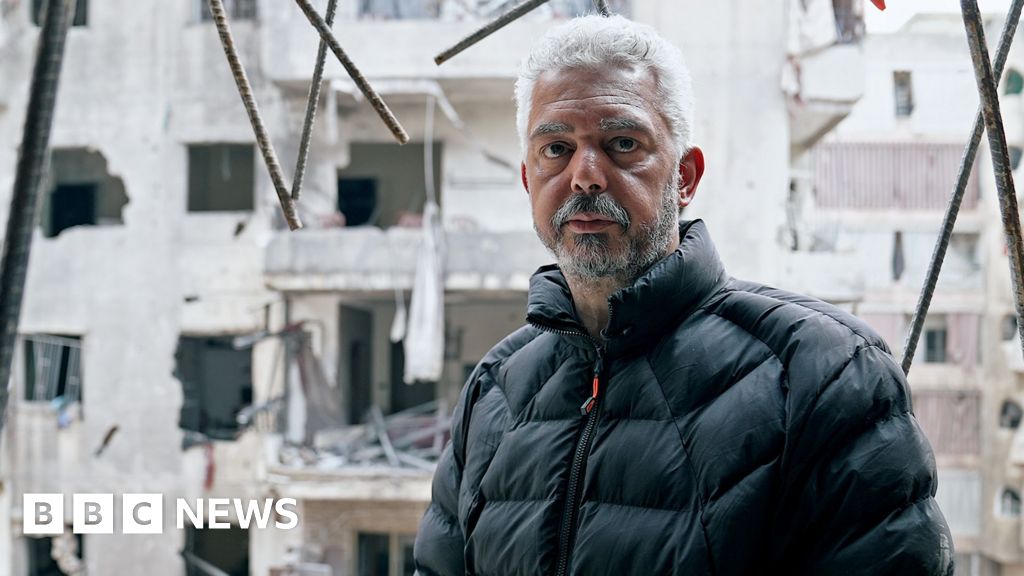
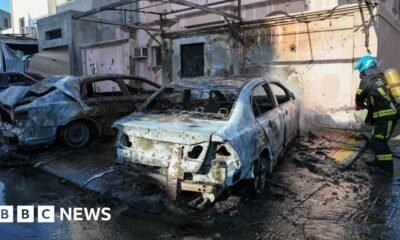
In the southern suburbs of Beirut, the neighbourhood of Hay el Sellom is barely recognisable.

What was once a densely populated, lively community is now a landscape of collapsed concrete, twisted metal and exposed wires. Homes have been reduced to layers of rubble. Staircases lead nowhere. The sounds of everyday life have been replaced by silence.

Despite repeated Israeli attacks since the start of the Iran war on other parts of Beirut's southern suburbs, where Hezbollah holds sway, residents say this neighbourhood remained calm until the afternoon of 8 April.

Beirut's southern suburbs had faced repeated Israeli evacuation orders and air strikes since the start of the war, but residents told us few people left Hay El Sellom, as they had nowhere to go. They also said that this neighbourhood had remained relatively calm.

On that Wednesday, Mohammed's son Abbas was at home asleep when the building was hit by an Israeli air strike. "The three floors above mine all fell into one room," Mohammed says. "They all came down together… on top of him."

It was part of a deadly wave of strikes that begun at 14.15 local time and saw about 100 targets across Lebanon hit in the space of just 10 minutes, according to Israel.

The destruction wrought in this brief window would surpass that of any other day in this war. The stated targets included Hezbollah command centres and military sites, but among the casualties were many ordinary Lebanese citizens.

The death toll for the day reached 361, according to the Lebanese authorities, with more than 1,000 injured.

In the weeks after the attack, the BBC visited some of the areas hit to piece together what happened on that day. We met Mohammed in the ruins of his apartment.

"This is the second home I've lost," he says. "In the last war [in 2024] I lost a home. And in this war I lost another.

"I wish it was just my home that I lost, and that my son survived. This brick can be rebuilt. But nothing will bring back my son."

He is adamant that everyone who died were residents of the building. "If I thought there was even a 1% chance that someone from Hezbollah lived here, I wouldn't have stayed," he says. "I would never risk my son's life."

"Maybe, since I'm 45 years old, I wouldn't worry about the risk to myself but a young man with his whole life ahead of him – I would not put him in a building if anyone was there."

Following the death of his son, Mohammed expressed his sympathies for Hezbollah, asking it to defend Lebanon, in an interview with local media. That's a sentiment echoed by many people we spoke to in areas that have been consistently attacked by Israel.

Hezbollah – an Iran-backed militia and political party based in Lebanon – had fired rockets into Israel on 2 March, in response to US and Israeli attacks on Iran. A wider Israeli occupation of southern Lebanon followed, and further attempts to destroy the Hezbollah leadership.

Earlier on 8 April, a temporary ceasefire between the United States and Iran had been announced, a pause in a wider regional war that had already reshaped the Middle East.

Even though Israel said Lebanon would not be included, people on the ground were cautiously hopeful – until the assault began.

By analysing verified footage, social media posts and satellite imagery and comparing these with eyewitness accounts, we have identified at least five strikes that hit Hay el Sellom in quick succession.

Some Israeli media reported Ali Mohammed Ghulam Dahini was killed in the neighbourhood, and say he was a senior Hezbollah figure. We also found a memorial poster which describes him as a Hezbollah fighter. We asked the Israel Defense Forces (IDF) if Dahini was a target, but it did not respond to this question, nor did it provide specific information about who or what was being targeted in Hay el Sellom.

What is clear is the scale of civilian casualties. The Lebanese health ministry has told us more than 80 people were killed in this neighbourhood. Our analysis shows that at least 15 of those who died were children.

The narrow roads that run between tightly packed buildings in Hay el Sellom slowed rescue efforts. Residents describe people trapped under rubble, calling out for help, sending messages and waiting.

One of the first to arrive at a nearby hospital was Ghassan Jawad. He had been asleep when the building collapsed around him and his family.

"I suddenly found myself underground," he says. "I thought I was dead." He remembers the sound of people screaming. "I started to pray because I knew that was it."

Then, he says, something unexpected happened. "My cat started digging. She made a small hole so I could breathe."

After about 10 minutes, he heard voices above him, as neighbours began digging through the rubble. "They brought hammers and metal bars," he says. "They dug me out." But others did not survive.

"I could hear people dying," he says quietly. "I heard my mother praying next to me… then her voice stopped." His mother, two sisters and their children were all killed. "It became silent," he says. "Completely silent."

Just four miles away, in central Beirut, another neighbourhood was also struck -Corniche al Mazraa, one of the city's busiest areas. At 14:15 a gym class was in progress, a restaurant was preparing food, and a barber was mid-cut.

Then with no prior warning the explosions came, killing 16 people, according to the Lebanese Health Ministry.

It was the first time this neighbourhood had been targeted in the latest war.

Noha, a fitness instructor, was at work seven storeys above street level when two bombs hit a confectionary company's warehouse, causing a powerful blast that damaged surrounding buildings.

She told me that she had often watched from a distance as the southern suburbs of Beirut were pounded, never thinking that the attacks would reach the heart of the city. "For us, this happened without warning," she says.

"I looked out and found the world was black. I found people all covered in blood. I found people on the floor."

Noha questions why the area was struck. "The target was civilian. Certainly, a civilian target," she says. "We are the ones who were hurt."

We searched for evidence of a Hezbollah target and could not find one. We also asked the IDF, but it did not respond.

We have identified at least four other strikes that occurred within a one-mile radius of the gym.

Across the country, similar scenes were unfolding within the same 10-minute window. From Hermel in the north, across the Bekaa valley to villages in the deep south, strikes were reported almost simultaneously.

The southern city of Sidon was among those struck without warning, with bombs flattening the Hezbollah-affiliated al Zahraa religious complex.

Rahma, 27, and Rayan, 22, young women from a family forced to flee their home near the Israeli border, were visiting the mosque when the attack came.

"They said they were going to pray," says their mother, Kawkab. "Half an hour later, the complex was hit." Both girls were killed.

Al Zahraa's cleric, Sheikh Sadiq Naboulsi, was also killed in the attack. He had deep ideological and family ties to Hezbollah, although did not himself hold an official position. Another man killed here – Mohammed Ma'ani – was a senior Hezbollah official in the group's liaison and co-ordination unit. The IDF declined to confirm whether either men were the intended targets.

It has also been possible to identify seven of the other nine individuals reportedly killed here. All the available evidence suggests they were civilians.

The IDF says it targeted 250 Hezbollah operatives that day but has not provided a full list of names. Lebanon's health ministry disputes this, saying the vast majority of those killed were civilians.

Asked what steps were taken to protect civilians, the IDF said it made "extensive efforts to mitigate harm to uninvolved individuals".

The IDF also said that most of the targeted sites were located "within the heart of the ci

📰 மூல செய்தி (Source): https://www.bbc.com/news/articles/c202652vvnjo?at_medium=RSS&at_campaign=rss

முக்கியச் செய்திகள்

Estonia says Nato jet shot down drone over its territory

Published

on

Estonia has said a Nato fighter jet shot down a drone, which it suspects was a Ukrainian projectile knocked off course by Russian electronic jamming, over its territory.

Defence Minister Hanno Pevkur said a Romanian F-16 fired a missile and drone debris fell in a marshy area in central Estonia on Tuesday. No damage was reported.

Ukraine reacted by accusing Russia of deliberately redirecting Ukrainian drones launched at "legitimate military targets" in Russia, apologising to "Estonia and all of our Baltic friends for such unintended incidents".

Russia has not commented on the latest in a series of recent drone incursions over Nato members Estonia, Latvia and Lithuania.

Last week, Latvian Prime Minister Evika Silina resigned following a political crisis over Russia-bound Ukrainian drones straying into Latvian territory.

Earlier this month, two Ukrainian drones hit an empty oil storage site in Latvia. Ukraine said this was the result of electronic jamming by Russia.

A similar incursion was reported by Estonia and Latvia in March.

Moscow has accused the three Baltic states of allowing Ukraine to use their "air corridors" to strike targets inside Russia – a claimed denied by Tallinn, Riga and Vilnius.

Ukraine has recently intensified its drone and missile attacks against targets in Russia, including oil and gas facilities near the Baltic states.

Russian President Vladimir Putin launched a full-scale invasion of Ukraine in 2022.

At Tuesday's news conference, Pevkur said the drone was shot down shortly after 12:00 local time (09:00 GMT) between the lake of Võrtsjärv and the town of Põltsamaa.

He said the projectile had been identified as a potential threat even before it entered Estonia's air space.

"We received early information from Latvia about a drone that had strayed off course, and Estonia tracked the drone until Romanian fighter jets participating in the Baltic air policing mission shot it down," the Estonian defence ministry said in a statement.

Pevkur added he had "immediately" discussed the incident with his Ukrainian counterpart, who apologised for the incident.

"Estonia has not granted permission to use its airspace to anyone other than its allies, and the Ukrainians have not asked for this permission," the Estonian defence minister said.

Local media outlets later published photos of what they said were drone fragments on the ground.

The drone crashed into a forest, about 30m (98ft) from the nearest residential building, Estonia's ERR public broadcaster reported.

It quoted a local resident as saying: "There was a loud bang and I saw the drone fall from the sky."

In Ukraine, Foreign Ministry spokesman Heorhii Tykhyi said "Russia continues to redirect Ukrainian drones into the Baltics" and did this "on purpose, together with intensified propaganda".

In a statement, he said: "We apologise to Estonia and all of our Baltic friends for such unintended incidents," stressing "we use the Russian airspace to get to them".

His comments came just hours after Russia's foreign intelligence agency SVR said that Ukraine was planning to launch its drones against Russian targets from Estonia, Latvia and Lithuania.

SVR reported that Ukrainian drone military personnel had already been deployed at military bases in Latvia.

Latvia dismissed the claim as Russian "disinformation", with the foreign ministry saying Riga "has not given its consent for its territory and airspace to be used to carry out attacks against targets in the Russian Federation".

And Ukraine's Tykhyi said "there is no truth in Moscow's latest set of falsehoods accusing Ukraine of preparing attacks against Russia from the territory of Latvia".

There is growing concern in the three Baltic states on the easternmost flank of Nato that Moscow is planning major provocations to test the resolve of the military alliance.

Last year, more Nato countries agreed to move troops and fighter jets eastwards after more than a dozen drones had entered the airspace of Poland, another member of the alliance.

📰 மூல செய்தி (Source): https://www.bbc.com/news/articles/c302jy8z4vro?at_medium=RSS&at_campaign=rss
Continue Reading

முக்கியச் செய்திகள்

Southampton expelled from play-offs for spying

Published

on

Spygate is alleged to have taken place two days before Middlesbrough play-off semi-final first leg against Southampton

Southampton have been thrown out of the play-offs after admitting they spied on three clubs in the Championship season.

Middlesbrough, beaten by Southampton in the semi-final, have been reinstated and will now play Hull City for a place in the Premier League.

The EFL charged Saints with watching training sessions involving Oxford United and Ipswich Town, in addition to filming Middlesbrough as they prepared for the first leg of their play-off semi-final on 7 May.

The independent disciplinary commission also handed Southampton a four-point deduction in the Championship for next season.

Saints will now miss out on a game dubbed the richest in world football, with the winners of the play-off final guaranteed a minimum £110m in Premier League broadcast revenue.

The final will remain on Saturday at Wembley with the kick-off time to be confirmed.

Southampton admitted to "multiple breaches of EFL regulations related to the unauthorised filming of other clubs' training", the EFL said.

The club have also received a reprimand in respect of all the charges.

Sources have confirmed to BBC Sport that Southampton will lodge an appeal on Wednesday and will argue that the punishment is disproportionate.

The EFL said it would be "working to try and resolve any appeal on Wednesday 20 May".

It added that "subject to the outcome, it could result in a further change to Saturday's fixture".

The appeal will be heard by an Independent League Arbitration panel with three new members.

The EFL said in a statement: "Southampton was first charged on Friday 8 May, with further charges issued on Sunday 17 May in relation to additional breaches during the 2025-26 season.

"Those additional charges arose from matters identified after the initial proceedings involving Middlesbrough were initiated.

"Southampton admitted breaches of regulations requiring clubs to act with the utmost good faith and prohibiting the observation of another club's training session within 72 hours of a scheduled match.

"The admitted breaches concern fixtures against Oxford United in December 2025, Ipswich Town in April 2026 and Middlesbrough in May 2026."

Southampton did not win any of the three games – they lost 2-1 at Oxford, drew 2-2 at home to Ipswich and claimed a 0-0 draw at Boro.

The statement continued: "The EFL is now in discussion with all three clubs regarding the implications of today's decision and will make a further announcement in due course."

Middlesbrough issued a statement which said they "welcome the outcome".

"We believe this sends out a clear message for the future of our game regarding sporting integrity and conduct," it added.

"As a club, we are now focused on our game against Hull City at Wembley on Saturday. Ticket information for our supporters will be available shortly."

Southampton had already sold tickets for Saturday's game, and their supporters will receive a full refund.

They must now wait to see if the Football Association issues any charges for individuals involved in the spying. The EFL can only apply sanctions against its member clubs.

After a spying case at the 2024 Olympic Games, three members of Canada's staff, including the head coach, were banned from all football by Fifa for a year.

Middlesbrough were at their Rockliffe Park training base preparing for the game against Southampton 48 hours later.

The spy, Southampton analyst intern William Salt, is said to have parked at the golf club, then walked a couple of hundred yards down a road which leads to a raised area of ground.

Sources told the BBC that the accused simply stood pointing his mobile at the training session, while wearing in-ear headphones.

Middlesbrough staff believe he may have been live-streaming the session via a video call.

A member of Middlesbrough's staff approached, say BBC sources, but the person would not identify himself. Then, he quickly deleted some content off his phone before running off into the golf club.

He jogged into the toilets, changed his clothes and hurriedly left the site.

Middlesbrough's photographer took photos and matched him to a photo on the Southampton website. One of those pictures was subsequently made public last week.

Boro were furious and quickly reported it to the EFL.

The EFL charged Southampton with breaking two regulations.

EFL Regulation 3.4, which requires clubs to act towards each other with the utmost good faith; and

EFL Regulation 127, which prohibits any club from observing, or attempting to observe, another club's training session within 72 hours of a scheduled match between the two clubs.

Could Southampton be kicked out of play-offs over Spygate?

Boro want Southampton out of play-offs over Spygate

How Southampton allegedly spied on Middlesbrough

📰 மூல செய்தி (Source): https://www.bbc.com/sport/football/articles/cwy2pnpqjl7o?at_medium=RSS&at_campaign=rss

Continue Reading

முக்கியச் செய்திகள்

Grant Shapps quits aerospace firm after watchdog probe

Published

on

A former Conservative defence secretary has quit his job with a missile manufacturer over concerns he broke the rules governing the employment of former ministers.

Sir Grant Shapps resigned as chairman of Cambridge Aerospace on 30 April "to simplify matters" and after the firm secured a multimillion-pound government missile contract.

He said he had had no involvement in the deal or the company's military work and, despite a title of "chairman", had not chaired its board or been a director, but was "one of several co-founders".

Ministerial ethics watchdog Sir Laurie Magnus said he had "allowed a perception of impropriety to develop" and "failed to uphold the standards expected in the rules".

Sir Grant served as defence secretary under Rishi Sunak and has held a number of ministerial posts in government.

He was the Conservative MP for Welwyn Hatfield in Hertfordshire from 2005 to 2024, when he lost his seat in the general election.

The now defunct Advisory Committee on Business Appointments (Acoba) approved his role with the company in 2025 on condition that he play no part in its defence-related work until two years after he left office.

Acoba's decision was criticised by anti-corruption campaigners at the time, including Labour MP Phil Brickell, who said Sir Grant's claim the company was focused on "civilian aerospace" was "stretching credulity" given the firm's own description of itself as involved in "defence tech".

In correspondence with Sir Grant, Sir Laurie questioned whether he had complied with this condition, noting the company "seems publicly to have only one project, which is defence-related".

The watchdog initially contacted Sir Grant following the announcement on 10 April of a contract for Cambridge Aerospace to supply the UK and its Gulf allies with "Skyhammer" interceptor missiles.

Sir Laurie said the announcement "appears to be at direct variance with your original description of the role".

He added: "It is, on the face of it, difficult to reconcile the current scope of Cambridge Aerospace's operations with the restriction that you avoid defence matters entirely, and in the absence of a fresh application for advice in view of changes to the nature of the business of Cambridge Aerospace under your chairship."

In response to Sir Laurie's letters, Sir Grant said he had "scrupulously" followed Acoba's rules and was not involved "in any way, at any time, in any capacity" in the contract between Cambridge Aerospace and the Ministry of Defence.

But he apologised for not seeking further advice as the company began working on defence matters, saying this was "an oversight for which the excessive speed of events is the only mitigating circumstance".

Sir Grant also declined to answer a series of detailed questions from Sir Laurie, citing "legal obligations of confidentiality which I cannot unilaterally waive".

Brickell said he welcomed Sir Grant's resignation, but called for tougher sanctions for former ministers who broke the rules.

Do you have a story suggestion for Cambridgeshire? Contact us below.

Follow Cambridgeshire news on BBC Sounds, Facebook, Instagram and X.

📰 மூல செய்தி (Source): https://www.bbc.com/news/articles/cvgzjlqv1q9o?at_medium=RSS&at_campaign=rss
Continue Reading

Trending

Copyright © 2024 by 7Tamil Media, All rights reserved.