Connect with us

உலகம்

Morocco World Cup 2026 preview: Players to watch, group and squad list

Published

on

The Atlas Lions aim to better their historic 2022 semifinal appearance but have had a chaotic run-in.

Previous World Cup appearances: 6

Best performance: Fourth place (2022)

First appearance: 1970 (Mexico)

Top goal scorer: Youssef En-Nesyri (3)

Most appearances: Achraf Hakimi, Hakim Ziyech (10)

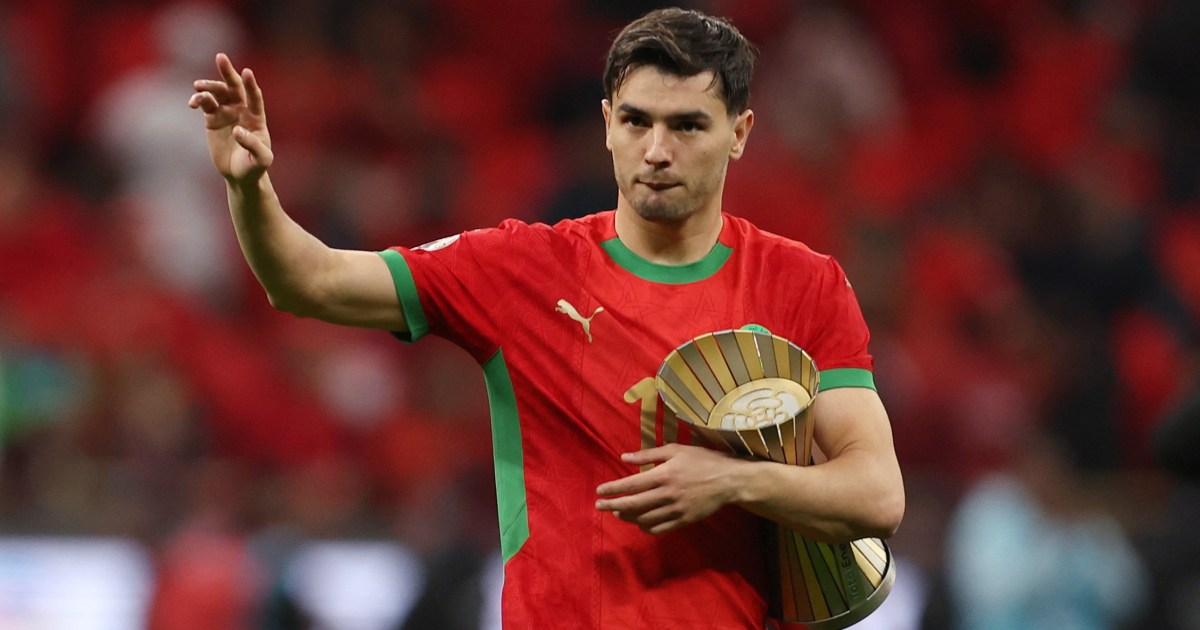
Player to watch: Brahim Diaz

FIFA world ranking: 8

The FIFA World Cup begins on June 11. You can follow the action on Al Jazeera’s dedicated World Cup 2026 page with all the latest news, match build-up and live text commentary, and keep up to date with group standings, real-time match results and schedules.

Four years ago, the Morocco made history by becoming the first African and Arab team to reach the World Cup semifinals in Qatar, eliminating Spain and Portugal along the way, before narrowly losing to France.

They come into the 2026 edition again boasting a strong squad and hoping to replicate – or go even further – than their sensational 2022 run.

However, the Atlas Lions also find themselves in rather more chaotic circumstances this time around with a managerial departure less than three months out from the tournament, and bruised by a wild Africa Cup of Nations (AFCON) final that provoked a diplomatic row with Senegal.

The squad is still dealing with the fallout from one of the most incendiary episodes in African football history.

January’s final in Rabat descended into chaos when Senegal’s players walked off the pitch in protest after Morocco were awarded a contentious stoppage-time penalty following a VAR review with the game at 0-0.

The decision to award the spot kick sparked trouble among the Senegal fans in the crowd. Eighteen spectators were were later jailed following the disruption.

After Senegal finally returned to the pitch after a lengthy delay, Real Madrid and Morocco star Brahim Diaz missed the penalty with a poor attempt at a panenka. Senegal went on to win the game 1-0 with a goal in extra-time.

However, the saga did not end there. In March, CAF stripped Senegal of the title and awarded it to Morocco, ruling that Senegal had forfeited the game by leaving the pitch.

Senegal have appealed at the Court of Arbitration for Sport (CAS), and have made allegations against CAF and Morocco.

For the Atlas Lions, being belatedly crowned champions by officials has done little to ease the pain as well as a sense of injustice, and the ongoing saga continues to leave a toxic fallout for the team.

Walid Regragui, the coach who masterminded the 2022 run, parted ways with the team in March.

It is likely that he ultimately paid the price after the manner of Morocco’s narrow defeat to Senegal in the AFCON final on home soil, as well as reported arguments between him and the country’s football federation over the direction of the team.

His replacement, Mohamed Ouahbi, led Morocco’s Under-20 side to the 2025 Youth World Cup title as the federation said a “strategic decision” was behind the appointment.

“It’s a desire not to waste time and to take a different direction,” a source close to the federation told the AFP news agency.

But for Ouahbi, 49, stepping up to a first senior World Cup under such acrimonious circumstances is an extremely challenging task – especially as he has only ever managed youth teams in his career.

“I’m not here to build, because the foundations are already in place. I’m here to keep performing,” Ouahbi said after his appointment.

Whether the new coach has the authority and tactical acuity to thrive at the highest level remains to be seen, and it will be a bit of a baptism of fire.

Up until that penalty miss, talented forward Brahim Diaz had been the best player at the tournament, driving Morocco to the final as he won the Golden Boot with five goals.

The Real Madrid playmaker is quick, clever and capable of producing something out of nothing – giving Morocco a touch of genuine magic between the lines.

He may be carrying a psychological weight into this tournament after the AFCON final fracas, but Morocco will hope he will channel that frustration into having an outstanding World Cup.

While much of the squad is fairly well established, the exciting 18-year-old Lille midfielder Ayyoub Bouaddi, who has switched allegiances after representing France at junior level, made the squad.

“A dream come true, but above all the start of a new chapter, with even more work, rigour and responsibilities,” Bouaddi said on X.

“I am aware of the privilege I have to defend ‌these colours, and I will give everything to represent my country in the best possible way.

“A thought also for France. My choice in no way diminishes the pride and gratitude for having been able to wear that jersey in my youth.”

Perhaps surprisingly, Youssef En-Nesyri, who scored the winning goal against Portugal in the 2022 quarterfinal, did not make the cut.

Elsewhere, Bilal El Khannouss is a highly technical and creative attacking midfielder, while Sofyan Amrabat gives the side combative energy in defence.

Marseille defender Nayef Aguerd has been selected, despite not playing since March due to injury.

Last season, the PSG right back scored 11 goals and provided 14 assists en route to helping his club win a historic treble of the Champions League, Ligue 1 and the French Cup – he was subsequently named CAF African Player of the Year.

This season has been less productive so far in terms of goals and assists. Hakimi increasingly attracts intense attention from opponents keen to neutralise his threat. His season has also been overshadowed by issues off the pitch as it was announced earlier this year that he will stand trial for rape in France – allegations which Hakimi denies.

Despite the off-field issues and reduced returns this season, his overlapping runs, delivery and goalscoring threat – on top of his defensive prowess – arguably means he remains the best right back in the world.

Group C certainly has its challenges for Morocco, not least in their opening game against Brazil. While the Brazilians no longer quite hold the fear factor of previous tournaments, they are still packed with quality.

Nevertheless, Morocco will fancy their chances of getting something from that game and sending a statement to their rivals.

Easier ties await after that, and although an improving Scotland are no pushovers and Haiti could provide an unknown quantity, Morocco should be winning both of those games if they are to mount a serious push for the title.

Morocco also faced Brazil and Scotland in the France 1998 World Cup. The Atlas Lions put in a respectable performance then – recording a 3-0 win over Scotland while losing by the same score to Brazil and drawing with Norway – but finished third in the group and failed to progress to the round of 16.

⚽ June 13: Brazil vs Morocco (New Jersey, US), 6pm ET (22:00 GMT).

⚽ June 19: Scotland vs Morocco (Boston, US), 6pm ET (22:00 GMT).

⚽ June 24: Morocco vs Haiti (Atlanta, Georgia), 6pm ET (22:00 GMT).

An inexperienced coach and turmoil around the squad will probably lead them to fall short of matching their 2022 exploits.

Goalkeepers: Yassine Bounou (Al Hilal), Munir Mohamedi (RS Berkane), Ahmed Tagnaouti (Royal Armed Forces).

Defenders: Noussair Mazraoui (Manchester United), Anass Salah-Eddine (PSV Eindhoven), Youssef Belammari (Al Ahly), ‌Nayef Aguerd (Marseille), Chadi Riad (Crystal Palace), Issa Diop (West Ham United), Redouane Halhal (KV Mechelen), Achraf Hakimi (Paris St-Germain), Zakaria El Ouahdi (Genk).

Midfielders: Samir El Mourabet (Strasbourg), Ayyoub Bouaddi (Lille), Neil El Aynaoui (Roma), Sofyan Amrabat (Real Betis), Azzedine Ounahi (Girona), Bilal El Khannouss (Stuttgart), Ismael ‌Saibari (PSV ‌Eindhoven).

Forwards: Abdessamad Ezzalzouli (Real Betis), Chemsdine Talbi (Sunderland), Soufiane Rahimi (Al Ain), Ayoub El Kaabi (Olympiacos), Brahim Diaz (Real Madrid), Yassine Gessime (Strasbourg), Ayoub Amaimouni-Echghouyabe (Eintracht Frankfurt).

📰 மூல செய்தி (Source): https://www.aljazeera.com/sports/2026/6/3/morocco-world-cup-2026-preview-players-to-watch-group-and-squad-list?traffic_source=rss

உலகம்

UK-China ‘ice age’ thaws: Why the West needs Beijing

Published

on

British Foreign Secretary Yvette Cooper hails ‘candour and respect’ in new ties with Beijing, despite differences.

Eight years after a British prime minister and foreign secretary made back-to-back visits to China, the Keir Starmer government is once again trying to reset relations with Beijing after a long period of what Starmer had in January described as an “ice age” in relations.

Prime Minister Starmer went to Beijing in January, and Foreign Secretary Yvette Cooper is currently visiting on a three-day trip, as the United Kingdom and China try to revive economic and diplomatic ties despite lingering differences over security, human rights and the Russian war on Ukraine. Former PM Theresa May and her Foreign Secretary Jeremy Hunt made similar visits to China soon after each other in 2018.

The UK isn’t alone. Cooper’s visit to Beijing this week is the latest in a string of visits by global leaders and officials seemingly eager to engage with the second-largest economy in the world at a time of heightened global instability.

During her trip so far, Cooper has called for the two nations to work together to confront a host of global challenges, including conflicts in Iran and Ukraine and the Ebola outbreak in the Democratic Republic of the Congo.

“It is in our shared interest to have a rules-based international order and to find ways to reduce rising geoeconomic tensions,” the foreign secretary said on Tuesday as she met Chinese Vice President Han Zheng at Beijing’s Great Hall of the People at the start of her visit.

While acknowledging “areas of disagreement” between London and Beijing, Cooper insisted that approaching discussions with “candour and respect” would help to increase mutual understanding.

“Those frank and constructive discussions can help us make meaningful progress for the benefit of our two countries and the wider world,” she said.

The rhetoric about a “rules-based order” comes at a time when, under President Donald Trump, the United States – the country that led the creation of the post-World War II global architecture – increasingly faces accusations of ripping apart the international laws that were its foundation. China has in recent years positioned itself as a grown-up, responsible and stable global power, in contrast to the US.

But behind Cooper’s comments, say analysts, is also a deeper, more pragmatic acknowledgement: Western nations like the UK need China now more than ever.

The West has come to rely heavily on China, especially when it comes to the production of advanced goods – like semiconductors, medical instruments and aerospace components – as well as its stranglehold on many of the earth’s critical natural resources required to manufacture them all, said John Minnich, assistant professor in the Department of International Relations at the London School of Economics.

“This dependence is growing by the day,” Minnich told Al Jazeera. “Whether this is a good thing for the West or this trajectory is politically sustainable is another matter.”

Getting on a better footing with Beijing is a priority now, say observers. “The UK cannot afford a purely adversarial relationship with China,” Jing Gu, director of the Centre for Rising Powers and Global Development at the Institute of Development Studies in the UK, said.

“It’s a pragmatic response to the UK’s own global economic position and needs, and to the changing winds of US-China relations under the second Trump administration,” Minnich said.

This rapprochement has been in the works since the UK’s governing Labour party swept to power in July 2024. Former Foreign Secretary David Lammy travelled to China for a two-day diplomatic trip in October that year, as part of initial efforts to thaw what Starmer would dub a diplomatic “ice age” between the two countries. Starmer’s own trip in January, to meet President Xi Jinping, laid the groundwork for deeper economic engagement, including a $15bn investment by British pharmaceutical company AstraZeneca and visa-free travel for Britons.

On Tuesday, China’s Vice President Han gave Cooper a warm welcome, along with a cultural visit to the Forbidden City, where she was shown around the world’s largest imperial palace complex by a tour guide before meeting her counterpart, Wang Yi, for talks at Diaoyutai State Guesthouse.

In his address at Beijing’s Great Hall of the People, Han stressed the need to “intensify interactions and strengthen dialogue and cooperation for the sake of world peace and stability and for the growth of our respective economies”.

“Currently, the ongoing geopolitical conflicts are dealing a heavy blow to world peace and stability and affecting the prospect of the world economy,” he continued. Addressing Cooper, he said her visit would help “move our relations steadily forward along the strategic direction established by the leaders of our two countries”.

It’s not just the UK. A growing number of Western countries are seeking to reset ties with China at a time when global geopolitical tensions are causing havoc with supply chains and huge market volatility. This year, leaders and officials from the US, Ireland, Spain, Germany, Canada and Finland are just a number of those who have travelled to China in a flurry of diplomatic engagement.

US President Donald Trump’s trip to China last month signalled a shift in direction after last year’s “trade war”, in which the two sides slapped each other with tit-for-tat tariffs and China threatened to restrict exports of most of its rare-earth metals. Those tensions had been rising since Trump’s first term as president until he and Xi called a temporary truce late last year to allow for trade talks.

Also notable, however, was that Washington’s rapprochement with Beijing coincided with a tense period in US-UK relations.

Trump publicly took Starmer to task over his refusal to assist in the US-Israel war on Iran or to send naval backup to help the US reopen the strategic Strait of Hormuz. Similarly, Trump’s outbursts over the Western response to the war generally have depicted the EU as a foe and NATO as obsolete.

For the UK, Trump’s unpredictability is what has tipped the balance in favour of reinforcing bilateral cooperation with Beijing, as Britain struggles with sluggish economic growth and global energy price shocks triggered by the war on Iran.

And there is “plenty of room for mutual beneficial economic cooperation” between the two countries, Minnich said. “The UK is unusual among major Western countries in that its economic strengths complement rather than compete with China’s.

“Unlike Germany, the UK is not heavily dependent on high-value-added manufacturing, where China is increasingly competitive. Instead, it specialises in things like high-value financial and other services in which China remains relatively weak,” he added.

Cooper is expected to fly to Shenzhen, a major technology hub, to discuss trade links as well as “the challenges of the future of AI as it rapidly changes our world”. This is significant because China is outpacing almost every country in the world in producing ideas and innovation in areas that matter to the UK, including renewable energy.

Last year, the UK and China signed a partnership agreement on clean energy covering academic, regulatory, industrial and commercial partnerships. During Starmer’s visit to China earlier this year, the prime minister announced that Octopus Energy, the UK’s largest electricity supplier by market share, had formed a joint venture with China’s PCG Power to trade renewable energy in the Asian country.

Access to affordable, clean technology – which China has bundles of – could help the UK reduce the cost of decarbonisation and accelerate the energy transition. “But this cannot mean passive dependence,” Gu, at the Institute of Development Studies, said. “Middle powers such as the UK are not simply choosing sides; they are trying to buy time – time to support growth, accelerate the green transition, re

📰 மூல செய்தி (Source): https://www.aljazeera.com/news/2026/6/3/uk-china-ice-age-thaws-why-the-west-needs-beijing?traffic_source=rss

Continue Reading

உலகம்

Hezbollah video shows attack on Israeli troops at Lebanon’s Beaufort Castle

Published

on

Hezbollah video shows attack on Israeli troops at Lebanon’s Beaufort Castle

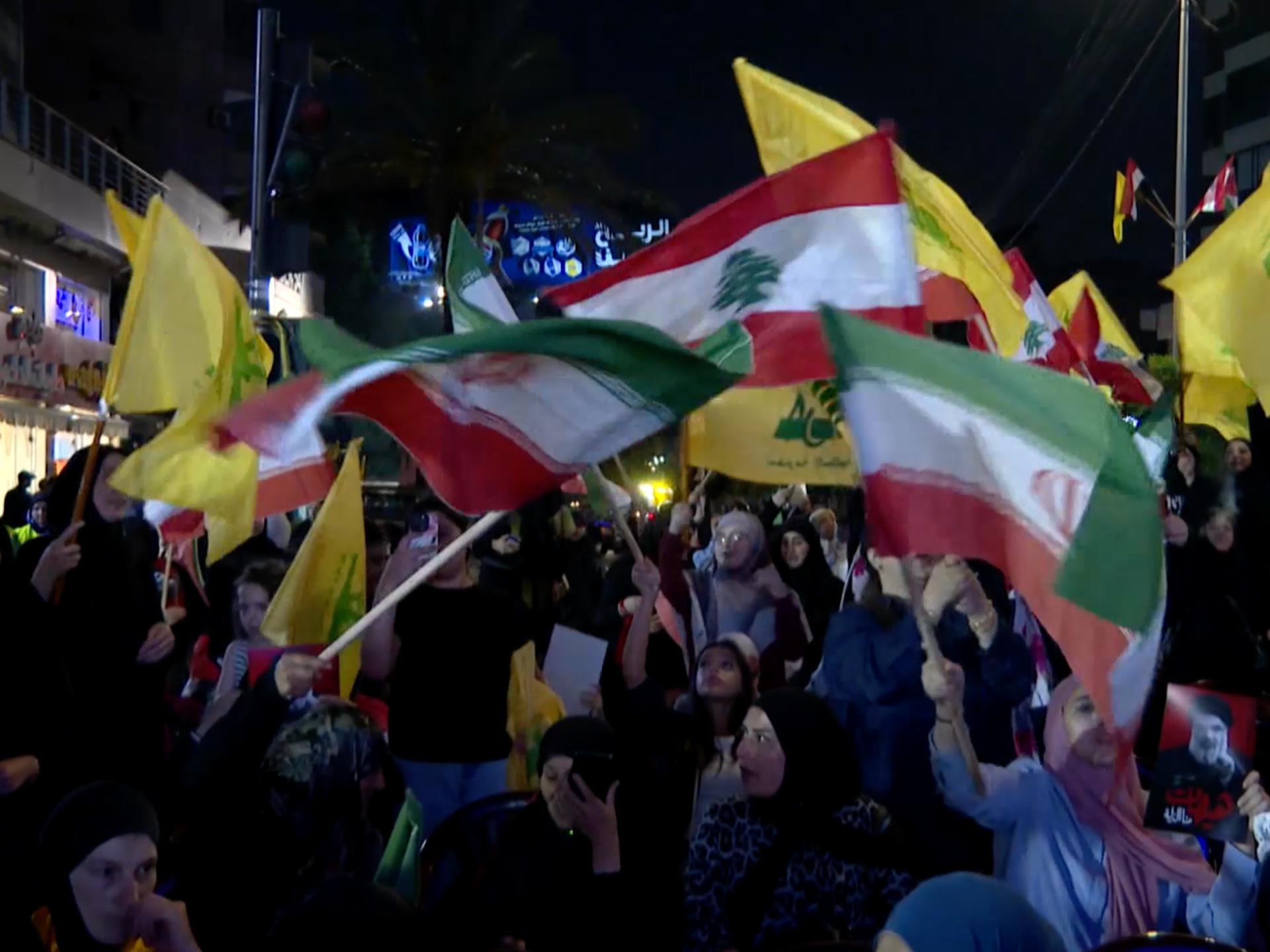
Hezbollah has released drone video showing attacks targeting Israeli forces occupying Beaufort Castle in southern Lebanon. Israeli troops seized the medieval fortress on May 31.

📰 மூல செய்தி (Source): https://www.aljazeera.com/video/newsfeed/2026/6/3/hezbollah-video-shows-attack-on-israeli-troops-at-lebanons-beaufort-castle?traffic_source=rss

Continue Reading

உலகம்

How social media changes the way we see war

Published

on

We see war now as we see everything else – through a screen. Genocide, displacement and mass violence are livestreamed to our phones, tucked between cat videos and advertisements for products designed to distract us.

We don’t choose to be spectators, we become them almost unconsciously – scrolling, watching and moving on. In the age of digital spectatorship, the key question is no longer whether we see human suffering, but what, if anything, we choose to do once we have.

Join Ali Rae in Episode Five of All Hail The Military – a five-part series that reveals the systems, power and hidden complicities that sustain global militarism – and the profound impact it has on us all.

📰 மூல செய்தி (Source): https://www.aljazeera.com/video/all-hail/2026/6/3/how-social-media-changes-the-way-we-see-war?traffic_source=rss

Continue Reading

Trending

Copyright © 2024 by 7Tamil Media, All rights reserved.