Connect with us

முக்கியச் செய்திகள்

I gave up my job due to the stress of my child's food allergies

Published

on

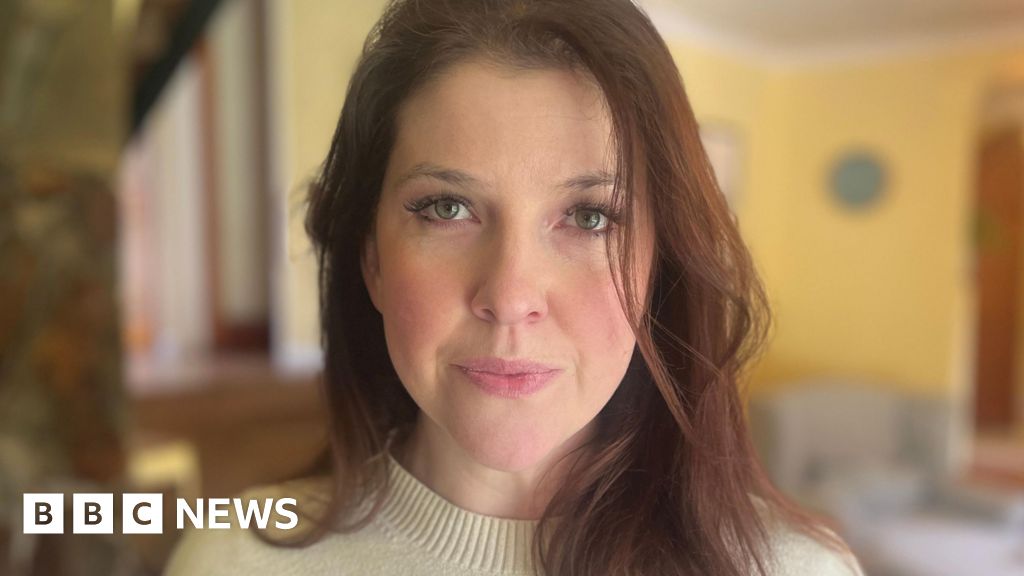
A mother has said she felt forced to give up her job to look after her daughter due to the "horrific ongoing stress" of living with the five-year-old's life-threatening food allergies.

Katy, from Cornwall, said she thought she was going to lose Molly when she suffered a severe allergic reaction while on a family holiday in Italy, aged one.

After eating a meal at a restaurant, Molly "started getting really lethargic, then just went floppy", Katy recalled.

"We were terrified… We just ran through the streets trying to get back to the hotel," she continued.

"It was the worst experience of mine and my husband's life."

Katy administered an adrenaline pen and Molly was taken to hospital where she later recovered, but Katy said the fear had never left her.

Her experience comes as doctors, charities and patients call for wider access to treatment on the NHS.

The National Allergy Strategy Group is urging the government to make desensitisation treatments like food oral immunotherapy (OIT), which can cost thousands of pounds privately, more accessible on the NHS.

OIT is a treatment that involves patients consuming very small, carefully measured amounts of the food they are allergic to, under medical supervision. The dose is gradually increased over time to help the immune system become more tolerant.

An NHS spokesperson said it was "currently supporting a trial to gather more evidence on the use of oral immunotherapy for food allergies, while also developing guidance to support local services to improve allergy care".

Molly is allergic to milk, egg and some nuts.

Katy said the reaction happened despite her carefully explaining the risks to restaurant staff, both verbally and using translation cards.

One year later, it happened again. This time in England when Molly ate a muffin containing milk.

Katy said it was following this that she gave up her job as a lawyer to look after her daughter after realising she "didn't trust anyone with her allergies".

She had been due to return to work following maternity leave for her second child.

Although there was a "really big case" at the law firm she was with, she said she felt she had "no option" but to leave the business, halving her family's income.

Molly has now started school and Katy said she felt she could consider going back to work as she had confidence in her school's policies – and because it had also been announced allergies training would be made compulsory in England.

Food allergy rates in England are estimated to have doubled in the decade to 2018, according to a major study published in The Lancet in 2024.

The sharpest rise has been among children under five, with about 4% affected.

Emergency hospital admissions for food‑related anaphylaxis also doubled in the 20 years to 2024, reaching 1,709 cases.

Professor Adam Fox, who specialises in paediatric allergy, said allergies now had "major public health implications for millions of people".

A charity‑funded clinical OIT programme is currently running in nine NHS hospitals in England, using shop-bought foods to treat peanut and milk allergies.

An NHS spokesperson said: "Oral immunotherapy as a treatment for food allergies is not routinely available on the NHS due to limited evidence around the effectiveness of available products."

But Fox said studies such as those by the European Academy of Allergy and Clinical Immunology (EAACI) had already provided adequate evidence that OIT was safe and effective.

"The problem is not doing the research, it's for the NHS to then put the resource and the organisational will between turning it into something that people actually have access to in a timeframe that it would be useful," he said.

A 2025 report by the British Society for Allergy & Clinical Immunology (BSACI) Registry for Immunotherapy (BRIT) highlighted "unmet need" and "unwarranted variation" in UK provision of immunotherapy.

Katy said Molly had been referred by her local NHS trust for milk OIT, but they had been told she was on a waiting list of "at least two years", that it was almost 300 miles away in London and there was "no guarantee of being accepted".

Parents Scott and Louisa, from Helston in Cornwall, sought private OIT for their five-year-old daughter Carey after she suffered an "extremely frightening" anaphylactic reaction as a toddler.

Scott said doing this was "a big sacrifice" both financially and in terms of the effort required.

The family had to travel 400 miles for every round trip to the clinic in Hampshire.

The treatment for Carey's walnut and pecan allergy cost £6,000, with a further £4,000 set aside for associated travel and hotel costs.

She was given small doses of nuts at the private clinic she attended, which was increased over time to retrain her immune system to tolerate the food.

Carey can now eat seven walnuts or pecans without having an allergic reaction so treatment was "100% worth it", Scott said.

He added Carey must continue eating the nut regularly to maintain tolerance, with her progress to be reviewed after a year.

The clinic Carey attended is run by Dr Helen Evans-Howells, a GP and allergy specialist, who described it as "a tragedy" the NHS was not offering OIT more widely.

While she understood it was under huge financial pressure, she argued earlier treatment would "ultimately save money" for the NHS in the future.

As chair of Anaphylaxis UK's clinical and scientific panel, she also said: "We are having admissions for reactions, missed days off work or school, a significant impact on their wellbeing."

She said the costs involved in OIT were due to "development of protocols, full-time access for patient support, insurance costs and the employment and training of staff".

She added her clinic operated "under robust clinical governance frameworks, including comprehensive policies for patient safety, anaphylaxis management, and escalation of care".

The current treatments have not yet passed through the NHS's regulatory process.

Food immunotherapy practitioners use ordinary foods such as nuts or milk in their programmes, rather than licensed pharmaceutical products.

Because these foods are not classified as medicines, their use in treatment is unlicensed and unregulated in the UK, BSACI said.

It added more work needed to be done on guidance for clinics.

BSACI advised they "must be suitably equipped to manage allergic reactions" with treatment "delivered by a practising allergist who is also a member of the BSACI or has other credentials that would show their learning and competency in this area".

Dr Sian Ludman, a paediatric allergy consultant at Royal Devon and Exeter Hospital, said she felt there was "a lack for our patients" in south-west England with such limited immunotherapy options for children.

"We are able to refer up to certain centres in London, for example, but their waiting list is incredibly long," she said.

She did also stress OIT was not appropriate for everyone.

The results of the NHS-supported Natasha Trial are expected in 2027.

Tanya Ednan-Laperouse, founder and trustee of the Natasha Allergy Research Foundation which has funded the trial, said the aim was "to show that everyday, shop-bought foods, taken under medical supervision, rather than expensive pharmaceuticals, can be used as an effective oral immunotherapy treatment".

She added it was hoped the findings "will show this approach is not only effective at treating food allergy but is cost effective and will therefore be adopted by the NHS".

But the BSACI said: "To meet regulatory standards it will require significant regulatory and safety issues to be addressed."

A licensed peanut allergy treatment, Palforzia, was available on the NHS for under‑18s but was later withdrawn from the global market by the manufacturer.

The decision was "not related to the quality, safety or efficacy of the medicine, but based on strategic and operational considerations," BSACI said.

Other immunotherapy treatments are licensed

📰 மூல செய்தி (Source): https://www.bbc.com/news/articles/ckgzdqy27zjo?at_medium=RSS&at_campaign=rss

முக்கியச் செய்திகள்

'My instinct was to help him': Runners help exhausted man finish Boston Marathon

Published

on

Two runners sacrificed personal bests to come to the rescue of an exhausted competitor at the Boston Marathon.

Aaron Beggs was first to stop to pull Ajay Haridasse up off the ground after he fell and could not get up.

With Haridasse still struggling to stay on his feet, another runner, Robson De Oliveira, stepped in and the pair put their arms around Haridasse to help him across the line.

The incident was filmed by several spectators who witnessed Haridasse falling shortly after the 26 mile (41.8km) mark.

On the 85th anniversary of the Blitz and ahead of a new play about it, BBC News NI talks to 93-year-old Reggie who lived through it.

Liz Kimmins acknowledged the decision was taken against a difficult funding backdrop for the public transport company.

Farmers say they are being hit on several fronts, with the price of fuel and fertiliser all facing a hike.

The remains of two adults, a young child and six babies were found during a dig in 2018.

Five people from Northern Ireland are hoping for success at the upcoming European sport stacking championships.

Aimee Oliver's problems began in her 20s following the birth of her first child.

Marie McGrath was diagnosed with bowel cancer at the start of 2026

They are among hundreds of thousands of ship plans and documents made widely accessible.

Drivers caught speeding on a stretch of road outside a rural school are being taught some lessons by the pupils.

He said he would be back and now, decades after he came to Belfast as a young bodybuilder, Arnold Schwarzenegger has returned to the city for a special honour.

There are only fewer than 200 men registered to work as a midwife in the UK and just six in Northern Ireland – and Fraser Morton is one of them.

Natalie McNally was 15 weeks pregnant when she was murdered by Stephen McCullagh in December 2022.

A real estate professor warns property rent rises in Belfast are not sustainable.

Stephen McCullagh has been found guilty of murdering Natalie McNally in her Lurgan home in December 2022.

A woman diagnosed with anal cancer has said Northern Ireland should have a clinic for patients who have had pelvic radiotherapy.

Chris Wynne, from Danske Bank, says scammers pretend to be someone from the fraud team so customers hand over information.

The grandstand at Casement Park is being removed as the demolition of the 73-year-old Belfast stadium enters its final stages.

A total of 42 umbrellas – double the original number – have now been finished to endure the Belfast weather for many years to come.

📰 மூல செய்தி (Source): https://www.bbc.com/news/videos/cj0v65l4y9yo?at_medium=RSS&at_campaign=rss
Continue Reading

முக்கியச் செய்திகள்

Lebanon accuses Israel of targeting journalist killed in air strike

Published

on

Lebanon's prime minister has accused Israel of war crimes after Israeli air strikes killed one journalist and wounded another in southern Lebanon on Wednesday.

The strike killed Amal Khalil, who worked for a Lebanese newspaper, and injured freelance photographer Zeinab Faraj.

Officials in Lebanon say they were deliberately targeted as they sought shelter in a home after an initial air strike hit the vehicle in front of them, killing two men.

The officials also accused the Israel Defense Forces (IDF) of intentionally targeting a marked ambulance as it tried to reach the journalists in the village of Tayri.

The IDF denied that it was preventing rescue teams from reaching the area and said it did not target journalists.

Journalists Khalil, 43, who worked for Lebanese newspaper Al-Akhbar, and Faraj, a freelance photographer, were travelling together. The two men who died have not been named by officials.

Lebanese Prime Minister Nawaf Salam said: "Targeting journalists, obstructing access to them by relief teams, and even targeting their locations again after these teams arrive constitutes described war crimes."

He accused Israel of repeatedly targeting media workers in southern Lebanon in what he described as "an established approach".

Salam offered condolences to Khalil's family and said that Lebanon would "pursue the crimes before the competent international forums".

In a statement, the IDF said it "does not target journalists and acts to mitigate harm to them while maintaining the safety and security of its troops".

The IDF said it identified two vehicles that had "departed from a military structure used by Hezbollah".

One of the vehicles had approached Israeli troops in a manner that was an "immediate threat" after crossing a "forward defence line", violating a ceasefire, the statement said.

The IDF said the Israeli Air Force then struck one of the vehicles, and that the "structure from which the individuals had fled was also struck".

The Lebanese health ministry said the IDF "pursued" Khalil and Faraj, "who had taken refuge from the first raid in a nearby house, targeting the house where they had sought shelter".

When a Lebanese Red Cross ambulance arrived to treat the wounded, Israeli forces directed a stun grenade and gunfire toward it, preventing it from reaching them, the ministry said in a statement.

"This constitutes a blatant double violation: obstructing the rescue efforts of a citizen known for her civic media activism, and targeting an ambulance clearly marked with the Red Cross emblem," the health ministry said.

Clayton Weimer, the executive director of Reporters Without Borders, said the IDF had received messages from the organisation, as well as journalists, asking that it allow ambulances to get to Khalil.

"The Red Cross signalled they were unable to get through because of ongoing Israeli bombardment. So that is callous disregard, on top of what appears to be a deliberate and targeted killing of a journalist."

Faraj was eventually evacuated along with two of the dead, the statement added. Khalil's body was later recovered by emergency teams, according to Lebanon's civil defence agency.

Al-Akhbar said in an article on her death that Khalil "remained steadfast in her humanitarian and professional duty".

The Guardian's William Christou, who covers the Middle East for the paper, described her in a post on X as a "professional, kind and dedicated journalist, and always a pleasure to run into in the field".

The IDF acknowledged reports that two journalists were injured as a result of the strikes, but insisted it was not preventing further rescue teams from reaching the area. It has not acknowledged Khalil's death.

The US-based Committee to Protect Journalists (CPJ) said it was "outraged" by Khalil's death.

"The repeated strikes on the same location, the targeting of an area where journalists were sheltering, and the obstruction of medical and humanitarian access constitute a grave breach of international humanitarian law," said CPJ Regional Director Sara Qudah.

In 2024, Khalil said had been the target of an "Israeli death threat" that warned her to leave southern Lebanon, local media reported. CPJ said the report raised "serious concerns of deliberate targeting".

Earlier this month, two journalists were killed in separate Israeli strikes in Lebanon – Ghada Dayekh, a presenter with privately-owned radio station Sawt al-Farah, and Suzan Khalil, a reporter and presenter on Al-Manar TV, which is affiliated with the armed group Hezbollah.

Last month, three Lebanese journalists were killed in a targeted Israeli strike in the town of Jezzine, their employers said.

Ali Shoeib, a reporter for Hezbollah-affiliated Al Manar TV, and reporter Fatima Ftouni and her brother, cameraman Mohamed Ftouni, both from Al Mayadeen channel, were killed in the strike.

At the time, the IDF confirmed it killed Shoeib and Mohamed Ftouni, describing them as "terrorists" from Hezbollah's military wing, while saying it was aware of reports a female journalist was also killed.

Lebanese President Joseph Aoun called the killings a "brazen crime" that broke the "most basic rules" of international law by targeting reporters, "who are ultimately civilians performing a professional duty".

At least 2,475 people have been killed in Israeli attacks in Lebanon since the latest war began, and more than 7,500 wounded, according to the Lebanese authorities, whose figures do not differentiate between civilians and combatants. The number includes at least 274 women and 177 children.

The Lebanese health ministry said last week that at least 100 medical workers had been killed in Israeli attacks during the war, and that more than 120 Israeli attacks have been recorded on ambulances and medical facilities. Israeli attacks have killed seven journalists In Lebanon, according to the CPJ.

Israeli authorities say Hezbollah attacks have killed two civilians in Israel since 2 March, and that 13 Israeli soldiers have been killed in combat in Lebanon.

Both Hezbollah and Israel have accused each other of violating the ceasefire agreement. The IDF said earlier on Wednesday that Hezbollah launched an attack on Israeli forces in southern Lebanon.

On the same day, Hezbollah issued four statements saying it had struck Israeli targets in south Lebanon, "in response to the Israeli enemy's violation of the ceasefire", according to the AFP news agency.

Last week, a meeting hosted by US Secretary of State Marco Rubio brought Lebanese and Israeli envoys together for the first direct, high-level contact in three decades between the two countries.

Following the talks, their governments agreed to implement a 10-day cessation of hostilities that began on Friday in order to "enable good-faith negotiations toward a permanent security and peace agreement", the US state department said.

Ahead of Thursday's follow-up talks in Washington, Lebanon's president confirmed that efforts were under way to extend the ceasefire.

Aoun said preserving Lebanese sovereignty over all of its territory was his top priority, and that Lebanese negotiators would seek an end to Israeli attacks, the withdrawal of Israeli troops from Lebanon, release of Lebanese prisoners in Israel, deployment of Lebanese troops along the Israeli border, and the beginning of reconstruction process, according to a statement from his office.

A Lebanese official told AFP news agency that Lebanon would request a one-month extension of the ceasefire at the talks.

In a speech to Israeli diplomats, Israel's foreign minister said the two countries should "work together against the terror state that Hezbollah built".

📰 மூல செய்தி (Source): https://www.bbc.com/news/articles/c5yvn036evlo?at_medium=RSS&at_campaign=rss

Continue Reading

முக்கியச் செய்திகள்

US Navy chief leaving post 'effective immediately', Pentagon says

Published

on

US Navy Secretary John Phelan is leaving the Trump administration, the Pentagon announced on Wednesday.

His departure will be "effective immediately", Pentagon spokesman Sean Parnell said in a social media post.

Navy Undersecretary Hung Cao will serve as acting secretary, Parnell added.

Phelan is the latest high-ranking military leader to leave the administration in recent months. His departure comes amid the US-Israel war with Iran and the continued US blockade of the Strait of Hormuz.

"On behalf of the Secretary of War and Deputy Secretary of War, we are grateful to Secretary Phelan for his service to the Department and the United States Navy," Parnell wrote. "We wish him well in his future endeavors."

The Navy did not provide a reason for Phelan's departure.

It comes just weeks after US Defense Secretary Pete Hegseth asked Army Chief of Staff Randy George to step down from his post.

Two other Army officials, Gen David Hodne and Maj Gen William Green, have also been removed from their roles recently.

Since entering the Pentagon, Hegseth has fired more than a dozen senior military officers, including the chief of naval operations and the Air Force's vice chief of staff.

The secretary's role is largely administrative and includes formulating policies, recruiting, training and equipping the Navy, as well as overseeing budgeting and logistics like construction, and repair of naval ships and facilities.

Phelan, a civilian who had not previously served in the military, was sworn in as Secretary of the Navy in March 2025 after being nominated by President Donald Trump in 2024. The businessman was a major donor to Trump's campaign.

The two appeared alongside one another at Mar-a-Lago last December when Trump announced that the US would commission a new series of heavily armed Navy "battleships" named after himself – part of a revamped "Golden Fleet" which Phelan supported.

Andrew Peek, a former State Department deputy assistant secretary, told the BBC that the president was clear that he wanted to expand the country's merchant and civilian fleet.

"Eventually, somebody was going to take the fall for the lack of movement on that. I would bet that's about 30% of this," Peek said.

"The other 70% – Phelan's replacement is very well known to the MAGA base, I would bet it's a simple replacement with someone he likes and trusts better," he added.

Phelan's replacement, Cao, became undersecretary in October 2025 and is a 25-year Navy veteran.

He ran an unsuccessful campaign for the US Senate in Virginia in 2024, endorsed by Trump, against incumbent Democratic Senator Tim Kaine. During a campaign debate, he criticized the military's diversity, equity and inclusion initiatives.

Speaking about Navy recruiting during the debate, Cao said: "What we need is alpha males and alpha females who are going to rip out their own guts, eat them and ask for seconds. Those are the young men and women that are going to win wars," the AP reported.

The Navy's change in leadership comes as Trump said the US blockade of Iranian ports would continue amid a ceasefire in the war. Clashes have continued in the Strait of Hormuz, a vital global shipping route that supplies much of the globe's oil, with Iran announcing that it had "seized" two ships in the strait.

White House Press Secretary Karoline Leavitt said the president is "satisfied" with the ongoing US naval blockade on Iranian ports, and "understands Iran is in a very weak position".

Mohammad Bagher Ghalibaf, Iran's chief negotiator in talks with the US, said on Wednesday that it is "not possible" for the Strait of Hormuz to be re-opened due to "the blatant violations of the ceasefire" by the US and Israel.

📰 மூல செய்தி (Source): https://www.bbc.com/news/articles/ce9ml02g5k7o?at_medium=RSS&at_campaign=rss
Continue Reading

Trending

Copyright © 2024 by 7Tamil Media, All rights reserved.