Connect with us

உலகம்

Why is the EU under pressure to suspend its trade agreement with Israel?

Published

on

Divided EU nations debate suspending Israel deal as pressure mounts over rights violations in Gaza and the occupied West Bank.

Germany and Italy blocked a bid to suspend a key European Union trade pact with Israel on Tuesday, as European Union foreign ministers met to discuss the bloc’s relationship with Israel.

Three member nations – Spain, Slovenia and Ireland – had requested that the Association Agreement between the European Union and Israel be reconsidered because of Israel’s actions in Gaza and the occupied West Bank.

While it has been blocked this week, the move is a reflection of growing unease across the continent over Israel’s conduct in the occupied Palestinian territories in recent years, as well as mounting calls for action from rights groups over Israel’s growing list of human rights abuses.

In Luxembourg on Tuesday, Spain’s Foreign Minister Jose Manuel Albares told reporters. “I expect every European country to uphold what the International Court of Justice and the UN say on human rights and the defence of international law,” he said. “Anything different would be a defeat for the European Union.”

The bloc remains divided on its ties to Israel, however. Countries such as Germany, Hungary and the Czech Republic, in particular, are reluctant to take any drastic steps, meaning any move towards full suspension of the agreement is unlikely in the near future.

German Foreign Minister Johann Wadephul called Spain’s request “inappropriate”, saying any issues had to be discussed in a “critical, constructive dialogue with Israel”.

So, what is the EU-Israel agreement, and why is it so controversial?

The agreement, which came into effect in 2000, grants Israel preferential access to EU markets and supports cooperation within key areas such as trade, research and diplomacy.

The European Union is Israel’s largest trading partner, making the agreement a major part of their relationship.

A central feature of the deal is its human rights clause, known as Article 2, which states that cooperation is “based on respect for human rights and democratic principles”.

This clause is at the heart of the current debate, as critics argue that violations by Israel could justify suspending the agreement, either fully or in part.

Calls to suspend the agreement have been made by several governments, rights groups and EU citizens, particularly those who have long condemned Israel’s decades-long occupation of Palestinian territory in the West Bank and Gaza.

Within the EU, Spain, Ireland and Slovenia are leading efforts to push for a review and suspension of the agreement, arguing that the bloc must act in line with its legal and human rights commitments.

“We need to act. We need to make sure that our fundamental values are protected,” Helen McEntee, Ireland’s foreign minister, said in Luxembourg.

Belgian Foreign Minister Maxime Prevot said while Brussels is calling for at least a partial suspension, a “full suspension is probably out of reach given the positions of the various European ⁠⁠countries”.

In a statement addressed to European Commission President Ursula Von Der Leyen on Thursday, more than 60 human rights organisations, including Amnesty International and Human Rights Watch, called on the EU and member states to “adopt long-overdue measures, including suspending the EU-Israel Association Agreement, banning trade with illegal Israeli settlements and suspending all transfers and transit of arms to Israel”.

Public pressure has also grown significantly. On April 15, The Justice for Palestine European Citizens’ Initiative (ECI) successfully gathered one million signatures, three months after it was launched, in support of its campaign demanding that Brussels halt the association agreement.

The campaign accuses Israel of committing genocide, maintaining an illegal occupation and enforcing an apartheid system against Palestinians in the occupied West Bank.

As a result of the number of signatures it has gathered, according to EU law, the European Commission is “required to react, and decide what, if any, action it will take in response to the initiative, justifying its decision”.

Mainly because of anger about Israel’s treatment of the Palestinians in Gaza, where more than 71,000 people have been killed in Israel’s war, and in the occupied West Bank, where Palestinian villages and communities have come under increased attacks by Israelis from illegal settlements and raids by Israeli forces.

Israel’s two-year genocide in Gaza has become the catalyst for growing calls to end the association agreement.

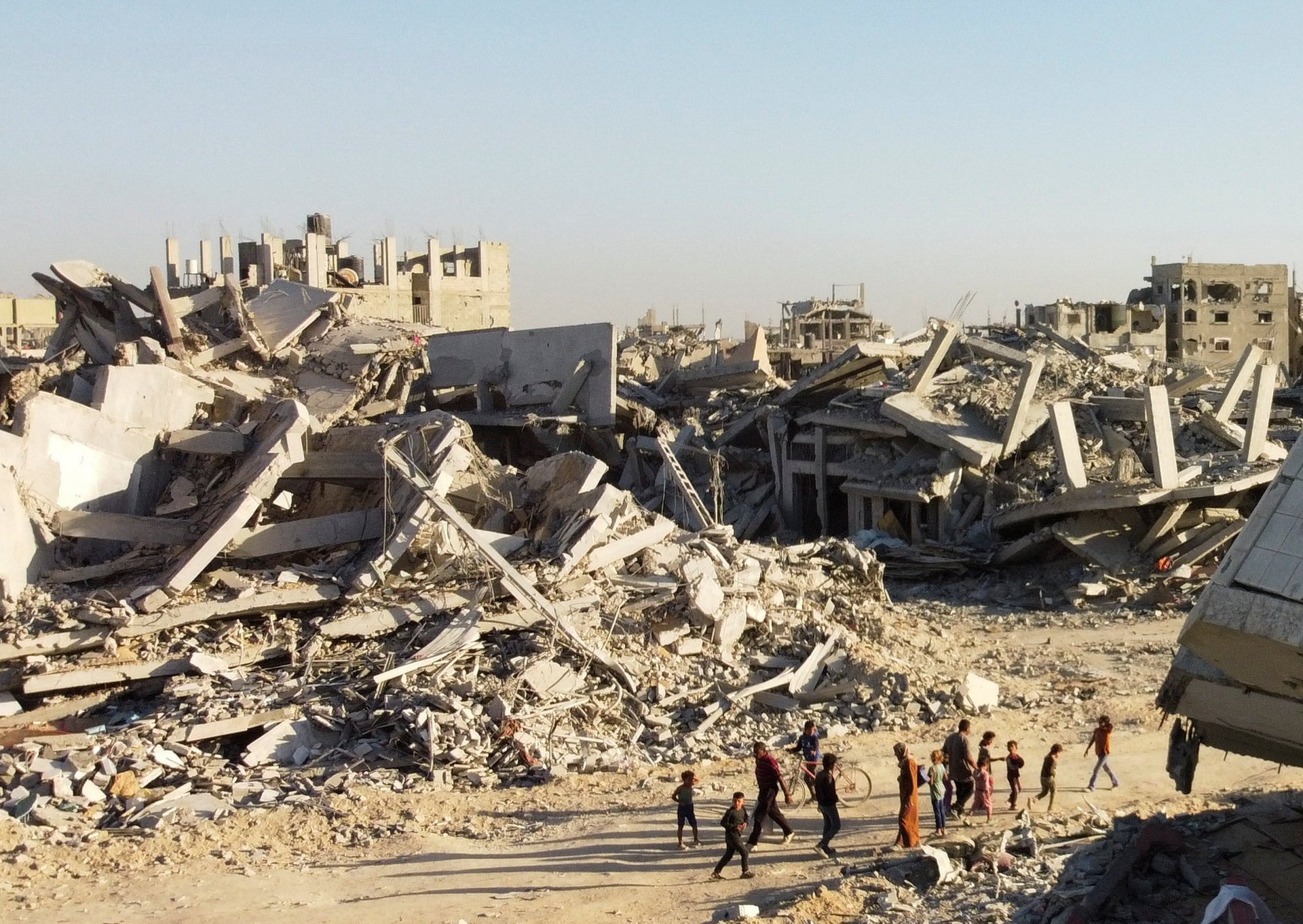
Since Israel’s war on the coastal enclave began on October 7, 2023, more than 71,000 Palestinians have been killed, most of them women and children, according to the Gaza Health Ministry. Many thousands of people more are missing, lost under the rubble and presumed dead.

Despite a US-led “ceasefire” agreement which was reached between Israel and Hamas last October, Israeli forces have continued to launch attacks and strikes on Gaza on a near-daily basis, killing more than 700 Palestinians since then, and continuing to severely restrict essential aid from entering the war-devastated coastal enclave.

A UN inquiry in September last year found genocidal intent in Israel’s war on Gaza, a landmark moment after nearly two years of war.

In December 2023, South Africa filed a case at the International Court of Justice (ICJ) in The Hague against Israel, accusing it of conduct amounting to genocide in Gaza. That case is ongoing.

And, in November 2024, the International Criminal Court (ICC) issued arrest warrants for Israeli Prime Minister Benjamin Netanyahu and former Israeli Defence Minister Yoav Gallant for alleged war crimes in Gaza.

There are “reasonable grounds” to believe that Gallant and Netanyahu “intentionally and knowingly deprived the civilian population in Gaza of objects indispensable to their survival, including food, water, and medicine and medical supplies, as well as fuel and electricity”, the ICC said.

The court also issued an arrest warrant for Hamas military commander Mohammed Deif for “crimes against humanity” in relation to the Hamas-led assault on army outposts and villages in southern Israel on October 8, 2023, when more than 1,000 Israelis were killed, and more than 200 were captured and taken to be held in Gaza. Deif’s death in an Israeli air strike on Gaza was confirmed in January 2025.

Concerns also extend to the occupied West Bank, where rising settler violence against Palestinians has received widespread condemnation by European governments. The violence, which Palestinians and activists say is ignored and often supported by the Israeli armed forces, has prompted discussions within the EU about possible sanctions targeting “extremist settlers“.

The continued building of illegal Israeli settlements has further intensified criticism, as it is seen by many European nations as undermining the prospects for a two-state solution.

A familiar pattern is that outposts are established at the edges of Palestinian villages, after which sustained and often violent harassment, including diverting water supplies, killing or stealing livestock and destroying solar panels, of the communities living there begins. Once the members of a community have been driven out, an illegal Israeli settlement is built on the site. These illegal settlements then gain retrospective approval from the Israeli authorities at some point later on.

In December last year, 14 countries, including the UK, Canada, Denmark and France, condemned Israel’s approval of 19 ⁠⁠settlements in the occupied West Bank, saying the move was illegal and jeopardised the Gaza ceasefire and “long-term peace and security across the region”.

In the same month, the United Nations said the expansion of Israeli settlements in the occupied Palestinian territory had reached its highest level since at least 2017.

International law stipulates that occupying powers like Israel must not move

📰 மூல செய்தி (Source): https://www.aljazeera.com/news/2026/4/21/why-is-the-eu-under-pressure-to-suspend-its-trade-agreement-with-israel?traffic_source=rss

உலகம்

US Jewish leader, Israel advocate Abe Foxman dies at 86

Published

on

Israeli officials hail Foxman, who led the ADL advocacy group for nearly three decades, as warm and passionate.

Prominent Jewish American leader and Israel defender Abraham “Abe” Foxman has died at age 86.

The Anti-Defamation League, the advocacy group he led for 28 years, confirmed his death on Sunday, calling him an “outspoken, passionate, and tireless advocate for the Jewish people and Israel“.

A Holocaust survivor, Foxman helped shape the conversation around Israel and anti-Semitism in the US for decades.

ADL Board Chair Nicole Munchnik said Foxman helped build the “modern liberal era of America”, describing him as a “longtime adviser” to US presidents and world leaders.

“To those of us who knew him, Abe was a warm friend, adviser, spirited antagonist and hugger – all over lunch,” Munchnik said.

Foxman joined the ADL in 1965 and served as the group’s national director from 1987 to 2015.

Under his leadership, the group – which presents itself as an anti-hate watchdog – became one of the most influential advocacy organisations in the country.

Palestinian rights advocates have long condemned the ADL, accusing it of demonising pro-Palestine activists and conflating criticism of Israel with anti-Semitism.

Since the start of the genocidal war on Gaza, the ADL – under Foxman’s successor Jonathan Greenblatt – has intensified its campaign against Israel’s critics.

Greenblatt, who has supported laws to penalise boycotts of Israel, compared the Palestinian keffiyeh to the Nazi swastika last year.

Foxman also remained a staunch supporter of Israel and defended its conduct during the genocidal war on Gaza.

“What is happening in Gaza is tragic. But it is not Genocide. And it is not illegal,” he wrote on X in July 2025 as Israel imposed a hunger crisis on the territory.

“War is hell and inhumane, destructive and ugly. And nations must take all possible care to avoid civilian harm. And Israel has and is doing that. Having said this, Israel still needs to act with all deliberate speed and skill to provide maximum humanitarian aid to lessen the loss of innocent civilian lives.”

Weeks before his death, Foxman backed the US-Israel war on Iran, voicing gratitude to US President Donald Trump and Israeli Prime Minister Benjamin Netanyahu for attacking the country.

“Thank you President Trump and Prime Minister Netanyahu for standing up to evil and jihadist extremism. The world hopefully will be a better and safer place in the future,” he said in a social media post on February 28 after the war broke out.

In March, Foxman warned about what he described as the rise of anti-Semitism on the right and left of the political spectrum in the US, hitting out at liberal politicians publicly distancing themselves from the American Israel Public Affairs Committee (AIPAC).

“If a politician doesn’t want to take money from AIPAC, don’t take money from AIPAC, but don’t make taking money from AIPAC a morality test – because that continues to build the conspiracy theory that there is a Jewish lobby that controls America,” he told the Jewish Standard.

AIPAC, which backs the war on Iran, has been spending millions of dollars on ad campaigns to defeat Israel’s critics in US elections.

Last year, Foxman sounded the alarm about the dwindling support for Israel in the US, underscoring the importance of the alliance between the two countries for Israel.

“We’re in a propaganda war, and to an extent, we’re losing the propaganda war, and I worry about losing America,” Foxman told Times of Israel.

“It’s scary, looking at the polls, the Sunday television shows, the major newspapers – there is so much out there that is anti-Israel.”

Despite his assertion, rights advocates often decry the absence of Palestinian perspectives on TV shows in the US media.

In 2021, Foxman announced that he was cancelling his New York Times subscription after the newspaper published a front page featuring the photos of dozens of Palestinian children killed by Israel in Gaza.

“Today’s blood libel of Israel and the Jewish people on the front page is enough,” he said at that time.

Tributes in Israel and the US poured in for Foxman on Sunday.

Israeli Foreign Minister Gideon Saar said he was “deeply saddened” by the death of Foxman.

“A towering voice against antisemitism, Abe devoted his life to defending the Jewish people and strengthening the bond between Israel and Jewish communities worldwide,” Saar said on X.

Israel’s President Isaac Herzog also called Foxman a “legendary leader of the Jewish people”.

“He was a passionate Zionist, a humanist, and an outspoken, wise friend,” Herzog said.

📰 மூல செய்தி (Source): https://www.aljazeera.com/news/2026/5/10/us-jewish-leader-israel-advocate-abe-foxman-dies-at-86?traffic_source=rss

Continue Reading

உலகம்

Israeli weapon fires tiny metal cubes into people in Lebanon, like Gaza

Published

on

Israeli weapon fires tiny metal cubes into people in Lebanon, like Gaza

The same tiny tungsten cubes that spray out of Israeli bombs, causing devastating internal injuries to people in Gaza are being found in wounded civilians in Lebanon, war surgeon Dr Tahir Mohammed says. He draws parallels between what Israel is doing in both places and describes the weapons as “indiscriminate”.

📰 மூல செய்தி (Source): https://www.aljazeera.com/video/newsfeed/2026/5/10/israeli-weapon-fires-tiny-metal-cubes-into-people-in-lebanon-like-gaza?traffic_source=rss

Continue Reading

உலகம்

Trump to discuss Iran with Xi Jinping during China visit: Officials

Published

on

Official says US president will likely ‘apply pressure’ on China over Beijing’s purchase of Iranian oil amid war.

Donald Trump is set to arrive in Beijing on Wednesday evening to discuss the Iran war and other issues with his Chinese counterpart President Xi Jinping.

White House Principal Deputy Press Secretary Anna Kelly said an opening ceremony and meeting will be on Thursday morning, and the trip will conclude on Friday. The US plans to host the Chinese leader during a reciprocal visit later this year.

Kelly said that this week’s trip would be of “tremendous symbolic significance” and focus on “rebalancing the relationship with China and prioritising reciprocity and fairness to restore American economic independence”.

Trump’s visit, initially scheduled for earlier this year but postponed in March due to the US-Israel war on Iran, comes as the US president struggles to contain the fallout from the war, both at home and abroad.

A senior administration official told news outlets in an anonymous briefing on Sunday that Trump could “apply pressure” to China on Iran in areas such as oil sales and Tehran’s purchase of potential dual-role military-civilian goods.

US Treasury Secretary Scott Bessent last week accused China of “funding” Iran.

“Iran is the largest state sponsor of terrorism, and China has been buying 90 percent of their energy, so they are funding the largest state sponsor of terrorism,” Bessent told Fox News.

Iran closed the Strait of Hormuz in response to US-Israeli attacks, restricting passage through a key artery of global energy transport.

China has said that it wants to see the war end and hosted Iranian Foreign Minister Abbas Arraghchi last week. At the same time, Beijing has refused to recognise Washington’s “unilateral” sanctions on Iran’s oil sector.

Disruptions stemming from the war have disrupted the global economy, with Asian states that depend on imports from the Middle East especially hard hit.

Trump could also bring up China’s support for Russia during the talks, along with trade and rare earth minerals, a vital resource for the US tech sector. Business executives from aerospace manufacturer Boeing and a handful of agricultural companies are set to travel with the US delegation.

The anonymous administration official said that no change was expected regarding the US stance on Taiwan, a main sticking point in relations between Washington and Beijing. China considers the self-ruling island a part of its territory, but the US has deep security and economic commitments to Taiwan.

📰 மூல செய்தி (Source): https://www.aljazeera.com/news/2026/5/10/trump-to-discuss-iran-with-xi-jinping-during-china-visit-officials?traffic_source=rss

Continue Reading

Trending

Copyright © 2024 by 7Tamil Media, All rights reserved.