Connect with us

முக்கியச் செய்திகள்

Why does Amazon have no Western rivals?

Published

on

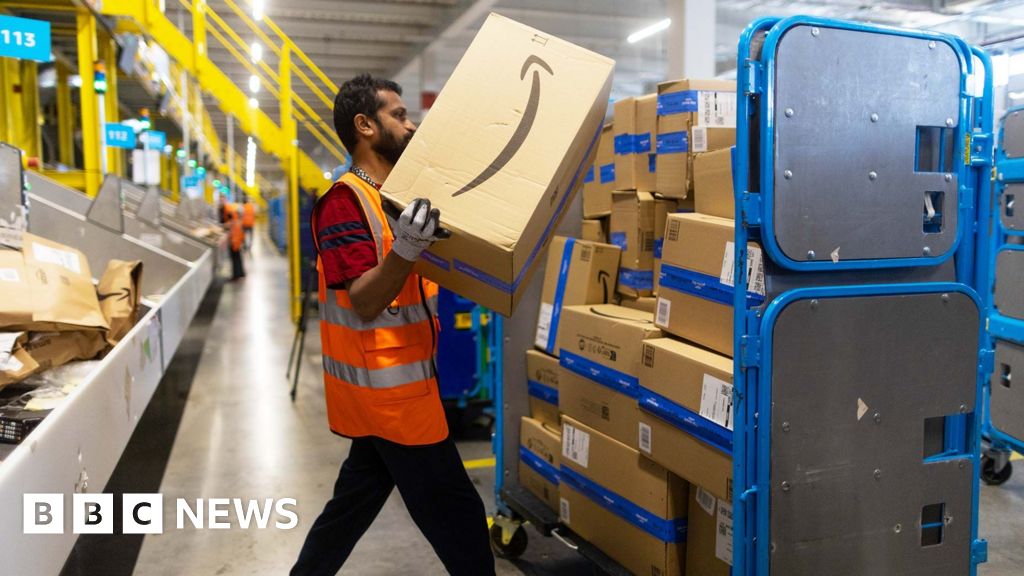
Vitamins, repair tape and a jar of mango chutney – just some of what my household bought last month via Amazon's sprawling online shopping platform.

We also shopped at the company's supermarket chain Whole Foods, streamed its TV shows, read books on Kindle e-readers, and browsed countless websites no doubt powered by Amazon Web Services (AWS), its highly profitable cloud-computing business.

And that isn't half of the interconnected products and services offered by the global behemoth, which earlier this year overtook US superstore giant Walmart to become the world's largest company by annual sales.

But why does Amazon, launched by Jeff Bezos in 1995 as an online bookstore out of a rented garage, have so few serious rivals in the West when it comes to e-commerce? Couldn't we consumers benefit from a bit more competition?

First, to be sure, Amazon isn't without competitors in any of the segments it is in, including e-commerce. Major US retailers like Walmart and Target both have broad-based, rapidly expanding online retail arms, and offer their own versions of Amazon's Prime subscription service.

In the UK, Tesco leads in online groceries, and Zalando is Germany's biggest internet retailer of clothing. When it comes to ultra-cheap products, Chinese websites Temu and Shein are major forces.

Then there is eBay, which earlier this month received a $55.5bn (£41bn) takeover offer from video games retailer GameStop, though it later rejected it. Ebay has a different business model to Amazon, with its focus on auctions, second-hand goods, and collectible items.

And while GameStop said it hoped eBay could one day become a stronger competitor to Amazon, the latter currently towers over all its rivals when it comes to total e-commerce market share.

In the US, Amazon accounts for 40.5% of all online retail sales, while its nearest rival Walmart has 9.2%, according to figures from last month. Ebay is down at around 3%.

Amazon also strongly dominates in the UK, where it accounts for about 30% of online retail sales.

"Amazon is not an undisputed monopolist in e-commerce, but it is the dominant firm," says Annabelle Gawer, director of the Centre of Digital Economy at the University of Surrey. "And the scope of what it sells is unparalleled."

A combination of factors has made Amazon exceptionally difficult to rival, note experts.

One is a 'first-mover' advantage. Among the earliest to scale online retail – and with a clear vision of how the internet could revolutionise shopping with convenience and speed – it captured market share faster than many rivals.

Just as important was the willingness of its shareholders, for many years, to allow the company to lose money by selling products at a loss, and later to aggressively reinvest early profits back into the business to fuel growth. To this day Amazon has never paid shareholders a dividend.

"[The strategy] constrained the competition," says David Yoffie, a professor emeritus at Harvard Business School (HBS). For traditional companies, pursuing the same approach would have significantly damaged their stock price and angered shareholders, he says.

Today Amazon has a big advantage over retail rivals in that it can use funds from its most lucrative businesses – notably AWS, its main profit engine – to sustain its lower-margin retail operation and invest in new ventures.

Positioning itself as a technology company also helped. Algorithms, automation and data have been central to Amazon's ability to scale, driving efficiency and shaping its customer experience.

Moreover, it has a culture of bold experimentation, says Sunil Gupta, also a professor at HBS, entering areas from cloud computing and consumer devices to own-brand products, original content production and healthcare – and moving on if something fails.

Experts also point to two pivotal business moves. One, instituted in 2000, was to go from being an online retailer to an online platform, allowing third-party sellers to offer their goods in its online store.

The result was a "network effect" explains Gupta. More sellers meant more products, which kept customers from going elsewhere – and in turn attracted even more sellers. "It is very hard for a new player to break that," adds Gupta.

The other was the launch of Amazon Prime, in the US in 2005 and the UK in 2007, offering free and fast delivery in return for an annual subscription fee. This made the platform "very sticky", says Emily West, a professor of communication at the University of Massachusetts Amherst who has studied and written about Amazon.

"You have the free shipping, in which case you may as well just search for your stuff on Amazon," she says.

While Prime itself is not particularly profitable – most of Amazon's e-commerce profits come from advertising and third-party seller fees – what is included with Prime has grown to a broad bundle, from a vast library of movies and shows to stream, including Amazon's own content, to discounts at US Whole Foods, making membership even harder to cancel.

"Amazon is not just a website that sells products," says Gawer. "It's an ecosystem of multiple businesses that are reinforcing each other… which makes it very hard to compete with."

But there could additionally be another reason Amazon lacks rivals – behaviour that some allege violates competition law, preventing existing competitors from growing and new ones from emerging.

In the US, both the Federal Trade Commission (FTC) and the state of California have separate antitrust lawsuits against Amazon set for trial in early 2027, alleging the company uses unlawful practices to maintain its dominance and harm competition, with California last month releasing a trove of evidence.

Amazon denies the allegations and is fighting the legal action.

The FTC case is broad, but a key allegation is that Amazon prevents new or smaller marketplaces from gaining a foothold because it stops them from competing on price.

It is accused of penalising its sellers – for example by lowering their product's visibility in search results or removing their "Buy Box" – if it finds they have lower prices on other websites.

The alleged result is that shoppers have little incentive to leave Amazon because prices are the same and rival platforms' typical strategy of lowering fees for sellers to encourage cheaper prices fails because sellers fear losing sales on Amazon.

One solution some have called for is to break Amazon into multiple stand-alone companies. "It would oxygenate the market," says Stacy Mitchell is co-executive director of the US based non-profit Institute for Local Self-Reliance, which is part of the Athena coalition fighting to change the way Amazon operates.

Others, however, see a breakup as unlikely – Google, for example, avoided one in its recent competition case.

Meanwhile with deep pockets – hundreds of billions if not trillions – and enough time, most experts agree a company could build a copycat of Amazon's e-commerce platform. It would be cheaper, of course, for an incumbent such as Walmart, which is clearly borrowing elements of Amazon's playbook.

Yet Amazon's next threat may not come from another conventional retailer at all.

There is a very different kind of shopping experience on the horizon. E-commerce is starting to be embedded directly in generative AI interfaces like ChatGPT, letting users buy products without leaving the sites – a development that could threaten Amazon's dominance in online retail.

"You aren't necessarily seeing a company that is impossible to compete against," sums up Yoffie.

📰 மூல செய்தி (Source): https://www.bbc.com/news/articles/cg7p5nr307mo?at_medium=RSS&at_campaign=rss

முக்கியச் செய்திகள்

Elon Musk just lost another lawsuit. Will he keep fighting?

Published

on

Elon Musk, the world's richest man, has not been winning in court lately.

His loss on Monday in his lawsuit against OpenAI and its co-founder Sam Altman is the latest in a string of legal defeats or settlements.

Late last year he agreed to settle with former Twitter executives and thousands of former employees of the social platform, which he has renamed X, after fighting for years to pay them nothing.

Then in March, he lost a case brought against him by investors of Twitter, who claimed they were misled by public statements he made during the takeover.

That same month, a judge threw out his lawsuit against advertisers that decided to leave the platform.

In May, another judge reversed certain actions by DOGE, the government cost-cutting department Musk helped create and led last year, finding cuts to some grants were "a textbook example of unconstitutional viewpoint discrimination."

Now that he's also lost his high-profile lawsuit against OpenAI, is it possible that Musk will be less prone to picking fights?

"No one is invincible," said Shubha Ghosh, a lawyer and law professor at Syracuse University.

But it may take more significant losses for Musk to back off, or change his aggressive style, in the courts.

"In a lot of ways, he is just another businessperson asserting his rights," Ghosh said. "I don't think he's abusing the legal system. Whether he uses it effectively, I'm not sure."

In addition to a tendency towards the unconventional, Musk also has the deepest pockets on earth. He is poised to soon be the world's first trillionaire given his stake in SpaceX, another of his companies that is expected to be publicly listed in the near future.

The sheer size of Musk's wealth makes it seem unlikely that even a string of losses, related costs or fines would put him off fighting or filing future lawsuits.

"I don't see him stopping," said Dorothy Lund, a lawyer and law professor at Columbia Law School. "It seems like there is no one who has been able to put real consequences on him or his actions."

A recent fine of $1.5m (£1.1m) from the US Securities and Exchange Commission (SEC) over his failure to disclose his initial accumulation of Twitter stock, for instance, is insignificant for someone like Musk.

When his multi-billion-dollar pay package for Tesla was invalidated by a judge in December 2024, Musk simply reincorporated the entire company in Texas and got a potentially even bigger pay package approved by shareholders.

"He does what he wants and sometimes gets a slap on the wrist, so why would he change?" Lund said.

On Monday, Musk criticised the decision against him in the OpenAI case, writing on X that it created "a free license to loot charities if you can keep the looting quiet for a few years!"

He also insulted the judge overseeing the case as a "terrible activist".

Musk has a "larger than life personality", Ghosh added, which makes him different from many business leaders.

He seemed to decide that the right time to get SpaceX onto the public stock market was during his high-profile trial against Altman, a mentee-turned-rival-turned-public enemy. That alone sets him apart from most people in business.

When executives have a company that is about to go public, they typically enter into what's known as a "quiet period".

It is a period of time, mandated by the SEC, during which leaders of a business actively preparing to list on a public stock exchange are not supposed to make certain statements. Many chief executives say as little as possible during a quiet period, as even general statements on a company's growth are usually prohibited.

Lund noted that there are not many people who compare to Musk in terms of his ability, and apparent desire, to keep fighting in court and in public after so many dings.

"He is not afraid of public opinion, he's not afraid of taking big swings," Lund said. She noted that kind of disregard for risk is "valuable in entrepreneurs", But the courtroom is not a boardroom.

Lund noted that even notoriously aggressive corporate figures like Carl Icahn, the famed "corporate raider" who inspired the greed-driven character of Gordon Gecko in the film Wall Street, did not seem to have the brazenness of Musk.

"If and when this will blow up for him, I don't know," Lund said.

The only analogous public figure for her is President Donald Trump, who is notorious for making seemingly off-the-cuff remarks in public and taking legal action against perceived foes.

"Musk is a singular individual," Lund said, "but negative things never seem to stick to either of them."

📰 மூல செய்தி (Source): https://www.bbc.com/news/articles/cqlpz4w6v13o?at_medium=RSS&at_campaign=rss

Continue Reading

முக்கியச் செய்திகள்

Farage facing new questions over home purchase funding

Published

on

Nigel Farage is facing questions over Reform UK's claim that he used a fee from appearing on a TV show to buy a £1.4m home.

Last week the party told the BBC the Reform UK leader bought the house in Surrey in 2024 without a mortgage by using his fee from appearing on I'm A Celebrity.

In 2025, Farage told the FT that fee had been paid to his company Thorn In The Side Limited.

However, the company accounts appear to suggest the income he received remained in his account after the house purchase.

The party has denied Farage used any of the £5m gift he received in April 2024 from crypto-billionaire Christopher Harborne in the house purchase 36 days later.

Land registry documents seen by the BBC show the money for the house was paid in cash on 10 May 2024, without the use of a mortgage.

A spokesperson for Farage said: "Anti money laundering money checks [for the property purchase] were in March [2024], before he received the gift.

"Nigel has multiple sources of income, as you can see from his parliamentary register."

Farage appeared on the ITV reality series in late 2023, where he finished third and was reportedly paid a seven-figure appearance fee.

Labour chair Anna Turley said: "Nigel Farage needs to stop dodging scrutiny over his undeclared £5m 'gift' and put the evidence on the table to prove what he's saying is true.

"It's clear he's taking the public for fools and thinks he can just brush this scandal under the carpet. He can't."

Conservative shadow minister Alex Burghart said: "This extraordinary sum of money is more than most people will see in a lifetime.

"His excuses for taking it keep changing – if the property wasn't paid for with proceeds from his reality TV career, as he claimed, the public will rightly ask where the money came from."

Company accounts for Thorn In The Side Limited show a jump in cash of around £1.4m for the year ending May 2024.

At the end of May 2025, 12 months after Farage completed the purchase of the property in Surrey, the cash balance on the company accounts had increased and the accounts do not show any dividends paid.

Harborne, a Thailand-based British businessman, gave £5m to Farage on 5 April 2024, two months before he announced he would stand in that year's general election.

In April, Harborne told The Telegraph , he "wasn't expecting anything in return apart from ensuring his safety" when referring to the gift.

Harborne also said he gave the money to Farage "because of my great admiration for the decades of work he had done to achieve Brexit".

Parliamentary rules state that new MPs must declare any donations received in the 12 months before they were elected.

The payment did not appear on Farage's declaration of interests and only became public knowledge after being reported by the Guardian newspaper last month.

Reform UK has consistently said it does not believe the payment needed to be declared because it was a "personal, unconditional gift".

Harborne has gone on to become Reform's biggest donor and gave the party £12m in 2025.

Farage has said that Harborne gave him the money to pay for his lifetime security.

The Parliamentary Standards Commissioner has launched an inquiry into whether Farage broke Commons rules by not declaring the £5m payment from Harborne .

On Thursday, Farage told The Sun newspaper that the payment was "given as a reward for campaigning for Brexit" and that he was "not in the least bit worried" about the inquiry.

Sign up for our Politics Essential newsletter to read top political analysis, gain insight from across the UK and stay up to speed with the big moments. It'll be delivered straight to your inbox every weekday.

📰 மூல செய்தி (Source): https://www.bbc.com/news/articles/c936nqy00rwo?at_medium=RSS&at_campaign=rss

Continue Reading

முக்கியச் செய்திகள்

New High Street crime unit to target gangs fronting shops after BBC investigation

Published

on

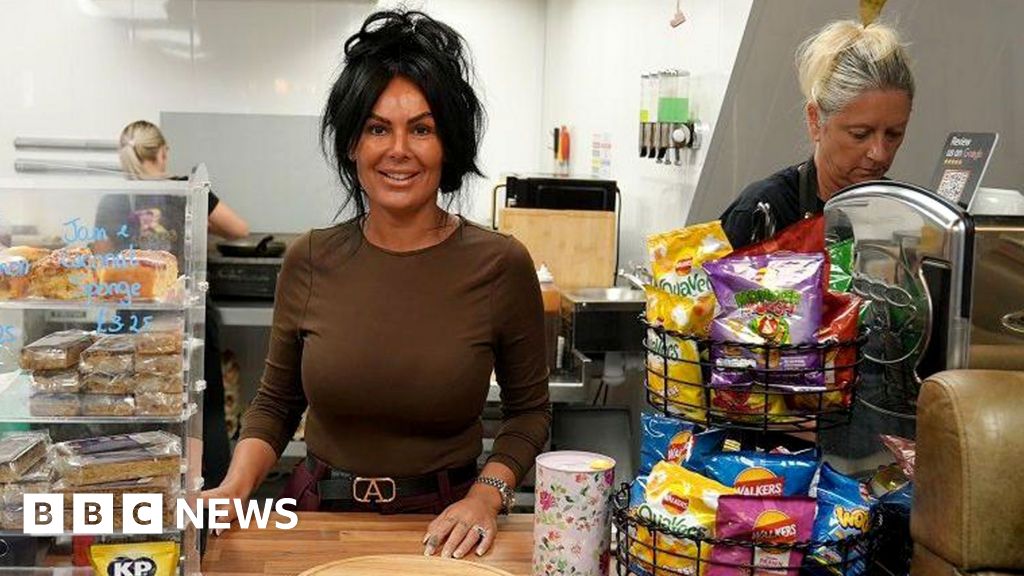
A new £30m High Street organised crime unit has been announced by the government after the BBC's year-long investigative reporting into illegal mini-marts, vape shops and barbers.

Over 12 months BBC News exposed drug gangs, child sexual exploitation reports, money laundering, immigration crime, and ghost directors linked to shop fronts selling illegal cigarettes and illegal vapes.

The law enforcement response will be run across the UK by the National Crime Agency (NCA) over the next three years – with a cash boost for trading standards.

The Chartered Trading Standards Institute (CTSI) suggested cuts to its members' resources under previous governments had helped allow serious and organised crime to gain foothold in High Streets.

The government has also pledged to carry out a review on how to strengthen law enforcement powers – as well as consulting on extending the length of closure orders to shut criminal businesses down for longer, an area the CTSI said needed to be changed.

The NCA estimates that at least £1bn of criminal cash is laundered through High Street stores the UK each year through businesses connected to the sale of fake goods, tax evasion, illegal working, and illegal drug supply.

Home Secretary Shabana Mahmood said: "We are hitting back with a nationwide crackdown to shut these fronts down, seize dirty cash and drive organised crime off our high streets and put bosses behind bars."

Proposals for the High Street organised crime unit – which will be overseen by Security Minister Dan Jarvis – were originally outlined in the 2025 Autumn Budget but the government has now released more details.

Over the course of 12 months, BBC News has gone undercover to expose the shocking reality of organised crime taking over our High Streets leading to an "urgent" Home Office investigation, multiple arrests across the country and pledges to change the law.

In April 2025 the BBC joined the NCA as it raided barbers, mini-marts and vape shops in response to growing intelligence reports that some of these shops are being used for money laundering and illegal working.

In May and June last year the team found secret underground tunnels supplying sacks of illegal cigarettes to High Street mini-marts in Hull, with authorities warning us that there is a "war" against organised crime that they can't win, with the profits from counterfeit tobacco now rivalling "heroin and cocaine" in a black market worth up to £6bn a year.

The then Immigration Minister, Seema Malhotra, described what the BBC had found as a "national scandal" and the then-Home Secretary Yvette Cooper later said it was a "disgrace".

In July, mass Freedom of Information requests revealed for the first time that 3,700 illegal shops had operated across the UK.

In November last year, we exposed asylum seekers buying and selling High Street mini marts for cash, criminal kingpins erasing £60,000 illegal working fines, and exposed a Kurdish organised crime gang operating on High Streets the length of Britain.

In response to our investigations, Mahmood launched an "urgent" investigation led by the National Crime Agency (NCA), Immigration Enforcement, HMRC and police forces from across the country. She said the BBC's evidence proved that "the system was broken" and demonstrated a pull factor in the small boat crisis.

This year, in March a senior council worker repeatedly shared with West Midlands authorities reports of children as young as 11 being sexually abused in High Street mini-marts and last month undercover reports exposed how cocaine, cannabis, laughing gas and prescription pills were being offered for sale. One street we visited in the West Midlands was described as "lawless" by an anonymous law enforcement source.

In response, Prime Minister Sir Keir Starmer said the government was "absolutely focused" on tackling such criminality, pledging stronger powers and more police officers to do so.

The NCA said 950 people have been arrested and more than £10m worth of goods seized over the past 18 months and the new unit would help it target and disrupt more "high harm offenders".

Sal Melki, deputy director of illicit finance at the NCA, said: "This criminal activity makes our communities less safe and less prosperous.

"It undermines legitimate business, deprives public services of tax revenues, and fuels a range of predicate offences such as the drugs trade, illicit goods, trafficking, and organised immigration crime."

Lord Bichard, chairman of National Trading Standards, said the unit would "help drive a coordinated national response while strengthening local enforcement capability".

John Herriman, chief executive of the CTSI, told the BBC that cuts of about 50% had been made to trading standards resources between 2011 and 2023.

He said there was a "sense" that the situation on High Streets "has been getting worse and worse for a number a years," adding: "That is pretty demoralising."

"This funding is the start of that fight-back process," he said.

Currently courts can order shops to be closed for three months. Herriman said the CTSI wants new powers to be brought in to raise the limit to 12 months, with a complete ban possible for the worst offenders.

Responding to the government plans, the Conservatives said Labour had "done more damage to our High Streets than 75 officers can fix".

Chris Philp MP, Shadow Home Secretary, said there were fewer police officers as well as "anti-business legislation" under the government.

"Crime and antisocial behaviour are at unacceptably high levels, every day, too many people witness things that anger and alarm them," he said, adding a Tory government would aim to put extra police officers on the streets.

Get our flagship newsletter with all the headlines you need to start the day. Sign up here.

📰 மூல செய்தி (Source): https://www.bbc.com/news/articles/ce3pzwx449no?at_medium=RSS&at_campaign=rss

Continue Reading

Trending

Copyright © 2024 by 7Tamil Media, All rights reserved.