Connect with us

உலகம்

What is really happening in northern Nigeria

Published

on

There is no US-led conspiracy or a ‘Christian genocide’. There is an insurgency that has adapted.

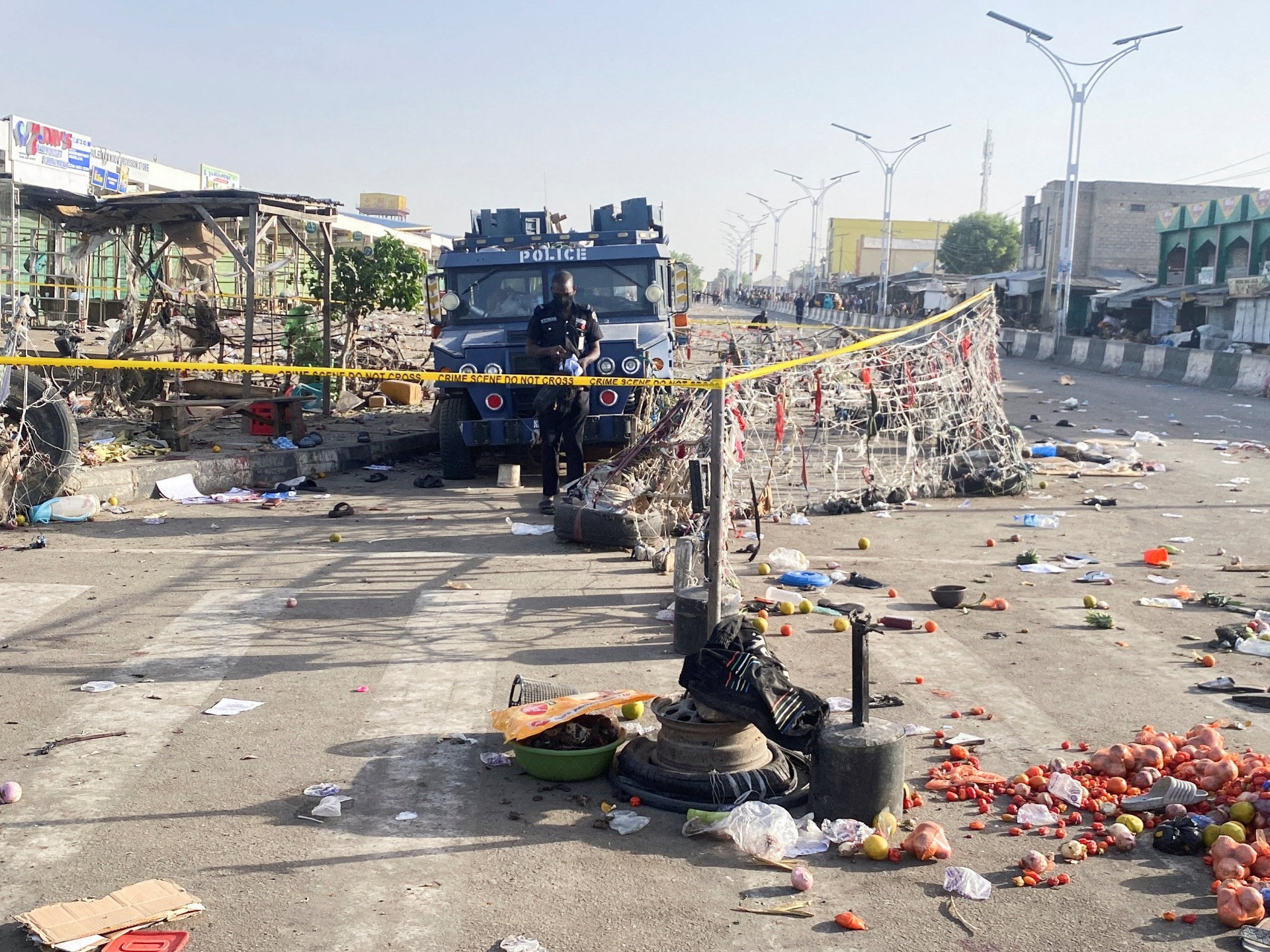
In recent months, the frequency and intensity of attacks in northern Nigeria have shattered the comforting illusion that the region’s long insurgency has receded into the background of national life. As violent incidents have proliferated, many Nigerians have refused to confront this uncomfortable reality and have opted instead to embrace conspiracy theories suggesting that the resurgence is somehow tied to renewed American involvement in Nigeria’s  counterterrorism efforts.

It is not difficult to see why the theory of foreign collusion with terrorist groups resonates in Nigeria. In February 2025, United States Congressman Scott Perry claimed that the US Agency for International Development (USAID) had funded Boko Haram, but offered no evidence for the allegation. Richard Mills, then the US ambassador to Nigeria, rejected Perry’s statement, but by then the claim had already acquired a life of its own in the public space and on social media.

Then, American officials like Congressmen Ted Cruz and Chris Smith made statements that fuelled the “Christian genocide” narrative, which falsely claims that the killings in Nigeria exclusively target Christians.

Attacks on Christians have happened, including most recently on a church in Kaduna state on Easter Sunday, but Muslim communities have also been regularly targeted. The truth is that terrorist groups have long operated indiscriminately.

What this moment demands, therefore, is to go beyond the seduction of easy explanation, and embark on serious analysis of what is really happening in northern Nigeria.

That diagnosis must begin with clarity about what the attacks reveal. First, they reveal that the insurgency has adapted in both form and method. Second, northern Nigeria’s insecurity can no longer be understood in isolation from the rest of the region; it is part of the wider regional disorder across the Lake Chad basin and the Sahel. And third, the violence continues to feed on deeper domestic vulnerabilities that extend far beyond the battlefield: chronic poverty, educational exclusion, weak local governance, and the long erosion of the social contract in parts of the North.

Let us begin with the first point. Recent attacks demonstrate that the insurgent ecosystem has learned, adapted, and expanded beyond the old image of a crudely armed rebellion fighting in predictable ways. The ISIL affiliate in West Africa Province (ISWAP), in particular, has become more adaptive in structure and tactics, while its conflict with Boko Haram has weakened the latter and left ISWAP as the more organised and deeply entrenched threat in the Lake Chad region. It has consolidated its presence in parts of the Lake Chad basin and expanded into Sambisa Forest, widening the space from which it can threaten civilians and military formations alike.

This matters because insurgencies are sustained not by ideology alone, but by terrain, supply routes, local economies, and the ability to move men and materiel through spaces where the state is weak or absent. In that sense, the insurgency is no longer merely surviving in familiar hideouts; it is entrenching itself in a broader and more fluid battlespace, with ISWAP’s control of trade in and around Lake Chad now a major pillar of its resilience.

ISWAP has also refined the way it fights, demonstrating a growing capacity for coordinated assaults, night raids, ambushes, and operations designed not merely to inflict casualties, but to isolate military positions and slow the movement of reinforcements. This challenge is magnified by the sheer scale of the theatre itself.

Borno, Yobe, and Adamawa states are each comparable in size to entire European countries: Borno is slightly larger than the Republic of Ireland; Yobe is roughly the size of Switzerland; and Adamawa is slightly larger than Belgium. Policing territories of that scale would test any state, all the more so when they border a fragile regional neighbourhood.

The terrain has also shaped the rhythm of the conflict, with the dry season, particularly the first quarter of the year, ushering in an intensification of attacks.

At the heart of this adaptation is the evolution of technology. What once seemed unthinkable in this theatre has now entered the insurgent repertoire. Drones, including commercially available models modified for combat, are now part of the operational environment. The significance of this shift is not merely technical; it is also psychological and strategic.

Beyond technology, the insurgency’s growing mobility has sharpened the threat further. Rapid assaults by motorcycle-mounted units demonstrate the extent to which insurgent violence now depends on speed, concentration, and dispersal. Fighters can assemble quickly, strike vulnerable locations, and disappear into difficult terrain before an effective response can take shape.

The advantage here lies not in holding territory in the conventional sense, but in imposing uncertainty, stretching the state’s defensive attentions, and proving that the insurgents can still choose where and when to shock the system.

Perhaps the most dangerous dimension of this adaptation is the infiltration of foreign fighters. Their significance lies not only in their numbers, but in what they bring with them: technical knowledge, battlefield experience, tactical imagination, and links to wider militant networks.

Their presence points to a deeper cross-fertilisation between local insurgency and global terrorist currents. More troubling still, they are now playing a more active role in the conflict, not only refining tactics and skills but also participating directly in combat.

That is why the regional dimension must be central to any serious analysis. The weakening of regional cooperation has come at the worst time, creating openings that insurgents are only too ready to exploit. A threat that has always been transnational becomes harder to confront when neighbouring states no longer act with sufficient cohesion.

Niger’s withdrawal from the Multinational Joint Task Force after the reaction of the Economic Community of West African States (ECOWAS) to the military coup there has sharpened that challenge and weakened the perimeter defences of the north-east theatre. The force, comprising troops from Nigeria, Niger, Cameroon, and Chad, with a smaller Beninese contingent at its headquarters in N’Djamena, was instrumental in earlier gains and remains vital for reinforcing positions, conducting operations in difficult terrain, denying insurgents safe havens, and intercepting the movement of foreign fighters.

Yet even regional analysis, necessary as it is, does not fully explain the problem. Insurgencies endure not only because they move across borders, but because they can recruit, regroup, and exploit social weakness at home.

Violence in northern Nigeria is sustained by a combination of doctrinal extremism, chronic poverty, educational exclusion, and a state whose presence is often too limited to command confidence in the communities where armed groups seek recruits. The argument, therefore, cannot remain confined to the military sphere.

Poverty and lack of education do not directly produce terrorism, but they increase vulnerability, especially where alienation, weak institutions, and manipulative ideological narratives are already present. This is why the educational crisis in northern Nigeria should be seen not only as a developmental challenge, but as part of the wider security landscape. Education does more than impart literacy and numeracy; it provides structure, routine, and pathways to self-actualisation and social belonging.

It is important to note that the government is not without a response. In 2024, President Bola Ahmed Tinubu signed the Student Loans (Access to Higher Education) Act into law, and the rollout of the Nigerian Education Loan Fund has since opened a wid

📰 மூல செய்தி (Source): https://www.aljazeera.com/opinions/2026/4/20/what-is-really-happening-in-northern-nigeria?traffic_source=rss

உலகம்

Former Afghanistan cricketer Shapoor Zadran battles life-threatening disease

Published

on

Former pace bowler Zadran is receiving treatment for HLH, a rare immune system disorder, at a hospital in India.

Former Afghanistan cricketer Shapoor Zadran is battling for his life as he receives treatment for a rare life-threatening immune system disorder at a hospital in New Delhi, media reports say.

Zadran, who was admitted to a hospital in the Indian capital in January, is suffering from an advanced form of hemophagocytic lymphohistiocytosis (HLH) and has been placed in the intensive care unit (ICU), ESPNcricinfo reported on Monday.

“It was a very serious infection,” Zadran’s brother Ghamai Zadran told ESPNcricinfo. “His whole body was full of the infection, including TB (tuberculosis). It also spread to his brain, which was revealed after MRI and CT scans.”

Ghamai said Zadran had started to respond to the treatment and, after a few weeks, he was discharged from the hospital and the group moved to a hotel nearby.

“The doctor said we could drop in for the checkups frequently,” Ghamai said. “He [Zadran] was feeling good for about 20 days before he got the infection again. Then we admitted him to the hospital [again].”

HLH is a rare life-threatening disorder of immune regulation with a high mortality rate that usually occurs in infants and young children, according to Johns Hopkins Medicine.

In adults, many different conditions, including infections and cancer, can cause HLH. While the incidence is increasing, it remains underdiagnosed.

Zadran, 38 years old and a left-arm fast bowler for Afghanistan, first felt unwell in his home country in October and was referred to hospitals in India for further treatment. He arrived in the country with his wife and former Afghanistan captain Asghar Afghan.

He was discharged after initial treatment but had to be readmitted when his symptoms returned and worsened with time, his brother said.

HLH weakens the body’s immune system, which does not work normally as certain white blood cells – histiocytes and lymphocytes – attack other blood cells, causing the spleen and liver to enlarge.

Zadran represented Afghanistan between 2009 and 2020, playing 43 one-day internationals (ODIs) and 37 T20 internationals (T20Is). He was part of the Afghanistan squad in its formative years, as the war-torn nation established itself as one of the leading associate members of the International Cricket Council.

The ferocious pacer was part of Afghanistan’s squad when the nation made its debut at the ODI Cricket World Cup in 2015 in Australia and New Zealand. He shone with the ball, taking 10 wickets in six games.

While Afghanistan received Test status in 2017, Zadran never played the longest and most prestigious format of the game for his country.

During his 11-year career, Zadran was renowned for his towering and broad frame, long hair, and aggressive bowling style. He roared in celebration at every dismissal of a batter and became a fan favourite amongst Afghan cricket supporters for his on-field demeanour and performances.

The Afghanistan-born player picked up cricket in Pakistan’s Peshawar, where he lived for many years as a refugee before returning to his home country in the early 2000s.

Social media posts showed Afghan cricket star and T20I captain Rashid Khan by Zadran’s bedside during a visit to the hospital earlier this month.

News of Zadran’s illness prompted several international cricket stars to show an outpouring of support and warm wishes.

Former Pakistan captain Shahid Afridi said he was “truly saddened” to hear of his former nemesis’s condition.

“You’ve always been a fighter on the field, and I know you’ll fight this too,” Afridi wrote on X.

📰 மூல செய்தி (Source): https://www.aljazeera.com/sports/2026/4/20/former-afghanistan-cricketer-shapoor-zadran-battles-life-threatening-disease?traffic_source=rss

Continue Reading

உலகம்

Iran expands limited internet access but restrictions remain for most

Published

on

More Iranians being sold ‘privilege’ of limited internet access, but most remain in the dark.

Tehran, Iran – Iranian authorities have been slowly expanding a list of individuals and entities deemed eligible to have limited internet access. However, the action serves only to illustrate that most of the population of more than 90 million people remains disconnected during the war with the United States and Israel.

The government imposed a near-total internet shutdown across Iran within hours of the first bombs falling in downtown Tehran on February 28. The move has seen internet connectivity reduced to about 2 percent of pre-war levels at most, according to monitors.

A limited intranet functions to keep some local services and apps alive, but people are highly frustrated, and the economy has suffered billions of dollars in lost revenue as a result of more than 1,200 hours of the digital blackout. One business, however, is thriving: the black market for internet connections.

This week, tens of thousands of people and organisations selected by the state based on their positions and professions signed up or received text message invitations to connect through a service called Internet Pro.

That is the name selected for a limited and metered internet connection through which thousands of sites and most global messaging services are blocked but some applications, app stores and Google services function.

The service is being sold in the form of 50-gigabyte data packages by three top state-linked telecommunications companies. State authorities can also issue limited internet protocols (IPs) for global connectivity to designated office spaces of approved companies and businesses.

Applicants need to provide full identification and professional or referral documents. Business owners and traders introduced to the Ministry of Information and Communications Technology and other authorities through their guilds and chambers of commerce were among the first to be connected this month.

Doctors, university professors, researchers and academics in various fields were nominated by the Ministry of Science this week. Freelancers were told to sign up through a webpage set up by the state-linked Iranian ICT Guild.

This is a separate service from that enjoyed by holders of “white SIM cards”, which offer less restricted connections and are reserved for officials, state-linked entities and individuals, journalists and some civilian supporters of the establishment perceived to be helping “get the message out” on behalf of the government.

For years, Iranian authorities have stressed that they are against a tiered internet system, which in effect renders connectivity a privilege, not a fundamental right in an age of rapid digital advancement.

But with such a system now in action and expanding, some state media are now framing it as a necessity despite harsh criticism regarding such an idea from the population over the years.

The state-linked ISNA news agency this week branded Internet Pro an “expert option providing a stable connection for professional activities”. The outlet encouraged potential applicants to contact the three telecommunications companies to see if they are eligible.

No such tiered system was implemented at a significant scale around the short-lived internet blackout imposed during the 12-day war with Israel in June or the 20-day near-total shutdown in January during deadly nationwide protests.

But the extended and unprecedented internet shutdown now in place sees eligible people and businesses giving in and electing to sign up.

Not all are convinced, however. Many are reported to have taken to state-run online platforms and news sites with demands for the full restoration of the internet.

On the local technology-focused site Zoomit, which can be reached through the intranet, thousands of people have recounted experiences of lost jobs and disrupted lives as a result of the shutdown.

“I’m a cybersecurity and network expert. Our servers and systems have not received security updates for about two months, and we’ve lost all our integration with open-sourced communities,” one user wrote. “This has significantly increased risks and stopped development, it’s unclear if my team will have its contract renewed this year in these economic conditions.”

Iranians circumventing the filternet through virtual private networks (VPNs) and other methods have also rejected the tiered system.

Aliasghar Honarmand, the editor in chief of an online privacy news website and an online medical news and research service, wrote on X that he has ignored multiple offers for Internet Pro over recent days.

“Access to the free internet is a fundamental and basic right for all people,” he wrote, adding that giving it to elites based on state classifications leads to normalising severe internet disruptions, creating an illusion of free connectivity, undermining social cohesion, violating personal privacy and propagating a black market.

Since the start of the war, Iranians going online from inside and outside the country have observed a battle between developers working on behalf of the state to deepen internet restrictions and those trying to skirt them.

This week, a circumvention method known as SNI (server name indication) Spoofing became popular after an unidentified user reported that he managed to establish a secure connection and published a guide.

The method tricked internet censors into thinking the users were visiting a permitted site or service when they were accessing blocked content. However, the authorities quickly moved to block gateways allowing the method to work, resulting in its demise within days.

Two experts who spoke with Al Jazeera said authorities are now deploying a heavily restrictive and centralised internet architecture through something called a national NAT (network address translation): a single country-scale gateway that all internet traffic must pass through.

This allows the authorities to reroute and bundle connectivity across Iran through a central operator with the aim of achieving higher levels of control and monitoring and an improved capacity to combat circumvention efforts.

But the method is hardware-intensive and costly, can lead to degraded or lagging connections and could potentially act as a single point of failure for saboteurs to exploit, the experts said.

One young resident of Tehran who has used Internet Pro issued for her university professor mother told Al Jazeera that most platforms considered essential by many people, such as Telegram, WhatsApp and Instagram, remain blocked on the service. ChatGPT was also blocked, but China’s DeepSeek was available on the service, she added.

“This is ridiculous and stupid because all groups of society, for whatever reason, need and deserve the internet. This move excludes most people who have no links to get them connected, including the elderly, and serves to keep the internet out for longer,” she said.

📰 மூல செய்தி (Source): https://www.aljazeera.com/news/2026/4/20/iran-expands-limited-internet-access-but-restrictions-remain-for-most?traffic_source=rss

Continue Reading

உலகம்

Ugandan and Congolese forces rescue 200 from ISIL-backed ADF

Published

on

Soldiers rescued the civilian captives who were being held by the Allied Democratic Forces, a group linked with ISIL.

Ugandan and Congolese forces have reported the rescue of at least 200 civilians from captivity by an ISIL (ISIS)-linked rebel group in the eastern Democratic Republic of the Congo (DRC).

The captives were freed last week after being kidnapped by the Allied Democratic Forces (ADF), Uganda’s military said on Monday.

It said those freed from the camp along the River Epulu that was run by the former Ugandan rebel force were in poor health.

“Many [of the captives] recounted harsh conditions in captivity, including lack of food, forced labour, and punishment for disobedience,” a military statement said. “Several appeared frail, suffering from untreated illnesses such as malaria, respiratory infections, and physical exhaustion.”

The ADF, also referred to by some experts and institutions as an ISIL affiliate in Central Africa (IS-CA), originally began in 1994 as a rebel group in Uganda, whose government it accused of persecuting Muslims. The group pledged allegiance to ISIL a decade ago.

Twenty-five years ago, it crossed the border into eastern DRC after offensives by the Ugandan army. It is now based there and has stepped up attacks along the border of the two countries over the past decade or more.

United Nations figures suggested it has killed thousands of civilians in eastern DRC, where the military accuses it of kidnapping large numbers of civilians and forcing young female captives into marriage.

The ADF reinvigorated its activities last year as the DRC battled several other rebel groups in the east, the most prominent being the Rwandan-backed M23.

ADF attacks on civilians have risen in recent months in parts of Ituri and neighbouring North Kivu province despite joint Congolese-Ugandan military operations against the group. Earlier this month, at least 43 people were killed in an attack.

The rescue of the captives announced on Monday was part of an offensive targeting ADF positions along the River Epulu. The Ugandan military said several ADF fighters were killed during the operation and a number of weapons were recovered.

Uganda’s military also said joint operations with the DRC have intensified since the start of this year and their forces overran a major ADF camp in February.

“The sustained offensive has improved security in parts of eastern DRC, enabling displaced communities to return home, schools to reopen, and cross-border trade between Uganda and the DRC to resume,” the military statement added.

📰 மூல செய்தி (Source): https://www.aljazeera.com/news/2026/4/20/ugandan-and-congolese-forces-rescue-200-from-isil-backed-adf?traffic_source=rss

Continue Reading

Trending

Copyright © 2024 by 7Tamil Media, All rights reserved.