Connect with us

முக்கியச் செய்திகள்

What is Developed Vetting security clearance at centre of Mandelson row?

Published

on

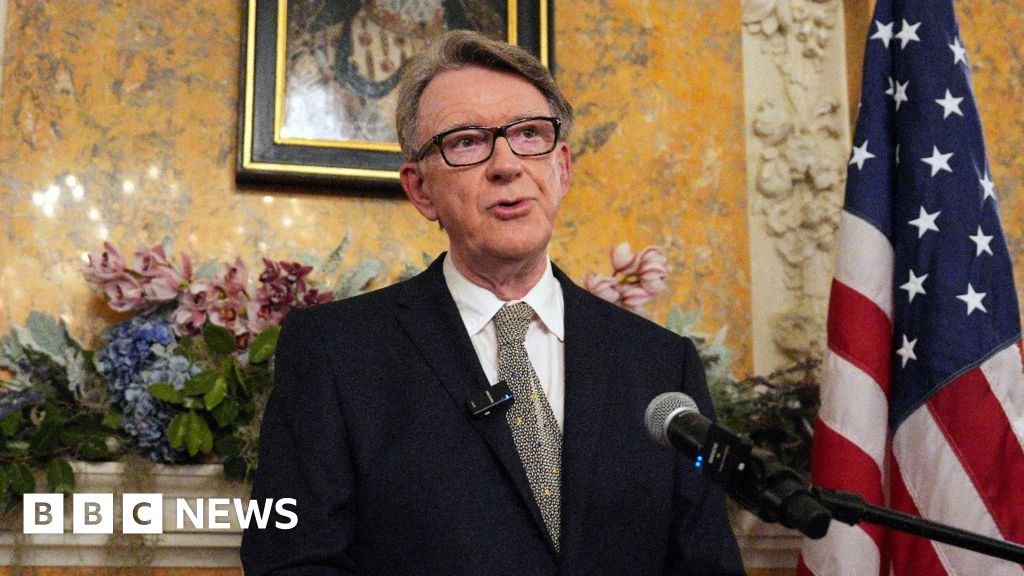
It has emerged that Peter Mandelson was granted a security clearance by the Foreign Office against the recommendation of the government's vetting agency when he was made US ambassador.

The government is under intense pressure to explain how Mandelson came to be granted Developed Vetting (DV) status, which is needed to view top secret government material, despite concerns flagged during his screening process.

Mandelson was appointed as the UK's ambassador to Washington in December 2024, before being removed last September when further information about his ties to convicted sex offender Jeffrey Epstein came to light.

Mandelson, as with any official whose work is likely to involve having access to top secret material, underwent a process called Developed Vetting during his appointment process.

It is the most intrusive process employed by the government for those required to access sensitive material and be granted the highest level of security clearance.

It is carried out by United Kingdom Security Vetting (UKSV), a specialist agency within the Cabinet Office, and applies to thousands of relatively junior officials working in government departments and overseas, as well as senior figures like Mandelson.

The process is designed to identify whether people applying for government jobs pose a security risk, either because they might seek to abuse their position, or because their personal lives make them a potential blackmail target – for example, if they are in high levels of debt or are having an affair.

In practice, it means candidates have to fill out various questionnaires, including being asked to provide detailed information about their finances, internet use and medical conditions.

Official records are also checked, including a candidate's credit history and any criminal offences. Records held by the Security Service are also reviewed.

Those being vetted then have to undergo an interview with a specially trained vetting officer, which is designed to be intrusive.

Candidates are asked about very personal areas like friendships, family, health and sex life, sometimes over several hours.

A higher level of clearance, known as Enhanced Developed Vetting, also exists for a small number of positions, though Mandelson did not need to undergo this for the ambassador role.

Downing Street says it learned this week that the Foreign Office, which oversaw Mandelson's DV process, granted him clearance "against the recommendation" of the vetting agency.

We do not know the specifics of the recommendations Foreign Office officials were presented with, or why they decided to press ahead with awarding the clearance despite the findings of the vetting agency.

Sir Olly Robbins, the Foreign Office's top civil servant who was sacked on Thursday over the awarding of clearance to Mandelson, told MPs in November that clearance decisions are usually signed off by low-ranking officials based on the findings of the vetting report, though decisions can be escalated to senior leaders in specific cases.

There are several outcomes which the vetting process can result in beyond a straightforward awarding or refusal of clearance, according to the government's own guidance. They are:

We do not know if any of the above applied to Mandelson, nor do we know what issues led the vetting agency to recommend that he be refused clearance.

Downing Street has said the decision to override the advice on Mandelson was taken by Foreign Office officials, with neither the prime minister or foreign secretary made aware at the time.

Foreign Secretary Yvette Cooper previously said the vetting process is "independent of ministers who are not informed of any findings other than the final outcome".

Mandelson's vetting only began after the prime minister had announced he would appoint him to the ambassador's role, though other checks (more below) had been carried out by that stage, and senior civil servants told a parliamentary committee in November that carrying out vetting post-appointment is standard practice.

A due diligence check was carried out by a team at the Cabinet Office on behalf of Downing Street, as the prime minister was responsible for the appointment, prior to Mandelson's appointment.

The point was to identify reputational risks or potential conflicts of interests that may have needed to be considered in Mandelson's case.

Sir Chris Wormald, the UK's top civil servant, has previously confirmed to MPs that this was largely based on public information, such as media reports.

At the time, it was public knowledge that the peer had maintained his relationship with Epstein after his conviction for soliciting sex from a minor in 2008.

In 2023, the Financial Times reported about emails suggesting he stayed at Epstein's Manhattan mansion in 2009, while the financier was in jail.

The only non-public information that featured, Sir Chris added, were records of a meeting Lord Mandelson facilitated between Epstein and Sir Tony Blair that have since been disclosed by the National Archives.

This appears to be a reference to a meeting in Downing Street in 2002, six years before Epstein's conviction.

Lord Mandelson's file included information about his previous roles inside and outside government, and his "professional and financial relationships".

His prior relationship with Epstein was listed as a reputational risk, Sir Chris added, alongside his previous two resignations as a minister during the last Labour government.

Sir Chris Wormald, who was Cabinet Secretary at the time, has previously told MPs that "mitigations" were put in place regarding potential conflicts of interest arising from Mandelson's business career which were identified during this pre-vetting process.

After reviewing the due dilligence findings, No 10 sources said Sir Keir Starmer asked Lord Mandelson to address three specific questions, which were sent to him via email by the prime minister's then chief of staff, Morgan McSweeney.

These questions were: why has he continued contact with Epstein after he was convicted? Why was he reported to have stayed in one of Epstein's homes while the financier was in prison? And was he associated with a charity founded by Epstein associate Ghislaine Maxwell that the financier had backed?

At the time, his answers were considered sufficient for him to be appointed to the role, for it to be announced publicly, and for the vetting process to begin prior to him formally taking up the position.

The BBC understands Mandelson's view is that he answered questions about his relationship with Epstein in the vetting process accurately.

Sign up for our Politics Essential newsletter to keep up with the inner workings of Westminster and beyond.

📰 மூல செய்தி (Source): https://www.bbc.com/news/articles/cj0n5700nrpo?at_medium=RSS&at_campaign=rss

முக்கியச் செய்திகள்

Spring warmth set to return with 26C forecast next week

Published

on

While recent days have felt like winter for some, things will gradually get warmer, especially later in the week ahead.

After returning to around average of the mid to high teens, temperatures will jump into the low twenties for much of the United Kingdom from mid-week.

For parts of south-east England, it could be as warm as 26C by the end of the week, though there is still some uncertainty this far away.

There will be sunshine at times but showers or longer spells of rain will feature in the week ahead.

The weekend will still be quite changeable with a mixture of sunshine and rain at times

With northerly winds across the UK, the temperature has been around 4-7C below average this week.

Showers, thunderstorms and hail have also featured widely with some questioning what has happened to spring.

Thunderstorms and hail are actually quite common features of the weather this time of year as the extra daylight and warmth helps grow bigger showers that bring hail.

With the wind switching to more of a westerly direction over the weekend, it will start to feel warmer although the weather will continue to be quite mixed.

After a bright start on Saturday, cloud increases from the west with some rain in Northern Ireland and western areas of England and Wales.

By Sunday, temperatures will have risen to around 12-16C. This will be close to the average for the time of year. With lighter winds it should actually start to feel warmer than it has done this week.

Showers will be mostly confined to northern and western areas of the UK with sunny spells elsewhere.

Warmer, southerly winds will develop as the week goes on, raising temperatures into the twenties for most of us.

Into next week the temperature will continue to rise very gradually as the wind moves round to a south-westerly.

By Tuesday and Wednesday it will have reached at or just above average with 16-20C for most parts of the UK.

While there'll be some sunny spells, the weather will remain quite mixed with showers or longer spells or rain, especially the further north and west you are.

Later in the week the temperature will start to rise even further with 20-26C looking likely across most areas.

The highest temperatures will be most likely around south-east England.

It's possible they may exceed the highest temperatures we've seen so far this year:

UK & England – 26.6C at Kew Gardens on 8 April

Wales – 24.8C at Mona Airfield on 7 April

Northern Ireland – 21.5C at Altnahinch on 25 April

There should also be quite a bit of dry and mostly sunny weather for many parts as an area of high pressure builds in from the south.

There are signs the settled and warmer weather will persist into the bank holiday weekend.

You can stay right up to date with the latest on the BBC Weather app or website.

Is the UK heading for another drought this summer?

Warning of record global temperatures as chance of very strong El Niño grows

📰 மூல செய்தி (Source): https://www.bbc.com/weather/articles/cx21rj9j7xpo?at_medium=RSS&at_campaign=rss
Continue Reading

முக்கியச் செய்திகள்

US planning to criminally indict ex-Cuban leader Raúl Castro

Published

on

The US justice department is reportedly preparing to indict aging Cuban leader Raúl Castro in the coming days over the shooting down of two aircraft three decades ago.

The reported charges, which would need to be approved by a US grand jury, emerged as the director of the CIA travelled to Cuba to meet officials in Havana.

Castro, 94, stepped down as Cuban Communist Party leader in 2021, ending his family's more than half a century in power. He led the country for 15 years, stepping in after his brother, Fidel, resigned.

The potential indictment is the latest move in a US pressure campaign that has included an oil blockade and widespread sanctions.

The charges are said to centre on the 1996 downing of two planes operated by the US activist-humanitarian group Brothers to the Rescue.

Unnamed US Department of Justice (DoJ) officials told US media the indictment could come as soon as next Wednesday.

Asked on Friday about the reported indictment plan, President Donald Trump told reporters on Air Force One: "I'll let DoJ comment on it."

He added: "But [Cubans] need help, as you know. And you talk about a declining country. They are really a nation, a country in decline."

Trump has issued an oil blockade against Cuba, which has exacerbated fuel shortages. This week the island's energy minister acknowledged that Cuba has, in essence, run out of fuel oil.

Potential charges against Raúl Castro were unclear, but officials said the investigation centred on an attack on two small planes, which happened on 24 February 1996 while Fidel was president and Raúl was armed forces minister.

Four people aboard were killed in the incident.

Brothers to the Rescue, a Cuban exile group that searched for rafts carrying migrants from Cuba to the US, had previously dropped anti-Castro leaflets near the Cuban coast.

The Cuban government – including Fidel Castro, who died in 2016 – said Brothers to the Rescue had repeatedly violated Cuban airspace, although the International Civil Aviation Organization found the attack took place over international waters.

In March, the attorney general in Florida announced in a news conference that the state was reopening an investigation into Raúl Castro's alleged role in the incident.

Florida's Governor Ron DeSantis praised the possible criminal charges on Friday, calling them "long overdue".

Cuba has not officially commented on the reports of an indictment, but Foreign Minister Bruno Rodriguez struck a defiant tone on Friday.

"Despite the [US] embargo, sanctions and threats of the use of force, Cuba continues on a path of sovereignty towards its socialist development," he said, according to Reuters news agency.

In order for charges to be filed, prosecutors would have to convince a grand jury, made up of members of the public, that probable cause exists to believe a crime has been committed.

Acting US Attorney General Todd Blanche, who leads the US justice department, has declined to confirm reports of an impending indictment.

"If and when there's a time to talk about about that, we will, obviously," Blanche told Fox News.

Trump has said the US wants to change Cuba's communist leadership. He told crowds at a recent rally that the US would be "taking over" the Caribbean island nation, which lies 145km (90 miles) from the US state of Florida.

On Thursday, CIA director John Ratcliffe met his Cuban counterpart at the interior ministry in Havana. Raúl Rodríguez Castro, grandson of Raúl Castro, was at the meeting.

A CIA official told the BBC's US partner CBS that Washington was prepared to engage on economic and security issues, "but only if Cuba makes fundamental changes".

A Cuban statement said the meeting was an attempt to improve dialogue and that Havana was not a threat to US national security.

It came after American officials renewed an offer of $100m (£74m) of aid to ease the effects of its oil blockade.

Washington has focused more on Cuba in recent months after the US indicted Venezuelan leader Nicolás Maduro in January then removed him from power in an overnight operation.

Analysts say any similar attempt by US special forces to arrest Castro could meet stiff opposition in Cuba, particularly among government loyalists.

William LeoGrande, professor of Latin American politics at the American University in Washington, told the BBC the potential indictment was "one more element of the pressure campaign" that Trump has kept up since returning to office last year.

But further destabilising the island could backfire on the US, said LeoGrande, who wrote the book Back Channel to Cuba: The Hidden History of Negotiations between Washington and Havana.

"If the Cuban economy and social order collapses, it would actually be a disaster for the United States, because it's likely to touch off a mass migration crisis," the professor said.

He said it looks like the US "is sending a warning to Raúl Castro that he should use his influence to get the government to make concessions".

"Or else the US military may be coming for him, just like it came for President Maduro in Venezuela."

📰 மூல செய்தி (Source): https://www.bbc.com/news/articles/c1w2gnd9xp2o?at_medium=RSS&at_campaign=rss

Continue Reading

முக்கியச் செய்திகள்

Would FA Cup win paper over the cracks for Chelsea?

Published

on

Chelsea have won eight and lost eight of their FA Cup final appearances so far, losing their past three in a row

Chelsea go into the FA Cup final in the unusual position of having no permanent manager, an angry fanbase and a lingering question: would beating Manchester City at Wembley be enough to save their season?

Lifting silverware would undoubtedly delight supporters, but concerns over a troubled campaign and anger towards the Clearlake-Boehly ownership group will likely persist.

A draw at Liverpool last weekend prevented Chelsea from becoming the first team to lose seven consecutive league matches before an FA Cup final.

However, it did little to alter their Premier League fortunes. They remain ninth in the table and their pre-season target of Champions League qualification is all but gone.

Qualification for any European competition remains in serious doubt, but victory on Saturday would at least secure a place in the second-tier Europa League – a result that would be welcomed by both players and the club's hierarchy.

It remains a worrying picture for Chelsea, who are operating under strict Uefa financial controls following a settlement last year that limits their spending, as they search for a new head coach.

Bournemouth's Andoni Iraola, Fulham's Marco Silva and former Real Madrid manager Xabi Alonso are understood to be among the options on the club's shortlist. Chelsea sources insist the race is open but, externally, Alonso is seen as the favoured candidate.

Former head coach Enzo Maresca left after a falling out with the hierarchy on New Year's Day, with many believing he has been lined up to succeed Pep Guardiola at City should he depart.

Maresca's replacement, Liam Rosenior, was hired from partner club Strasbourg but lasted less than four months. Interim head coach Calum McFarlane is the first Englishman to lead a team into an FA Cup final since Frank Lampard did so with Chelsea in 2020.

McFarlane earned a point in a 1-1 draw at Etihad Stadium in January in his first experience of leading a senior side, but Guardiola's team remain firm favourites.

A win on Saturday would not only deliver Chelsea their first domestic trophy since 2018, but, even amid any celebration, would be unlikely to quell supporter anger at Stamford Bridge.

Watch live on BBC One and BBC iPlayer (build-up from 13:15 BST) and listen to full match commentary on BBC Radio 5 Live and BBC Sounds. Follow live text commentary plus TV and radio coverage on the BBC Sport website and app.

Fans have protested against BlueCo this season

Not A Project CFC, a growing protest movement, has announced a march up Wembley Way at 13:30 BST before the match. It will feature a large banner focusing "not only on BlueCo's ownership but also on the club's sporting directors".

Three days later, during Chelsea's final home match of the season against Tottenham, supporters plan to turn their backs on the action in the 22nd minute – a reference to 2022, the year BlueCo bought the club.

The group said the protest was "an attempt to send a public message that we have no faith in the current ownership and the direction the club is heading".

It added that the demonstrations would not stop simply because Chelsea are set to appoint their sixth permanent manager, and frustration among supporters centres on footballing issues.

These include what they see as an underwhelming return on spending of more than £1.6bn on predominantly young players, with calls for accountability from the five sporting directors who have led recruitment.

The movement is separate from the Chelsea Supporters' Trust, but the trust has also offered more measured criticism of the club in recent weeks, while focusing its efforts on securing a fairer ticketing policy.

Chelsea insist they are listening and that accountability is built into their system.

There is anger within the club at Chelsea's slide down the table, which is partly attributed to Maresca surprising officials by leaving midway through the campaign, a development that made the decision to recruit Rosenior more appealing.

Unlike Maresca, Rosenior departed on good terms but, having lost the backing of parts of the dressing room, it was felt an interim appointment such as McFarlane offered a better chance of success in both the FA Cup and the Premier League.

The club say they are in a "period of self-reflection", but are keen to point out they have not deviated from their aim of building a winning team or seeking greater "stability" in the head coach role.

Clearlake co-founder Behdad Eghbali acknowledges the club "haven't done [that] right yet" when picking a head coach and will "tweak" their transfer policy to sign more experienced players.

Enzo Fernandez was left out of Chelsea's squad for two matches after Liam Rosenior said he crossed a line

Rosenior had tried to stamp his authority and improve the culture by dropping players like Enzo Fernandez after his comments about a move to Madrid – while criticism of the project has also come from Marc Cucurella.

However, the Fernandez decision had little positive impact and occurred during a historic sequence of six defeats in a row without scoring – Chelsea's worst run in 114 years.

Yet, Reece James and Moises Caicedo have both recently signed new contracts, while Cole Palmer has denied suggestions he is seeking a move to Manchester United.

Joao Pedro is also being linked with a move to Barcelona but is deemed not for sale and said he is "very happy" at the club when speaking to BBC Sport this week.

In a separate interview with UK newspapers before the final, Romeo Lavia says criticism that the players downed tools was "tough to hear" and the squad have seen criticism about their culture and lack of leadership.

Joao Pedro, who has emerged as one of the leaders despite joining in the summer, added: "In the difficult moment you want to see who who wants to win, who want to improve. We have had a tough moment in the Premier League.

"I spoke with everyone here, especially with Reece. We need to change. We need to do something as players. We have conversations between us and everyone is very committed to improve and put Chelsea where it deserves."

Chelsea have not beaten Man City since the 2021 Champions League final, when the club was still owned by Roman Abramovich. City's 13-game unbeaten run in all competitions against them, including 10 wins, is one Chelsea have not endured since before Abramovich transformed the club following his takeover in 2003.

However, Chelsea were already in decline by the time BlueCo took control, having become the first team in English football history under Abramovich to lose three successive FA Cup finals, while also losing six consecutive domestic cup finals.

All of this feeds into a broader identity crisis, with supporters yearning for a return to the early Abramovich era, but experiencing similar managerial turnover under the American ownership – without the same consistent success.

Interim managers have won major honours before. Guus Hiddink lifted the FA Cup in 2009, Roberto di Matteo led Chelsea to their first Champions League title in 2012, and Rafa Benitez followed a year later by winning the Europa League.

Chelsea are a club that have often thrived amid chaos, while other clubs have failed to translate more stable leadership into trophies.

"Well, we just won two trophies last year, so, you know, it kind of depends – a rough patch for whom?" fellow Clearlake co-founder Jose Feliciano told Bloomberg.

"Arsenal hasn't won in 20 years, as far as I have checked – or maybe they've won something – but anyway, we have just won two trophies."

Still, Chelsea are attempting to wean themselves off chaos and into the stability seen at Arsenal or previously at Liverpool under Jurgen Klopp.

They have five sporting directors, a squad built around young players on long-term contracts, and are still searching for a head coach to bring coherence to the project.

Asked w

📰 மூல செய்தி (Source): https://www.bbc.com/sport/football/articles/cz72l30wqq4o?at_medium=RSS&at_campaign=rss

Continue Reading

Trending

Copyright © 2024 by 7Tamil Media, All rights reserved.