Connect with us

உலகம்

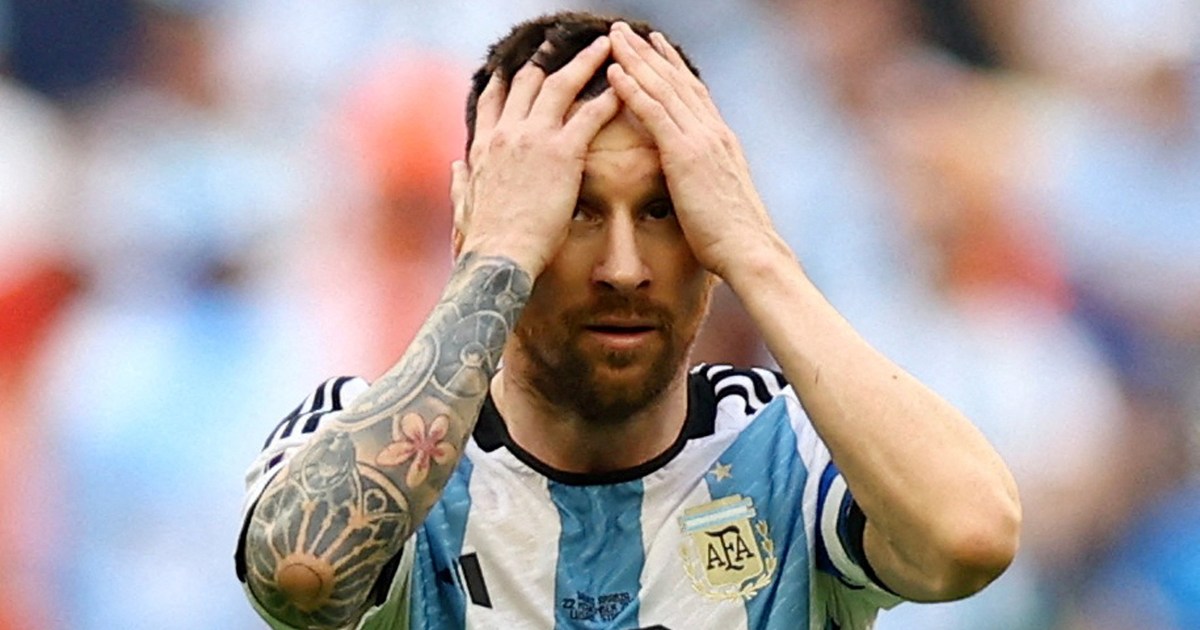
What are the biggest FIFA World Cup upsets in history?

Published

on

Nothing makes the news like an unfancied or low-ranked team pulling off a shock result at the football World Cup.

The FIFA World Cup 2026 is the most eagerly awaited sports event of the year.

Fans are gearing up to see who scores the most goals, who are the biggest performers on football’s grandest stage, and who wins the coveted trophy.

But the tournament has also produced many stunning shocks throughout its history as defending champions have been knocked out in the group stages and minnows have downed giants of the game – such as when Saudi Arabia upset eventual champions Argentina at Qatar 2022.

Here are some of the major upsets in the history of the World Cup.

The post-war England team, comprising the likes of Alf Ramsey, Tom Finney and Billy Wright, was among the favourites to lift the trophy as it made its World Cup debut. The Americans, meanwhile, put together a group of part-timers, including a dishwasher, a letter carrier and a teacher. The mixed bunch practised together for one day and set off on a boat to Brazil.

Joe Gaetjens scored a 38th-minute header to put the USA ahead. In the second half, England’s attack was relentless, but USA’s goalkeeper Frank Borghi prevented them from scoring an equaliser and etched his team’s name into the history books.

A German side staging a comeback to win a World Cup match would not be considered an anomaly today.

However, this was a lesser-known West German side of the 1950s facing the Mighty Magyars of Hungary, who had the great Ferenc Puskas leading their attack.

Hungary entered the World Cup in Switzerland as favourites and lived up to their billing by handing a 9-0 drubbing to South Korea and thrashing West Germany 8-3 in earlier matches.

The two sides met in the final again. Hungary scored two goals in the first half and were seemingly following the script until the opponents scored two.

The game was tied until the 84th minute when Helmut Rahn scored his second goal and broke Hungarian hearts. The German comeback against one of the best teams in football’s history was termed “The Miracle of Bern”.

The fact that North Korea was able to make it to England for the World Cup was surprising enough.

The English FA had considered rejecting the North Korean team’s visa amid its cold war against the Western allied-backed South Korea.

Italy were held together by Giacomo Bulgarelli on the pitch. The midfielder was injured during the match, which reduced the Italian side to 10 men as substitutions were not allowed at the time.

Seven minutes later, Pak Doo Ik scored a goal that not only won his team the match but also knocked out the two-time world champions.

The match is considered one of the biggest upsets in World Cup history, and its original match ticket is placed in the FIFA football museum.

The spot where the goal was scored has been marked with iron stud marks after the stadium was demolished for a housing estate.

West Germany entered the 1982 World Cup as reigning European champions, former two-time winners and one of the favourites.

The all-star German lineup included Hansi Mueller, Wolfgang Dremmler, Karl-Heinz Rummenigge and Lothar Matthaus.

Algeria, on the other hand, were a team made up of little-known names but had been performing well prior to the World Cup.

The nonchalance shown by the Germans turned into complacency. Rabah Madjer scored in the 54th minute to hand the Germans their first shock.

Just after Rummenigge’s strike brought Germany level, a goal that would shock West Germany and the world came from the now-legendary Algerian forward Lakhdar Belloumi.

Holders, favourites and led by possibly the world’s greatest footballer of the time, Diego Maradona, Argentina had a seemingly easy opening match at the 1990 World Cup.

Cameroon were making their World Cup debut and were the only sub-Saharan African country playing in the tournament.

The opening match of the World Cup was played at the legendary San Siro stadium.

Although Argentina started well, the Cameroonians grew in confidence as the game went on without conceding.

Halfway into the second half, Francois Omam-Biyik latched onto a free kick and headed his side into a lead that would stand until the final whistle.

And finally, holders knocked out in the first round: check.

The opening game of the 2002 World Cup had all the possible subplots to make for an interesting match. But what the pundits and the French team failed to anticipate was the meticulously planned Senegalese stifling of the French attack.

Add to that the pace of El Hadji Diouf and a 30th-minute goal from Papa Bouba Diop, Senegal found themselves on top of the group at the end of 90 minutes.

France’s journey ended after another loss and a draw. Senegal went on to become only the second African country to qualify for the quarterfinals.

The 2014 World Cup seemed like the perfect opportunity for Brazil to right the wrongs of 1950 when they lost the final against Uruguay at home despite being clear favourites.

The stage was set for football’s biggest party to light up the samba nation with the crowning of Brazil as champions for the sixth time.

It was only a matter of two more matches. Or so thought the Brazilians.

They were up against Germany, never to be underestimated in a World Cup knockout match. Both teams had a similar path to the semifinals: Topping their groups and having close encounters in the knockouts.

However, Brazil lost their star forward Neymar Jr to injury in the quarterfinal and captain Thiago Silva to yellow card accumulation.

In the semifinal, Germany opened the scoring in the 11th minute and never looked back. Between the 23rd and 29th minutes, the Germans scored four more goals to stun the Brazilians on the pitch, in the stands and across the country.

It didn’t get better after half-time, as Brazil’s defence was breached twice more, before the home team scored a consolation goal in the last minute.

The final scoreline of 7-1 was Brazil’s biggest defeat since 1920, and brought on titles such as “the Agony of Mineirao” and was termed a national humiliation for the football-mad country.

Germany went on to win the final against Argentina for their fourth title.

The opening game of Group B in the 2014 World Cup pitted the two finalists from the previous World Cup.

Spain entered the tournament as reigning European and world champions and one of the favourites.

When Xabi Alonso opened the scoring in the 27th minute, all seemed to be going well for the star-studded Spanish side. But one minute before half-time came a goal that became the most iconic image of the tournament.

Robin van Persie was 15 yards from the goal when he latched onto a looping ball and scored a stunning header to baffle Iker Casillas and the rest of the Spanish side.

The Dutch went on to score four more goals to hand Spain their second-biggest loss in a World Cup. It was also the biggest loss margin for defending champions in a FIFA World Cup.

Spain were knocked out of the group after another loss, while the Netherlands finished the tournament in third place.

Some of the biggest upsets in the World Cup have involved the defending champions being handed first-round defeats, and the 2018 tournament was no different.

It was the third consecutive World Cup where the holders were knocked out at the first hurdle.

Germany came into their final group match needing a win to progress. South Korea were playing for pride as they were all but out of the tournament.

The match seemed to be heading to a goalless draw, so the Germans amassed all their efforts on scoring a winning goal that would see them through.

However, two minutes into injury time, South Korea’s Kim Young-gwon scored from a corner.

Then Manuel Neuer, German captain and goalkeeper, came out all the way into the Korean half to support the attack.

South Korea capitalised by collecting the ball from a pass misplaced by Neuer, and slotting it into an empty net to seal Germany’s fate.

It wa

📰 மூல செய்தி (Source): https://www.aljazeera.com/sports/2026/5/25/what-are-the-biggest-fifa-world-cup-upsets-in-history?traffic_source=rss

உலகம்

Police in Belfast use water cannon as anti-immigrant unrest continues

Published

on

Clashes come as family of knife attack victim calls for calm and condemns violence targeting immigrants.

Unrest in Northern Ireland: Second day of anti-immigration protests in Belfast

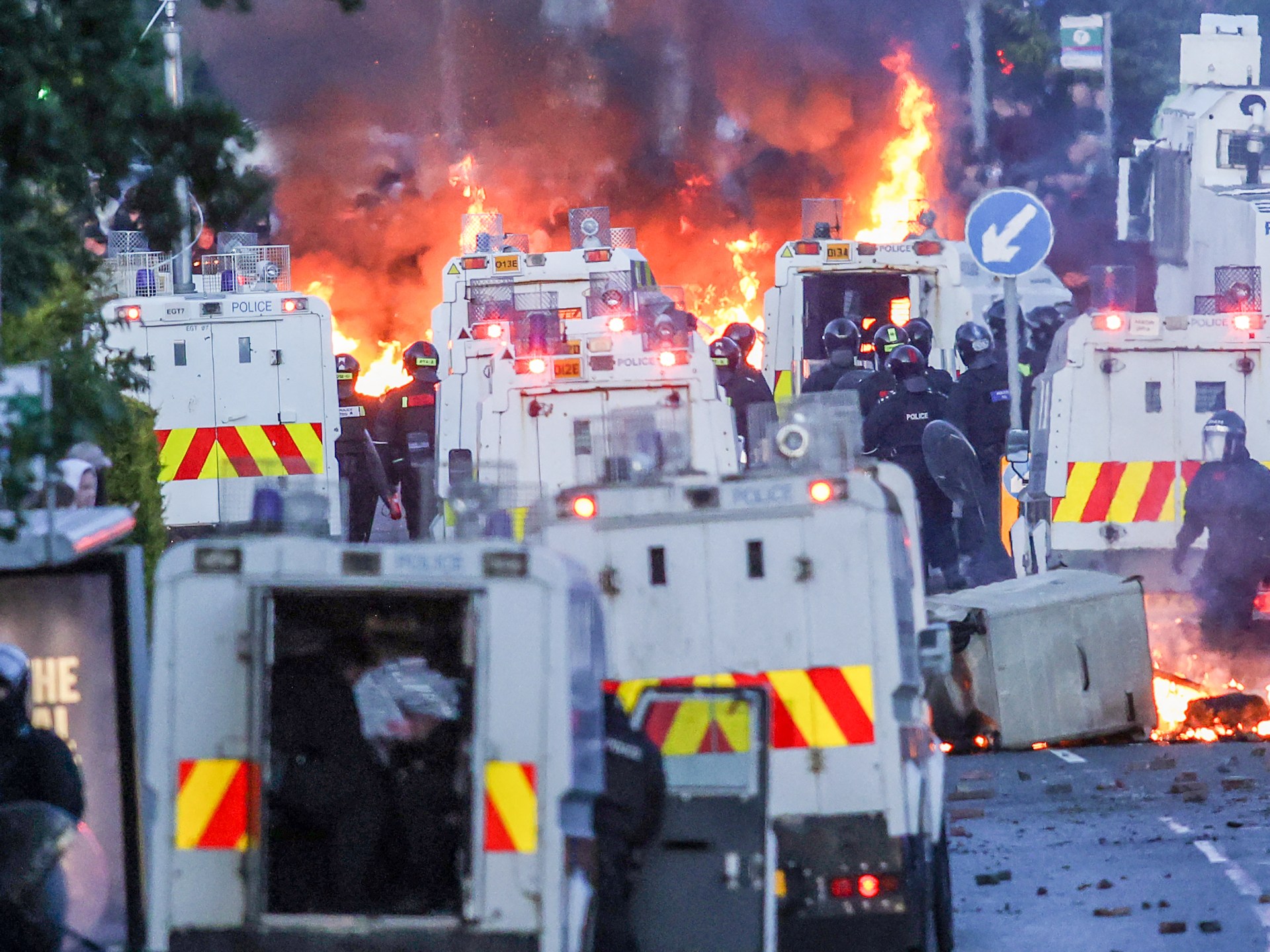
Police in the United Kingdom city of Belfast have used water cannon to disperse dozens of far-right protesters during a second night of unrest triggered by a knife attack involving a Sudanese refugee.

The clashes on Wednesday came as the family of the stabbing victim appealed for calm and condemned the wave of anti-immigrant violence in the city in Northern Ireland.

Police said the protesters threw “missiles” such as rocks and bottles at officers, while images from the scene showed several fires burning on the streets.

Police said officers deployed “water cannon in an attempt to maintain public order”.

But the unrest was markedly less severe than on Tuesday evening, when hundreds of masked men burned families out of their homes and set vehicles alight.

“We want to make it absolutely clear that overnight unrest is not welcome, and peaceful protest is the only way forward,” the family of the victim, Stephen Ogilvie, said in a statement.

“We have many migrants who make a deeply valuable contribution to our country… We do not want this terrible tragedy to be used to divide people or fuel hostility,” it said.

The family added that Ogilvie, who lost an eye and suffered serious wounds to his neck and face, was in a stable condition.

Their appeal came as the suspect in the attack, a 30-year-old ‌Sudanese national named Hadi Alodid, appeared in court on charges including attempted murder.

He was remanded in custody, and the case was adjourned to July 8.

Videos of the stabbing attack circulated online all day on Tuesday, sparking calls on social media for violent protest. Police had to help one family escape from a burning house, according to the Reuters news agency, while several cars and a bus were set on fire and reduced to shells.

Local politicians and a pastor said many of those targeted were Black.

UK minister Ruth Anderson said at least 27 people were made homeless in Belfast “because people went door-to-door to try and target foreign nationals”.

Resident Jamie Corry, 33, said he could only watch on as his house went up in flames.

“I was actually standing right there watching my whole house just go up, slowly but surely,” he told Reuters. “I told them and all, when they were lighting a car up on fire, ‘that’s my property, that’s my property’… and they still didn’t care.”

The attack comes at a time of heightened tensions in the UK following the murder of a student in Southampton who was handcuffed by police as he lay dying from stab wounds after his killer, a Sikh man, had falsely alleged a racist attack.

Tech billionaire Elon Musk reposted many messages that blamed migration on violence in the UK, sharing a post that argued that the “very deliberate policy of mass uncontrolled immigration and open borders” is increasing tensions.

Amid calls from Musk, other far-right agitators like Tommy Robinson called for more protests on Wednesday, Northern Ireland’s police chief said ⁠an extra 200 officers were being deployed on the streets.

“These idiots didn’t just target ethnic minority groups… they targeted society,” Chief ⁠Constable Jon Boutcher said of Tuesday night’s rioters.

Officers had to take a family that included a two-month-old baby to safety during Tuesday’s violence, which he branded “a huge act of self-harm by mindless idiots”.

Speaking in London, UK Prime Minister Keir Starmer said the knife attack raised serious questions, but that “driving people out of their homes is not … the right way to respond”.

He condemned the unrest as “shocking and completely unacceptable”.

Anna Turley, the chairwoman of the UK’s governing Labour Party, meanwhile, said that online platforms were “playing a role in driving” the unrest and suggested Musk was one of the “bad faith actors” inflaming tensions.

The United Nations human rights chief Volker Turk condemned what he called “incitement” on social media. “Dehumanisation of whole groups within a society is totally unacceptable and frankly despicable,” he told reporters in Geneva, adding that the violence in both Northern Ireland and Southampton had been “really shocking”.

Social media providers, he insisted, must take seriously their responsibility to prevent hate speech and incitement to violence.

Immigration has historically been low in Northern Ireland, partly due to the three-decade conflict between mainly Catholic Irish nationalists seeking Irish unity and predominantly Protestant pro-British “loyalists” wanting to stay in the UK and the British military.

However, migration has increased in recent years, and there has been an increasing sentiment against it in both Northern Ireland and parts of the Republic of Ireland.

📰 மூல செய்தி (Source): https://www.aljazeera.com/news/2026/6/11/police-in-belfast-use-water-cannon-as-anti-immigrant-unrest-continues?traffic_source=rss

Continue Reading

உலகம்

Dahiyeh crowds rally in favour of Iranian support against Israel

Published

on

Dahiyeh crowds rally in favour of Iranian support against Israel

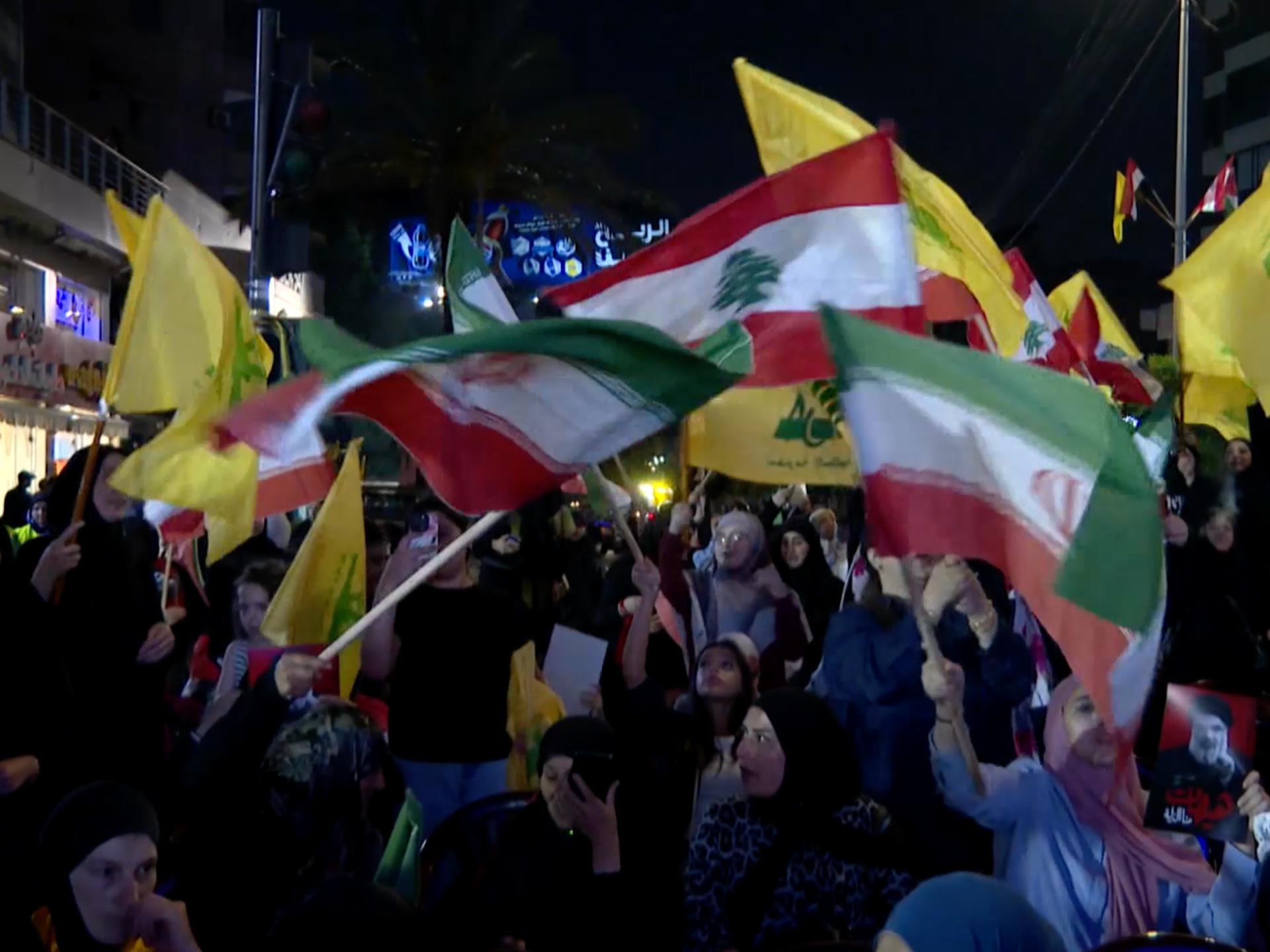
Defiant crowds of Hezbollah supporters rallied in Beirut’s Dahiyeh neighbourhood to support Iran’s role in standing against Israel, and rejecting efforts to separate Lebanon’s war from Iran’s. Al Jazeera’s Heidi Pett reports.

📰 மூல செய்தி (Source): https://www.aljazeera.com/video/newsfeed/2026/6/11/dahiyeh-crowds-rally-in-favour-of-iranian-support-against-israel?traffic_source=rss

Continue Reading

உலகம்

OpenAI says China-based actors stoking opposition to AI data centres

Published

on

AI company says ChatGPT accounts sought to ‘exploit and amplify existing public concerns’ about energy prices.

China-based actors are likely behind the use of ChatGPT for “covert influence operations” aimed at stoking opposition to data centres in the United States, OpenAI has said.

In a research report released on Wednesday, the company behind the world’s most popular AI chatbot said it had banned a cluster of accounts likely based in China for attempting to “manipulate a legitimate debate about American AI”.

OpenAI, whose release of ChatGPT in 2022 kicked off a global frenzy around AI, said the accounts were used to generate social media comments and images that blamed data centres for rising electricity prices in communities across the US.

Among other content, the accounts generated a comic strip showing a cigar-chomping businessman holding bags marked with dollar signs as a family reacted in shock to their electricity bill, according to the San Francisco-based company.

OpenAI said a second cluster of accounts had generated content casting US tariffs as an effort to “dominate technological competition” with China, and specified that the material should not mention Chinese leader Xi Jinping.

While the campaign sought to “exploit and amplify existing public concerns” about energy prices, OpenAI found no evidence that it had a “meaningful” influence, the company said.

“Foreign influence operations have long sought to latch onto existing local issues and sincerely held beliefs, using them to build credibility, amplify divisions or exacerbate public distrust,” the ChatGPT creator said.

“In this case, the operators attempted to covertly insert themselves into an ongoing American debate about the future of the country’s AI capabilities while hiding who they were and what motivated them.”

China’s embassy in Washington, DC, said it was not familiar with the report but that it opposed “any groundless attacks or smears against China”.

“AI is profoundly changing the way people work and live. It is a new frontier for all humanity,” an embassy spokesperson said in a statement provided to Al Jazeera.

“China believes in a people-centered approach to AI and advocates openness and inclusiveness to ensure AI is a force for good and for all.”

OpenAI is the latest prominent voice to suggest foreign influence could be behind opposition to AI in the US.

In May, Secretary of the Interior Doug Burgum told a policy event hosted by Breitbart News that the public’s increasingly negative sentiment towards the construction of data centres was not “organic” and could, in some cases, be linked to “foreign-sourced dark money”.

Darren Linvill, a professor at Clemson University in Clemson, South Carolina, who studies foreign influence campaigns, expressed doubt that the campaign identified by OpenAI or any other coordinated effort would have much impact on the “volume or tone” of the public debate.

“My team is very familiar with the work of various Chinese influence actors, and the AI work China has done to date has been interesting but not effective,” Linvill told Al Jazeera.

“It’s getting better with each passing month, and I’m concerned what they may be capable of in the future, but they aren’t there yet.”

“If China were really serious about meaningfully influencing the discourse around data centres using AI chat bots, I question if they would use OpenAI to do it,” Linvill added.

Opposition to the construction of data centres has been on the rise in the US, with at least 36 projects blocked or delayed between May 2024 and June 2025, according to Data Center Watch, a research project by AI security company 10a Labs.

In March, Senator Bernie Sanders and House Representative Alexandria Ocasio-Cortez announced legislation that would impose a moratorium on new data centres until the introduction of national safeguards to mitigate the risks of AI.

The legislation has little chance of becoming law in the near future due to US President Donald Trump’s laissez-faire approach to AI regulation and Republicans’ control of both chambers of Congress.

Opposition to data centres has been driven in part by the huge amounts of energy they consume supporting the computing power needed to train and run AI models such as ChatGPT.

The facilities accounted for 1.5 percent of global electricity use in 2024, with consumption growing 12 percent annually over the last five years, according to the International Energy Agency.

📰 மூல செய்தி (Source): https://www.aljazeera.com/economy/2026/6/11/openai-says-china-based-actors-stoking-opposition-to-ai-data-centres?traffic_source=rss

Continue Reading

Trending

Copyright © 2024 by 7Tamil Media, All rights reserved.