Connect with us

உலகம்

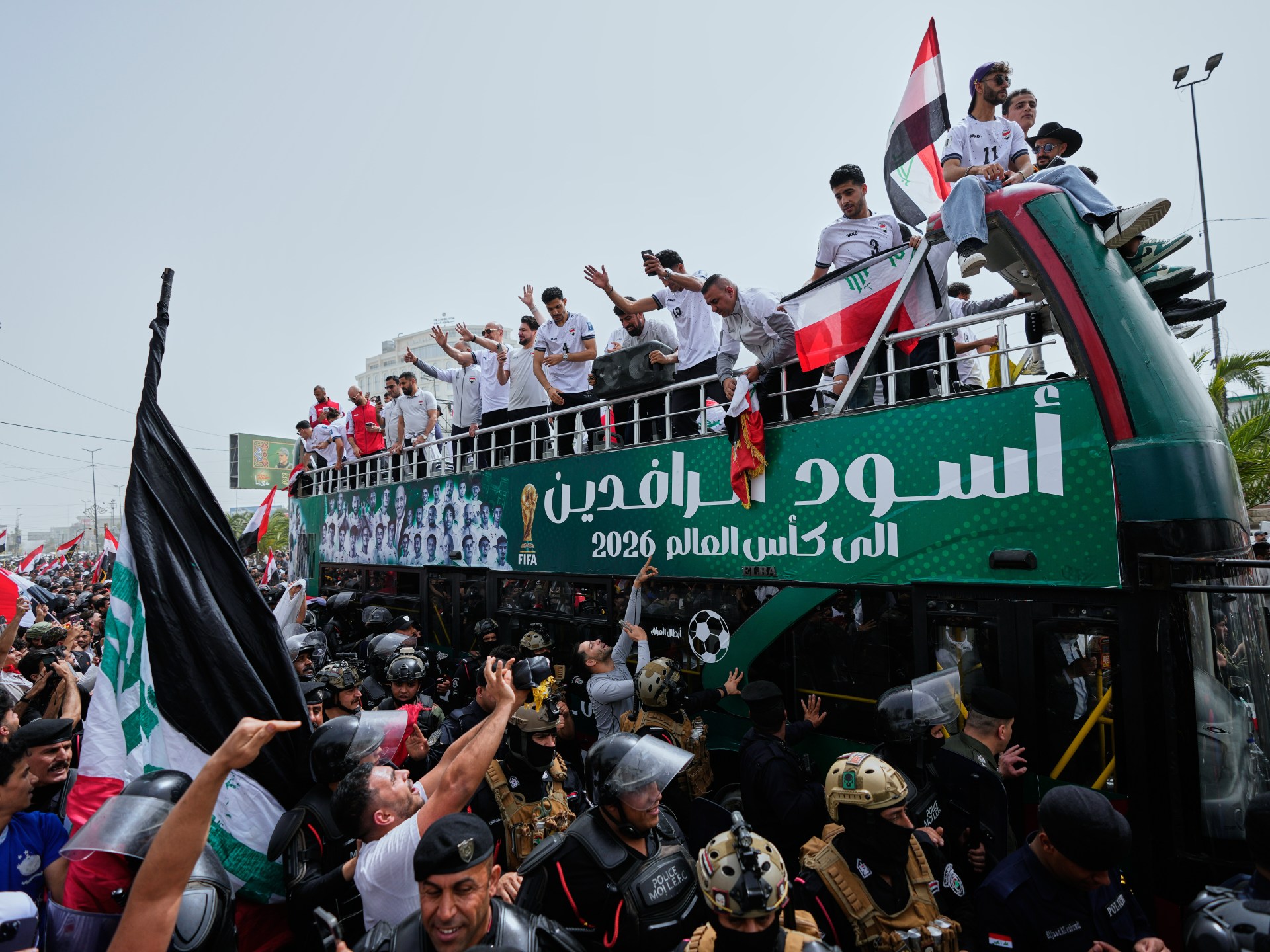
US visa rejections, war on Iran keep fans away from World Cup

Published

on

High visa application fees, equally high rejection rates, an unwelcoming America, and the war combine to deter fans.

When Iran qualified for the FIFA World Cup last March, the men’s national team didn’t expect their participation to hinge on visas being granted by hosts, the United States, only at the last moment – if at all.

Nor did Iranian fans eager to support Team Melli expect to be banned from entry by the US. President Donald Trump signed an executive order last June halting visa issuance to a handful of countries, including Iran, which the US designated a “state sponsor of terrorism”.

Perhaps most unanticipated for Iranians was that the host nation of the largest sporting event in the world would launch a war on their country just months before the tournament began.

For Amir Ghalenoei’s side, the joint US-Israel war was more than a wrench thrown into World Cup preparation plans; it was tangible and personal, as thousands across the country were killed by missile attacks.

It was the US bombing Azadi Stadium, home to several local matches and where the national team trained. It was the men’s team holding tiny backpacks in remembrance of the students massacred in a US strike on a school in Minab the day the war began.

After months of politically charged rigmarole between the US and Iran – which led to them switching basecamps to Mexico instead – the men’s national football team will find themselves playing in the shadow of war. That too, if the US grants them visas in time.

For Iranian football fans, travelling to the US was “almost impossible” even without the visa challenges or the war. There are no direct means of transport between the countries, which do not have formal diplomatic relations.

“Aside from the visa issue, you have to take two- or three-way routes from Tehran to get to the US,” said Ali, a fan who did not want to share his full name for safety reasons.

“Returning from the US to Iran is a big challenge in itself, with the possibility of being arrested by the [Iranian] government,” he added. The war has increased scrutiny of antinational sentiment within Iran, resulting in executions of people arrested on accusations of spying for Israel or the US.

Political repercussions extend to the sport sphere, too. Iran’s top footballer Sardar Azmoun was expelled from the national team in March for a perceived act of disloyalty to the government, when he posted a picture on social media of a ⁠meeting with Dubai ruler Mohammed bin Rashid Al Maktoum. Relations between the UAE and Iran have been tense during the war, with Iran hitting the Emirates repeatedly and accusing it of allowing the US to use its territory for attacks on Iran.

The US war on Iran, now nearing its 100th day, has also deterred fans globally from attending the World Cup.

“Football is called the Beautiful Game for a reason, for its ability to unite people,” South African football fan Byron Pillay told Al Jazeera.

“But it’s hard to believe in that magic with the politics and war rhetoric off the field of play, specially when one of the tournament hosts is central to that.”

Compatriot Riaz Hamed echoed those reservations. “With the stance of America in particular, regarding the treatment of fans and immigrants in the country, I don’t believe it to be entirely safe to attend.”

Fears have been stoked by reports from organisations such as Human Rights Watch, which said an asylum seeker who attended the Club World Cup final last year in New Jersey with his children was arrested by the Immigration and Customs Enforcement (ICE) department and deported to his country of origin.

Khayran Noor, an international sports lawyer based in Kenya, emphasised that sport cannot be separated from wider geopolitical dimensions.

“If participation can be shaped by geopolitical realities outside the game itself, does that ultimately undermine the inclusive ideals these tournaments claim to represent?” Noor said in an interview with Al Jazeera.

“Football is global, but global mobility is not; the World Cup sits directly at the intersection of that contradiction.”

Mounting visa rejections have also spooked fans from attempting to attend the World Cup.

The US has launched a FIFA Priority Appointment Scheduling System (PASS), which expedites visa interviews for fans who have bought tickets through FIFA. But it does not guarantee a visa.

Last month, a group of nearly 150 Ghana football fans saw their visa applications rejected.

Godwin Nii Armah, 32, scrapped his travel plans for the World Cup for personal reasons, but knew he might have shared the same fate as those compatriots. He also admitted that travelling to Toronto, Boston and Philadelphia to support the Black Stars would have been a costly logistical headache in addition to international flights and visa fees.

Ghana nationals have to pay a $185 fee with their US visa application and 100 Canadian dollars ($71) for the Canadian visa. Add the two, and the amount is comparable to the monthly per capita income in Ghana.

Noor questioned whether future FIFA host agreements should include obligations relating to accessibility and mobility before hosting rights are awarded.

“If teams and fans from particular parts of the world face structural barriers before they can even attend, then the broader spirit of inclusion that these tournaments seek to embody risks being undermined.”

She acknowledged that while states understandably retain sovereign responsibilities regarding border control and national security, global sporting events often require exceptional frameworks.

Fans from 27 of the 48 nations headed to the World Cup need a US visa to apply, costing anywhere between $185 to $435 – amounts that represent wages that an average person in many countries in the Global South would earn over several months.

Canada is marginally more visa-friendly, while Mexico remains the most accessible World Cup host nation.

That was why South Africa chose to send a small supporters group to Pachuca, Mexico, where South Africa have set up basecamp and play two group stage matches.

Sahil Ebrahim is among the “lucky few” in that delegation. After decades of supporting Bafana Bafana from a TV screen in Cape Town, Ebrahim attended the Qatar 2022 World Cup.

Now the 40-year-old is on his way to his second World Cup, where he will witness the tournament opener live in Mexico City, when South Africa play the hosts on June 11.

Contrary to the South African football team, who faced a 24-hour delay in their departure over a visa bungle by the federation, Ebrahim said the Department of Sport did an “excellent job” expediting their visas with the Mexican embassy.

The process, however, paled in comparison with the 2022 World Cup in Qatar, where Hayya cards centrally aligned all visa, ticket and transport details for each fan, Ebrahim acknowledged.

While South Africa’s friendly against Jamaica on Friday, June 5, is closed to the public, Ebrahim and the supporters’ group will watch an exhibition game on Sunday where the Bafana legends of 2010 will take on their Mexican counterparts. South Africa had hosted the World Cup in 2010, a first for an African nation.

“Ultimately, major sporting events succeed not only because people watch them, but because people participate in them,” Noor said.

“The question is not who can watch the World Cup – the question is who can truly participate in it.”

📰 மூல செய்தி (Source): https://www.aljazeera.com/sports/2026/6/5/us-visa-rejections-war-on-iran-keep-fans-away-from-world-cup?traffic_source=rss

உலகம்

Thousands protest in Albania over Kushner-linked resort project

Published

on

Thousands protest in Albania over Kushner-linked resort project

Thousands of people have been protesting in Albania’s capital against a $5 billion luxury resort project backed by the US president’s son-in-law Jared Kushner.

📰 மூல செய்தி (Source): https://www.aljazeera.com/video/newsfeed/2026/6/5/thousands-protest-in-albania-over-kushner-linked-resort-project?traffic_source=rss

Continue Reading

உலகம்

How the world failed a mother’s children, killed in Israeli strikes on Gaza

Published

on

How the world failed a mother’s children, killed in Israeli strikes on Gaza

Palestinian journalist and mother Aya Shamaa wrote about how an Israeli strike killed her children, newborn Ryan and seven-year-old Yaman. Like countless mothers in Gaza, she saw her children as gleams of hope amid a fragile ceasefire. Narrated by Al Jazeera’s Al Anoud Al Aqeedi.

📰 மூல செய்தி (Source): https://www.aljazeera.com/video/newsfeed/2026/6/5/how-the-world-failed-a-mothers-children-killed-in-israeli-strikes-on-gaza?traffic_source=rss

Continue Reading

உலகம்

Zelenskyy asks Putin for meeting: What’s he offering, could Russia accept?

Published

on

Russia and Ukraine have been holding peace talks since the war began in 2022, but with no concrete outcome.

Ukraine’s President Volodymyr Zelenskyy has written an open letter to Russia’s President Vladimir Putin and proposed a meeting to discuss ending Moscow’s four-year war on Kyiv.

The letter, which was published in full on the Ukrainian president’s website on Thursday and sent via diplomatic channels to Russia as well as countries including the United States, comes as Russia’s war on Ukraine continues to rage into its fifth year.

On Thursday, at least 12 people were killed and dozens injured in Russian attacks across Ukraine, according to Ukrainian authorities. Zelenskyy also commemorated at least 707 children killed by Russian attacks during the two countries’ more than four-year-long war.

Meanwhile, in Russian-occupied Ukraine, at least four people were killed in Ukrainian drone attacks on Thursday. Ukraine also struck an oil complex and naval base in St Petersburg, Russia, on Wednesday.

Russia and Ukraine have been holding indirect peace talks since the war began in February 2022, but with little or no concrete outcomes. US President Donald Trump has also met both Putin and Zelenskyy, seeking to bring them to the negotiating table to discuss ending the war, but so far, his efforts have not borne fruit.

Will Zelenskyy’s open letter to Putin open a new path to a ceasefire?

In his letter, Zelenskyy told Putin that he has spent nearly half of his 26 years in power in Russia “waging war against Ukraine” and said Russians are now growing increasingly tired of Ukrainian missiles and drone attacks, inflation and fuel shortages.

“We can all see that Russians are finally becoming less comfortable with this reality – with the fact that the war is bringing more and more negative consequences to Russia,” he wrote.

He also told Putin that a prolonged war could threaten the Russian president’s personal position. “It is a fact of Russian history that you know well: When Russia grows tired, change comes,” he said.

“After 26 years in power, age is beginning to take its toll. And with time, the fatigue with you will only grow,” he added.

Zelenskyy also wrote that while he and the Ukrainian people are less concerned about the loss of Russian lives on the battlefield, every loss of a Ukrainian counts. “Even when the ratio of Ukrainian losses to Russian losses is one to five or one to six, it still matters greatly.

“We in Ukraine do not want a permanent war. We know very well that life without war is infinitely better. And we want to achieve that,” he said.

Zelenskyy noted that with the US focused on its war on Iran, “it would be wrong to simply wait until the war in Europe returns to the centre of its attention,” and suggested a path to peace.

“Do not be afraid to take the path out of this war. That is the main thing that is required of you now.

“Ukraine proposes ending this war through direct engagement between us – and you. I am proposing a meeting… If you do not personally come to the conclusion that it is time to end this war, Ukraine will continue fighting for its existence,” he added.

Regarding the location of the meeting, Zelenskyy said: “There are countries that have traditionally hosted leaders to resolve issues of war and peace. Switzerland, Turkiye, the countries of the Arab world – many are able and willing to host such a meeting.

“We believe Europe should be part of this process – those who truly have the capacity to influence the situation. We also believe that the United States must be part of the process. This is what could help shape a new security architecture for our part of the world,” he added.

Writing on X, Ukrainian Foreign Minister Andrii Sybiha described the letter as “a serious and meaningful proposal to end the war … with clear, doable steps and an invitation for a personal meeting”.

“We expect a meaningful response to this proposal. It’s time to end this war. It’s time to choose peace.”

Markus Ziener, a senior visiting fellow at the German Marshall Fund of the United States Berlin office, told Al Jazeera that making the letter public forces Russia to openly show its hand while proving to the world that Ukraine is ready for diplomacy.

“It places the moral high ground and the pressure to respond entirely on the Kremlin,” he said.

He noted, however, that this is not the first time Zelenskyy has reached out to Putin.

“Most recently on May 11, 2025, he publicly and explicitly announced that he was ready to travel to Turkey to meet Putin in person for face-to-face talks,” he said.

Zelenskyy’s new proposal shows that the Ukrainian president “feels emboldened by the successful military pushbacks against the Russian army on the battlefield, including successfully targeting Russian infrastructure far in Russian mainland”, Ziener said.

“The Ukrainian president believes that, currently, the momentum is on his side and therefore it is good moment [to] offering talks.”

The Russian president’s spokesman told reporters in Russia that Putin was aware of Zelenskyy’s letter but had not yet been briefed about its content in detail.

But at Russia’s showcase annual economic forum in St Petersburg on Thursday, Putin said his troops were continuing to advance in Ukraine.

“The offensive is ongoing on a daily basis. At present, the Russian Federation has taken full control of the Luhansk People’s Republic – 100 percent. And Russia has brought more than 85 percent of the territory of the Donetsk People’s Republic under its control. (And) 80 percent of the territory of the Zaporizhzhia region,” he said, referring to three of the four regions in Ukraine which Moscow has claimed as its own since 2022.

“Naturally, under these circumstances, the Ukrainian side would like us to halt the advance. But rather than stopping that, it would be better to bring the war to an end altogether by agreeing to the compromises that were discussed in Anchorage,” he said, referring to a summit he held in Alaska with Trump, which ended without any agreement, in August 2025.

In his letter to Putin, Zelenksyy wrote that Ukraine had heard that Russia “promised in Alaska the resolution of certain issues concerning Ukraine and Europe”, but added that issues on Ukraine and Europe could not be decided in Anchorage.

“Since the war is taking place in Europe, and since Ukraine needs security guarantees, while you [Putin] also seek security guarantees for yourself, it would be logical to involve those who can genuinely serve as guarantors,” Zelenskyy said.

While it is unknown if Putin will accept Zelenskyy’s proposal, he told the conference in St Petersburg: “We are certainly prepared and willing to reach an agreement with Ukraine through peaceful means. Specifically, on the basis we discussed during our meeting with President Trump in Anchorage.

“As for what we might say to one another if we were to reach the end of the conflict, at the very least we could – and indeed should say, ‘Thank goodness it’s all over,'” he added.

So far, Putin has only agreed to meet Zelenskyy in Moscow or a third country, once a peace agreement is finalised.

Ziener said it is highly unlikely that Putin will agree to Zelenskyy’s latest proposal while Russia is militarily under pressure, as agreeing to direct talks could be seen as a weakness on the part of the Kremlin.

“Furthermore, meeting Zelenskyy as an equal would undermine years of Kremlin propaganda aimed at delegitimising the Ukrainian president,” he said.

Since Trump became president of the US for the second time in January 2025, he has been promising to end Russia’s war in Ukraine.

He has met both Russia’s President Putin and Ukraine’s President Zelenskyy in separate meetings to discuss ending the war, but so far, these efforts have not borne fruit.

Truce talks have largely stalled due to Russia’s insistence on keeping territory it has seized from Ukraine. Ukraine has stated that it is not prepared to cede any territory.

📰 மூல செய்தி (Source): https://www.aljazeera.com/news/2026/6/5/zelenskyy-asks-putin-for-meeting-whats-he-offering-could-russia-accept?traffic_source=rss

Continue Reading

Trending

Copyright © 2024 by 7Tamil Media, All rights reserved.