Connect with us

உலகம்

US launches tariff refund system as thousands of importers line up

Published

on

More than 330,000 importers paid up to $166bn in tariffs on 53 million shipments ​of imported goods.

The refund system set up to allow companies to recover illegally collected tariffs from the United States government has gone live as thousands of companies rushed to file claims.

“So far, so good” – though the system is a little glitchy, said Jay Foreman, CEO of toymaker Basic Fun, which had a team in its “war room” at its headquarters in Boca Raton, Florida, ready to start filing when the system went live at 8am US Eastern time (12:00 GMT) on Monday.

Foreman said the system didn’t crash as some had feared it might under the onslaught of attempted submissions – but rather would sometimes not allow an upload and force them to retry. The company has over 500 files it needs to upload to the system, although the system permits these to be uploaded in batches.

“However, if you load too many or the system is too busy, it will kick them back,” Foreman said in an email about how the process was working in the early moments. “We’ve got over 50 percent of our invoices loaded so far. We are hoping in the next few hours to have them all loaded. I’m very happy we got this process started early.”

Companies contacted by the Reuters news agency in recent days expressed concerns about the durability of the new system, created by US Customs and Border Protection (CBP) in response to a court order that it prepare to return up to $166bn to importers.

The US Supreme Court in February struck down the tariffs that President Donald Trump pursued under a law meant for use in national emergencies, handing the Republican president a stinging defeat.

In court filings, customs officials said as of April 9, some 56,497 importers had completed the necessary steps to receive electronic refunds, an amount totalling $127bn, or more than three-quarters of the total eligible to be refunded. More than 330,000 importers paid the tariffs at issue on 53 million shipments of imported goods.

Companies must submit declarations listing the goods on which they collectively put billions of dollars towards the import taxes the court subsequently struck down. If CBP approves a claim, it will take 60-90 days for a refund to be issued, the agency said.

The government expects to process refunds in phases, however, focusing first on more recent tariff payments. Any number of technical factors and procedural issues could delay an importer’s application, so any reimbursements that businesses plan to make to customers would likely have to trickle down slowly.

It is unclear whether getting a refund claim into the portal as soon as possible will impact how quickly it’s processed, but many companies decided to not take the risk of waiting.

A CBP spokesman said on Friday that the agency created a system that will “efficiently process refunds, pursuant to court order, for importers and brokers who paid” the duties.

This is the latest twist in a drawn-out battle over emergency tariffs collected over the past year as Trump seeks to restructure US trade relations. The constantly shifting tariffs roiled global business as companies rushed to move supply chains to avoid them as well as figure out who would ultimately pay the taxes.

📰 மூல செய்தி (Source): https://www.aljazeera.com/economy/2026/4/20/us-launches-tariff-refund-system-as-thousands-of-importers-line-up?traffic_source=rss

உலகம்

Former Afghanistan cricketer Shapoor Zadran battles life-threatening disease

Published

on

Former pace bowler Zadran is receiving treatment for HLH, a rare immune system disorder, at a hospital in India.

Former Afghanistan cricketer Shapoor Zadran is battling for his life as he receives treatment for a rare life-threatening immune system disorder at a hospital in New Delhi, media reports say.

Zadran, who was admitted to a hospital in the Indian capital in January, is suffering from an advanced form of hemophagocytic lymphohistiocytosis (HLH) and has been placed in the intensive care unit (ICU), ESPNcricinfo reported on Monday.

“It was a very serious infection,” Zadran’s brother Ghamai Zadran told ESPNcricinfo. “His whole body was full of the infection, including TB (tuberculosis). It also spread to his brain, which was revealed after MRI and CT scans.”

Ghamai said Zadran had started to respond to the treatment and, after a few weeks, he was discharged from the hospital and the group moved to a hotel nearby.

“The doctor said we could drop in for the checkups frequently,” Ghamai said. “He [Zadran] was feeling good for about 20 days before he got the infection again. Then we admitted him to the hospital [again].”

HLH is a rare life-threatening disorder of immune regulation with a high mortality rate that usually occurs in infants and young children, according to Johns Hopkins Medicine.

In adults, many different conditions, including infections and cancer, can cause HLH. While the incidence is increasing, it remains underdiagnosed.

Zadran, 38 years old and a left-arm fast bowler for Afghanistan, first felt unwell in his home country in October and was referred to hospitals in India for further treatment. He arrived in the country with his wife and former Afghanistan captain Asghar Afghan.

He was discharged after initial treatment but had to be readmitted when his symptoms returned and worsened with time, his brother said.

HLH weakens the body’s immune system, which does not work normally as certain white blood cells – histiocytes and lymphocytes – attack other blood cells, causing the spleen and liver to enlarge.

Zadran represented Afghanistan between 2009 and 2020, playing 43 one-day internationals (ODIs) and 37 T20 internationals (T20Is). He was part of the Afghanistan squad in its formative years, as the war-torn nation established itself as one of the leading associate members of the International Cricket Council.

The ferocious pacer was part of Afghanistan’s squad when the nation made its debut at the ODI Cricket World Cup in 2015 in Australia and New Zealand. He shone with the ball, taking 10 wickets in six games.

While Afghanistan received Test status in 2017, Zadran never played the longest and most prestigious format of the game for his country.

During his 11-year career, Zadran was renowned for his towering and broad frame, long hair, and aggressive bowling style. He roared in celebration at every dismissal of a batter and became a fan favourite amongst Afghan cricket supporters for his on-field demeanour and performances.

The Afghanistan-born player picked up cricket in Pakistan’s Peshawar, where he lived for many years as a refugee before returning to his home country in the early 2000s.

Social media posts showed Afghan cricket star and T20I captain Rashid Khan by Zadran’s bedside during a visit to the hospital earlier this month.

News of Zadran’s illness prompted several international cricket stars to show an outpouring of support and warm wishes.

Former Pakistan captain Shahid Afridi said he was “truly saddened” to hear of his former nemesis’s condition.

“You’ve always been a fighter on the field, and I know you’ll fight this too,” Afridi wrote on X.

📰 மூல செய்தி (Source): https://www.aljazeera.com/sports/2026/4/20/former-afghanistan-cricketer-shapoor-zadran-battles-life-threatening-disease?traffic_source=rss

Continue Reading

உலகம்

Iran expands limited internet access but restrictions remain for most

Published

on

More Iranians being sold ‘privilege’ of limited internet access, but most remain in the dark.

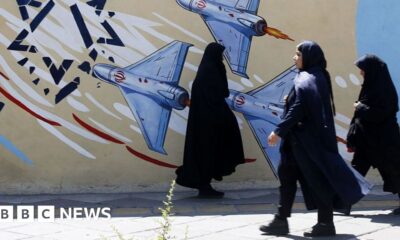
Tehran, Iran – Iranian authorities have been slowly expanding a list of individuals and entities deemed eligible to have limited internet access. However, the action serves only to illustrate that most of the population of more than 90 million people remains disconnected during the war with the United States and Israel.

The government imposed a near-total internet shutdown across Iran within hours of the first bombs falling in downtown Tehran on February 28. The move has seen internet connectivity reduced to about 2 percent of pre-war levels at most, according to monitors.

A limited intranet functions to keep some local services and apps alive, but people are highly frustrated, and the economy has suffered billions of dollars in lost revenue as a result of more than 1,200 hours of the digital blackout. One business, however, is thriving: the black market for internet connections.

This week, tens of thousands of people and organisations selected by the state based on their positions and professions signed up or received text message invitations to connect through a service called Internet Pro.

That is the name selected for a limited and metered internet connection through which thousands of sites and most global messaging services are blocked but some applications, app stores and Google services function.

The service is being sold in the form of 50-gigabyte data packages by three top state-linked telecommunications companies. State authorities can also issue limited internet protocols (IPs) for global connectivity to designated office spaces of approved companies and businesses.

Applicants need to provide full identification and professional or referral documents. Business owners and traders introduced to the Ministry of Information and Communications Technology and other authorities through their guilds and chambers of commerce were among the first to be connected this month.

Doctors, university professors, researchers and academics in various fields were nominated by the Ministry of Science this week. Freelancers were told to sign up through a webpage set up by the state-linked Iranian ICT Guild.

This is a separate service from that enjoyed by holders of “white SIM cards”, which offer less restricted connections and are reserved for officials, state-linked entities and individuals, journalists and some civilian supporters of the establishment perceived to be helping “get the message out” on behalf of the government.

For years, Iranian authorities have stressed that they are against a tiered internet system, which in effect renders connectivity a privilege, not a fundamental right in an age of rapid digital advancement.

But with such a system now in action and expanding, some state media are now framing it as a necessity despite harsh criticism regarding such an idea from the population over the years.

The state-linked ISNA news agency this week branded Internet Pro an “expert option providing a stable connection for professional activities”. The outlet encouraged potential applicants to contact the three telecommunications companies to see if they are eligible.

No such tiered system was implemented at a significant scale around the short-lived internet blackout imposed during the 12-day war with Israel in June or the 20-day near-total shutdown in January during deadly nationwide protests.

But the extended and unprecedented internet shutdown now in place sees eligible people and businesses giving in and electing to sign up.

Not all are convinced, however. Many are reported to have taken to state-run online platforms and news sites with demands for the full restoration of the internet.

On the local technology-focused site Zoomit, which can be reached through the intranet, thousands of people have recounted experiences of lost jobs and disrupted lives as a result of the shutdown.

“I’m a cybersecurity and network expert. Our servers and systems have not received security updates for about two months, and we’ve lost all our integration with open-sourced communities,” one user wrote. “This has significantly increased risks and stopped development, it’s unclear if my team will have its contract renewed this year in these economic conditions.”

Iranians circumventing the filternet through virtual private networks (VPNs) and other methods have also rejected the tiered system.

Aliasghar Honarmand, the editor in chief of an online privacy news website and an online medical news and research service, wrote on X that he has ignored multiple offers for Internet Pro over recent days.

“Access to the free internet is a fundamental and basic right for all people,” he wrote, adding that giving it to elites based on state classifications leads to normalising severe internet disruptions, creating an illusion of free connectivity, undermining social cohesion, violating personal privacy and propagating a black market.

Since the start of the war, Iranians going online from inside and outside the country have observed a battle between developers working on behalf of the state to deepen internet restrictions and those trying to skirt them.

This week, a circumvention method known as SNI (server name indication) Spoofing became popular after an unidentified user reported that he managed to establish a secure connection and published a guide.

The method tricked internet censors into thinking the users were visiting a permitted site or service when they were accessing blocked content. However, the authorities quickly moved to block gateways allowing the method to work, resulting in its demise within days.

Two experts who spoke with Al Jazeera said authorities are now deploying a heavily restrictive and centralised internet architecture through something called a national NAT (network address translation): a single country-scale gateway that all internet traffic must pass through.

This allows the authorities to reroute and bundle connectivity across Iran through a central operator with the aim of achieving higher levels of control and monitoring and an improved capacity to combat circumvention efforts.

But the method is hardware-intensive and costly, can lead to degraded or lagging connections and could potentially act as a single point of failure for saboteurs to exploit, the experts said.

One young resident of Tehran who has used Internet Pro issued for her university professor mother told Al Jazeera that most platforms considered essential by many people, such as Telegram, WhatsApp and Instagram, remain blocked on the service. ChatGPT was also blocked, but China’s DeepSeek was available on the service, she added.

“This is ridiculous and stupid because all groups of society, for whatever reason, need and deserve the internet. This move excludes most people who have no links to get them connected, including the elderly, and serves to keep the internet out for longer,” she said.

📰 மூல செய்தி (Source): https://www.aljazeera.com/news/2026/4/20/iran-expands-limited-internet-access-but-restrictions-remain-for-most?traffic_source=rss

Continue Reading

உலகம்

Ugandan and Congolese forces rescue 200 from ISIL-backed ADF

Published

on

Soldiers rescued the civilian captives who were being held by the Allied Democratic Forces, a group linked with ISIL.

Ugandan and Congolese forces have reported the rescue of at least 200 civilians from captivity by an ISIL (ISIS)-linked rebel group in the eastern Democratic Republic of the Congo (DRC).

The captives were freed last week after being kidnapped by the Allied Democratic Forces (ADF), Uganda’s military said on Monday.

It said those freed from the camp along the River Epulu that was run by the former Ugandan rebel force were in poor health.

“Many [of the captives] recounted harsh conditions in captivity, including lack of food, forced labour, and punishment for disobedience,” a military statement said. “Several appeared frail, suffering from untreated illnesses such as malaria, respiratory infections, and physical exhaustion.”

The ADF, also referred to by some experts and institutions as an ISIL affiliate in Central Africa (IS-CA), originally began in 1994 as a rebel group in Uganda, whose government it accused of persecuting Muslims. The group pledged allegiance to ISIL a decade ago.

Twenty-five years ago, it crossed the border into eastern DRC after offensives by the Ugandan army. It is now based there and has stepped up attacks along the border of the two countries over the past decade or more.

United Nations figures suggested it has killed thousands of civilians in eastern DRC, where the military accuses it of kidnapping large numbers of civilians and forcing young female captives into marriage.

The ADF reinvigorated its activities last year as the DRC battled several other rebel groups in the east, the most prominent being the Rwandan-backed M23.

ADF attacks on civilians have risen in recent months in parts of Ituri and neighbouring North Kivu province despite joint Congolese-Ugandan military operations against the group. Earlier this month, at least 43 people were killed in an attack.

The rescue of the captives announced on Monday was part of an offensive targeting ADF positions along the River Epulu. The Ugandan military said several ADF fighters were killed during the operation and a number of weapons were recovered.

Uganda’s military also said joint operations with the DRC have intensified since the start of this year and their forces overran a major ADF camp in February.

“The sustained offensive has improved security in parts of eastern DRC, enabling displaced communities to return home, schools to reopen, and cross-border trade between Uganda and the DRC to resume,” the military statement added.

📰 மூல செய்தி (Source): https://www.aljazeera.com/news/2026/4/20/ugandan-and-congolese-forces-rescue-200-from-isil-backed-adf?traffic_source=rss

Continue Reading

Trending

Copyright © 2024 by 7Tamil Media, All rights reserved.