Connect with us

உலகம்

US Congress moves to deepen military ties with Israel: Why it matters

Published

on

Analysts say the plan would weave Israeli military interests more deeply into the fabric of US national security policy.

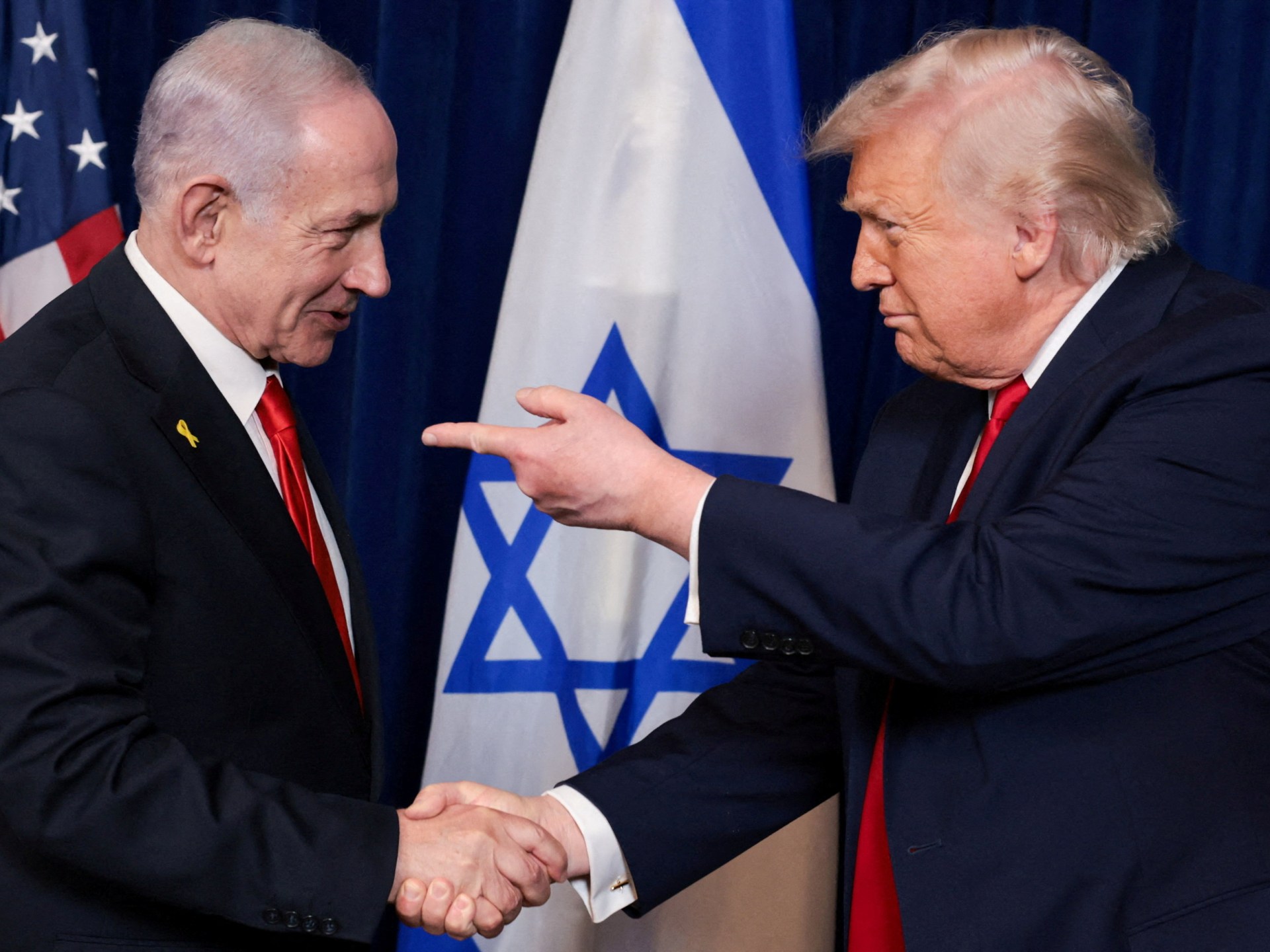
Lawmakers in the United States are quietly advancing a proposal that could deepen military ties between the US and Israel in unprecedented ways, at a time when public support for Israel among Americans is increasingly fractured.

Among the provisions included in the 2027 National Defence Authorisation Act (NDAA) released this week is Section 224, the “United States-Israel Defence Technology Cooperation Initiative”.

The NDAA, which Congress passes annually to set military policy and authorise defence spending, will undergo further debate and amendments before becoming law. Some legislators have already signalled opposition, with Representative Thomas Massie saying he would seek to remove the provision if it reaches the House floor.

The measure remains at an early stage, but analysts say if passed, it would limit political oversight over the defence relationship.

Analysts added that it could mark a significant shift in the US-Israel relationship, moving beyond a model centred on American military aid towards deeper institutional integration between the two countries’ defence industries and militaries.

Critics argue that such a move would make support for Israel less a matter of political choice and more a structural feature of US national security policy, embedding the relationship within joint military and industrial programmes that would be difficult to unwind.

Section 224 incorporates elements of the US-Israel Future of Warfare Act legislation introduced by Representative Ronny Jackson, according to Track AIPAC. While the legislation did not advance as a standalone bill, key elements of it were instead folded into the NDAA.

The provision would require the US defence secretary to designate an official responsible for coordinating military cooperation between the two countries. According to the text, that official would be tasked with “synchronising cooperative efforts between the United States and Israel”, including “bilateral defence technology research, development, testing, evaluation, integration and industrial cooperation”.

The legislation envisages cooperation across a wide range of military technologies. It specifically identifies as priority areas; “counter-unmanned systems including aerial, maritime and ground platforms”, “anti-tunnelling and subterranean threats”, and “missile and air defence technologies”.

The proposal also seeks to deepen collaboration on emerging technologies, including “artificial intelligence, quantum machine learning and autonomous systems”, as well as “directed energy and advanced sensing”, “cyber defence, electronic warfare and digital resilience”, and “biotechnology, biomanufacturing, and medical defence”.

The inclusion of “network integration” and “data fusion” has drawn particular attention because it suggests significantly closer integration of military information systems between the two countries.

The United States and Israel already cooperate on defence projects, including missile defence systems such as Iron Dome. However, analysts say that Section 224 would expand cooperation into nearly every major area of emerging military technology, and could create a “lock-in” between the two countries military infrastructure.

Mark Hilborne, a senior lecturer, the School of Security Studies at King’s College London, told Al Jazeera the proposal goes well beyond the traditional foundations of the US-Israel defence relationship.

“While historically, the US-Israel defence relationship has included US military aid and weapons transfers, joint missile defence programmes such as Iron Dome, David’s Sling and Arrow, and intelligence and operational cooperation, the proposed agreement increases cooperation to include a wider set of emerging technologies,” he said.

“So this all suggests a much tighter integration – less about provision and perhaps sharing technologies and capabilities, and more about jointly developing these.

“It would point to a more institutionalised relationship, and perhaps one that might survive changing administrations in the US, as some of the development cycles could be very long and would become entrenched,” he said.

The proposal comes amid growing debate in the US over military support for Israel, particularly as Israel’s genocidal war on Gaza continues, and concerns mount over the use of US-made weapons.

Human rights organisations and United Nations experts have repeatedly raised concerns about Israeli military actions in Gaza, where despite a so-called ceasefire in place since last October, at least 850 Palestinians have been killed. Israel is also advancing into southern Lebanon, where it has killed more than 3,000 people since the beginning of March.

These wars have led to increasing scepticism among Americans towards unconditional support for Israel, recent opinion polls suggest.

A New York Times poll in May found that only 30 percent of respondents believed Donald Trump made the right decision in ordering military strikes against Iran, while 64 percent said it was the wrong decision.

An Institute for Global Affairs poll released last week found that only 16 percent of Americans support continuing weapons transfers to Israel without additional restrictions. Thirty-eight percent said the US should stop supplying weapons entirely, while 24 percent said military aid should be conditioned on how the weapons are used.

Opposition has also emerged from parts of the Republican Party, which traditionally has always been aligned with Israel.

Former Representative Marjorie Taylor Greene criticised the proposal on social media, writing: “This is what complete capture to a foreign government looks like, and there hasn’t been a single shot fired.”

Massie, who has opposed military aid to Israel, likewise pledged to introduce an amendment removing the provision from the NDAA. The Republican senator was defeated in the primary elections last month, highlighting the financial and political influence of pro-Israel lobby groups in the US.

Influential conservative commentator, Tucker Carlson, has increasingly criticised US support for Israel, reflecting divisions within the broader MAGA movement. Criticism has also intensified among left-wing Democrats, with many calling for restrictions on military aid to Israel.

Critics of the measures warn that the proposal could create a form of institutional “lock-in” that makes both countries simultaneously reliant on each other for military development and procurement.

Some analysts say such integration would move key aspects of the US-Israel relationship away from highly visible aid votes or commercial contracting, and into the less transparent world of defence procurement and industrial partnerships at a state-to-state level.

Hilborne from the King’s College said the initiative could also have direct implications for Palestinians. “If joint R&D produces more effective technology, then systems related to surveillance, autonomous vehicles, AI and targeting, and various counter-drone or counter-missile technology would be improved, providing a capability boost to Israeli forces operating in Gaza or the West Bank,” he said.

“This enhanced integration would further embed US technology into Israeli forces. These would all be concerns from a Palestinian perspective.”

Critics also point to the economic implications, where expanded co-production agreements could lead to new manufacturing facilities and defence jobs in the United States, creating a further reliance on Israel.

Hilborne also argued that deeper integration could reduce Washington’s leverage over Israel. “The deeper integration may also mean that the US loses some degree of leverage over Israel, as it would be less able to withhold certain capabilities from Israel,” he said.

“As a consequence, Israel might be emboldened in its policies.”

The proposal could also have impl

📰 மூல செய்தி (Source): https://www.aljazeera.com/news/2026/5/31/us-congress-moves-to-deepen-military-ties-with-israel-why-it-matters?traffic_source=rss

உலகம்

Donated milk reaches Cuba amid deepening shortages

Published

on

Cuba has begun distributing donated powdered milk from Mexico and Uruguay as the island faces severe shortages and a deepening economic crisis. Officials say young children, pregnant women and paediatric facilities will be prioritised.

📰 மூல செய்தி (Source): https://www.aljazeera.com/video/newsfeed/2026/6/1/donated-milk-reaches-cuba-amid-deepening-shortages?traffic_source=rss

Continue Reading

உலகம்

Colombia’s outsider candidate defied the polls

Published

on

Colombia’s presidential election is headed to a runoff on June 21. Far-right outsider, Abelardo de la Espriella, will face leftist senator, Ivan Cepeda. Professor Jorge Restrepo describes de la Espriella’s rise in the polls as a punishment vote against Colombia’s long-established political class.

📰 மூல செய்தி (Source): https://www.aljazeera.com/video/newsfeed/2026/6/1/aje-onl-nf_qt_guest-jorge-restrepo_colombia-elections-310526?traffic_source=rss

Continue Reading

உலகம்

‘Before, the land sustained us’: Who benefits from Guinea’s bauxite wealth?

Published

on

The country has vast reserves of the ore that is a source material for aluminium. But citizens still languish in poverty.

Bembou Silaty, Guinea – Mamadou Aliou walks through the small village of Bembou Silaty in northwestern Guinea carrying an irresolvable contradiction.

The 38-year-old works in the environmental health and safety department for a bauxite mining company, yet he is also an activist striving to improve life in his community, which often means criticising the actions of another mining company in the area.

“Before these companies arrived, we cultivated our land, and it sustained us,” Aliou told Al Jazeera.

“We could cover our daily needs, especially food. But now, when a piece of land is registered and belongs to a mining company, you have nothing there any more.”

The foreign-linked mining companies are part of the global scramble for Guinea’s bauxite. The West African nation holds the world’s biggest reserves of the ore, which is the source material for alumina and ultimately aluminium, a metal essential for car and aircraft frames, windows, wind turbines, and solar panels.

Over the past three decades, Guinea has multiplied its bauxite production tenfold. More than a dozen projects of bauxite production are currently ongoing in the country, according to the online cadastre.

As the global energy transition demands ever more aluminium, it has placed Guinea in a strategically crucial position. Approximately 75 percent of the bauxite exported by the country over the past decade has ended up in China, which produces 60 percent of the world’s aluminium.

Companies from Russia, the United States, and the United Arab Emirates have also established themselves in the country to secure the ore. In Bembou Silaty, an Indian company that began operations in 2019 now holds an exploitation concession until 2034.

Located in the prefecture of Telimele (Kindia region), Bembou Silaty has undergone a transformation since bauxite was discovered on its land about five years ago.

Yet, on the ground, many lament the cost: Contaminated water, loss of farmland, and a steep decline in agricultural productivity.

In the traditional bauxite heartlands of Kindia and Boke, the main roads are in notably good condition, a cut above the rest of the country. Steady jobs in technical roles or transport logistics have created economic opportunities for some Guineans.

Yet Bembou Silaty remains a quiet, peaceful village without electricity, and farming methods that are untouched by mechanisation.

Less than 2km (1.2 miles) away, however, the lush green landscape and mild climate of the rainy season give way to the electric-powered site of the Indian mining company.

There, excavators and trucks laden with bauxite constantly traverse the wide, unpaved roads, built to accommodate the heavy traffic, in a noisy, busy zone where the mining economy bulldozes its way forward.

People working in technical roles at the mine can earn up to about $300 a month.

For other locals who make a living from farming, most don’t have a regular wage and rely on the yield from their crops.

Across Guinea, an estimated half of the population depends on agriculture for their livelihood.

Locals in Bembou Silaty say every hectare claimed by mining is a hectare lost to farming, in a country that spent more than $500m importing rice in 2024.

“They give you compensation for your land, but it’s not enough, and in the end, it’s mismanaged,” Aliou said.

“Within a month or two, someone who received 50 or 100 million Guinean francs ($5,700-11,400) has nothing left. No land, no money. They have to start over, from below zero.”

Locals who still own land continue to grow rice, cassava, peanuts and cashews in the village, but they have ever less space and agricultural productivity is falling.

The village women have set up an association, “Allawalli” (which means “God help us” in Fula), to work cooperatively.

Walking through the alleys of Bembou Silaty, a few houses stand out.

They are made of cement, which withstands the rains better than the more common mud-brick homes, though many remain unfinished.

Locals say they were built with compensation money.

Fatoumata Binta Bah, a neighbour of Aliou’s, comes from a family of farmers. They once cultivated cashews, their livelihood.

Then the Indian mining company started up operations and offered them less than 50 million Guinean francs (about $5,700) for their land. That compensation, paid as a lump sum, seemed like a decent amount of money, she says.

But now, the money is gone, and their new house is still incomplete.

“The land they took from us was productive. That’s what we lived on,” said Bah, 20, as she prepared tea over a fire in the family courtyard.

“In the end, it wasn’t enough,” she lamented.

The Indian company did not respond to Al Jazeera’s questions on the purchase of land.

Meanwhile, on the outskirts of the village, surgical holes drilled into the ground mark where mining companies have tested for bauxite – a reminder to the farmers that the impact on the land is felt even before extraction begins.

In a recent report, Djami Diallo, the Guinean minister of the environment and sustainable development, stated that each year, certain companies had their impact studies and evaluation reports rejected for failing to comply with environmental standards.

Three or four companies in Boke, Kindia’s neighbouring region that is considered the bauxite capital in the country, were said to be affected. But the minister acknowledged that “just because companies do not meet the conditions to obtain the compliance certificate does not mean that everything stops.”

Not all homes in Bembou Silaty, a community of about 5,000, have indoor toilets and plumbing. In the centre of the village, there are communal latrines for those who do not have facilities available in their homes. Showers can be taken in the same place, using a bucket and water collected from the spring.

One small gain for the community since the mining company’s arrival is a new water point in the village. The tap serves nearly all the residents. Even Aliou uses it to fill buckets for his household – for cooking and drinking – though he says he knows the water contains iron, as contamination occurs.

Still, he considers himself luckier than his friends in the neighbouring village of Koussadji Dow, who rely on now-brown, contaminated river water.

Tala Oury Sow, a trader and farmer, washes her cooking utensils in the murky river water – a daily struggle.

She starts speaking softly, surrounded by neighbours, but her voice rises to a shout.

“We had hoped the mining company’s arrival would improve things, but it has gotten worse,” she protested.

“Since the mining companies came, we’ve had this problem with the water. The children get sick, and the parents too,” added Mariama Kindi Diallo, a farmer, in her courtyard.

“The doctors tell us not to drink the rain or river water. There are no roads, no school, no phone signal. What are we supposed to do? We are asking for help to have a dignified life,” she pleaded, as her family and neighbours nodded in agreement.

The Indian company did not respond to requests for comment on these issues.

To escape the increasingly difficult conditions in villages like Bembou Silaty, some people leave the rural areas and head to the capital, Conakry.

Bauxite mining so dominates Guinea that one can chance upon a driver of one of the trains hauling ore from the mines to the port of Kamsar.

Alpha, who did not want his real name published, works for a United States-backed company and provides a window into the immense volume of resources being exported.

“We operate six trains of 150 wagons each day,” he said, explaining that the annual target for 2025 was to export 17.5 million tonnes of bauxite.

“The government wants to change things, because the profits we make in Guinea right now are small. We need refineries here to increase the state’s revenue,” he

📰 மூல செய்தி (Source): https://www.aljazeera.com/features/2026/6/1/before-the-land-sustained-us-who-benefits-from-guineas-bauxite-wealth?traffic_source=rss

Continue Reading

Trending

Copyright © 2024 by 7Tamil Media, All rights reserved.