Connect with us

முக்கியச் செய்திகள்

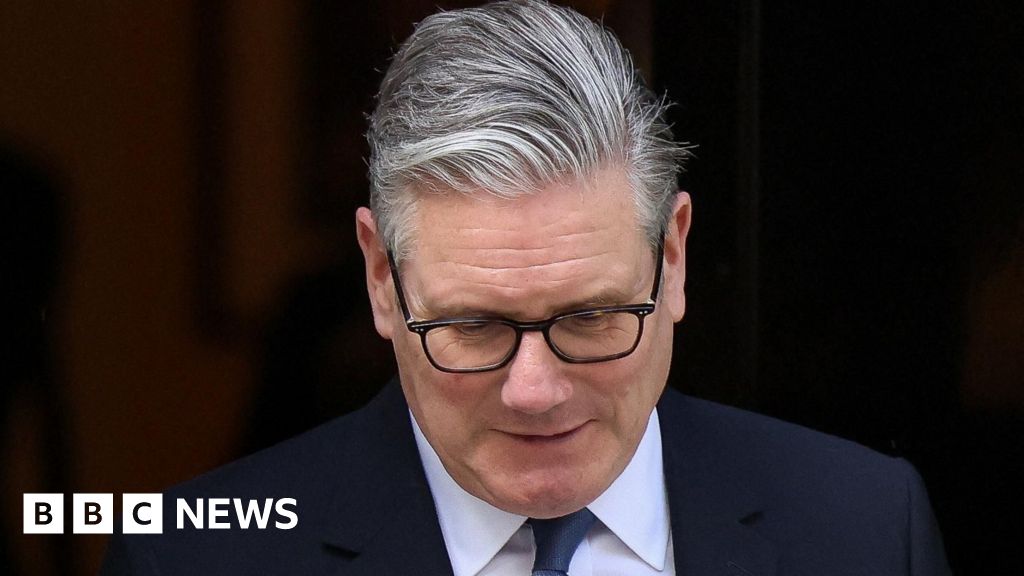
Unhappy Labour MPs aren't ready to oust Starmer yet

Published

on

Labour is trailing in the polls and the prime minister's personal ratings have plumbed the depths.

The party is facing losses in forthcoming elections: losing control of Wales, shedding councillors in England, and going into reverse in Scotland.

To put the tin lid on it, the prime minister has been on the back foot over his appointment of Lord Mandelson to the job of ambassador to the US, and the subsequent sacking of senior civil servant, Sir Olly Robbins, in a row over security vetting.

So the question being asked around Westminster is not 'should there be a Labour leadership contest?' – but 'why is such a contest not expected on 8 May', the day after the expected electoral drubbing?

One Labour MP, Jonathan Brash, has called for Sir Keir to resign, and to set a timetable for his departure. Some others have agreed with this privately.

Nonetheless it is significant that no-one is publicly echoing Brash's call and the prevailing mood seems to be against an imminent leadership challenge.

One long-standing Labour MP has his take: "Keir Starmer is basically dead, isn't he? And because people think it is inevitable that he won't lead us into the next election, there isn't the rush."

While there are some noises about having a so-called caretaker leader, many MPs would be reluctant to do this.

As one of them put it: "We have to be sure that when there is a contest we can have a candidate who can lead us in to the next election."

They added that it would be disastrous for trust if the party 'chopped and changed', and trying to find that candidate who can re-inspire the party, never mind the voters, is proving elusive.

The one thing left and right seem to agree on is that there is no obvious leader-in-waiting who is currently in Parliament.

One MP from the centre-left of the party said: "The PLP (Parliamentary Labour Party) thinks the situation is terminal – but we have thought that since February. We don't have an option in Wes [Streeting] because of the Mandelson thing – despite his data dump of the text messages with him.

"And there is a growing 'stop Ange' [Angela Rayner] mood because we don't think she'd win an election."

An MP further to the left said that Rayner, the former deputy leader, was "compromised" by her tax affairs and by "taking up lucrative speaking engagements".

Meanwhile, a minister drew a lesson from Labour's Scottish leader Anas Sarwar's call for Sir Keir's resignation in February: it could have fired the starting gun on a leadership contest, but culminated in declarations of loyalty from ministers.

"What it proved was neither Wes nor Angie were ready for it. I was waiting for a call (from Steeting's team) and it never came," they said.

And a Labour figure whose career can be traced back to the Blair era said that after days of damaging headlines about Lord Mandelson, people were angry.

"We will tank in the elections. But we are back where we were a week ago. There is no easy mechanism (to remove a leader) and there is no obvious candidate."

However, one potential candidate is still being spoken about by MPs. As one former frontbencher put it: "The problem is that the solution isn't in Westminster."

They were, of course, talking about Andy Burnham, who was blocked from standing as a candidate for Westminster in the Gorton and Denton by-election earlier this year.

"He is the person who just about everyone could live with – unless you are Wes Streeting."

Another potential Burnham supporter was more downbeat. He recognised that the Greater Manchester mayor would need to stand in a "very safe seat" given Labour's polling, and that a supportive MP would have to stand down.

Burnham would also need the approval of Labour's ruling body, the National Executive – the composition of which could move in his favour this summer.

But one MP's analysis would have convinced Sir Keir that he was right – from the point of view of political survival – to have vetoed the mayor's candidacy.

"If Andy had been back (in Westminster) things would have moved by now," they said.

Some MPs are more fatalistic. A minister told us: "Starmer is seriously unpopular. I think we are going to lose the next election. The only way we win is if people feel better off and I have not heard a serious argument from any possible candidate about how they could achieve that in such a short space of time."

Some are looking to those closest to Sir Keir to conduct the defenestration, just as Conservative PM Margaret Thatcher was told to leave, more than three decades ago

One MP told us: "Lots of cabinet ministers seem to know that he is not going to lead us in to the next election – the question is whether they want to force something to happen soon or to wait until it's too late."

But some MPs believe that ministers are taking an 'everyone for themselves' approach. One minister's assessment was that "they are on manoeuvres".

It has not gone unnoticed that Energy Secretary Ed Miliband distanced himself from the decision to appoint Lord Mandelson to the Washington job; and that Foreign Secretary Yvette Cooper and Work and Pensions Secretary Pat McFadden both criticised attempts by No10 to sound out an ambassadorial role for Matthew (now Lord) Doyle – the departing head of communications in 2025.

And several ministers have privately questioned the manner of Sir Olly Robbins's dismissal.

One influential Labour figure interpreted this as a sign of fraying loyalties, and said "serious cabinet ministers are not prepared to defend [the PM] or sully themselves".

Another MP said: "They are looking for life rafts. They are thinking six months ahead, and they are saying that they would still very much like to be in the cabinet. Someone else's cabinet."

An MP close to Miliband proffered a more straightforward explanation. "Ed just said: Stuff this, I'm telling the truth."

There had been talk of the PM regaining the initiative after the May elections not just with a programme of new legislation in the King's Speech, but by having a reshuffle.

That feels riskier now than it did before the latest Mandelson revelations. Disgruntled ex-ministers can prove dangerous.

Under the radar, the prime minister has been working hard to shore up his position with sceptical MPs.

There have been receptions for backbenchers, including trips to Chequers, his grace-and-favour country pile.

He is undertaking a round of meetings with regional groups of MPs and internal campaign groups. On Wednesday, he met the Red Wall group, whose members are largely in Reform-facing seats, to discuss how the party's industrial strategy can extend to small and medium sized towns.

Attendees report that such meetings are "constructive", MPs can be frank – and that Sir Keir listens more than he speaks.

And after the departure of Morgan McSweeney as chief of staff, some MPs who had felt cold-shouldered now report that they are having proper engagement with No 10.

Sir Keir's political director Amy Richards – formerly a long standing aide to Yvette Cooper – is being praised for dismantling what was seen by some as a boy's club behind the black door of No 10.

That said, we are told that members of the women's PLP are incandescent about the Doyle revelations, and they want to see more women promoted to prominent positions.

So even after the past week, a leadership melodrama seems far from certain.

Brutally bad results are – in a phrase used by several MPs – "priced in".

But often there is a difference between theory and practice. How will that loss of seats feel after elections next month? What will angry ex-councillors be saying to their MPs?

Some believe the emotional impact of electoral defeats could be too much to bear.

"People think they are ready for it but there is a real chance of things going crazy that weekend. Everything could collapse very fast," one MP says.

Another put it like this: "The PLP is like a tinderbox – it might just ignite in May."

But one MP recounted the fears of a

📰 மூல செய்தி (Source): https://www.bbc.com/news/articles/c78lp5jw8yxo?at_medium=RSS&at_campaign=rss

முக்கியச் செய்திகள்

Driving test booking rules tightened after thousands of no shows

Published

on

Learner drivers are now only able to swap their test to the three centres nearest to their original booking location in a bid to cut down waiting times.

It comes as official figures shared exclusively with the BBC suggest no-one turned up to take 64,500 practical driving tests last year.

The average wait for practical driving tests across Britain are longer than five months. The new rules will stop learners booking the soonest test available anywhere, then making a series of swaps to get a slot closer to home.

Learner driver Emma told the BBC she was waking up at 05:30 every Monday to try to book a test only to find herself in a queue of thousands. She now has a test in seven months time.

In England the wait time for a driving test is 22.7 weeks, Scotland 22.9 weeks and in Wales 17.3 weeks, according to figures provided to the BBC by the Driver and Vehicle Standards Agency (DVSA) for April 2026.

Last year, 1,998,608 driving tests were booked in the UK but no one turned up for 64,500 of them meaning 3.2% were wasted, according to the DVSA.

Some of these were booked by third party resellers using bots with the intention of charging inflated prices but were unable to sell them, the BBC understands.

The number of no shows last year was higher than the 52,000 recorded the previous year.

Emma, not her real name, is 21 and has been learning to drive in West London for nearly a year.

"Some of my friends who need to drive for work were booking tests at test centres not local to them in areas that they hadn't really driven before…just so that they could get the test and just try and pass as fast as they could," she said.

Emma managed to book a test near to where she lives but it is not for seven months.

"I'm then paying for lessons every week, which is fine, it's good to have the practice, but when you've got so long until your test, it's just a little bit of a waste of money and a massive time burden," she said.

Emma's driving instructor Donovan has been using his local test centre for 10 years.

"At one point, I didn't have a test there for six months, simply because none of my students could get one at booking there," he said.

"Effectively, you had people booking tests in Scotland just to get the date and then changing it to London when one became available," he said.

He hopes the changes "will reduce people booking tests that they have no intention of taking" and "free up a bit more space on the booking system".

However, Carly Brookfield, chief executive of the Driving Instructors Association, says the industry "doesn't have a huge amount of confidence that any of these measures are realistically fixing the booking system problem".

Ann Harvey contacted BBC Your Voice last month after her teenage son had failed to get a test in Reading and finally sat his driving test in Bury St Edmunds, more than 130 miles away.

"I was also shocked by the number of no shows listed at Bury St Edmunds. Usually 30 per day! There should be a penalty for not turning up," she said.

Beverley Warmington, DVSA's chief executive, said: "The location restrictions introduced on 9 June will help to deter bookings at locations where learners do not intend to take their test."

She added that the DVSA was "determined to reduce waiting times further" and had delivered more than 217,000 additional tests between June 2025 and April 2026 partly using military driving examiners.

📰 மூல செய்தி (Source): https://www.bbc.com/news/articles/c4gyel9n02zo?at_medium=RSS&at_campaign=rss
Continue Reading

முக்கியச் செய்திகள்

'Lives still at risk' from unregulated baby sleep industry after BBC investigation

Published

on

Lives are "still at risk" from the unregulated baby sleep industry, a parliament debate was told last night.

MPs are now urging the government to set out a timeline for legislation to make training and background checks compulsory, in the wake of a BBC investigation.

Labour MP Connor Rand described the industry as the "Wild West" and called for the introduction of "mandatory safeguarding and qualification standards" for everyone providing paid support to families.

The debate comes after secret filming by the BBC revealed how some self-described baby sleep experts have been giving parents dangerous advice that medical professionals say could increase the risk of Sudden Infant Death Syndrome (Sids).

Liberal Democrat MP Tom Morrison said the government needs "a proper regulatory framework to make sure these charlatans that are putting out bogus sleep advice on social media… are held to account."

Health Minister Karin Smyth said "public safety is and has to remain the top priority".

Rand said the death of Madison Bruce Smith – a baby in his Altrincham and Sale West constituency – had shown the real-world consequences of allowing unqualified practitioners.

The MP, who led the debate, has set out a series of recommendations as the government considers regulating the sector.

These include the introduction of mandatory minimum safeguarding and paediatric qualification standards, backed by the National Nanny Association and The Lullaby Trust.

Rand also called for mandatory enhanced DBS background checks for all individuals working with children – including nannies, maternity nurses, infant sleep consultants and childcare professionals working in private homes.

He highlighted the gap in postnatal support for new parents and urged the government to set out plans to invest in health visitor services.

He said the "infant sleep industry has boomed… as the support that used to be provided by the state has been stripped back."

Conservative MP Robbie Moore said he "absolutely backs all of the calls" Rand put forward in his speech, emphasising that he wants to see regulation for nannies, as well as maternity nurses and those working in infant sleep.

Allie Bell and Maria Culley from the National Nanny Association say they hope the debate is the "start of meaningful reform" and the start of regulation for maternity nurses, nannies and the wider baby sleep industry.

"Families deserve clarity about the qualifications, training and safeguarding standards of those caring for their children, particularly during the earliest and most vulnerable stages of a child's life," Bell and Culley told the BBC.

Last month the UK's leading baby-safety charity The Lullaby Trust and Morrison wrote to Streeting calling for "urgent action" to "ensure that no more babies' lives are put at risk due to unregulated and bogus sleep advice".

Currently anyone can call themselves a maternity nurse, sleep expert or consultant, without any training, oversight or accountability.

DUP MP Jim Shannon highlighted this lack of oversight a sector that predominantly caters for "sleep-deprived and vulnerable parents".

Speaking during the debate, Shannon said: "Anyone can buy a website domain, call themselves an infant sleep expert or a maternity nurse and charge vulnerable sleep-deprived parents hundreds of pounds for unregulated, untested and potentially unsafe advice."

Shannon added that parents "need to have security in that advice that they are taking comes from a solid foundation and that qualifications, or lack of qualifications are clear".

The Department for Health and Social Care (DHSC) said in March that the law would be changed to limit who was allowed to call themselves a nurse.

This means people working in a hands-on capacity as night nannies would no longer be able to operate as "maternity nurses".

Rand called for a clear timeline on when legislation will be introduced, and said the new regulations should apply to those calling themselves sleep consultants or practitioners.

Smyth reiterated the plans to protect the title of nurse on Monday night, adding that the government will "shortly" be publishing "a call for evidence on the protection of the title nurse".

Following our investigation, the BBC spoke to dozens more parents, who say the government's commitment to increased regulation is "absolutely essential" for the safety of babies and maternal mental health.

Mother-of-two Aimee Beesley welcomes the changes proposed and says currently "babies lives are at risk".

When she was sleep-deprived, and struggling with postnatal depression with her first child, she paid hundreds of pounds for a sleep consultant and self-described maternity nurse, who had thousands of followers online. She had wrongly assumed there was a regulatory body already in place.

She says the advice she received included sleeping her babies in their own room at eight weeks old and placing muslin towels around their heads in the cot.

She believes that self-described maternity nurses "capitalise on women's vulnerability" and "say whatever they want" online.

Now supporting families herself after undertaking a qualification in infant sleep, Aimee believes "any coach worth their salt would be prepared to re-train under the right regulatory body".

Responding on behalf of the government, Smyth said the early stages of parenting is "a really worrying and stressful time… and rogue advice from so-called experts can have a damaging and devastating effect on those who seek reputable advice and guidance."

She outlined existing provision for new parents, including the Healthy Babies programme which "supports new parents and families by offering integrated preventative and universal support, including perinatal mental health, parent-infant relationships and infant feeding in the 1,001 days from pregnancy to age two."

Have you been affected by the issues raised in this story? Contact the team at: ParentingInvestigation@bbc.co.uk

Details of organisations offering information and support on child bereavement are available at BBC Action Line

📰 மூல செய்தி (Source): https://www.bbc.com/news/articles/crrprxy2257o?at_medium=RSS&at_campaign=rss

Continue Reading

முக்கியச் செய்திகள்

SpaceX's stock market blast-off could be Musk's biggest gamble yet

Published

on

It's 07:25 am, 13 October 2024, at Starbase, near Boca Chica on the Texas side of the US/Mexico border, and on the launch pad stands the biggest rocket ever made. Its engines fire and it climbs into the skies over the Gulf of Mexico to cheers and screams in the SpaceX control room.

But the launch is not the main event. What goes up must come down – and how it comes down will become a milestone in space exploration.

Seven minutes later, the massive rocket booster that blasted the craft towards space starts falling back to Earth – until its engines reignite as planned. It slows its descent and guides itself with pinpoint precision so it can be captured by a clasp called Mechazilla, or "the chopsticks", by engineers who have achieved something that's never been done before.

Amid the whoops and high-fives in SpaceX's control room, Elon Musk tells his millions of social media followers that this is a "big step towards making life multiplanetary" – a reusable rocket that will slash the costs of launching things into orbit, to the Moon and one day to Mars.

A company with a futuristic vision, led by what some would call a maverick unconventional genius, SpaceX and Musk have drawn comparisons with Tony Stark, leader of Stark Industries and also known as Iron Man of the Marvel Comics Universe.

On 12 June, trading will begin in a chunk of shares in a company that, up to now, only Musk and a select group of rich private institutions have been able or invited to own.

It is perhaps little wonder that more than one UK stockbroker has told the BBC that there has been "a surge" in interest in signing up for the chance to buy shares in this exciting company, controlled by a talismanic individual, that has captured the world's imagination. UK retail investors are likely to be allocated around £1.5bn worth of shares and one of the UK's leading investing platforms hopes this could encourage a new generation of investors.

Simon Belsham, Chief Client Officer at Hargreaves Lansdown said: "While we recognise this IPO might not be right for everyone, it's an exciting moment for many of our clients. We're expecting this might be a first foray into investing for many."

Even if you don't apply directly to buy shares, if you have retirement savings invested in shares – as almost everyone with a pension plan does – then it is very likely you will soon be a part-owner of a company, whether you like it or not, that sits at the crossroads between technology and geopolitics and, as Musk would have it, the very future of the human race.

The chance for normal Earthlings to buy shares in SpaceX is one of the most important moments in the history of stock markets and is close at hand – and one that will almost certainly make Elon Musk the world's first ever trillionaire.

On the first few pages of the prospectus – or sales brochure – for SpaceX shares is this modest mission statement: "To build the systems and technologies necessary to make life multiplanetary, to understand the true nature of the universe and to extend the light of consciousness to the stars."

But SpaceX isn't just about rockets – it's not even mainly about rockets. It's a bet on the future of artificial intelligence (AI). And the success or failure of its imminent partial sale to the public is an important test of the hitherto unbridled investor optimism – and some people's dismay – that AI will hoover up large parts of the world economy.

The continued concentration of power in a few US mega-corps also poses important questions about the way business, economics and politics works here on Earth. And many think this is Musk's Icarus moment – when he flies too close to the sun. "I think it's an Elon Musk ego project," says Sinead O'Sullivan, an economist who has worked for Nasa in the past.

So should we be pleased we will all likely be passengers on his astral journey?

SpaceX has filed for an initial public offering (IPO) of its shares. Although it's only selling a portion of the company to the likes of us, the price of the shares Elon Musk is selling means we can calculate the price tag of the whole company.

The bankers selling the shares have put a target price tag on the company on $1.75trn – which puts it comfortably in the top 10 most valuable companies on Earth.

That is a staggering valuation for a company that lost nearly $5bn (£3.7bn) last year. So what are we buying?

SpaceX is in fact several businesses in one company. It designs rockets as well as manufacturing and launching its own and other people's satellites. Its launch capabilities alone dwarf that of any other company – or indeed country on Earth.

Its own satellites also form the basis of the Starlink communications network, which has proven to have crucial geopolitical importance during Ukraine's defence against the Russian invasion.

This is a profitable business and one that generates significant income. But even the most optimistic estimates value this part of SpaceX at around $300bn – less than 20% of SpaceX's $1.75trn target valuation.

The real bet is on AI because bundled into SpaceX is Elon Musk's AI company xAI, along with a deeper space programme with plans to create data centres in space providing vast computing power – powered by the sun, cooled by the chill of space – while creating human-crewed bases on the Moon and eventually Mars.

The success of SpaceX depends to a huge extent on its AI business. Of the $28.5trn market that SpaceX has identified for its services, known as its total addressable market – $26.5trn of that is in AI.

To believe that, you need to believe that the AI industry will be comparable in size to the entire economy of the United States or all of Europe.

The SpaceX prospectus estimates that the space and communications sector is less than 10% of the $28trn total – and yet those are the only businesses that SpaceX has demonstrated commercial and technical advantages.

"If we look at the business itself, it's really unclear as to what business or industry SpaceX is even in," says O'Sullivan.

"The logo, the brand is built on two decades of rocketry but most of the capital expenditure is actually on data centres and an AI company that seems to be more about social media than anything to do with space," she adds. "All of these are just in a kind of conglomerated business under Elon Musk's name."

The prospectus admits that SpaceX will have to do things no company has ever done before. It says it "requires, building, commercialising and operating products and services… at a scale that has not been previously achieved".

O'Sullivan is sceptical. "When we look at the massive share price that they are trying to get here, you're buying a share of the Elon Musk brand more than any kind of space industry."

But there is no shortage of evangelists who will point to Musk's staggering ability to raise money, challenge orthodoxy and prove his doubters wrong.

He took on the combined might of the global car industry and within 20 years of its founding his carmaker Tesla was worth more than Toyota, Ford, General Motors and Volkswagen combined.

The other reason that some investors intend to pass on the opportunity to invest in Musk's greatest adventure yet is their objection to the total control he will exert over the company.

Musk is listed as founder, chief executive, chief technical officer and chairman of the board.

Even though he only owns 42% of the company, his shares come with extra voting rights meaning he effectively controls 85% of the company.

Financial journalist Robert Armstrong asks: "What is holding shares in a company? It's ownership – but what kind of ownership is this? Do you really own something you can't control?"

Armstrong adds that investors should get a discount for forfeiting control: "I want to pay less for a company where my ownership does not include control."

But as one large institutional investor told the BBC, "the cult of Elon Musk requires disciples to pay a premium for the ques

📰 மூல செய்தி (Source): https://www.bbc.com/news/articles/cy8d9e4lzv1o?at_medium=RSS&at_campaign=rss

Continue Reading

Trending

Copyright © 2024 by 7Tamil Media, All rights reserved.