Connect with us

உலகம்

UK-China ‘ice age’ thaws: Why the West needs Beijing

Published

on

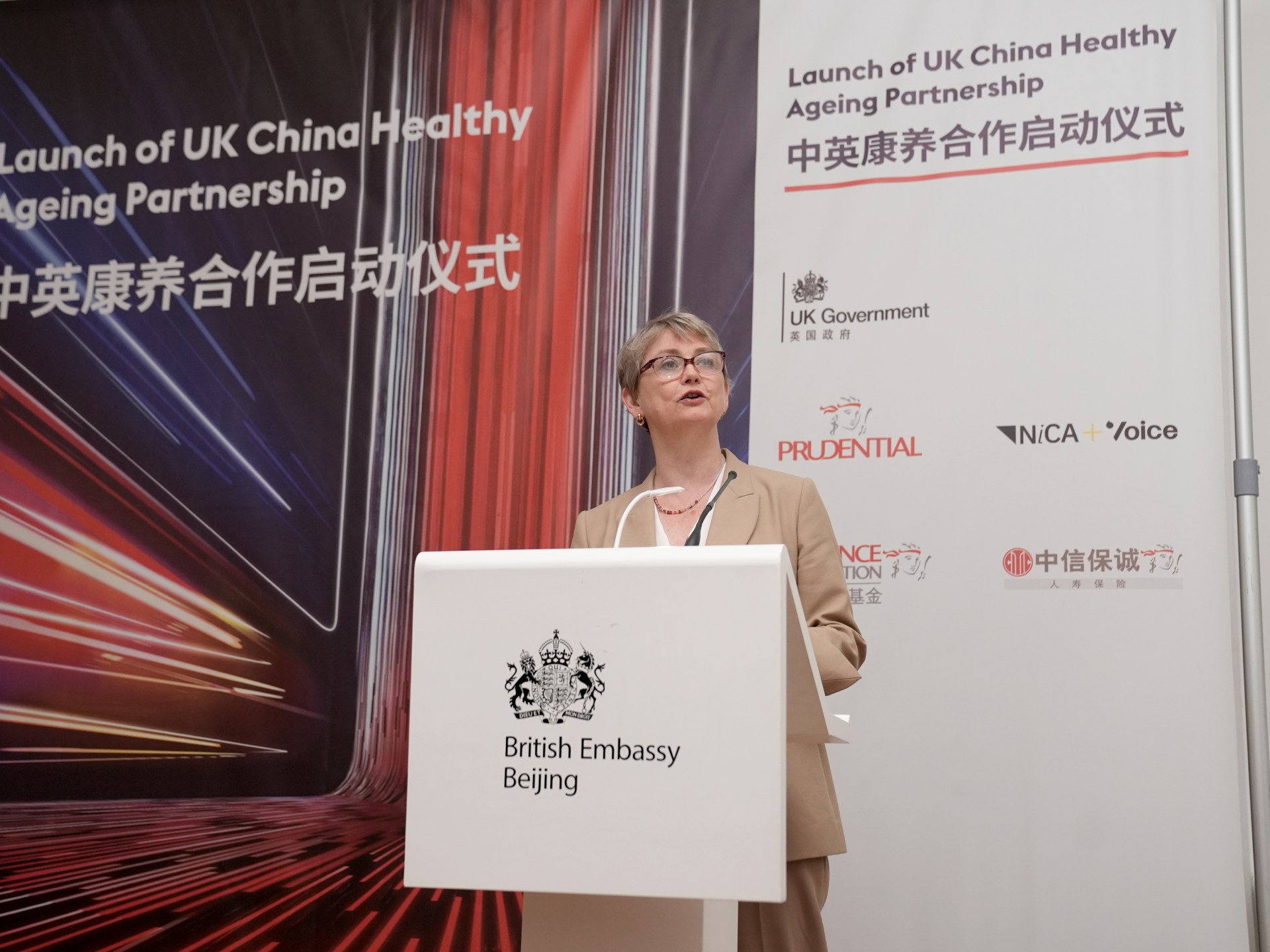
British Foreign Secretary Yvette Cooper hails ‘candour and respect’ in new ties with Beijing, despite differences.

Eight years after a British prime minister and foreign secretary made back-to-back visits to China, the Keir Starmer government is once again trying to reset relations with Beijing after a long period of what Starmer had in January described as an “ice age” in relations.

Prime Minister Starmer went to Beijing in January, and Foreign Secretary Yvette Cooper is currently visiting on a three-day trip, as the United Kingdom and China try to revive economic and diplomatic ties despite lingering differences over security, human rights and the Russian war on Ukraine. Former PM Theresa May and her Foreign Secretary Jeremy Hunt made similar visits to China soon after each other in 2018.

The UK isn’t alone. Cooper’s visit to Beijing this week is the latest in a string of visits by global leaders and officials seemingly eager to engage with the second-largest economy in the world at a time of heightened global instability.

During her trip so far, Cooper has called for the two nations to work together to confront a host of global challenges, including conflicts in Iran and Ukraine and the Ebola outbreak in the Democratic Republic of the Congo.

“It is in our shared interest to have a rules-based international order and to find ways to reduce rising geoeconomic tensions,” the foreign secretary said on Tuesday as she met Chinese Vice President Han Zheng at Beijing’s Great Hall of the People at the start of her visit.

While acknowledging “areas of disagreement” between London and Beijing, Cooper insisted that approaching discussions with “candour and respect” would help to increase mutual understanding.

“Those frank and constructive discussions can help us make meaningful progress for the benefit of our two countries and the wider world,” she said.

The rhetoric about a “rules-based order” comes at a time when, under President Donald Trump, the United States – the country that led the creation of the post-World War II global architecture – increasingly faces accusations of ripping apart the international laws that were its foundation. China has in recent years positioned itself as a grown-up, responsible and stable global power, in contrast to the US.

But behind Cooper’s comments, say analysts, is also a deeper, more pragmatic acknowledgement: Western nations like the UK need China now more than ever.

The West has come to rely heavily on China, especially when it comes to the production of advanced goods – like semiconductors, medical instruments and aerospace components – as well as its stranglehold on many of the earth’s critical natural resources required to manufacture them all, said John Minnich, assistant professor in the Department of International Relations at the London School of Economics.

“This dependence is growing by the day,” Minnich told Al Jazeera. “Whether this is a good thing for the West or this trajectory is politically sustainable is another matter.”

Getting on a better footing with Beijing is a priority now, say observers. “The UK cannot afford a purely adversarial relationship with China,” Jing Gu, director of the Centre for Rising Powers and Global Development at the Institute of Development Studies in the UK, said.

“It’s a pragmatic response to the UK’s own global economic position and needs, and to the changing winds of US-China relations under the second Trump administration,” Minnich said.

This rapprochement has been in the works since the UK’s governing Labour party swept to power in July 2024. Former Foreign Secretary David Lammy travelled to China for a two-day diplomatic trip in October that year, as part of initial efforts to thaw what Starmer would dub a diplomatic “ice age” between the two countries. Starmer’s own trip in January, to meet President Xi Jinping, laid the groundwork for deeper economic engagement, including a $15bn investment by British pharmaceutical company AstraZeneca and visa-free travel for Britons.

On Tuesday, China’s Vice President Han gave Cooper a warm welcome, along with a cultural visit to the Forbidden City, where she was shown around the world’s largest imperial palace complex by a tour guide before meeting her counterpart, Wang Yi, for talks at Diaoyutai State Guesthouse.

In his address at Beijing’s Great Hall of the People, Han stressed the need to “intensify interactions and strengthen dialogue and cooperation for the sake of world peace and stability and for the growth of our respective economies”.

“Currently, the ongoing geopolitical conflicts are dealing a heavy blow to world peace and stability and affecting the prospect of the world economy,” he continued. Addressing Cooper, he said her visit would help “move our relations steadily forward along the strategic direction established by the leaders of our two countries”.

It’s not just the UK. A growing number of Western countries are seeking to reset ties with China at a time when global geopolitical tensions are causing havoc with supply chains and huge market volatility. This year, leaders and officials from the US, Ireland, Spain, Germany, Canada and Finland are just a number of those who have travelled to China in a flurry of diplomatic engagement.

US President Donald Trump’s trip to China last month signalled a shift in direction after last year’s “trade war”, in which the two sides slapped each other with tit-for-tat tariffs and China threatened to restrict exports of most of its rare-earth metals. Those tensions had been rising since Trump’s first term as president until he and Xi called a temporary truce late last year to allow for trade talks.

Also notable, however, was that Washington’s rapprochement with Beijing coincided with a tense period in US-UK relations.

Trump publicly took Starmer to task over his refusal to assist in the US-Israel war on Iran or to send naval backup to help the US reopen the strategic Strait of Hormuz. Similarly, Trump’s outbursts over the Western response to the war generally have depicted the EU as a foe and NATO as obsolete.

For the UK, Trump’s unpredictability is what has tipped the balance in favour of reinforcing bilateral cooperation with Beijing, as Britain struggles with sluggish economic growth and global energy price shocks triggered by the war on Iran.

And there is “plenty of room for mutual beneficial economic cooperation” between the two countries, Minnich said. “The UK is unusual among major Western countries in that its economic strengths complement rather than compete with China’s.

“Unlike Germany, the UK is not heavily dependent on high-value-added manufacturing, where China is increasingly competitive. Instead, it specialises in things like high-value financial and other services in which China remains relatively weak,” he added.

Cooper is expected to fly to Shenzhen, a major technology hub, to discuss trade links as well as “the challenges of the future of AI as it rapidly changes our world”. This is significant because China is outpacing almost every country in the world in producing ideas and innovation in areas that matter to the UK, including renewable energy.

Last year, the UK and China signed a partnership agreement on clean energy covering academic, regulatory, industrial and commercial partnerships. During Starmer’s visit to China earlier this year, the prime minister announced that Octopus Energy, the UK’s largest electricity supplier by market share, had formed a joint venture with China’s PCG Power to trade renewable energy in the Asian country.

Access to affordable, clean technology – which China has bundles of – could help the UK reduce the cost of decarbonisation and accelerate the energy transition. “But this cannot mean passive dependence,” Gu, at the Institute of Development Studies, said. “Middle powers such as the UK are not simply choosing sides; they are trying to buy time – time to support growth, accelerate the green transition, re

📰 மூல செய்தி (Source): https://www.aljazeera.com/news/2026/6/3/uk-china-ice-age-thaws-why-the-west-needs-beijing?traffic_source=rss

உலகம்

Police in Belfast use water cannon as anti-immigrant unrest continues

Published

on

Clashes come as family of knife attack victim calls for calm and condemns violence targeting immigrants.

Unrest in Northern Ireland: Second day of anti-immigration protests in Belfast

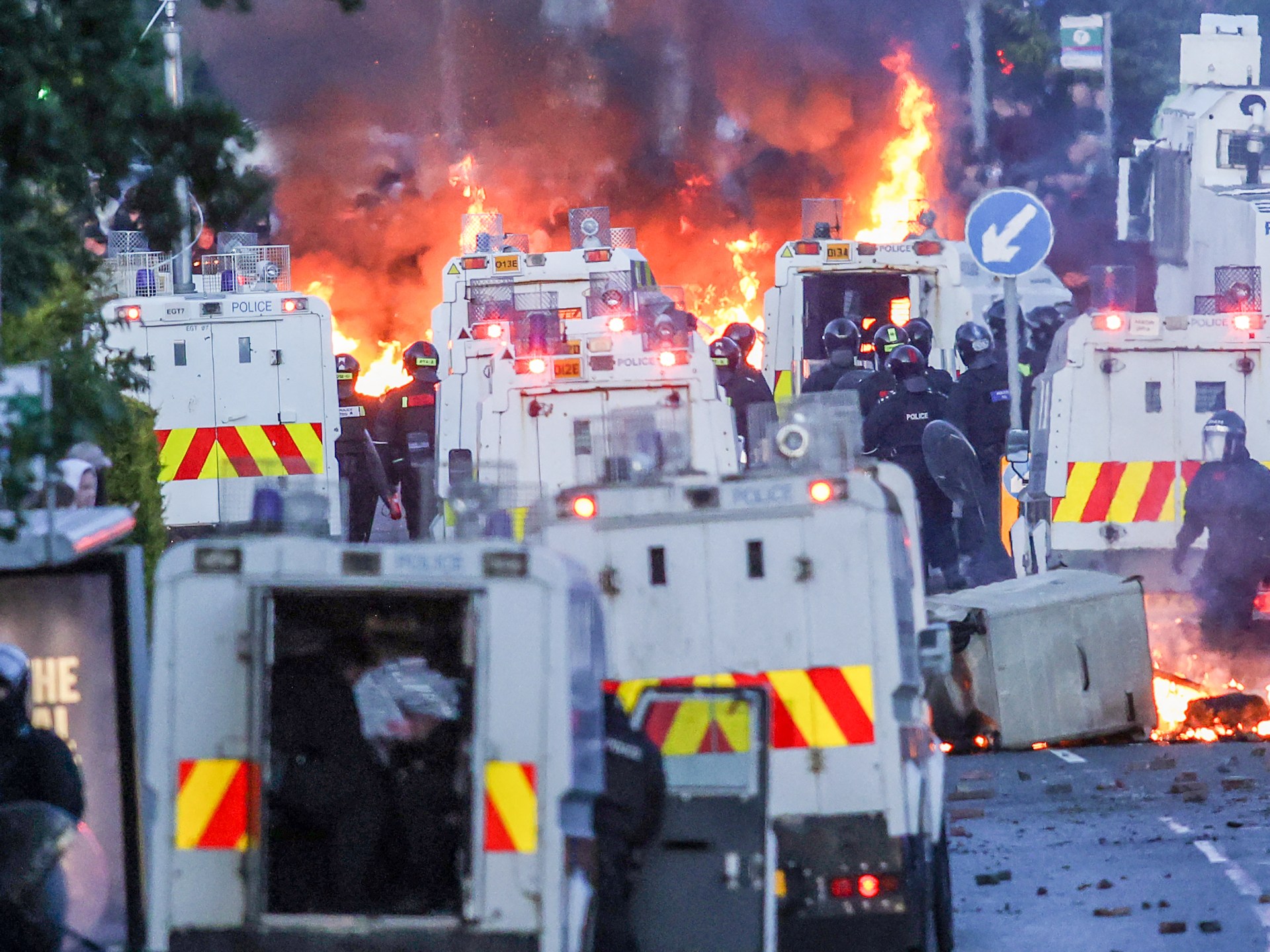
Police in the United Kingdom city of Belfast have used water cannon to disperse dozens of far-right protesters during a second night of unrest triggered by a knife attack involving a Sudanese refugee.

The clashes on Wednesday came as the family of the stabbing victim appealed for calm and condemned the wave of anti-immigrant violence in the city in Northern Ireland.

Police said the protesters threw “missiles” such as rocks and bottles at officers, while images from the scene showed several fires burning on the streets.

Police said officers deployed “water cannon in an attempt to maintain public order”.

But the unrest was markedly less severe than on Tuesday evening, when hundreds of masked men burned families out of their homes and set vehicles alight.

“We want to make it absolutely clear that overnight unrest is not welcome, and peaceful protest is the only way forward,” the family of the victim, Stephen Ogilvie, said in a statement.

“We have many migrants who make a deeply valuable contribution to our country… We do not want this terrible tragedy to be used to divide people or fuel hostility,” it said.

The family added that Ogilvie, who lost an eye and suffered serious wounds to his neck and face, was in a stable condition.

Their appeal came as the suspect in the attack, a 30-year-old ‌Sudanese national named Hadi Alodid, appeared in court on charges including attempted murder.

He was remanded in custody, and the case was adjourned to July 8.

Videos of the stabbing attack circulated online all day on Tuesday, sparking calls on social media for violent protest. Police had to help one family escape from a burning house, according to the Reuters news agency, while several cars and a bus were set on fire and reduced to shells.

Local politicians and a pastor said many of those targeted were Black.

UK minister Ruth Anderson said at least 27 people were made homeless in Belfast “because people went door-to-door to try and target foreign nationals”.

Resident Jamie Corry, 33, said he could only watch on as his house went up in flames.

“I was actually standing right there watching my whole house just go up, slowly but surely,” he told Reuters. “I told them and all, when they were lighting a car up on fire, ‘that’s my property, that’s my property’… and they still didn’t care.”

The attack comes at a time of heightened tensions in the UK following the murder of a student in Southampton who was handcuffed by police as he lay dying from stab wounds after his killer, a Sikh man, had falsely alleged a racist attack.

Tech billionaire Elon Musk reposted many messages that blamed migration on violence in the UK, sharing a post that argued that the “very deliberate policy of mass uncontrolled immigration and open borders” is increasing tensions.

Amid calls from Musk, other far-right agitators like Tommy Robinson called for more protests on Wednesday, Northern Ireland’s police chief said ⁠an extra 200 officers were being deployed on the streets.

“These idiots didn’t just target ethnic minority groups… they targeted society,” Chief ⁠Constable Jon Boutcher said of Tuesday night’s rioters.

Officers had to take a family that included a two-month-old baby to safety during Tuesday’s violence, which he branded “a huge act of self-harm by mindless idiots”.

Speaking in London, UK Prime Minister Keir Starmer said the knife attack raised serious questions, but that “driving people out of their homes is not … the right way to respond”.

He condemned the unrest as “shocking and completely unacceptable”.

Anna Turley, the chairwoman of the UK’s governing Labour Party, meanwhile, said that online platforms were “playing a role in driving” the unrest and suggested Musk was one of the “bad faith actors” inflaming tensions.

The United Nations human rights chief Volker Turk condemned what he called “incitement” on social media. “Dehumanisation of whole groups within a society is totally unacceptable and frankly despicable,” he told reporters in Geneva, adding that the violence in both Northern Ireland and Southampton had been “really shocking”.

Social media providers, he insisted, must take seriously their responsibility to prevent hate speech and incitement to violence.

Immigration has historically been low in Northern Ireland, partly due to the three-decade conflict between mainly Catholic Irish nationalists seeking Irish unity and predominantly Protestant pro-British “loyalists” wanting to stay in the UK and the British military.

However, migration has increased in recent years, and there has been an increasing sentiment against it in both Northern Ireland and parts of the Republic of Ireland.

📰 மூல செய்தி (Source): https://www.aljazeera.com/news/2026/6/11/police-in-belfast-use-water-cannon-as-anti-immigrant-unrest-continues?traffic_source=rss

Continue Reading

உலகம்

Dahiyeh crowds rally in favour of Iranian support against Israel

Published

on

Dahiyeh crowds rally in favour of Iranian support against Israel

Defiant crowds of Hezbollah supporters rallied in Beirut’s Dahiyeh neighbourhood to support Iran’s role in standing against Israel, and rejecting efforts to separate Lebanon’s war from Iran’s. Al Jazeera’s Heidi Pett reports.

📰 மூல செய்தி (Source): https://www.aljazeera.com/video/newsfeed/2026/6/11/dahiyeh-crowds-rally-in-favour-of-iranian-support-against-israel?traffic_source=rss

Continue Reading

உலகம்

OpenAI says China-based actors stoking opposition to AI data centres

Published

on

AI company says ChatGPT accounts sought to ‘exploit and amplify existing public concerns’ about energy prices.

China-based actors are likely behind the use of ChatGPT for “covert influence operations” aimed at stoking opposition to data centres in the United States, OpenAI has said.

In a research report released on Wednesday, the company behind the world’s most popular AI chatbot said it had banned a cluster of accounts likely based in China for attempting to “manipulate a legitimate debate about American AI”.

OpenAI, whose release of ChatGPT in 2022 kicked off a global frenzy around AI, said the accounts were used to generate social media comments and images that blamed data centres for rising electricity prices in communities across the US.

Among other content, the accounts generated a comic strip showing a cigar-chomping businessman holding bags marked with dollar signs as a family reacted in shock to their electricity bill, according to the San Francisco-based company.

OpenAI said a second cluster of accounts had generated content casting US tariffs as an effort to “dominate technological competition” with China, and specified that the material should not mention Chinese leader Xi Jinping.

While the campaign sought to “exploit and amplify existing public concerns” about energy prices, OpenAI found no evidence that it had a “meaningful” influence, the company said.

“Foreign influence operations have long sought to latch onto existing local issues and sincerely held beliefs, using them to build credibility, amplify divisions or exacerbate public distrust,” the ChatGPT creator said.

“In this case, the operators attempted to covertly insert themselves into an ongoing American debate about the future of the country’s AI capabilities while hiding who they were and what motivated them.”

China’s embassy in Washington, DC, said it was not familiar with the report but that it opposed “any groundless attacks or smears against China”.

“AI is profoundly changing the way people work and live. It is a new frontier for all humanity,” an embassy spokesperson said in a statement provided to Al Jazeera.

“China believes in a people-centered approach to AI and advocates openness and inclusiveness to ensure AI is a force for good and for all.”

OpenAI is the latest prominent voice to suggest foreign influence could be behind opposition to AI in the US.

In May, Secretary of the Interior Doug Burgum told a policy event hosted by Breitbart News that the public’s increasingly negative sentiment towards the construction of data centres was not “organic” and could, in some cases, be linked to “foreign-sourced dark money”.

Darren Linvill, a professor at Clemson University in Clemson, South Carolina, who studies foreign influence campaigns, expressed doubt that the campaign identified by OpenAI or any other coordinated effort would have much impact on the “volume or tone” of the public debate.

“My team is very familiar with the work of various Chinese influence actors, and the AI work China has done to date has been interesting but not effective,” Linvill told Al Jazeera.

“It’s getting better with each passing month, and I’m concerned what they may be capable of in the future, but they aren’t there yet.”

“If China were really serious about meaningfully influencing the discourse around data centres using AI chat bots, I question if they would use OpenAI to do it,” Linvill added.

Opposition to the construction of data centres has been on the rise in the US, with at least 36 projects blocked or delayed between May 2024 and June 2025, according to Data Center Watch, a research project by AI security company 10a Labs.

In March, Senator Bernie Sanders and House Representative Alexandria Ocasio-Cortez announced legislation that would impose a moratorium on new data centres until the introduction of national safeguards to mitigate the risks of AI.

The legislation has little chance of becoming law in the near future due to US President Donald Trump’s laissez-faire approach to AI regulation and Republicans’ control of both chambers of Congress.

Opposition to data centres has been driven in part by the huge amounts of energy they consume supporting the computing power needed to train and run AI models such as ChatGPT.

The facilities accounted for 1.5 percent of global electricity use in 2024, with consumption growing 12 percent annually over the last five years, according to the International Energy Agency.

📰 மூல செய்தி (Source): https://www.aljazeera.com/economy/2026/6/11/openai-says-china-based-actors-stoking-opposition-to-ai-data-centres?traffic_source=rss

Continue Reading

Trending

Copyright © 2024 by 7Tamil Media, All rights reserved.