Connect with us

உலகம்

UAE exit from OPEC signals closer alignment with US interests, experts say

Published

on

UAE wants to supply more oil than its OPEC quota and that could help push down prices once the Strait of Hormuz opens.

As the United Arab Emirates’s exit from OPEC officially takes effect, experts say the United States government will welcome the move for its potential to curb the oil-producing cartel’s pricing power.

While the UAE’s withdrawal, which went into effect on Friday, has been long rumoured, the timing was unexpected.

“The exit was a surprise in timing (at least to me), but in some ways has been brewing for some time,” wrote Rachel Ziemba, adjunct senior fellow at the Center for a New American Security – a US think tank.

“It prompts the question whether there will be more competition than cooperation in the region and what the governance of the energy markets will look like.”

The UAE has publicly complained about OPEC quotas, which limit the oil production for all member countries. It is one of the few OPEC members that has invested in boosting production over the past few years, but has not been able to get it to market in the volumes it wanted.

The move also comes at a time when the world is clamouring for new supplies of oil. The Strait of Hormuz, through which 20 percent of the world’s oil and gas transits, mostly from Middle East nations to Asia and Europe, continues to be blocked amid the US-Israel war on Iran, sending oil prices soaring.

With oil demand shooting up, the UAE is ready to step in with higher supplies and lower prices.

“This is going to increase oil production once things normalise [in the strait] by about 2 million barrels per day, which will pull down some pricing pressure depending on how demand does compared to global prices,” Adnan Mazarei, nonresident senior fellow at the Peterson Institute for International Economics (PIIE) – a non-partisan think tank in Washington, DC, told Al Jazeera.

“The US would welcome a weakening of the OPEC and OPEC+. They do have some ability to set prices, and a decline in that power will be welcomed by the US,” Mazarei said.

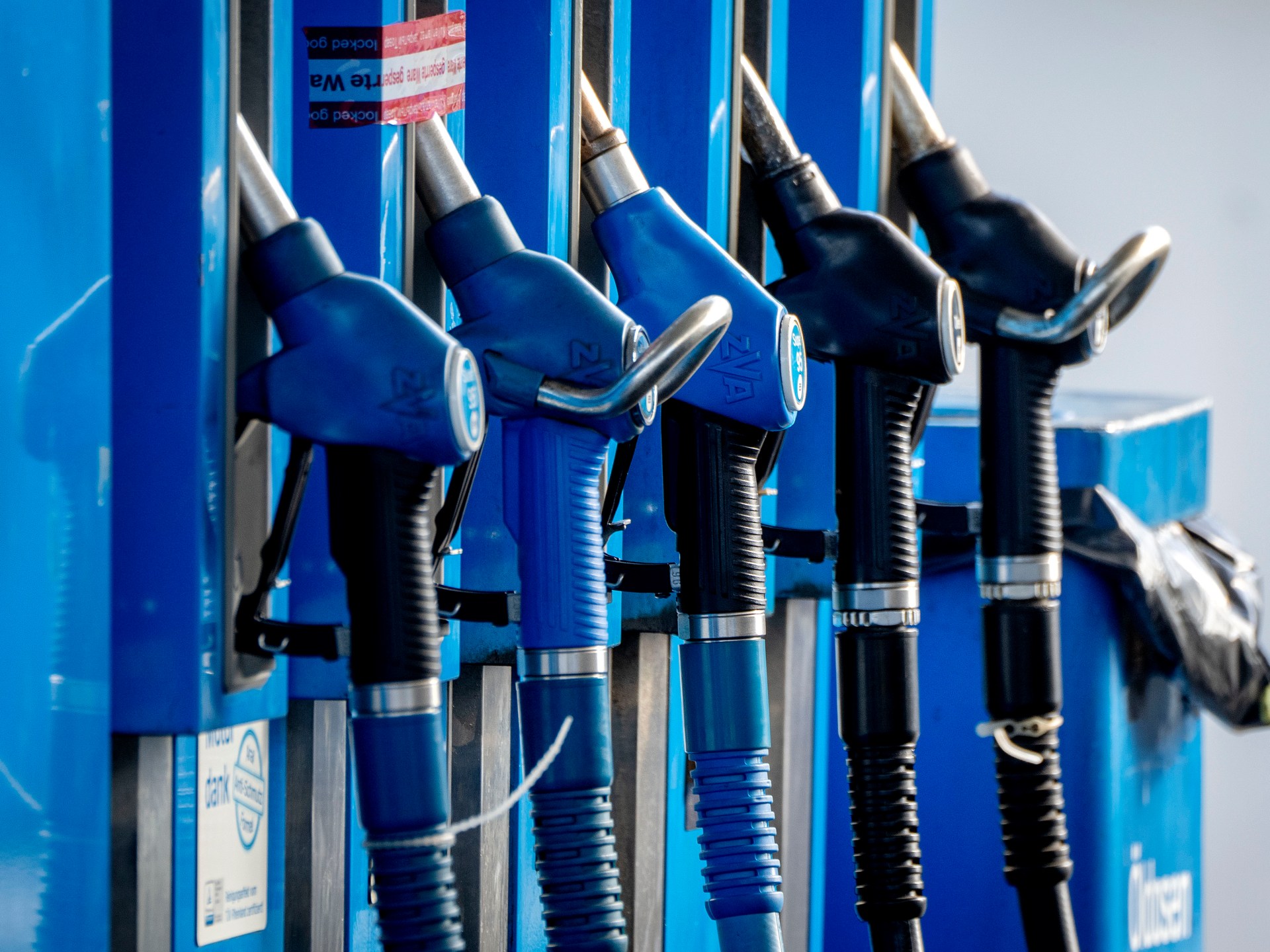
On Thursday, global oil benchmark Brent crude futures LCOc1 rose as high as $126.41 a barrel before settling down $4.02. Also on Thursday, the average price for one gallon of petrol hit $4.33 ($1.13 per litre), close to double from the $2.98 ($0.78 per litre) a day before the US and Israel launched their attack on Iran, which retaliated by closing off the strait and with attacks on energy infrastructure and US bases in the region.

With the war now in its third month, there has been no respite for consumers as prices continue to soar, fueling inflation and stressing wallets, an area of concern for US President Donald Trump with mid-term elections coming up in November and his Republican Party at risk of losing seats.

A new, four-day Reuters/Ipsos poll completed on Monday suggested 34 percent of Americans approve of Trump’s performance in the White House, down from 36 percent in a prior Reuters/Ipsos survey, which was conducted from April 15 to 20.

Trump reiterated his stance that prices will drop with the end of the war.

“The gas will go down. As soon as the war is over, it’ll drop like a rock,” he said on Thursday.

One of the few winners in the current oil squeeze – US oil and gas producers who have enjoyed “unusual profits” since this war began – will likely see some downward pressure on those profits as and when the UAE supply hits the market, Mazarei added.

Another is the US petrochemical sector, one of the dominant global players, alongside China and Saudi Arabia.

Used in everything from fertilisers, solar panels, clothing, and cosmetics to electric vehicles, electronics, and medicines, petrochemicals are integral to food security, manufacturing, and clean energy and becoming the fastest-growing source of demand for oil, PIIE said in a March report.

The disruption of the oil flows due to the war in Iran has strengthened the US role as it continues to be the largest oil producer.

“The US is in a very advantageous position. The increase in US access to Venezuelan oil will improve the US position further,” Mazarei said.

For now, the UAE’s move is “a future sign and signal – one of openness to trade and interest in helping the world restock,” Ziemba said.

It also comes on the heels of a request for a currency swap line it made to the US last month, which experts have said was a “fundamentally political move”.

“It signals the UAE’s political and economic closeness to the US, and this was a significantly political move,” Mazarei said.

UAE’s exit also opens the door for other OPEC members to follow suit, a scenario that would increase downward pressure on oil prices.

“There is a chance of other countries defecting. But if I had to bet, I’d say OPEC will survive, but in a weaker shape and effectiveness,” Mazarei said.

The one thing Mazarei is keeping an eye on is how the war in Iran will reshape the Gulf Cooperation Council (GCC), the regional alliance comprising Bahrain, Kuwait, Oman, Qatar, Saudi Arabia, and the United Arab Emirates.

“The question is, will the GCC survive?” he said.

Ziemba, too, is watching whether there will be more cooperation or competition in the region after the current conflict.

The UAE’s exit from OPEC “is one of many ways in which countries may be balancing – trying relationships for economic and security arrangements that may suit national interests,” she said, adding that she expects the UAE to be “an important player”, including for their own and regional interests.

📰 மூல செய்தி (Source): https://www.aljazeera.com/economy/2026/5/1/uae-exit-from-opec-signals-closer-alignment-with-us-interests-experts-say?traffic_source=rss

உலகம்

US Jewish leader, Israel advocate Abe Foxman dies at 86

Published

on

Israeli officials hail Foxman, who led the ADL advocacy group for nearly three decades, as warm and passionate.

Prominent Jewish American leader and Israel defender Abraham “Abe” Foxman has died at age 86.

The Anti-Defamation League, the advocacy group he led for 28 years, confirmed his death on Sunday, calling him an “outspoken, passionate, and tireless advocate for the Jewish people and Israel“.

A Holocaust survivor, Foxman helped shape the conversation around Israel and anti-Semitism in the US for decades.

ADL Board Chair Nicole Munchnik said Foxman helped build the “modern liberal era of America”, describing him as a “longtime adviser” to US presidents and world leaders.

“To those of us who knew him, Abe was a warm friend, adviser, spirited antagonist and hugger – all over lunch,” Munchnik said.

Foxman joined the ADL in 1965 and served as the group’s national director from 1987 to 2015.

Under his leadership, the group – which presents itself as an anti-hate watchdog – became one of the most influential advocacy organisations in the country.

Palestinian rights advocates have long condemned the ADL, accusing it of demonising pro-Palestine activists and conflating criticism of Israel with anti-Semitism.

Since the start of the genocidal war on Gaza, the ADL – under Foxman’s successor Jonathan Greenblatt – has intensified its campaign against Israel’s critics.

Greenblatt, who has supported laws to penalise boycotts of Israel, compared the Palestinian keffiyeh to the Nazi swastika last year.

Foxman also remained a staunch supporter of Israel and defended its conduct during the genocidal war on Gaza.

“What is happening in Gaza is tragic. But it is not Genocide. And it is not illegal,” he wrote on X in July 2025 as Israel imposed a hunger crisis on the territory.

“War is hell and inhumane, destructive and ugly. And nations must take all possible care to avoid civilian harm. And Israel has and is doing that. Having said this, Israel still needs to act with all deliberate speed and skill to provide maximum humanitarian aid to lessen the loss of innocent civilian lives.”

Weeks before his death, Foxman backed the US-Israel war on Iran, voicing gratitude to US President Donald Trump and Israeli Prime Minister Benjamin Netanyahu for attacking the country.

“Thank you President Trump and Prime Minister Netanyahu for standing up to evil and jihadist extremism. The world hopefully will be a better and safer place in the future,” he said in a social media post on February 28 after the war broke out.

In March, Foxman warned about what he described as the rise of anti-Semitism on the right and left of the political spectrum in the US, hitting out at liberal politicians publicly distancing themselves from the American Israel Public Affairs Committee (AIPAC).

“If a politician doesn’t want to take money from AIPAC, don’t take money from AIPAC, but don’t make taking money from AIPAC a morality test – because that continues to build the conspiracy theory that there is a Jewish lobby that controls America,” he told the Jewish Standard.

AIPAC, which backs the war on Iran, has been spending millions of dollars on ad campaigns to defeat Israel’s critics in US elections.

Last year, Foxman sounded the alarm about the dwindling support for Israel in the US, underscoring the importance of the alliance between the two countries for Israel.

“We’re in a propaganda war, and to an extent, we’re losing the propaganda war, and I worry about losing America,” Foxman told Times of Israel.

“It’s scary, looking at the polls, the Sunday television shows, the major newspapers – there is so much out there that is anti-Israel.”

Despite his assertion, rights advocates often decry the absence of Palestinian perspectives on TV shows in the US media.

In 2021, Foxman announced that he was cancelling his New York Times subscription after the newspaper published a front page featuring the photos of dozens of Palestinian children killed by Israel in Gaza.

“Today’s blood libel of Israel and the Jewish people on the front page is enough,” he said at that time.

Tributes in Israel and the US poured in for Foxman on Sunday.

Israeli Foreign Minister Gideon Saar said he was “deeply saddened” by the death of Foxman.

“A towering voice against antisemitism, Abe devoted his life to defending the Jewish people and strengthening the bond between Israel and Jewish communities worldwide,” Saar said on X.

Israel’s President Isaac Herzog also called Foxman a “legendary leader of the Jewish people”.

“He was a passionate Zionist, a humanist, and an outspoken, wise friend,” Herzog said.

📰 மூல செய்தி (Source): https://www.aljazeera.com/news/2026/5/10/us-jewish-leader-israel-advocate-abe-foxman-dies-at-86?traffic_source=rss

Continue Reading

உலகம்

Israeli weapon fires tiny metal cubes into people in Lebanon, like Gaza

Published

on

Israeli weapon fires tiny metal cubes into people in Lebanon, like Gaza

The same tiny tungsten cubes that spray out of Israeli bombs, causing devastating internal injuries to people in Gaza are being found in wounded civilians in Lebanon, war surgeon Dr Tahir Mohammed says. He draws parallels between what Israel is doing in both places and describes the weapons as “indiscriminate”.

📰 மூல செய்தி (Source): https://www.aljazeera.com/video/newsfeed/2026/5/10/israeli-weapon-fires-tiny-metal-cubes-into-people-in-lebanon-like-gaza?traffic_source=rss

Continue Reading

உலகம்

Trump to discuss Iran with Xi Jinping during China visit: Officials

Published

on

Official says US president will likely ‘apply pressure’ on China over Beijing’s purchase of Iranian oil amid war.

Donald Trump is set to arrive in Beijing on Wednesday evening to discuss the Iran war and other issues with his Chinese counterpart President Xi Jinping.

White House Principal Deputy Press Secretary Anna Kelly said an opening ceremony and meeting will be on Thursday morning, and the trip will conclude on Friday. The US plans to host the Chinese leader during a reciprocal visit later this year.

Kelly said that this week’s trip would be of “tremendous symbolic significance” and focus on “rebalancing the relationship with China and prioritising reciprocity and fairness to restore American economic independence”.

Trump’s visit, initially scheduled for earlier this year but postponed in March due to the US-Israel war on Iran, comes as the US president struggles to contain the fallout from the war, both at home and abroad.

A senior administration official told news outlets in an anonymous briefing on Sunday that Trump could “apply pressure” to China on Iran in areas such as oil sales and Tehran’s purchase of potential dual-role military-civilian goods.

US Treasury Secretary Scott Bessent last week accused China of “funding” Iran.

“Iran is the largest state sponsor of terrorism, and China has been buying 90 percent of their energy, so they are funding the largest state sponsor of terrorism,” Bessent told Fox News.

Iran closed the Strait of Hormuz in response to US-Israeli attacks, restricting passage through a key artery of global energy transport.

China has said that it wants to see the war end and hosted Iranian Foreign Minister Abbas Arraghchi last week. At the same time, Beijing has refused to recognise Washington’s “unilateral” sanctions on Iran’s oil sector.

Disruptions stemming from the war have disrupted the global economy, with Asian states that depend on imports from the Middle East especially hard hit.

Trump could also bring up China’s support for Russia during the talks, along with trade and rare earth minerals, a vital resource for the US tech sector. Business executives from aerospace manufacturer Boeing and a handful of agricultural companies are set to travel with the US delegation.

The anonymous administration official said that no change was expected regarding the US stance on Taiwan, a main sticking point in relations between Washington and Beijing. China considers the self-ruling island a part of its territory, but the US has deep security and economic commitments to Taiwan.

📰 மூல செய்தி (Source): https://www.aljazeera.com/news/2026/5/10/trump-to-discuss-iran-with-xi-jinping-during-china-visit-officials?traffic_source=rss

Continue Reading

Trending

Copyright © 2024 by 7Tamil Media, All rights reserved.