Connect with us

முக்கியச் செய்திகள்

Trump says Iran ceasefire is on 'massive life support'

Published

on

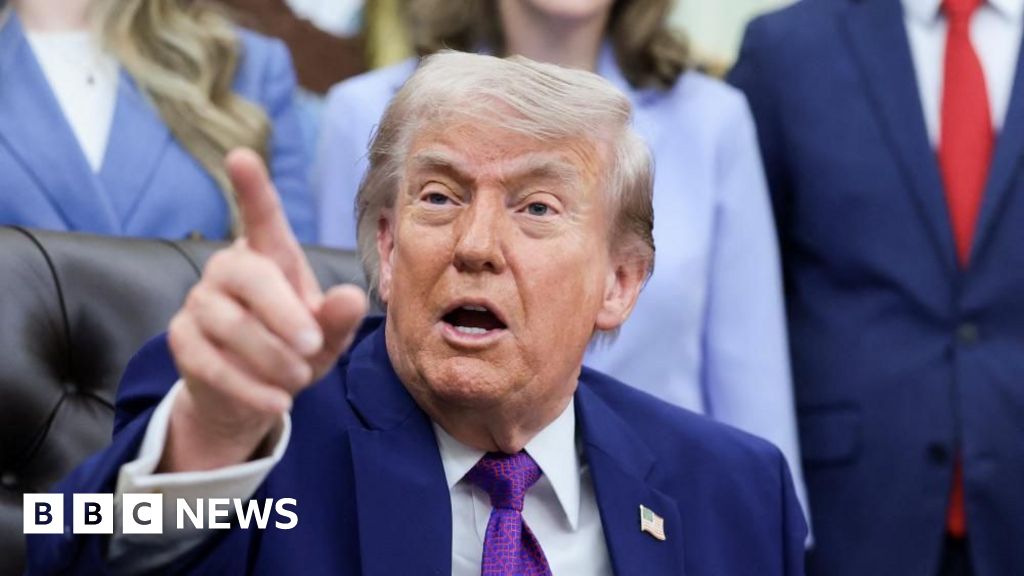
US President Donald Trump has said the month-long ceasefire between the US and Iran is on "massive life support".

He told reporters in the Oval Office on Monday that while the ceasefire remained in place, it was "unbelievably weak".

Following Trump's comments, Iranian parliamentary speaker Mohammad Ghalibaf wrote on X that Iran's armed forces were, "ready to respond and to teach a lesson for any aggression."

Iran laid out its demands to end the war and reopen the Strait of Hormuz in a counter-offer sent to the US on Sunday. Trump rejected the proposal, calling it "totally unacceptable" and a "piece of garbage".

After Trump's comments, Esmail Baghaei, a foreign ministry spokesperson for Iran, said Tehran's proposals were "responsible" and "generous".

After his comments saying Iran's armed forces ready to respond, Ghalibaf said in a separate post on X that there was "no alternative but to accept the rights of the Iranian people as laid out in the 14-point proposal".

"The longer they drag their feet, the more American taxpayers will pay for it," he said.

Tehran's offer includes an immediate end to the war on all fronts – a reference to the continued Israeli attacks against Iran-supported Hezbollah in Lebanon – a halt to the US naval blockade of Iranian ports and guarantees of no further attacks on Iran, according to Iran's semi-official Tasnim news agency.

It also reportedly includes a demand for compensation for war damage and an emphasis on Iranian sovereignty over the Strait of Hormuz.

Trump criticised the proposal, writing on Truth Social on Sunday: "I have just read the response from Iran's so-called 'Representatives.' I don't like it – TOTALLY UNACCEPTABLE."

In response to Trump's comments, Baghaei said Iran would act "in any way necessary to secure our interests".

Speaking in the Oval Office later on Monday, Trump addressed the ceasefire between the two countries which has largely been observed since April despite occasional exchanges of fire.

He told reporters: "I would say the ceasefire is on massive life support… when the doctor walks in and says, 'Sir, your loved one has approximately a 1 percent chance of living'."

The US president said Iran's leaders were "very dishonourable people", adding: "Look, I've had to deal with them four or five times – they change their mind."

"That piece of garbage they sent us – I didn't even finish reading it," he said.

Trump also accused Iran of going back on an agreement to allow the US to remove its supply of enriched uranium. He insisted that Iran would "never have a nuclear weapon".

Iran's Tasnim news agency quoted a source close to the negotiating team as saying: "There is no such thing in Iran's proposal as accepting taking out enriched nuclear material."

Earlier this week, Trump repeated that the war in Iran will be "over quickly".

But Israeli Prime Minister Benjamin Netanyahu said that Iran's stockpile of enriched uranium must be "taken out" before the war can be considered over.

"There's still enrichment sites that have to be dismantled," Netanyahu said in an interview on CBS's 60 Minutes show.

US news outlet Axios reported that the initial one-page, 14-point US memorandum includes provisions such as a suspension on Iranian nuclear enrichment, the lifting of sanctions, and restoring free transit through the Strait of Hormuz.

It cited two US officials and two other sources – all unnamed – who it described as briefed on the issues. These sources were reported as saying that many of the terms laid out in the memo would be contingent on a final agreement being reached.

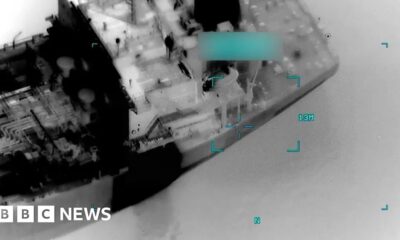
Iran has continued to block the Strait of Hormuz, prompting a rise in world oil prices. Normally about 20% of the world's oil and liquefied natural gas passes through the strait.

The US, for its part, has been enforcing a blockade of Iranian ports to exert pressure on Tehran to agree to its terms – a move that has infuriated Iran.

Israeli and US forces began massive air strikes on Iran on 28 February. A ceasefire in the Iran war came into effect last month.

📰 மூல செய்தி (Source): https://www.bbc.com/news/articles/cvgznxn18zgo?at_medium=RSS&at_campaign=rss

முக்கியச் செய்திகள்

Calls for 'urgent action' on baby-sleep industry after BBC investigation

Published

on

The UK's leading baby-safety charity and an MP have written to the health secretary calling for "urgent action" to regulate the infant-sleep industry, following a BBC investigation.

In the letter, the Lullaby Trust and Liberal Democrat Tom Morrison urge Wes Streeting to "ensure that no more babies' lives are put at risk due to unregulated and bogus sleep advice".

Last week, an undercover BBC report revealed how some self-described sleep experts have been giving new parents advice that goes against long-established safer sleep NHS guidelines.

Streeting said "dangerous misinformation dressed up as expert advice… must stop" and that parents should "only rely on trusted, evidence-based information" like the NHS Best Start in Life website.

The Department for Health and Social Care (DHSC) said in March that the law would be changed to limit who was allowed to call themselves a nurse.

This means people working in a hands-on capacity as night nannies would no longer be able to operate as "maternity nurses".

An inquest into the death of football manager Steve Bruce's four-month-old grandson found that Madison Bruce Smith died after being placed to sleep on his front by someone calling themselves a maternity nurse.

But many, including the Bruce Smith family, are calling for greater changes to be made by the DHSC and for urgent regulation for anyone working with infants.

Currently, there is no oversight or regulation of the industry – anyone can call themselves a baby-sleep expert or consultant regardless of experience or qualifications.

As a result, people can sell advice to parents which could be putting babies at increased risk of harm – including Sudden Infant Death Syndrome (Sids) – without consequence.

In their first statement since the inquest into their son's death, Madison Bruce Smith's family told the BBC "no parent should ever have to question whether the person they have trusted to care for their baby is truly qualified.

"Clear standards and accountability are essential, because so many children's lives depend on it."

The family say they want "all paid care for babies and infants" to be "properly regulated with mandatory training and strict adherence to national safer-sleep guidelines".

Morrison, MP for Cheadle, echoed these calls for broader and stricter regulation in his letter to Streeting.

"I must ask what more can be done to legislate to prevent life-threatening advice being given to parents, when they are searching for help and support in the often vulnerable and difficult beginnings of parenthood," he writes.

The letter from Morrison and The Lullaby Trust says that, "following an alarming BBC investigation… it is clear that government regulation is urgently needed to stop individuals from giving parents sleep advice that is contrary to established NHS and real expert guidance".

Through secret filming, we exposed two prominent figures in the infant-sleep sector giving advice that could put babies at risk of serious harm and even death according to medical professionals.

Both self-described experts have published books, have celebrity endorsements and tens of thousands of followers on social media. Their publisher, Penguin, has not responded to multiple requests for comment from the BBC.

The findings left NHS clinicians feeling "sick" and "horrified".

Calls to regulate the sector are being backed by medical professionals, researchers and families whose babies died under the care of individuals who placed them in unsafe sleeping positions.

The Lullaby Trust says "anyone advising families on infant sleep, or placing babies to sleep, should be held to clear standards for the guidance they provide.

"At a minimum this should follow NHS advice in the absence of a medical qualification."

During our investigation, we heard from families who had poor experiences with people calling themselves baby-sleep experts or consultants and who had found there was no official place for them to register concerns.

First-time mum Emily Aston, who used a self-described sleep expert when her son was four months old, says she didn't know where to go when the advice she was given went against safer sleep guidelines.

"It just felt like she needed to be stopped and there's nothing out there to report her behaviour to," she says.

Emily says the "vulnerability" of new parents using these types of services "is the main reason why there needs to be regulation".

NHS midwife and certified lactation consultant Olivia Hinge, who reviewed our undercover consultations with self-described sleep experts, says she understands why people offering support with sleep can be so appealing to new mums.

"What they're doing is what you often don't get on the NHS… somebody sitting and listening and talking about the feeding alongside the sleeping," Hinge says – "it feels like somebody's really taking the time to know them and their baby".

But she cautions that the gap in support for new parents shouldn't be filled by unsafe advice or by people working outside of their qualifications and expertise.

"Children are the most vulnerable people in our society and we have a duty to protect them… We need some form of regulation and consistent public health messages have to be upheld," Hinge adds.

In the letter to Streeting, Morrison also highlights the case of Genevieve Meehan, a nine-month-old baby who suffocated at her nursery after being tightly swaddled, strapped to a beanbag and left unattended for 90 minutes.

Her parents, Katie Wheeler and John Meehan, launched Campaign for Gigi to push for stronger safeguards in early years.

Last month the Department for Education published updated safer-sleep guidance for early-years providers in partnership with The Lullaby Trust.

From September 2026, this will become statutory thanks to Wheeler and Meehan's campaigning.

But the Cheadle MP said it was "a time-critical mission to step in and regulate" the issue of safer-sleep advice.

"Although the government is cracking down on the improper use of the title nurse, it'll do absolutely nothing if someone can just change their title to 'sleep consultant' and continue giving bogus advice the next day," Morrison said.

"It terrifies me, as a father of a young one myself, that people are out there claiming to be experts when they are not."

Health Secretary Wes Streeting added: "It should go without saying, that when someone calls themself a nurse, they actually are one.

"We are taking decisive action to crack down on unqualified individuals masquerading as professionals, making it a criminal offence to misuse the title 'nurse'."

Have you been affected by the issues raised in this story? Contact the team at: ParentingInvestigation@bbc.co.uk

Details of organisations offering information and support on child bereavement are available at BBC Action Line

📰 மூல செய்தி (Source): https://www.bbc.com/news/articles/c232glp2ej8o?at_medium=RSS&at_campaign=rss
Continue Reading

முக்கியச் செய்திகள்

Students at risk if universities go bust, say MPs

Published

on

Students need better government protection if a university in England goes bust and cannot pay its debts, according to MPs.

In a report, the Education Select Committee said 24 institutions are now said to be at risk of insolvency within the next 12 months – with many already making job cuts, closing courses and selling off buildings or land.

Helen Hayes MP, who chairs the committee, said the priority was to protect students "who have invested time, money and energy" into their studies.

A Department for Education (DfE) spokesperson said the government was committed to creating a secure future for universities so they can deliver for students, taxpayers and the economy.

Hayes said: "Developing an early warning system is essential. The government and the Office for Students should be ready to step in when the lights are turning amber, not when they are already flashing red."

The Labour MP for Dulwich and West Norwood said the possibility of a major UK university becoming insolvent was a "real possibility, not a theoretical warning".

The report said a protocol should be developed with costed plans for protecting students and staff, by offering options such as merging with another institution, restructuring or an orderly exit, where the university effectively closes but with arrangements in place for students, staff and courses.

The report said the higher education regulator, the Office for Students, fears 24 providers – including seven with over 3,000 students – are at risk of insolvency and "market exit" in the next 12 months.

A further 26 institutions are at risk of exit within the next two to three years, it said, but some of these are smaller, as only about half of them have more than 3,000 students.

The DfE said it had "taken action to put the sector on a secure financial footing", by raising the maximum cap on tuition fees and refocusing the Office for Students to support universities' financial stability.

"Through our ambitious reforms announced in the post-16 education and skills white paper we will restore universities as engines of growth, aspiration and opportunity."

However, the report said a fee freeze for undergraduates had impacted universities' finances, driving them to increase income from fees for postgraduate and international students.

It said interational students constitute a quarter of all students but pay over 45% of the fee income.

"These fees represent a financial surplus used to cross-subsidise research and domestic teaching," it said.

Hayes added that if the government wants to reduce the number of international students coming to the UK, it must set out how it will stabilise university finances.

Responding to the report, the University and College Union (UCU) said it shows the government is "asleep at the wheel" as universities face a "financial cliff edge".

General secretary Jo Grady called for an emergency higher education taskforce to oversee how ministers will directly intervene to implement the report's recommendations.

Vivienne Stern, chief executive of Universities UK, which represents 141 universities, said they were "grateful" to the government for increasing fees in line with inflation in England.

However, she said visa changes had decreased international enrolments, and "a longstanding failure of research grants to cover costs" had created huge pressures for universities.

Alex Stanley, National Union of Students (NUS) vice president, said the report was "scary reading" and "students should not be bearing the brunt of the lack of investment in higher education".

📰 மூல செய்தி (Source): https://www.bbc.com/news/articles/ce3p93j3823o?at_medium=RSS&at_campaign=rss

Continue Reading

முக்கியச் செய்திகள்

Chris Mason: PM hangs on by a thread as party revolts

Published

on

This morning, Sir Keir Starmer's cabinet is split on the most fundamental political question a government's top table of ministers can ever wrestle with: whether the prime minister should carry on.

Clearly, a cabinet split on this is unsustainable. Either cabinet ministers have to resign or be sacked, or the prime minister himself has to go.

Last night, ministers went in to see Sir Keir and he was met with a range of advice. Some said he should fight on. Some said he should set out a timetable for his departure. And others, as he weighed his options, tried to help him kick around how he might deal with the scenario he now confronts.

A dam now appears to have broken, with Labour MPs posting their public loss of confidence in the prime minister with such frequency it can be hard at times to keep count of them.

In the hours after the prime minister's crunch speech on Monday, the verdicts, public and private, began to flow.

"Just so devastatingly crap" was the pithy and rather brutal view of one Labour MP in touch with me. It was a prescient review given the torrent of public criticism from his own colleagues that was about to be begin.

Many of those MPs cannot shake a sense Sir Keir is repellent to too many voters just as Labour wrestles with how to take on Reform UK.

But there are plenty of other Labour MPs who look on in horror at the implosion they are witnessing and will be called upon to publicly defend, when they would much rather it didn't happen at all.

"A lot of us are watching this slightly aghast. With a war; an economy struggling due to Iran; market gilt movements etc. I'm still of the view that stability is a premium you give up at your peril," one told me.

How is the prime minister viewing all this? I have spoken to people who have been involved in conversations with him in recent days. They tell me that he has long been resolute about wanting to carry on, adamant that there is a genuine risk to the party and the country of a protracted leadership contest, which will deliver a successor with a "very questionable mandate" as one friend put it.

In other words, unlike Sir Keir, his successor on taking office won't have won a general election.

But it is also now true that the arithmetic and sentiment the prime minister confronts are bleak and getting darker.

"It's clearly not good," one cabinet ally who would rather this was not happening acknowledged.

And already bad blood oozes from the Labour movement. Rival leadership camps are briefing against each other. The blame game for their current mess is under way.

And now Sir Keir confronts the most awkward and painful of days – beginning with the most awkward and painful of meetings.

Tuesday morning begins with a cabinet meeting. Assembled around that famous table, Sir Keir's handpicked top team, who now disagree about how long their boss should last in his job.

It is four years ago this week that I became the BBC's Political Editor.

In those four years, I have reported on four prime ministers: Boris Johnson, Liz Truss, Rishi Sunak and Sir Keir Starmer.

To put that instability into context, I was 27 years old before I was on to the fourth prime minister of my lifetime, Gordon Brown in 2007. In the previous just over a quarter of a century, there had been just three: Margaret Thatcher, John Major and Tony Blair.

Instability and prime ministers with a short sell-by date are the new normal – and neither a big majority nor being a party that has not been in government for a while is any inoculation against that reality.

📰 மூல செய்தி (Source): https://www.bbc.com/news/articles/cn9py15w5yxo?at_medium=RSS&at_campaign=rss

Continue Reading

Trending

Copyright © 2024 by 7Tamil Media, All rights reserved.