Connect with us

உலகம்

Trump puts onus on Iran’s authorities as they project hardened stance

Published

on

Some officials say Tehran must not even entertain any more talks on the nuclear issue amid the threats and blockade.

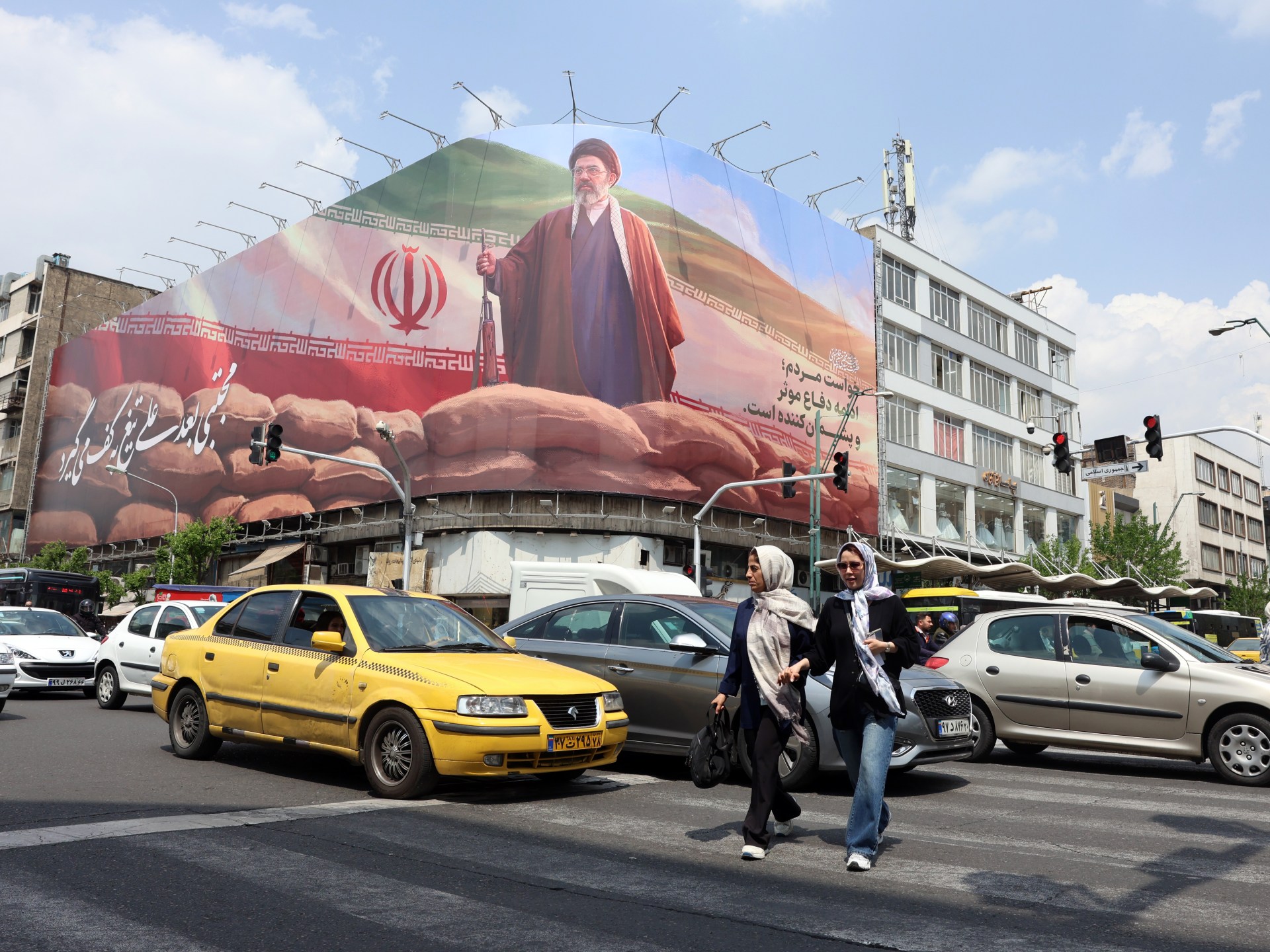
Tehran, Iran – Iran’s authorities and state media project that they are less interested than before the war in negotiations with the United States if they go beyond their accepted terms, as mediated talks failed to materialise in Pakistan.

Foreign Minister Abbas Araghchi met senior Pakistani officials in Islamabad on Saturday and left for Oman, to be later bound for Russia. The top diplomat, who was not joined by Parliament Speaker Mohammad Bagher Ghalibaf like in a previous round of negotiations earlier this month, said he was “yet to see if the US is truly serious about diplomacy”.

Envoys Steve Witkoff and Jared Kushner had been expected in Pakistan after the White House said Iran asked for a second round of direct negotiations, but US President Donald Trump cancelled the trip and said, “we have all the cards, they have none” while reiterating his claim about “infighting and confusion” among Iran’s leadership.

“If they want to talk, all they have to do is call!!!” Trump wrote in an online post, continuing to put the onus on Iran’s leadership.

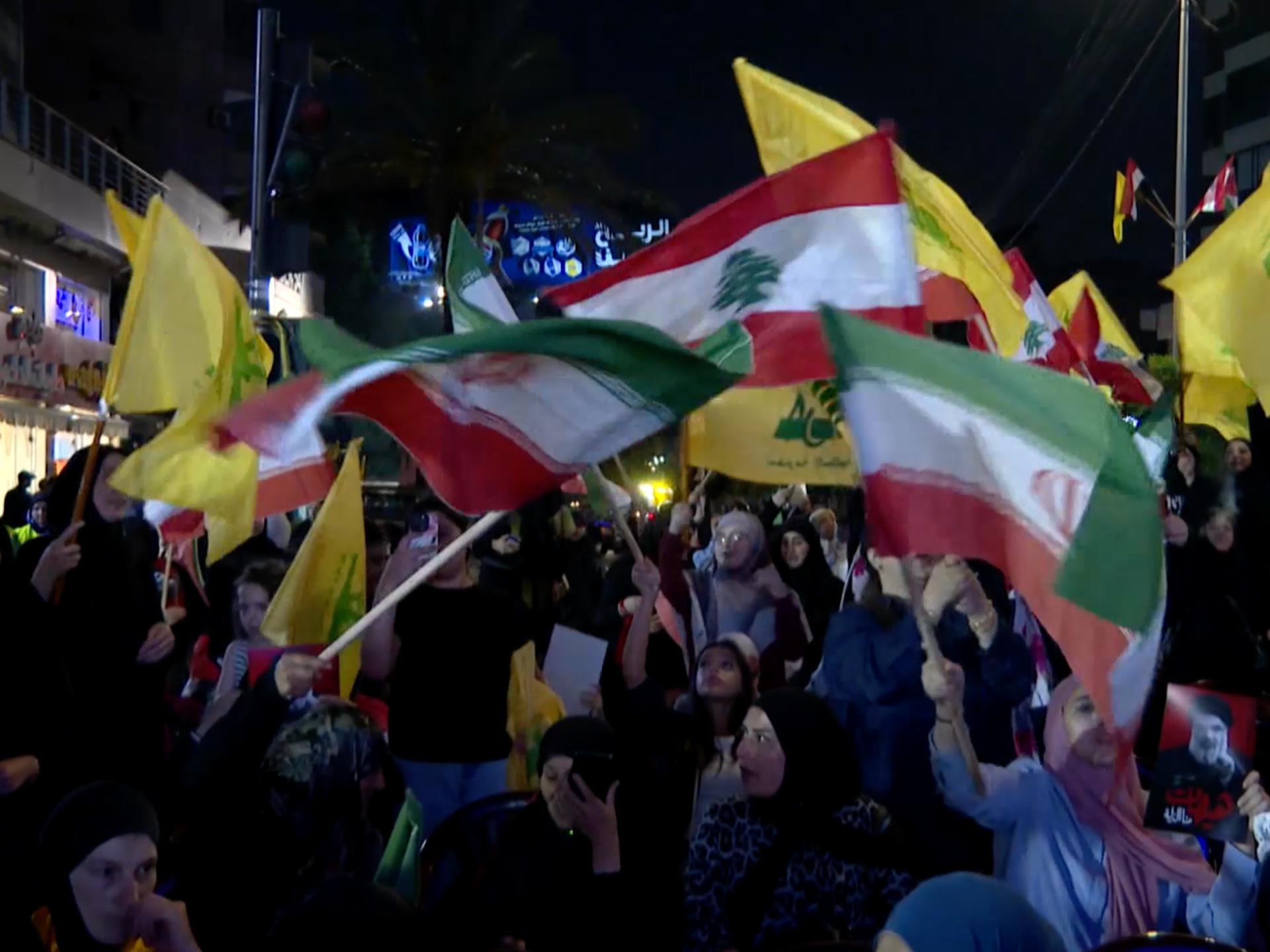
Amid a state-imposed near-total internet shutdown in Iran, nearing two months, officials and the supporters of the Islamic Republic emphasise that they are united in opposing any concessions to Trump.

The US president said earlier this week he was in “no rush” to reach an agreement with Iranian leadership, whom he claimed, without evidence, were “fighting like cats and dogs” among themselves.

Since Trump highlighted the perceived fractures, military, security, judiciary and government authorities in Iran have been releasing synchronised messages with near-identical wording to proclaim absolute unity.

The messages, circulated through state media and even using similar graphics and fonts but with different colours, claim that everyone in the country is “revolutionary” and exercises “complete obedience” to Supreme Leader Mojtaba Khamenei.

The authorities also claim that more than 30 million people – a third of Iran’s total population – have registered in a state-run campaign to express readiness to “sacrifice” their lives if necessary, but they have not provided any documentation to prove this.

The Khatam al-Anbiya Central Headquarters of the Islamic Revolutionary Guard Corps (IRGC) said on Saturday afternoon that armed forces would retaliate against the US if it continues its “blockade, banditry and piracy” in Iran’s southern waters.

“We are prepared and determined to monitor the behaviour and movement of the enemies in the region and maintain management and control of the strategic Strait of Hormuz, and to inflict more severe damages on the American-Zionist enemies in case of another aggression,” read its statement.

The IRGC on Saturday took a state television presenter to broadcast near two vessels seized days earlier in the strait to report that Iran exercised “total control” over the waterway.

Iranian authorities continue to call on their supporters, including paramilitary forces, to take to the streets every night in order to maintain control.

In a rally in downtown Tehran on Friday night, Meysam Motiei, a prominent state-backed religious singer with links to the supreme leader’s office, told the crowds that anyone stuck in factional infighting during times of war “has not grown up yet”.

“If anyone from any group or faction, especially in the name of being a revolutionary, tries to disturb the unity of the people, they will get a slap in the face by the people,” he asserted.

But in ultraconservative Mashhad in northeast Iran, where a shrine considered holy for Shia Muslims is located along with powerful religious and economic foundations, some were still preaching aggressively against the possibility of former reformist and moderate leaders retaking power.

“They have instructed us to keep unity with incumbent officials, not these two people,” a speaker told a gathering crowd on Friday night in a clip shared by state-linked media, in reference to former President Hassan Rouhani and his foreign minister, Mohammad Javad Zarif.

“We are not afraid of B-2s and B-52s; we are afraid of dishonourables who have no concern for the homeland. Wherever Trump makes a mess, Zarif comes and blabbers away,” he said, about the diplomat who led nuclear talks that led to a now-expired landmark accord with world powers in 2015.

Iran’s judiciary continues to execute dissidents, and on Saturday announced the hanging of Erfan Kiani, who was arrested during the nationwide protests in January when thousands were killed.

The judiciary described him as “Mossad’s hired knife-wielder” and said he was accused of destroying property, arson and more in downtown Tehran.

Iranian state media reports indicate that the US naval blockade of Iran’s ports is undermining the ceasefire extended by Trump and allowing the more hardline voices in Tehran to come out on top.

The Tasnim and Fars news agencies, affiliated with the IRGC, argued against allowing any nuclear negotiations to take place with the US, even though Trump and Israel’s Prime Minister Benjamin Netanyahu started the war with the predominant goal of preventing a nuclear-armed Iran. Tehran has consistently stressed that its nuclear programme is peaceful, although some Iranian leaders have called for the development of a bomb.

“The negotiations with the US are strictly to end the war, and Iran does not consider the nuclear issue to be part of the talks,” Tasnim said, claiming that time was not on Washington’s side due to the tumult in global markets resulting from the war.

Khamenei has not directly commented on more negotiations, but Ali Khezrian, another representative of Tehran in the hardline-dominated parliament, told state media on Thursday that Khamenei was “opposed to any extension of negotiations” under threats from the US and Israel.

Israel’s Defence Minister Israel Katz earlier this week adopted Trump’s apocalyptic messaging, and said armed forces are awaiting a greenlight from the US to “return Iran to the age of darkness and stone by blowing up central energy and electricity facilities and crushing national economic infrastructure”.

There are currently three US aircraft carriers and their supporting vessels in the Middle East region, according to the US military, which marks the first time this has happened since the buildup to the 2003 invasion of Iraq.

But Mahmoud Nabavian, a senior black-turban cleric and hardline member of parliament who was a part of the large Iranian delegation in the first round of talks, said it was a “strategic mistake” to even include the nuclear issue.

He told state media that this allowed the US to raise demands like a 20-year suspension of enrichment, and shipping Iran’s buried high-enriched uranium abroad.

“From now on, entering any negotiations with the US is pure damage and has no interest for the Iranian nation,” he said earlier this week, adding that oil sales were providing the government with a “full hand”.

Mohammad Saeedi, the Friday prayer imam of ultraconservative Qom, located south of Tehran, said in reference to the US that it would be “meaningless and unfair to sit down behind the negotiating table with a symbol of corruption”.

The government of relatively moderate President Masoud Pezeshkian has signalled concern about the potential impacts of systematic targeting of more civilian infrastructure, especially power plants, in case the war continues.

“We have a simple request from the people: to reduce their consumption of power and energy. For now, we have no need for these dear people to sacrifice their lives, but we need to control consumption,” the president said on Saturday. “They have hit our infrastructure and blockaded us, so the people become dissatisfied.”

Mohammad Allahdad, the head of Tavanir, the government-owned mother company for development and operation of Iran’s power gr

📰 மூல செய்தி (Source): https://www.aljazeera.com/news/2026/4/25/irans-authorities-project-hardened-stance-with-more-talks-on-horizon?traffic_source=rss

உலகம்

FA Cup final: Chelsea vs Manchester City – teams, start, lineups

Published

on

Manchester City will continue their hunt for a domestic treble when they face Chelsea in Saturday’s FA Cup final.

Who: Chelsea vs Manchester City

What: English FA Cup final

Where: Wembley Stadium in London, United Kingdom

When: Saturday, May 16 at 3pm (14:00 GMT)

How to follow: We’ll have all the buildup on Al Jazeera Sport from 11 GMT in advance of our live text commentary stream.

History will be made on Saturday as Manchester City become the first side to line up in four consecutive finals as they take on Chelsea for the trophy.

Between them, the sides have won 15 FA Cup titles, but this is a first meeting between the clubs in the final itself – despite the teams between them appearing in five of the last six finals.

City, who have already claimed the League Cup, are still in with the chance of a domestic treble. Chelsea, however, have been engaged in a managerial merry-go-round – all off the back of beating Paris Saint-Germain to claim the expanded FIFA Club World Cup last year.

Al Jazeera Sport takes you through all the information you need to know in the run-up to the 145th FA Cup final.

Crystal Palace beat City 1-0 in last season’s final to lift the trophy for the first time in their history.

Eberechi Eze scored the only goal of the game after 16 minutes to sign off from the Eagles in style. The England forward joined Arsenal at the end of the season.

City had dominated the final with a staggering 78 percent of possession.

Chelsea overcame Leeds United 1-0 in their last four clash, with Enzo Fernandez scoring the only goal in the 23rd minute.

The Blues thumped Port Vale in the quarterfinals with a 7-0 win, while there was a more Hollywood feel to their clash with Wrexham in the prior round.

Extra time was required in their 4-2 win in Wales.

City were well tested in the semifinal by Championship side Southampton as Nico Gonzalez scored with three minutes remaining after Jeremy Doku’s 82nd-minute strike cancelled out Finn Azaz’s opener.

Liverpool were seen off in the quarterfinals with a 4-0 thumping at Etihad Stadium, while a 3-1 win was recorded at Newcastle United in the round prior to that.

Manchester City were 3-0 winners in the last meeting between the sides, which came in a Premier League fixture in west London on April 12.

All three goals came within 17 minutes of each other in the second half, with Nico O’Reilly, Marc Guehi and Jeremy Doku netting at Stamford Bridge.

City sit second in the English top flight, just two points behind leaders Arsenal with two games to play.

Club World Cup holders Chelsea have sacked both Enzo Maresca and Liam Rosenior this season and sit ninth in the league.

Calum McFarlane will be taking charge of his sixth game in his second spell as the club’s interim manager.

The teams last met in the FA Cup in a semifinal clash at Wembley Stadium in April, 2024.

Bernardo Silva scored the only goal of the game to send City through to the final, where they were beaten 2-1 by Erik ten Hag’s Manchester United.

Alejandro Garnacho, now of Chelsea, gave United the lead, which Kobbie Mainoo doubled before the break. Jeremy Doku netted an 87th-minute goal to set up a tense finale.

Chelsea have had their name etched on the trophy on eight occasions, with their first win coming in 1970 as they beat Leeds United 2-1 in a replay at Manchester United’s Old Trafford.

The first attempt ended in a 2-2 draw, leading to the first time a final would be replayed. Wembley hosted the opening match, but was unavailable for the replay due to the pitch being in unfit condition.

City have lifted the cup on seven occasions, with their first win coming in 1904 with a 1-0 win over Bolton Wanderers.

Chelsea’s last win came in 2022 and required penalties against Liverpool to seal the win.

The match ended 0-0 after extra time – the first final to end goalless since Sir Alex Ferguson’s Manchester United beat Arsene Wenger’s Arsenal on spot kicks in 2005.

City last lifted the trophy in 2023, beating Manchester United 2-1.

In a final that would see a rerun between the cross-city rivals the following year, Ilkay Gundogan opened the scoring in the first minute and later restored his side’s lead five minutes after the break, after a Bruno Fernandes penalty had levelled the tie at the break.

Arsenal are the record winners of the competition with 14 victories to their name. The first was in 1930 under the club’s famous manager, Herbert Chapman. The Gunners beat Huddersfield Town 2-0 in the final.

Their last win came in 2020 when they beat Chelsea 2-1. It was the first of three successive finals for the Blues, who tasted defeat the following year against Leicester City before the 2023 win against Liverpool.

Manchester United are the second-most successful side in the competition’s history with 13 wins. Chelsea’s eight victories are joint third on the list with Liverpool and Tottenham.

The first FA Cup final was staged in 1872 with Wanderers beating Royal Engineers 1-0 in a match staged at the Kennington Oval cricket ground, which remains the current home to the English county cricket club, Surrey.

This will be the 181st meeting between the teams, with Chelsea winning 99 of the meetings and Manchester City winning 68 of the encounters.

The first match was played in 1907 in the old Division One of English football (now the Premier League), with the match ending in a 2-2 draw in London.

This will be the 11th meeting between the sides in the FA Cup, with City winning six of the matches to Chelsea’s four wins.

The first cup meeting was in February, 1915, with Chelsea winning 2-1 in Manchester. City had to wait 33 years for a chance of cup revenge, which they took at first attempt with a 2-0 home win in January 1948.

This will be the side’s seventh meeting in the competition in the last 13 seasons.

Estevao Willian, Jamie Gittens and Jesse Derry are all out with injuries, but Robert Sanchez, Pedro Neto and Alejandro Garnacho have all trained in the build-up to the game as they attempt to shake off knocks.

Sanchez; Gusto, Fofana, Colwill, Hato; James, Caicedo; Palmer, Fernandez, Cucurella; Pedro

Guardiola made several changes to his starting lineup for their last outing in the Premier League game against Crystal Palace, ⁠with Erling Haaland playing no part.

The Norwegian will be leading City’s attack in Saturday’s showpiece, though, aiming to correct a remarkable statistic.

Haaland has scored 161 goals in 196 games for City in all competitions, yet has never found the net or made an assist in the 12 semifinals or finals in which he has ⁠featured.

Rodri remains an injury doubt with a groin issue.

Trafford; Nunes, Khusanov, Guehi, O’Reilly; Gonzalez, Bernardo; Semenyo, Cherki, Doku; Haaland

📰 மூல செய்தி (Source): https://www.aljazeera.com/sports/2026/5/15/fa-cup-final-chelsea-vs-manchester-city-teams-start-lineups?traffic_source=rss

Continue Reading

உலகம்

BRICS talks end without joint statement as divisions over Iran war deepen

Published

on

Iran’s foreign minister had urged member states to condemn ‘violations of international law by the United States and Israel’.

The BRICS alliance of major developing economies has failed to issue a joint statement after their two-day meeting in India, amid internal divisions over the Iran war which is affecting several members.

India hosted the foreign ministers’ meeting in New Delhi and currently chairs the alliance. BRICS brings together core members Brazil, Russia, India, China and South Africa, as well as newer members Ethiopia, Egypt, Iran, Indonesia and the UAE.

India said on Friday that “there were differing views among some members” regarding the conflict in the Middle East.

Iranian Foreign Minister Abbas Araghchi on Thursday urged BRICS member states to condemn what he described as “violations of international law by the United States and Israel”.

The war has intensified tensions between Iran and its Gulf neighbours, including Saudi Arabia and the United Arab Emirates, a fellow BRICS+ member. Riyadh has yet to formally join the bloc.

Without directly naming the UAE, Araghchi told a news conference that a BRICS member had blocked parts of India’s statement. Iran repeatedly targeted its Gulf neighbour following the outbreak of the war on February 28, reportedly striking the UAE more than any other country involved in the conflict, including Israel.

“We have no difficulty with that certain country, they have not been our target in the current war. We only hit American military bases and American military installations, which are unfortunately on their soil,” Araghchi said.

The UAE representative, Minister of State, Khalifa bin Shaheen Al Marar, rejected Araghchi’s remarks, accusing him of attempting to justify “terrorist attacks” against the UAE and other Gulf states. Al Marar said Iran had launched approximately 3,000 attacks on the UAE using ballistic missiles, cruise missiles and drones.

India’s statement highlighted areas of consensus among BRICS members, including calls for reforms to global governance institutions, such as the United Nations and the Security Council. The bloc reiterated its longstanding demand for greater representation of Global South countries within international institutions, reflecting its broader push for a multipolar world order.

The foreign ministers also discussed Israel’s genocidal war on Gaza. They agreed that Gaza was an “inseparable part” of any future independent Palestinian state, stressing the importance of unifying the enclave with the occupied West Bank under the governance of the Palestinian Authority. However, the statement noted that one unnamed country had expressed reservations about certain aspects of the section on Gaza.

The group further called on all parties to respect the ceasefire in Lebanon, which critics have denounced as a halt in hostilities in name only. Without singling out a specific country, the ministers condemned the use of economic sanctions as a form of coercion.

Sudan was also on the agenda. The African country remains in the grip of what the UN has described as the world’s worst humanitarian crisis. Ministers called for an immediate ceasefire, saying that only a peaceful solution through dialogue could bring a lasting end to the civil war, which began more than three years ago. They also warned that Sudan could become fertile ground for what ministers described as “extremism” and “terrorism”.

Also discussed was the situation in Syria, which is recovering from the civil war that effectively ended in December 2024 following the overthrow of longtime ruler Bashar al-Assad.

India’s statement called for a peaceful and inclusive political transition. The parties further stressed the importance of eliminating what they described as “foreign terrorist fighters” in Syria, saying they pose a security threat to both the country and the wider region.

📰 மூல செய்தி (Source): https://www.aljazeera.com/news/2026/5/15/brics-talks-end-without-joint-statement-as-divisions-over-iran-war-deepen?traffic_source=rss

Continue Reading

உலகம்

UAE to accelerate oil pipeline project to bypass Strait of Hormuz

Published

on

The crown prince of the UAE says the project would help ‘meet global demands’.

The United Arab Emirates is fast-tracking the construction of a new pipeline, which will double the export capacity through Fujairah, a port city in the country’s east, as Gulf nations seek to bypass the Strait of Hormuz.

Crown Prince Sheikh Khaled bin Mohamed bin Zayed announced the acceleration of the West-East Pipeline project to “meet global demands”, at an executive meeting held by the Abu Dhabi National Oil Company (ADNOC) on Friday.

The pipeline should be operational by 2027, the government’s Abu Dhabi Media Office said.

Sheikh Zayed said ADNOC is “well positioned as a responsible and reliable global energy producer, with the operational flexibility to responsibly increase production to meet market needs when export constraints allow”.

The United States and Israel’s war on Iran shook global energy supply chains across the world.

With the blockade on the Strait of Hormuz – through which previously about a fifth of the world’s oil passed – and Iran’s new maritime protocol in the waterway, as well as attacks on energy infrastructure, Gulf nations have been forced to find alternative trade routes to maintain oil and gas exports.

Currently, the UAE has the Abu Dhabi Crude Oil Pipeline (ADCOP), a 380km (235-mile) pipeline which runs from Habshan, an oil and gasfield in the southwestern area of Abu Dhabi, to the port of Fujairah – which has come under attack recently.

The pipeline, which started working in 2012, has the capacity of about 1.5 million barrels of oil per day (bpd). It is one of the key energy routes in the Middle East.

Saudi Arabia also has the East-West pipeline, designed to export the kingdom’s oil, concentrated in the country’s east, via the west coast, which has been less affected by the Iran war.

Saudi’s pipeline is 1,200km (745 miles) long, running from the Abqaiq oil processing centre to the Yanbu port on the Red Sea. State oil giant Aramco’s Chief Executive Amin Nasser has called it a “critical lifeline” for the kingdom.

Oman borders the Gulf of Oman with an extensive coastline outside the Strait of Hormuz, while Kuwait, Iraq, Qatar, and Bahrain depend almost entirely on the waterway for their trade shipments.

Last month, the UAE announced its departure from the Organization of the Petroleum Exporting Countries (OPEC) in order to focus on “national interests”. The UAE said this move was part of its “long-term strategic and economic vision and evolving energy profile”.

📰 மூல செய்தி (Source): https://www.aljazeera.com/news/2026/5/15/uae-to-accelerate-oil-pipeline-project-to-bypass-hormuz?traffic_source=rss

Continue Reading

Trending

Copyright © 2024 by 7Tamil Media, All rights reserved.