Connect with us

உலகம்

The Taiz transplant team looking to begin a medical revolution in Yemen

Published

on

Taiz’s Cardiac and Vascular Diseases and Kidney Transplant Center has provided hundreds of Yemenis with affordable and lifesaving treatment.

A young girl lies in a hospital bed in Taiz, southwest Yemen, recovering from surgery to treat her atrial septal defect (ASD), better known as “hole in the heart”.

“May I take a picture of you?” a visitor asks. She smiles, slowly adjusts her position, and gets ready for the photo.

Ten-year-old Noor Majid has had ASD since birth. Her condition leads to constant breathing problems and chronic exhaustion. It is hoped the surgery will help her live a life similar to that of other girls her age.

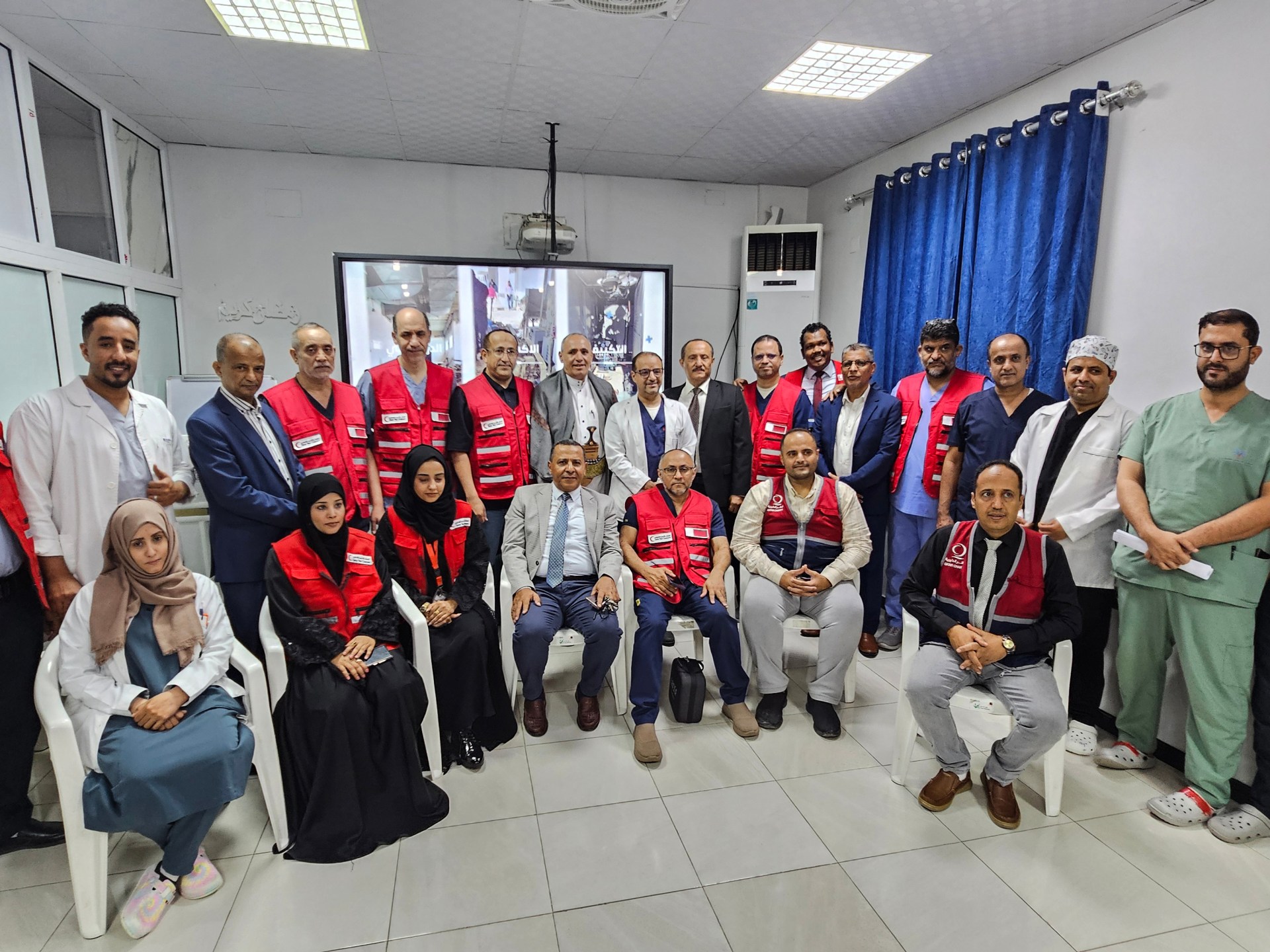
Noor was one of 110 children from different parts of Yemen being treated for free at the Cardiac and Vascular Diseases and Kidney Transplant Center in Taiz between May 16 and 21.

The Catheterization and Complex Paediatric Cardiac Surgery Camp, which undertook the treatment, is a multi-national effort, involving medical teams from across the world and supported by the Qatar Charity and the Qatar Red Crescent.

Surgeries on the children were performed by Qatari, Arab and French doctors from Qatar’s Sidra Medicine, one of the world’s leading cardiology hospitals, with the input of consultant doctors from across Yemen.

Professor Abudar al-Ganadi, who has headed the Cardiac and Vascular Diseases and Kidney Transplant Center since it was founded in Taiz in July 2021, told Al Jazeera that the camp marks a major accomplishment for the medical sector in Yemen.

“This is the largest medical camp in the country where complex operations of this kind are performed in this number and within such a critical period of time,” he said.

Since it was established just five years ago, the facility has come to be known as one of Yemen’s most significant medical achievements in recent times.

Despite the country’s ongoing war, the facility has conducted 164 kidney transplants, 1,450 open-heart surgeries, nearly 4,000 vascular operations, 4,340 catheterization procedures, and 1,500 urology operations since it opened its doors to patients.

Those who have benefited most are Yemenis with cardiovascular and kidney conditions who are unable to afford operations or transplants abroad. With no relevant treatment at home, the facility has become a literal lifesaver for hundreds of patients in Yemen.

Last month, the body announced it had carried out the first three liver transplants, which won international attention and could be the first step towards a sustainable programme of treatment of liver conditions in Yemen.

Professor al-Ganadi cautions that only time will determine the success of these operations, but he hopes the results will be positive.

“We launched this [liver transplant] programme quietly and cautiously with two cases, then a third one, and we will continue gradually. We will not announce preliminary results until after 10 transplants, then 50, just as we did with the cardiac programme,” he said.

Taiz has suffered more than most parts of Yemen, with a siege and shelling seeing the city’s health system become one of the first to collapse during the war. That is why the emergence of the facilty in his besieged, exhausted city is being treated as a miracle.

Dr Nader al-Hammadi, a resident physician in the cardiovascular surgery unit, said the fact that Yemenis can now receive treatment at home saves costs and time for patients.

“The patient used to suffer from the complications of travelling abroad to undergo open heart surgery, whether for coronary artery bypasses or mechanical valves,” he told Al Jazeera.

“The cost of such operations abroad could reach approximately $20,000 in addition to the costs of travel, accommodation, and living expenses. Meanwhile, the same operation is performed at the cardiovascular centre in Taiz for only $5,000, of which the patient pays just $2,000. The rest is covered by benefactors such as the Hayel Saeed Anam Group, Al-Zailai Company, Al-Kuraimi Bank, and others.”

The facility has now performed 1,500 open-heart surgeries, giving valuable experience to surgeons and lifesaving, affordable care to patients.

“It is certain that 1,000 of those would have been done abroad if the centre had not opened,” al-Hammadi adds.

“There are even operations that are not performed abroad, such as minimally invasive heart procedures, in which we are distinguished and of which we have done 220 cases. Many expatriates are therefore compelled to travel to us to have them done.”

For Professor al-Ganadi, establishing a medical unit to treat heart conditions in his hometown of Taiz has been a dream since he returned home in 2009 from his studies at Pavlov First Saint Petersburg State Medical University in Russia.

He faced myriad challenges working towards this, but his resolution and patience stand as an inspiring success story for a generation in Yemen who have seen their hopes and dreams dashed for a decade by war.

In April 2018, equally frustrated and exhausted by the war, Professor al-Ganadi, the only cardiovascular surgery consultant in Taiz, left for Saudi Arabia to work at King Fahad Medical City.

But then, in July 2021, he received a phone call from Taiz’s governor, who asked him if he still wished to establish a cardiovascular centre in the city. The governor said that if he was, he needed to return home immediately.

In Taiz, he found that only two floors of the devastated Republican Hospital could be used, while the only catheterization machine, used to treat cardiac conditions, was also out of service.

Still, al-Ganadi persisted and managed to get the support of private sector entities to begin the difficult process of creating the Cardiac and Vascular Diseases and Kidney Transplant Center from a concept into a reality.

“We started from zero, but we always had the Hayel Saeed Anam Group standing by us when needed,” he said, referring to the multinational corporation that has provided consistent support to Yemen’s healthcare teams during the war.

“They agreed to provide us with all the cardiac surgery equipment and supplies belonging to Yemen International Hospital, which was the largest and best in Taiz before it shut down in 2015 because of the war.”

After performing between three and five surgeries a month in the first year of its operations, the Cardiac and Vascular Diseases and Kidney Transplant Center now carries out 500 operations a month. This includes 50 adult cardiac surgeries, 70 vascular surgeries, and 300 cardiac catheterization procedures.

When it opened, it had just six beds on the first floor. Today, it has 131 beds, including 23 dedicated to intensive care, allowing it to treat more patients in Yemen.

“During the centre’s first year, we did 60 open heart surgeries; today, we perform 60 in a single month. That means it is the largest centre in Yemen performing open heart operations,” al-Ganadi added.

“I was influenced by Russian thinking, I learned from them how you can start from zero and work inside a building that is destroyed with windows that have no glass. We have earned trust, but the dream is not yet complete. Challenges, just like ambition, never end.”

📰 மூல செய்தி (Source): https://www.aljazeera.com/features/2026/6/7/a-cardiovascular-team-in-taiz-offers-yemen-hope-for-a-better-future?traffic_source=rss

உலகம்

Why has the Pentagon raised the risk of Israeli spying to the highest level?

Published

on

The US agencies warn of Israel intensifying efforts to collect information on the talks to end the war, according to media reports.

The US defence department has reportedly raised its assessment of the espionage threat posed by Israel to the highest category of “critical”, according to media reports citing American intelligence and defence officials.

The assessment, first published by NBC News on Friday and followed by The New York Times, comes at a time when Washington is pursuing diplomatic engagement with Iran, while its ally Israel is opposed to the talks aimed at ending the conflict now 100 days long on Sunday.

US President Donald Trump and Israeli Prime Minister Benjamin Netanyahu have publicly diverged in their approach to the war – Washington wants to extricate itself amid political pressure, while Israel is still pushing to topple the Iranian government.

This is not the first time Israel has been accused of espionage against the US – its closest ally and benefactor – with which it maintains extensive security and intelligence cooperation.

According to NBC News and The New York Times (NYT), citing anonymous current and former US officials, the Pentagon’s Defense Intelligence Agency (DIA) arm recently upgraded Israel’s counterintelligence threat level from “high” to “critical”, the most serious designation in its internal assessment system.

The warning was based on Israeli intelligence agencies intensifying efforts to collect information on US military personnel, government officials and policy discussions.

The news reports said the concern was focused on American officials involved in shaping Washington’s approach towards Iran, as the two foes continue to negotiate an end to the war that has sent global energy prices soaring.

“An intensified Israeli effort to learn about US positions in talks with Iran has crossed a line, according to some American officials,” the NYT said.

According to the news outlet, intelligence assessments pointed to increased Israeli surveillance efforts in recent weeks targeting US military and government figures.

They include Trump envoy and key negotiator Steve Witkoff; the Pentagon’s top policy official, Elbridge A Colby; and one of his deputies, Michael P DiMino IV, the NYT reported.

Witkoff was chief negotiator in the nuclear talks before Israel and the US launched the attack on Iran on 28 February.

The reports also referenced incidents in which US defence personnel working in Israel allegedly discovered software on their phones “to tap their communications had been surreptitiously installed on their phones”, the NYT added.

The newspaper said the DIA reports found Israeli spying on the US, which has occurred before, surged from late 2024 onwards, coinciding with US President Joe Biden’s administration stepping up pressure on Israel over its genocide in Gaza.

The reported increase in spying continued after Trump was elected to a second term in November 2024 and began shaping his administration’s policy towards Iran.

Tensions between Trump and Netanyahu have come to the surface in the past week, amid reports the US president called the Israeli prime minister “f****ing crazy”, due to Israel’s escalation in Lebanon. At least 3,500 people have been killed in Israeli attacks in Lebanon.

Trump has been pressing Israel to halt its attacks on Lebanon, but the bombardment in the south has continued, undermining a potential deal with Iran which insists both issues are inseparable.

While intelligence gathering between friendly nations is not unusual, some US officials reportedly believe recent Israeli activities have gone beyond what Washington traditionally considers acceptable among allies.

According to officials cited in the reports, US intelligence agencies have become increasingly concerned that Israel is seeking greater insight into US policy discussions and negotiating positions, specifically with Iran.

According to NBC, the Israeli embassy in Washington said it was “completely false” that the country spies on US government officials or American institutions.

“Israel does not gather intelligence on American entities, let alone US government officials,” NBC quoted the spokesperson as saying.

A White House official also reportedly dismissed the NBC report, saying the “entire story is false and sourced to someone who doesn’t have any knowledge of what’s going on”.

Al Jazeera could not independently verify the media reports and the US and Israeli responses.

Yes. Israel has previously been involved in espionage cases targeting the US, although such incidents have not been spoken about much given their close ties.

The most famous example is the Jonathan Pollard affair. The civilian intelligence analyst working for the US Navy was arrested in 1985 after passing large quantities of classified information to Israel. He later pleaded guilty to espionage and served 30 years in prison before being released on parole in 2015.

The Pollard case remains one of the most significant espionage scandals in the history of US-Israeli relations and continues to shape perceptions within parts of the American intelligence community.

However, espionage between close allies is not uncommon, says academic Andreas Kreig.

“Israel has a particularly long track record of conducting intelligence operations inside the United States,” the professor at the Department of Security at King’s College London told Al Jazeera.

“Over decades, Israel has sought to penetrate US policymaking circles through both formal and informal networks, including intelligence and lobbying channels, in order to gain insight into American strategic thinking and decision-making,” he added.

Nevertheless, Washington has for years provided billions in military aid and weapons sales to Israel, including throughout the ongoing Israeli genocide in Gaza.

The US Congress is also currently debating a section of a new defence bill, which would integrate the two countries’ research and development for weaponry to an unprecedented degree. The US has also provided diplomatic cover to Israel at the UN and other international bodies.

According to academic Kreig, Israel is “deeply concerned” about the trajectory of US negotiations with Iran.

“From the Israeli perspective, the recent conflict with Iran was effectively a joint US-Israeli war, yet the United States is now in a position to shape the diplomatic endgame,” he told Al Jazeera.

“The principal Israeli concern is that Washington could agree to a deal that establishes an enduring diplomatic framework, potentially lasting years or even decades, which would constrain Israeli freedom of military manoeuvre against Iran in the future. Israeli policymakers therefore have a strong incentive to stay ahead of US deliberations and understand negotiations in real time.”

Moreover, Kreig said Israeli intelligence gathering also serves a “strategic purpose”, which is to identify “opportunities to influence, derail, or undermine negotiations if Israeli leaders judge the process to be contrary to their security interests”.

“While Israel sees the United States as its indispensable patron and closest strategic partner, it has simultaneously treated the US as a legitimate intelligence target whenever interests diverge,” he added.

“What surprises many observers is the extent to which Israel, despite being heavily dependent on American military, diplomatic and financial support, has developed the capacity to penetrate multiple layers of US policymaking and cultivate influence across key institutions involved in American statecraft.”

According to analyst and Iran expert Negar Mortazavi, Israel’s reported espionage in the current context is not new and has past precedent. Israel’s opposition to US-Iran negotiations goes back to the time of US President Barack Obama when he signed a nuclear deal with Iran in 2015, which the US under Trump withdrew from in 2018.

“The Israeli Prime Minister Netanyahu did not want any deals or

📰 மூல செய்தி (Source): https://www.aljazeera.com/news/2026/6/7/why-has-the-pentagon-raised-the-risk-of-israeli-spying-to-the-highest-level?traffic_source=rss

Continue Reading

உலகம்

Israel strikes southern suburbs of Lebanon’s capital Beirut

Published

on

Videos show the aftermath of an Israeli attack on Beirut’s southern suburbs, with multiple explosions reported. Israel says it targeted Hezbollah headquarters, while Lebanese media says residential apartments were hit. The attack comes just days after US President Donald Trump told Benjamin Netanyahu that Beirut was off limits as Washington pursues a deal with Iran.

📰 மூல செய்தி (Source): https://www.aljazeera.com/video/newsfeed/2026/6/7/israel-strikes-southern-suburbs-of-lebanons-capital-beirut?traffic_source=rss

Continue Reading

உலகம்

Marc Marquez hits 100 career wins with Hungarian MotoGP victory

Published

on

The seven-time MotoGP world champion beat KTM’s Pedro Acosta to claim his first grand prix victory of the season.

Marc Marquez ‌claimed his 100th victory across all classes with a commanding win at the Hungarian Grand Prix on Sunday ⁠at Balaton Park, less than ⁠a month after surgery on his shoulder and foot.

The 33-year-old Spaniard beat KTM’s Pedro Acosta to the chequered flag for his first win since the San Marino Grand Prix last year and his ⁠74th in MotoGP.

The seven-time MotoGP champion’s triumph was particularly sweet as it also marked Ducati’s 100th victory while his team mate Francesco Bagnaia finished third.

“Super happy. Expensive win because after last year it changed everything,” said Marquez, who also won ⁠Saturday’s sprint from pole position.

“But the sport is like this. From one day to the other, one can change everything. I learned this in 2020 (after a season-ending crash).”

It became a nightmare race for Aprilia when Jorge Martin lost his balance on the first lap at turn one and crashed into three riders, including his teammate and championship leader Marco Bezzecchi.

The ‌crash also took out Gresini Racing’s Fermin Aldeguer and Trackhouse rider Raul Fernandez, as three Aprilia bikes were taken out of contention.

“I didn’t do a good start and when I started to brake, I just saw something arriving so fast,” Bagnaia said.

“It was Martin arriving (at) double the speed, so maybe it was two (riders) on the inside and locked the front, because the new tarmac on corner one was very slippery.”

Both Martin and Bezzecchi were taken to the medical centre, with Aprilia later confirming Martin had bruising on his back and right foot while Bezzecchi suffered contusions on his ⁠right leg and hand, though neither rider showed visible fractures.

Up ⁠front, Acosta seized the initiative on lap two, diving inside to take the lead in a thrilling battle that saw the KTM rider and Marquez trade fastest laps while leaving Bagnaia far behind in third.

The decisive moment came on lap 14 when Marquez made his move, only for Acosta to ⁠respond immediately, with the KTM rider even nudging aside his compatriot near the final turn, but Marquez was not to be denied.

Taking the lead at the chicane on the next ⁠lap, Marquez then streaked away, building a commanding advantage before cruising to victory ⁠as Acosta seemed to struggle with tyre wear.

In a moment of pure joy, he stood on his bike as he crossed the finish line, before celebrating with a red flag emblazoned with the number 100.

The milestone puts Marquez in exclusive company as only the third rider to reach a century of wins, ‌joining motorcycling greats Giacomo Agostini (122) and Valentino Rossi (115).

“We come back and we work hard. Some difficulties this first part of the season but I knew that here was a big chance to win,” Marquez added.

“I want to say thanks to the ‌people ‌that believed in me – the doctors, the physios, a lot of hours at home working. The prize was expensive but I’m happy to (make) another comeback.”

Trackhouse rider Ai Ogura finished fourth while Honda’s Luca Marini completed the top five.

📰 மூல செய்தி (Source): https://www.aljazeera.com/sports/2026/6/7/marc-marquez-hits-100-career-wins-with-hungarian-motogp-victory?traffic_source=rss

Continue Reading

Trending

Copyright © 2024 by 7Tamil Media, All rights reserved.