Connect with us

உலகம்

The strait may reopen, but global confidence may not return

Published

on

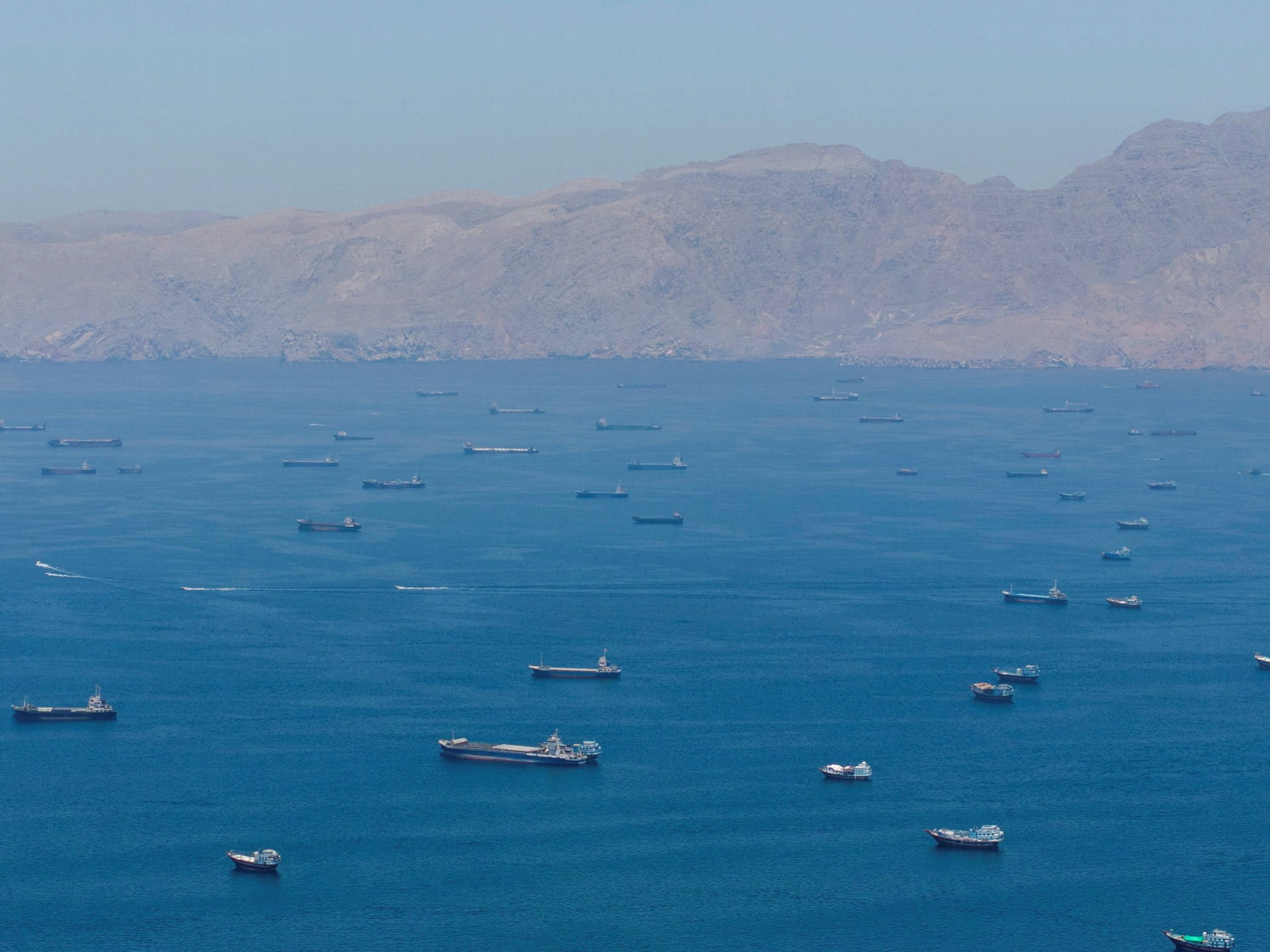
The next phase of the Strait of Hormuz crisis may be defined less by its closure and more by conditional access.

United States President Donald Trump’s claim that a deal to reopen the Strait of Hormuz has been largely negotiated may calm markets temporarily. But the deeper significance of the current crisis lies elsewhere. The issue is no longer only whether trade routes remain open but who has the power to condition access to them.

The specific terms of any agreement may evolve, and any diplomatic arrangement may still be delayed, contested or revised. But the broader pattern is already visible: Strategic trade routes are becoming more politically managed, commercially exposed and geopolitically contested.

The danger is not necessarily that diplomacy fails. The more important risk is that it succeeds just enough to disguise a weaker order as stability.

Temporary calm is not the same as strategic stability. Calm can be negotiated; stability must be trusted.

The most important shift, therefore, is not from war to peace but from disruption to governance.

Iranian plans for an authority to manage the Strait of Hormuz and exert greater influence over routing decisions and possible transit tolls show that Tehran is attempting to convert temporary leverage into a more permanent role in managing the waterway.

Therefore, the strategic question is shifting from access to governance. Access relates to whether ships can pass. Governance relates to who sets the rules, prices the risks, controls the exceptions and decides when normal commerce becomes conditional.

This matters not only for the Gulf, but for the wider international system. States that depend heavily on maritime trade now face a situation in which commercial access is shaped not simply by markets but also by geopolitical leverage, sanctions pressure, naval power and crisis diplomacy.

Asia remains central to this calculation. China, India, Japan and South Korea are among the principal end users of Gulf energy, and much of the commercial risk created by uncertainty in the Strait of Hormuz is transmitted eastwards. But the implications extend beyond Asia. Many developing economies remain highly exposed to energy volatility and shipping disruptions while possessing little influence over the geopolitical contest surrounding them.

The emerging pattern suggests a world in which commerce resumes but only under temporary political conditions that must be repeatedly renegotiated. That matters because modern trade depends on more than physical access. It depends on predictability, insurance, legal clarity, naval confidence and the belief that today’s route will still be viable tomorrow.

This is the difference between de-escalation and normalisation. De-escalation reduces the danger of immediate conflict. Normalisation restores confidence. At present, the first may be achievable, but the second remains distant.

None of this means the Strait of Hormuz is destined for permanent crisis, nor does it mean diplomacy is futile. The point is more limited but more important: Even successful crisis management may leave behind a less reliable commercial order.

For markets, this distinction is crucial. If an agreement is announced, reopening may be treated as resolution. That would be premature. Temporary calm can easily be mispriced as durable stability. Freight rates may ease, energy prices may soften and equity markets may rally. Yet none of that necessarily means the underlying risk has disappeared. It may only mean that the crisis has been deferred to the next negotiation cycle.

This process has consequences well beyond oil. Refiners must plan procurement against shifting risk premiums. Manufacturers must price energy and transport volatility into their margins. Insurers must reassess exposure. Shipping firms must make routing decisions under political uncertainty. Banks and traders must account for sanctions risks, payment disruptions and compliance costs.

This is how geopolitical instability enters the global economy: not only through spectacular shocks but also through recurring uncertainty that gradually raises the cost of ordinary commerce.

The larger lesson of the Strait of Hormuz crisis is that globalisation is not ending. It is becoming more politically exposed and strategically conditional.

Companies and governments that built their assumptions around frictionless movement must now operate in a world where passage, payments, insurance, ports and suppliers are increasingly vulnerable to geopolitical pressure. The Strait of Hormuz is only one chokepoint. But because of its centrality to global energy flows, it has become one of the clearest examples of this wider transformation.

For policymakers, responding to the present crisis requires more than reassurance that ships are moving again. It requires coordination between governments, commercial operators, insurers, shipping firms and energy buyers. It also requires recognising that strategic infrastructure can no longer be treated as politically neutral.

For boardrooms, the lesson is similar. Geopolitical risk can no longer sit outside procurement, logistics, treasury and insurance decisions. The question is no longer whether crises will interrupt trade. It is whether business models can absorb recurring instability without losing resilience or strategic flexibility.

Whatever happens with the ongoing negotiations between Iran and the US, one thing is certain: We are unlikely to go back to the old assumption that global commerce can move through strategic chokepoints as if geopolitics were merely background noise.

The views expressed in this article are the author’s own and do not necessarily reflect Al Jazeera’s editorial stance.

📰 மூல செய்தி (Source): https://www.aljazeera.com/opinions/2026/5/31/the-strait-may-reopen-but-global-confidence-may-not-return?traffic_source=rss

உலகம்

The world hit a 44-year high in executions

Published

on

Governments around the world executed more people in 2025 than at any point since 1981.

📰 மூல செய்தி (Source): https://www.aljazeera.com/video/by-the-numbers-3/2026/5/31/the-world-hit-a-44-year-high-in-executions?traffic_source=rss

Continue Reading

உலகம்

How Nigeria’s ‘algorithmic apothecary’ fuels a surge in risky herbal cures

Published

on

Unverified herbal remedies promoted on social media are driving rising health risks and delayed treatment in Nigeria.

Abuja, Nigeria – Oke Bola thought a fertility supplement she found online might help her conceive. Instead, within days of taking it, she struggled to breathe. Her experience reflects a growing online trade in unverified herbal remedies promoted across social media.

Bola (not her real name), who is in her early 40s and has never had children, said she bought the supplement earlier this year and increased the recommended dosage, hoping for quicker results after hearing about it from friends and family.

“I recognised the symptoms of asthma; the wheezing sound at night was familiar,” she told Al Jazeera. “When I checked online, I realised it could be from the herbal medication.”

Bola said her symptoms eased after she stopped taking the product. Without consulting a doctor, she assumed the reaction was linked to incorrect dosage and resumed use as instructed.

The product, Jinja Herbal Mixture, is marketed for its antioxidant, anti-inflammatory and antimicrobial properties.

A 2025 Nigeria-based study, titled The Toxicological Evaluation of Jinja: A Local Herbal Mixture (LHM), found it appeared safe for short-term use within tested dosage ranges, offering some support for its traditional use. But researchers also recorded biochemical changes at higher doses, including altered creatinine and sodium levels in test subjects, signs of possible kidney and liver stress.

The study called for further research into long-term effects and interactions with conventional medicines.

Another user, 47-year-old Temi Ahondiwura, a master’s graduate from the University of Ibadan, said a herbal eye treatment bought through Facebook worsened her vision problems. It was her first time trying such a remedy.

Marketed by social media influencers, the product claimed to treat multiple eye conditions.

“At first, I felt itching, but I thought that was part of the process,” she told Al Jazeera. “When it continued, I stopped and went back to my prescribed optical lenses.”

Stories like these are becoming increasingly common, according to pharmacist Akinade Akinlolu and Dr Egemba Chinonso Fidelis.

On a smartphone screen, relief is just a click away: fertility tonics, eye drops promising restored vision, syrups claiming to “flush out” disease. The advertisements are polished, persuasive and constant, woven into TikTok, Facebook, Instagram and X feeds.

Across Nigeria, doctors and pharmacists say a surge in social media-driven self-medication, particularly involving unverified herbal products, is worsening health outcomes, delaying treatment and adding pressure to an already strained system. High costs of care, shortages of medical equipment and the migration of health workers abroad have further weakened a system serving about 230 million people.

Nigeria’s young, hyperconnected population increasingly uses digital platforms for health information and advice. But that access has also created what Dr Isaac Kolawole and Dr Fidelis describe as an “algorithmic apothecary”, an unregulated online marketplace where influencers and anonymous sellers promote remedies directly to consumers with little or no scientific backing.

A report by Surjen Healthcare, a health-tech platform providing home-based care services, links rising self-medication in Nigeria to easy access to health information online. Many people, driven by high costs and mistrust in formal healthcare, now turn to social media for advice, sometimes with harmful consequences.

The report associates this trend with rising drug resistance, late hospital admissions and increased exposure to unsafe or counterfeit products. At the same time, Nigeria’s herbal medicine market continues to grow, but weak enforcement online has allowed unverified products to spread widely.

A 2025 study shows many Nigerians are open to traditional medicine delivered through digital platforms, often shaped by influencer content. It found that 68 percent of patients surveyed were willing to consult traditional practitioners online, while 42 percent of practitioners were aware of such platforms, but only 19 percent were using them. About 60 percent said they were open to adopting them.

“The platforms themselves amplify this effect,” said Fidelis. “Their algorithms reward engaging content and push it to wider audiences,” he told Al Jazeera.

Even users who try to avoid such content often encounter it repeatedly, shaped by emotional storytelling, music and urgency-driven messaging.

Within this ecosystem, herbal remedies, long part of Nigeria’s medical and cultural landscape, are increasingly repackaged as miracle cures, sometimes with dangerous consequences.

Doctors say more patients are arriving at hospitals only when their conditions have significantly worsened, often after prolonged use of unverified treatments.

A consultant nephrologist at the University College Hospital in Ibadan, Dr Yemi Raji, said herbal medicine continues to play a role in kidney disease cases in Nigeria.

While some plant-based treatments may have benefits, he said, many contain compounds that can become harmful in high doses or with prolonged use.

“When you take herbal medication, you are taking both the good and the bad,” he said, noting that 5-7 percent of his patients fall into this category. “Patients often arrive late, when treatment is more difficult and expensive,” he told Al Jazeera.

Dialysis alone, he said, can cost between 50,000 and 100,000 naira ($36-72) per session, several times a week.

“I advise staying away from medications that have not been verified by NAFDAC,” he said. “If you are ill, go to the hospital.”

Raji and Fidelis, the doctors, said herbal medicine remains widely used because it is affordable and culturally familiar, especially in areas with limited access to formal healthcare. But they stressed that the combination of weak regulation and online amplification is driving new risks.

Akinlolu, a pharmacist in Ibadan, a major city in southwestern Nigeria, said many online sellers rely on aggressive marketing to gain trust. He noted that while conditions like diabetes and hypertension can be managed, online claims often suggest cures.

Economic pressure, he added, is also pushing people towards cheaper or “miracle” alternatives.

Fidelis, a public health advocate known online as Aproko Doctor, said the herbal cure trend reflects “confident health lies” presented with certainty but lacking evidence.

“Real medicine does not promise to cure everything, and it does not rely on countdowns,” he said. “Scammers do.”

“These problems are not new,” he added. “What is new is the marketing channel.”

He pointed to studies linking herbal use to kidney and liver disease cases across Africa, including findings that about 46 percent of liver disease admissions in one Nigerian hospital involved herbs or roots.

A 2022 study found that 76.65 percent of participants had used herbal medicine. Most said they used it because they believed it was effective. More than a third combined herbal and conventional treatments, while 82.44 percent did not inform their doctors.

Fidelis said the problem has grown more visible online, noting that scammers have even used AI-generated versions of his image to promote fake products.

“If there are no consequences for lying about healthcare online, people will keep doing it,” he said.

The National Agency for Food and Drug Administration and Control (NAFDAC) says it is working to track unregistered manufacturers, but enforcement remains difficult, especially online.

The southwest zonal director of NAFDAC, Isaac Kolawole, said many sellers use fake or incomplete addresses, making them difficult to trace.

“With the sheer volume of products online, enforcement has limited reach,” he told Al Jazeera.

NAFDAC requires strict registration, testing and approval before herbal products can be sold or advertised, but say

📰 மூல செய்தி (Source): https://www.aljazeera.com/news/2026/5/31/how-nigerias-algorithmic-apothecary-fuels-a-surge-in-risky-herbal-cures?traffic_source=rss

Continue Reading

உலகம்

Wembanyama’s Spurs dethrone Thunder to reach NBA Finals against Knicks

Published

on

Wembanyama scores 22 and grabs 7rebounds as Spurs beat OKC 111-103 to book their first NBA Finals appearance since 2014.

The San Antonio Spurs, sparked by superstar Victor Wembanyama, have advanced to the NBA Finals for the first time since 2014 by dethroning the defending champions, the Oklahoma City Thunder, 111-103, to book a championship showdown against the New York Knicks.

The Spurs captured the best-of-seven Western Conference finals 4-3 on Saturday and reached the NBA Finals, which begin on Wednesday against the Knicks in San Antonio.

“Though we’re still hungry for one more, this feeling is, I can’t explain it, it’s so powerful,” Wembanyama said. “We want four more. We’re not done. Go Spurs go.”

French 7-foot-4-inch (224cm) centre Wembanyama scored 22 points and grabbed seven rebounds, Julian Champagnie added 20 points, including six three-pointers, and Stephon Castle had 16 points for the Spurs, who led the winner-take-all contest almost the entire way.

“We had a good team, a great team,” Champagnie said. “We had to stay the course and play a good game.

“We were passing the ball. We were playing as a team. We come out here and play together.

“We never knew if we were going to get this far, but when you’ve got the greatest player in the world, things happen.”

That was a nod to Wembanyama, the Most Valuable Player of the Western Conference finals and the NBA Defensive Player of the Year.

“It doesn’t mean anything for me other than the fact we are a team,” Wembanyama said of his series MVP award. “I got this for all of us and all the fans right here.”

Of his teammates, Wembanyama added, “They don’t even know how much I love them. They are just incredible. Everybody stepped up tonight.”

“Wemby” dominated in his first playoff game seven and was emotional at the finish, laughing, crying and hugging teammates over reaching his first NBA Finals.

“Realising that some part of the childhood dream was going to come true,” the 22-year-old Frenchman said of his reaction.

The win sets up an NBA Finals repeat of this season’s NBA Cup final, which the Knicks won with a 124-113 defeat of San Antonio last December in Las Vegas.

“A lot of physicality, hit first, and rebounding,” Champagnie said of the Knicks. “It will be a nice challenge for us.”

NBA Most Valuable Player Shai Gilgeous-Alexander led Oklahoma City with 35 points.

“He was brilliant. He had a great game,” Thunder coach Mark Daigneault said. “He delivered. It was a really big-time game for him.

“That would have been one of the stories of the game if we had been able to figure out a way to win it.”

Daigneault said the challenge to repeat was not among the things that led to the defeat.

“You can be proud of effort and progress and the level we played … and we can also be really disappointed,” he said.

“Felt like we could have won the series. We were right there. There’s nobody we don’t think we can’t beat.

“I thought we had enough to win, but credit San Antonio – they’re the ones who did.”

A Spurs squad with only one player who had been in a game seven before overcame a more experienced Thunder squad that won the title in a game seven last year.

“Back in October, we knew we had a chance to be pretty good,” Spurs coach Mitch Johnson said.

“There’s a lot being talked about, words like competitiveness, resolve, togetherness, execution – who gives a damn about the word experience?

“They had to go out and execute, and they did.”

Wembanyama hit two three-pointers in a 17-9 run to start the fourth quarter that lifted the Spurs ahead 97-86 with eight minutes remaining.

“Wemby” was whistled for his fifth foul seconds later and went to the bench, boosting Thunder hopes in the dying minutes while Gilgeous-Alexander tried to rally the reigning champions, only to fall short at the finish.

📰 மூல செய்தி (Source): https://www.aljazeera.com/sports/2026/5/31/wembanyamas-spurs-dethrone-thunder-to-reach-nba-finals-against-knicks?traffic_source=rss

Continue Reading

Trending

Copyright © 2024 by 7Tamil Media, All rights reserved.