Connect with us

உலகம்

The pollution that outlives war

Published

on

Long after fighting is over, the toxic leftovers of war continue to poison communities and the environment.

Felix Horne is a Horn of Africa researcher at Human Rights Watch.

War is measured first in lives lost, families uprooted and neighbourhoods reduced to rubble. But there are also deadly consequences that are often ignored. Pollution caused by war can settle over cities, contaminate water and soil, and shape public health long after the fighting is over. This is the case with the Iran war.

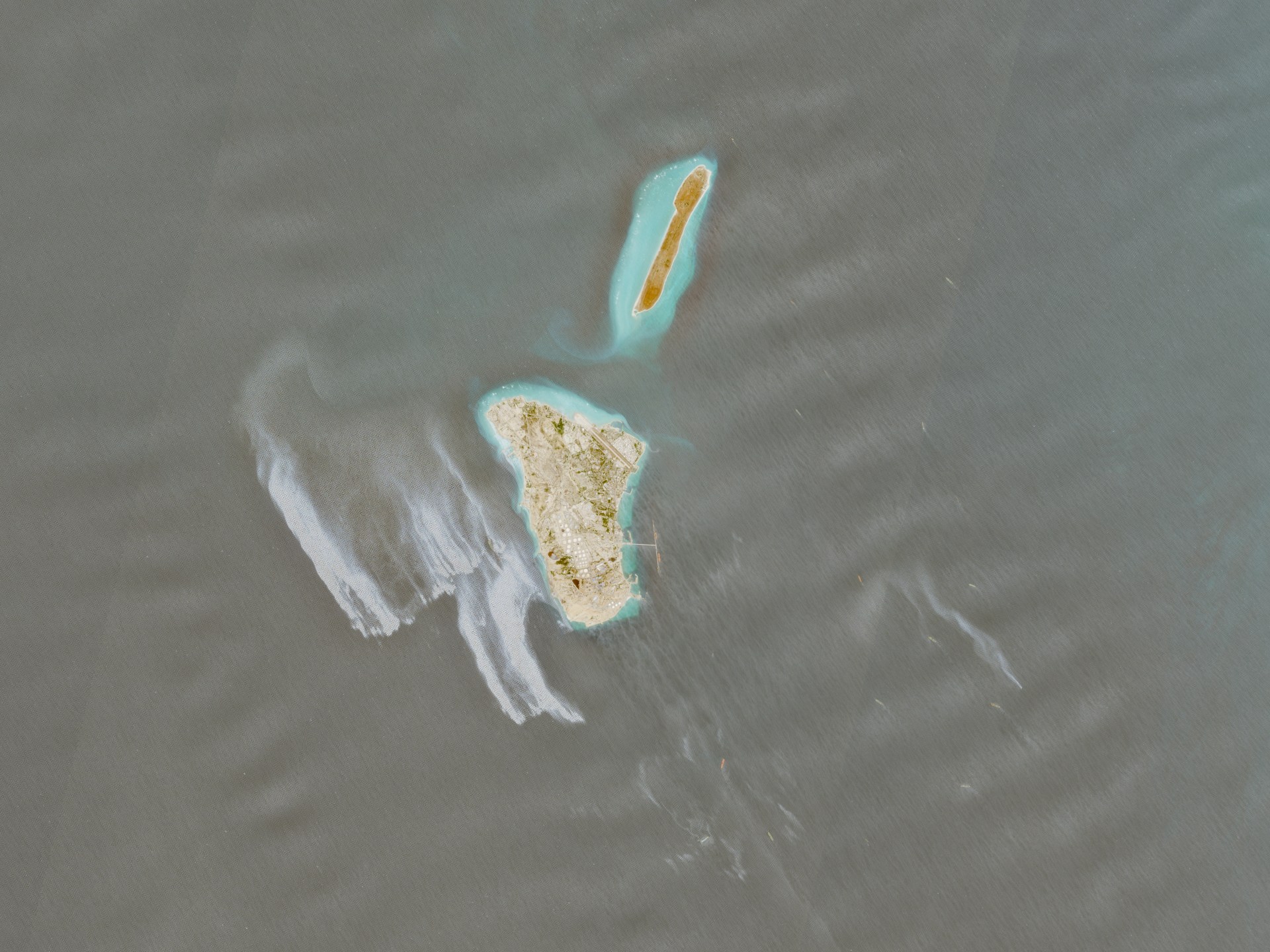
The six weeks of bombardment in Iran and the Gulf that saw attacks on energy infrastructure have already taken a toll. Burning fuel tanks send toxic particles into the air, while debris, run-off and oil residues threaten coastal waters and marine ecosystems across the Gulf, where pollution can spread far beyond the immediate strike zone.

The region has seen before how long such damage can last. During the 1991 Gulf War, retreating Iraqi forces set fire to more than 600 Kuwaiti oil wells. For months, dense smoke covered the skies, causing widespread air pollution, contamination of soil and groundwater across the Gulf – and a generation of health consequences.

The United Nations later treated much of that destruction as compensable harm: Through the UN Compensation Commission, Iraq ultimately paid more than $50bn for damage linked to oil fires, marine pollution and ecosystem loss.

Ukraine offers another terrifying example. The ongoing war has created a toxic legacy, with attacks on fuel depots, industrial sites, chemical warehouses and energy infrastructure contaminating air, rivers and farmland across large parts of the country. UN agencies and Ukrainian organisations have documented thousands of incidents of environmental harm since the invasion began, including fires at oil facilities, deforestation, contamination from damaged industrial sites, and widespread risks to water systems.

Fossil fuel systems are especially vulnerable in war because they concentrate combustible fuels and hazardous chemicals. When oil depots, refineries or pipelines are struck, they ignite fires that release toxic gases, carcinogenic particles and residues, contaminating surrounding land and water for years.

Conflict also erodes oversight. When governance collapses, environmental regulation and corporate accountability often collapse with it, leaving communities living in the shadow of fossil fuel infrastructure to absorb pollution and health harms long after headlines fade.

Routine maintenance on oil pipelines, for example, has become difficult in volatile security environments in Yemen and Sudan, resulting in contaminated water and farmland. In Yemen, years of conflict left the FSO Safer tanker without maintenance, threatening to cause one of the world’s worst potential oil spills before an emergency transfer operation finally took place in 2023.

The climate dimensions compound the harm. Militaries themselves were responsible for an estimated 5.5 percent of global greenhouse gas emissions in 2022, largely from the burning of high-emitting fossil fuels. Yet military emissions are not comprehensively included in international climate accounting – an exemption long pushed for by the United States. As military spending surges globally, so too does its largely uncounted carbon footprint.

Conflict also drives environmental harm beyond energy systems. When electricity collapses and fuels become scarce, households often turn to charcoal and firewood, accelerating forest loss in fragile areas. Researchers tracking conflict zones have found that deforestation frequently rises where governance weakens and fuel alternatives disappear.

Sudan has seen this dynamic around Khartoum and other urban areas, with significant loss of tree cover since the war began in 2023 –  tree cover that serves important ecosystem functions, including retention of groundwater.

War also creates hazards beyond fossil fuels themselves. Bombardment pulverises buildings, roads and industrial sites, releasing dust laced with silica, heavy metals, and other toxins into the air. These particles can scar lungs and aggravate chronic respiratory illness. Rebuilding destroyed cities adds another climate burden: Cement and steel production are among the most carbon-intensive industrial processes in the world, meaning reconstruction often generates another surge of emissions embedded in new concrete and infrastructure.

Renewable energy systems can also be damaged in conflict, but their environmental footprint is fundamentally different. A destroyed solar installation does not spill crude into rivers, and a damaged wind turbine does not ignite refinery-scale fires or release toxic benzene into nearby neighbourhoods.

That matters when countries rebuild. Energy systems reconstructed around oil storage, gas transport and centralised fuel infrastructure remain vulnerable both to pollution and to global price shocks whenever conflict threatens major supply routes such as the Strait of Hormuz. More distributed renewable grids cannot remove the risks of war, but they can reduce both the toxic aftermath and the global economic shock that follows.

Wars will continue to destroy infrastructure. Whether they also leave behind decades of pollution depends in part on what kind of energy systems are rebuilt when the fighting stops.

The views expressed in this article are the author’s own and do not necessarily reflect Al Jazeera’s editorial stance.

📰 மூல செய்தி (Source): https://www.aljazeera.com/opinions/2026/5/23/the-pollution-that-outlives-war?traffic_source=rss

உலகம்

Man Utd’s Fernandes trumps Arsenal to Premier League player of season award

Published

on

Arsenal’s Gabriel, David Raya and Declan Rice, and Man City’s Erling Haaland and Antoine Semenyo, pipped to EPL award.

Manchester ‌United captain Bruno Fernandes has been named the ⁠Premier League ⁠player of the season after guiding his club to third place in the ⁠standings while equalling the league’s assists record with a game to spare.

Fernandes tied the league ⁠record of 20 assists, jointly held by former Arsenal striker Thierry Henry and ex-Manchester City playmaker Kevin De Bruyne, with one game of the season to spare.

The Portugal international also scored eight goals as United ‌secured a third-place finish to qualify for the Champions League.

The 31-year-old midfielder was nominated alongside Arsenal’s title-winning trio of Gabriel, David Raya and Declan Rice, Man City’s Erling Haaland and Antoine Semenyo, Nottingham Forest midfielder Morgan Gibbs-White and Brentford striker ⁠Igor Thiago.

Fernandes emerged as the ⁠Premier League’s best playmaker this season when he created a league-high 132 chances. The next best player was Liverpool’s Dominik Szoboszlai, who ⁠created 89 chances.

Fernandes was named the Football Writers’ Association men’s player of ⁠the year earlier this month, while he also picked up the club’s Sir Matt Busby Player of the Year honour for the fifth time.

He has the opportunity ‌to make the Premier League assists record his own on Sunday when United travel to Brighton & Hove ‌Albion ‌for the final game of the season.

The award for Fernandes marks a rare occasion that a player that was not part of a title winning side that season is recognised for their achievement. Kevin De Bruyne’s 2020 award, when Liverpool won the league, was the last example.

United’s return to form since sacking Ruben Amorim as manager in January saw interim head coach Michael Carrick appointed as his permanent replacement on Friday.

Fernandes will line up for Portugal at this summer’s 2026 World Cup, with his nation opening their campaign against Congo on June 17, before facing Uzbekistan and Colombia.

📰 மூல செய்தி (Source): https://www.aljazeera.com/sports/2026/5/23/man-utds-fernandes-trumps-arsenal-to-premier-league-player-of-season-award?traffic_source=rss

Continue Reading

உலகம்

China coal mine blast kills at least 90, leaves nine missing

Published

on

A gas explosion at the Liushenyu coal mine in China’s Shanxi province has killed at least 90 workers, with nine still missing. The blast hit late on Friday when hundreds of miners were underground. President Xi Jinping has ordered all out rescue efforts as authorities investigate and detain a company official.

📰 மூல செய்தி (Source): https://www.aljazeera.com/video/newsfeed/2026/5/23/china-coal-mine-blast-kills-at-least-90-leaves-nine-missing?traffic_source=rss

Continue Reading

உலகம்

Uganda confirms three new Ebola cases, bringing total to five

Published

on

The new cases in Uganda include a driver who transported the country’s first ⁠confirmed patient and a ​health worker.

Uganda has confirmed three new ⁠cases of Ebola, bringing ⁠the total number of infections in the country in this outbreak to five, as authorities stepped up contact tracing to try to contain the spread.

The update from Uganda’s Ministry of Health on Saturday came a day after World Health Organization Director-General Tedros Adhanom Ghebreyesus announced the risk assessment for the Bundibugyo strain of Ebola was being revised to “very high at the national level, high at the regional level, and low at global level”.

Nearly 750 suspected cases and 177 suspected deaths ‌have been recorded in Uganda’s neighbouring country, Democratic Republic of the Congo (DRC), the centre of the outbreak.

First responders in the DRC say they lack basic supplies, which some have attributed to foreign aid cuts by major international donors, particularly the United States.

The WHO has said late detection, the absence of a vaccine or virus-specific therapeutics, widespread armed violence and high mobility among the population make the DRC especially vulnerable.

Uganda suspended all public transport to the DRC on Thursday after confirming two cases of Ebola – one infection and one death – involving Congolese nationals who crossed the border.

The new cases in Uganda reported on Saturday include a driver who transported the country’s first ⁠confirmed patient and a health worker ⁠exposed while caring for that patient.

Both are receiving treatment and were identified among known contacts, the Health Ministry said in a statement.

The third case is a woman ⁠from DRC who entered Uganda with mild abdominal symptoms and later travelled from Arua, close ⁠to the border, to Entebbe before seeking ⁠care at a private hospital in the capital, Kampala.

The patient initially improved and returned to DRC but later tested positive for Ebola after a follow-up prompted ‌by a tip-off from a pilot involved in transporting her.

All identified contacts linked to the confirmed cases are being closely monitored, ‌the ‌ministry said, urging the public to remain vigilant and report suspected symptoms.

“At this critical moment in the outbreak response, it is vital that authorities maintain high vigilance to control expansion of the virus,” Tedros said on Saturday.

“The WHO is working side by side with Africa Centres for Disease Control and Prevention, and partners in the DRC and Uganda, to contain the outbreak, support affected people, and bolster a coordinated response.”

📰 மூல செய்தி (Source): https://www.aljazeera.com/news/2026/5/23/uganda-confirms-three-new-ebola-cases-bringing-total-to-five?traffic_source=rss

Continue Reading

Trending

Copyright © 2024 by 7Tamil Media, All rights reserved.