Connect with us

உலகம்

The Baltics urgently need a de-escalation mechanism; Belarus can help

Published

on

Amid a growing risk of a spillover from the Ukraine war, the Baltic states could use de-escalation channels through Minsk.

Recent weeks have seen a significant escalation of military tensions in and around the Baltics. Lithuania, Latvia and Estonia, which are all NATO members, now experience regular incursions into their airspace by Ukrainian drones. According to both Kyiv and the Baltic capitals, those drones, en route to hit targets in western Russia, get diverted by Russian electronic jamming and end up entering these countries’ territories.

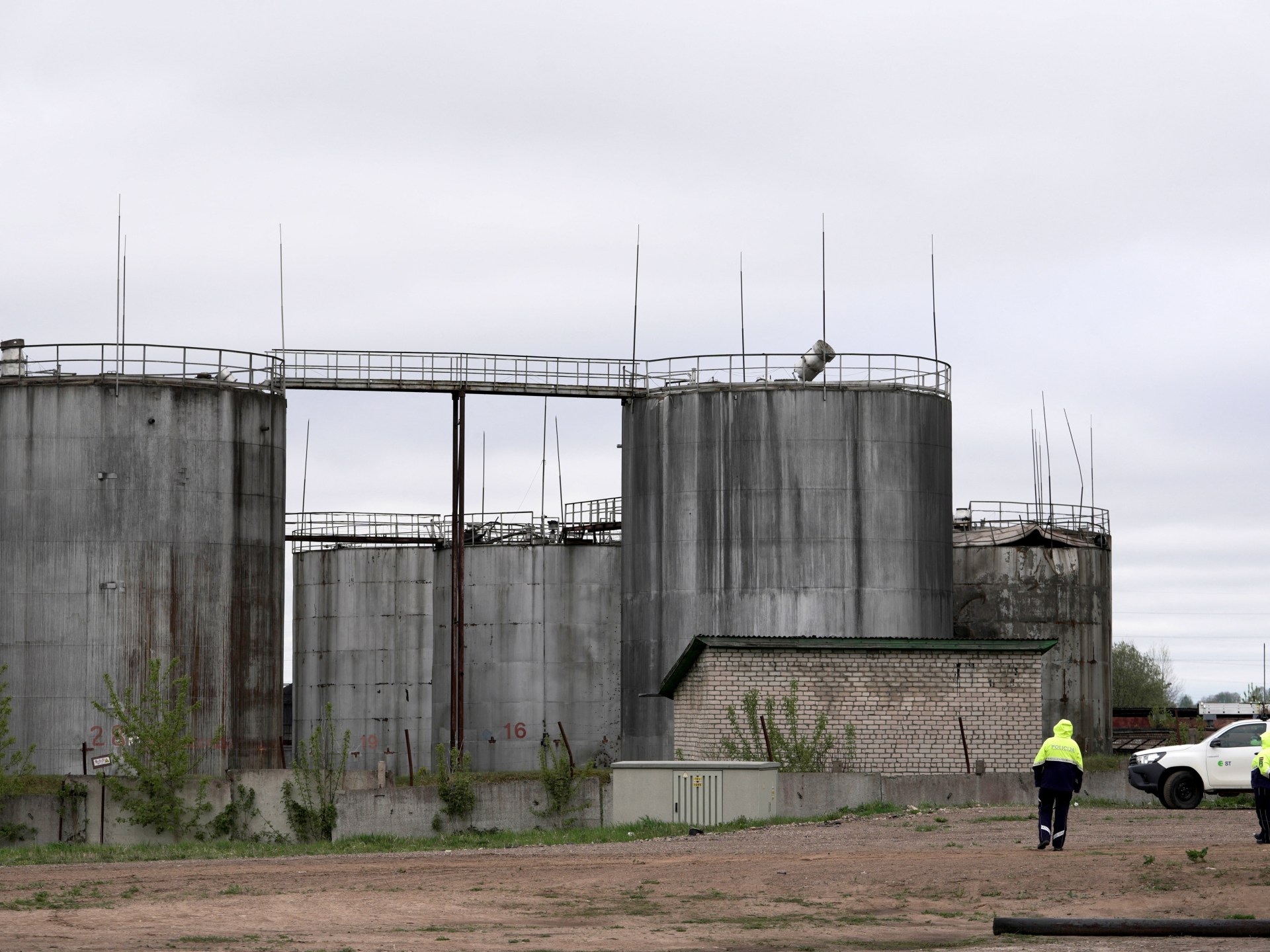
In early May, several stray unmanned aircraft crashed in Latvia, one of them damaging an oil storage facility. Those developments triggered a political crisis in Latvia and led to the collapse of its government. Last week, a drone was shot down over Estonia, and another drone sighting forced Lithuania to suspend train and air traffic temporarily.

Days later, the Russian Foreign Intelligence Service (SVR) and Russia’s representative to the United Nations issued menacing warnings, accusing Baltic states of having greenlit air corridors for Ukrainian unmanned aircraft to attack infrastructure targets in Russia and even hosting Ukrainian drone operators.

The growing tensions in the region are raising the risk of miscalculation. This is why the Baltics urgently need de-escalation mechanisms and communication channels.

The increasing frequency of drone incidents in the region as well as Russia’s latest direct military warnings to the Baltic states indicate two highly dangerous developments.

First, the long-feared horizontal escalation of the Russian-Ukrainian war is already happening. The recent events marked the first time in many decades that air raid sirens have gone off in NATO member states. Even though Moscow and NATO’s Baltic and Nordic capitals have so far stayed out of a direct collision, its prospects appear imminent unless tensions de-escalate in the coming weeks. As Lithuanian Prime Minister Inga Ruginiene noted after the latest drone incident, “war is much closer than ever.”

All this looks particularly perilous as the Baltic region has long been seen as the most likely potential flashpoint between Russia and NATO. The Baltic states sit between the Russian mainland to their east and its exclave of Kaliningrad to their west. Moreover, Latvia and Lithuania also have Russia’s ally Belarus on their southeastern borders.

Besides geography, deeply held historical grievances further fuel confrontational perceptions and biases. It could take just one incident to get out of control for a cascading, deadly regional crisis to become a reality.

Second, this is not just a temporary outbreak of instability that the sides can simply wait out or reverse by minor adjustments of their actions and rhetoric. Instead, the situation amounts to the new normal in Eastern European security and reveals numerous complex geopolitical contradictions that have now surfaced as a systemic problem.

Importantly, neither side can control these action-reaction dynamics unilaterally, and therefore, the region’s new normal appears fraught with excessive risks of miscalculation and intended or unintended escalation.

In response to these highly hazardous developments, regional actors seem to offer only more of the same – that is, increasingly hawkish posturing and doubling down on the idea of deterring each other militarily, including by nuclear means.

The rhetoric on both sides says it all. While Moscow promises retaliation against decision-making centres in the Baltic countries, Lithuanian Foreign Minister Kestutis Budrys went on the record as saying that NATO must “show the Russians that we are capable of breaking through their little fortress in Kaliningrad”. He added that, if necessary, the alliance “has all the means to level the Russian air defence and missile bases there”.

Other Baltic leaders are repeating calls for their NATO allies to bolster cooperation against Moscow and demonstrate resolve from the position of strength. Similarly, Russia keeps to its own version of escalate-to-de-escalate signalling as the cornerstone of deterrence against NATO.

While such approaches might seem safe bets from the point of view of domestic and alliance politics, they can do little to reduce the dangerously increasing escalation risks between Russia and NATO. Simply doubling down on the rigid deterrence ideas and uncompromising rhetoric and political posturing that have essentially brought about the current situation will only continue making things worse for everyone.

To avert drifting into a major war, the Baltics and Eastern Europe urgently need a subregional mechanism for military risk reduction that can maintain de-escalation communication channels with Moscow. This mechanism must be fully depoliticised and managed exclusively by the military, not politicians.

A properly negotiated security arrangement involving NATO and Russia appears unfeasible at this point. Therefore, an interim de facto military-to-military communication and coordination mechanism could be established that would involve five countries on both sides of the division line. On the NATO side, these are the Baltic states of Lithuania, Latvia and Estonia as well as Poland. And on the other side, it is Belarus, which has a defence alliance with Moscow.

To make this mechanism work, no political or legal agreements are needed. Just an understanding that these countries want to avoid further escalation scenarios, especially ones that would likely emanate from mere miscommunication and misinterpretation.

Formally, the framework could rest on a rather unique network of advanced bilateral confidence- and security-building agreements that Belarus has had with all three Baltic states and Poland for more than 20 years. While Belarus’s NATO neighbours stopped implementing the agreements in late 2020, importantly, they have not withdrawn from them and can easily revive their application.

These agreements were concluded in a different technological era and, therefore, do not account for drones and other modern military challenges. Yet they could serve as an overall framework legitimising and facilitating regular military-to-military contacts to jointly counter the drone threat.

Arguably, initial moves in the direction of such a depoliticised, de facto mechanism have already taken place. Recently, the Belarusian military used respective communication channels to pass information about incoming third-country drones to their colleagues in Poland and the Baltic states. Polish and Baltic officials publicly acknowledged both the facts of information sharing and its practical utility. Now they can simply start reciprocating by also sharing similar information with Belarus.

This mechanism would not resolve fundamental disagreements between the region’s geopolitical antagonists. But it is badly needed for risk reduction at a time when any escalation could pull the region into war.

The views expressed in this article are the author’s own and do not necessarily reflect Al Jazeera’s editorial stance.

📰 மூல செய்தி (Source): https://www.aljazeera.com/opinions/2026/5/27/the-baltics-urgently-need-a-de-escalation-mechanism-belarus-can-help?traffic_source=rss

உலகம்

Police in Belfast use water cannon as anti-immigrant unrest continues

Published

on

Clashes come as family of knife attack victim calls for calm and condemns violence targeting immigrants.

Unrest in Northern Ireland: Second day of anti-immigration protests in Belfast

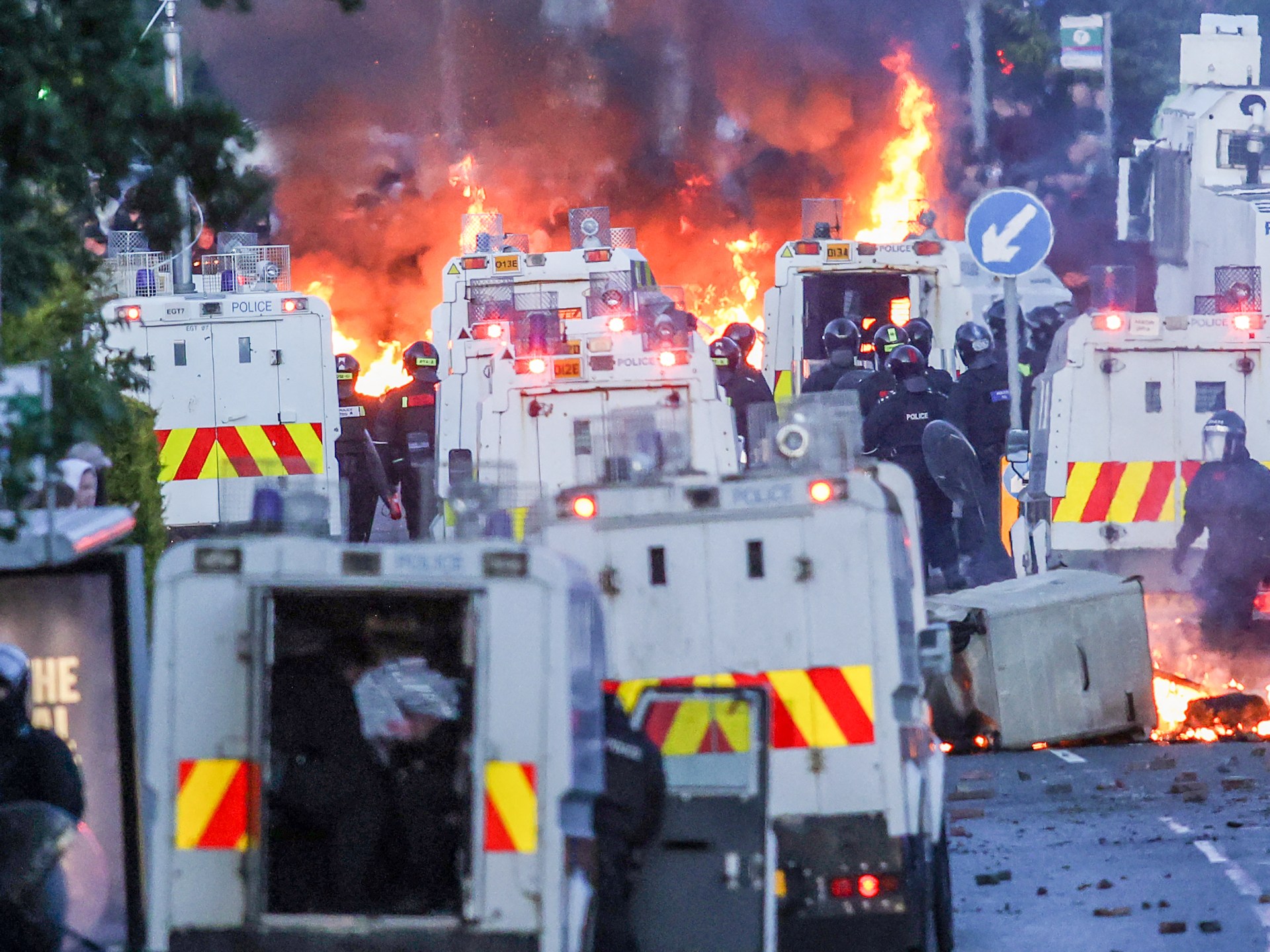
Police in the United Kingdom city of Belfast have used water cannon to disperse dozens of far-right protesters during a second night of unrest triggered by a knife attack involving a Sudanese refugee.

The clashes on Wednesday came as the family of the stabbing victim appealed for calm and condemned the wave of anti-immigrant violence in the city in Northern Ireland.

Police said the protesters threw “missiles” such as rocks and bottles at officers, while images from the scene showed several fires burning on the streets.

Police said officers deployed “water cannon in an attempt to maintain public order”.

But the unrest was markedly less severe than on Tuesday evening, when hundreds of masked men burned families out of their homes and set vehicles alight.

“We want to make it absolutely clear that overnight unrest is not welcome, and peaceful protest is the only way forward,” the family of the victim, Stephen Ogilvie, said in a statement.

“We have many migrants who make a deeply valuable contribution to our country… We do not want this terrible tragedy to be used to divide people or fuel hostility,” it said.

The family added that Ogilvie, who lost an eye and suffered serious wounds to his neck and face, was in a stable condition.

Their appeal came as the suspect in the attack, a 30-year-old ‌Sudanese national named Hadi Alodid, appeared in court on charges including attempted murder.

He was remanded in custody, and the case was adjourned to July 8.

Videos of the stabbing attack circulated online all day on Tuesday, sparking calls on social media for violent protest. Police had to help one family escape from a burning house, according to the Reuters news agency, while several cars and a bus were set on fire and reduced to shells.

Local politicians and a pastor said many of those targeted were Black.

UK minister Ruth Anderson said at least 27 people were made homeless in Belfast “because people went door-to-door to try and target foreign nationals”.

Resident Jamie Corry, 33, said he could only watch on as his house went up in flames.

“I was actually standing right there watching my whole house just go up, slowly but surely,” he told Reuters. “I told them and all, when they were lighting a car up on fire, ‘that’s my property, that’s my property’… and they still didn’t care.”

The attack comes at a time of heightened tensions in the UK following the murder of a student in Southampton who was handcuffed by police as he lay dying from stab wounds after his killer, a Sikh man, had falsely alleged a racist attack.

Tech billionaire Elon Musk reposted many messages that blamed migration on violence in the UK, sharing a post that argued that the “very deliberate policy of mass uncontrolled immigration and open borders” is increasing tensions.

Amid calls from Musk, other far-right agitators like Tommy Robinson called for more protests on Wednesday, Northern Ireland’s police chief said ⁠an extra 200 officers were being deployed on the streets.

“These idiots didn’t just target ethnic minority groups… they targeted society,” Chief ⁠Constable Jon Boutcher said of Tuesday night’s rioters.

Officers had to take a family that included a two-month-old baby to safety during Tuesday’s violence, which he branded “a huge act of self-harm by mindless idiots”.

Speaking in London, UK Prime Minister Keir Starmer said the knife attack raised serious questions, but that “driving people out of their homes is not … the right way to respond”.

He condemned the unrest as “shocking and completely unacceptable”.

Anna Turley, the chairwoman of the UK’s governing Labour Party, meanwhile, said that online platforms were “playing a role in driving” the unrest and suggested Musk was one of the “bad faith actors” inflaming tensions.

The United Nations human rights chief Volker Turk condemned what he called “incitement” on social media. “Dehumanisation of whole groups within a society is totally unacceptable and frankly despicable,” he told reporters in Geneva, adding that the violence in both Northern Ireland and Southampton had been “really shocking”.

Social media providers, he insisted, must take seriously their responsibility to prevent hate speech and incitement to violence.

Immigration has historically been low in Northern Ireland, partly due to the three-decade conflict between mainly Catholic Irish nationalists seeking Irish unity and predominantly Protestant pro-British “loyalists” wanting to stay in the UK and the British military.

However, migration has increased in recent years, and there has been an increasing sentiment against it in both Northern Ireland and parts of the Republic of Ireland.

📰 மூல செய்தி (Source): https://www.aljazeera.com/news/2026/6/11/police-in-belfast-use-water-cannon-as-anti-immigrant-unrest-continues?traffic_source=rss

Continue Reading

உலகம்

Dahiyeh crowds rally in favour of Iranian support against Israel

Published

on

Dahiyeh crowds rally in favour of Iranian support against Israel

Defiant crowds of Hezbollah supporters rallied in Beirut’s Dahiyeh neighbourhood to support Iran’s role in standing against Israel, and rejecting efforts to separate Lebanon’s war from Iran’s. Al Jazeera’s Heidi Pett reports.

📰 மூல செய்தி (Source): https://www.aljazeera.com/video/newsfeed/2026/6/11/dahiyeh-crowds-rally-in-favour-of-iranian-support-against-israel?traffic_source=rss

Continue Reading

உலகம்

OpenAI says China-based actors stoking opposition to AI data centres

Published

on

AI company says ChatGPT accounts sought to ‘exploit and amplify existing public concerns’ about energy prices.

China-based actors are likely behind the use of ChatGPT for “covert influence operations” aimed at stoking opposition to data centres in the United States, OpenAI has said.

In a research report released on Wednesday, the company behind the world’s most popular AI chatbot said it had banned a cluster of accounts likely based in China for attempting to “manipulate a legitimate debate about American AI”.

OpenAI, whose release of ChatGPT in 2022 kicked off a global frenzy around AI, said the accounts were used to generate social media comments and images that blamed data centres for rising electricity prices in communities across the US.

Among other content, the accounts generated a comic strip showing a cigar-chomping businessman holding bags marked with dollar signs as a family reacted in shock to their electricity bill, according to the San Francisco-based company.

OpenAI said a second cluster of accounts had generated content casting US tariffs as an effort to “dominate technological competition” with China, and specified that the material should not mention Chinese leader Xi Jinping.

While the campaign sought to “exploit and amplify existing public concerns” about energy prices, OpenAI found no evidence that it had a “meaningful” influence, the company said.

“Foreign influence operations have long sought to latch onto existing local issues and sincerely held beliefs, using them to build credibility, amplify divisions or exacerbate public distrust,” the ChatGPT creator said.

“In this case, the operators attempted to covertly insert themselves into an ongoing American debate about the future of the country’s AI capabilities while hiding who they were and what motivated them.”

China’s embassy in Washington, DC, said it was not familiar with the report but that it opposed “any groundless attacks or smears against China”.

“AI is profoundly changing the way people work and live. It is a new frontier for all humanity,” an embassy spokesperson said in a statement provided to Al Jazeera.

“China believes in a people-centered approach to AI and advocates openness and inclusiveness to ensure AI is a force for good and for all.”

OpenAI is the latest prominent voice to suggest foreign influence could be behind opposition to AI in the US.

In May, Secretary of the Interior Doug Burgum told a policy event hosted by Breitbart News that the public’s increasingly negative sentiment towards the construction of data centres was not “organic” and could, in some cases, be linked to “foreign-sourced dark money”.

Darren Linvill, a professor at Clemson University in Clemson, South Carolina, who studies foreign influence campaigns, expressed doubt that the campaign identified by OpenAI or any other coordinated effort would have much impact on the “volume or tone” of the public debate.

“My team is very familiar with the work of various Chinese influence actors, and the AI work China has done to date has been interesting but not effective,” Linvill told Al Jazeera.

“It’s getting better with each passing month, and I’m concerned what they may be capable of in the future, but they aren’t there yet.”

“If China were really serious about meaningfully influencing the discourse around data centres using AI chat bots, I question if they would use OpenAI to do it,” Linvill added.

Opposition to the construction of data centres has been on the rise in the US, with at least 36 projects blocked or delayed between May 2024 and June 2025, according to Data Center Watch, a research project by AI security company 10a Labs.

In March, Senator Bernie Sanders and House Representative Alexandria Ocasio-Cortez announced legislation that would impose a moratorium on new data centres until the introduction of national safeguards to mitigate the risks of AI.

The legislation has little chance of becoming law in the near future due to US President Donald Trump’s laissez-faire approach to AI regulation and Republicans’ control of both chambers of Congress.

Opposition to data centres has been driven in part by the huge amounts of energy they consume supporting the computing power needed to train and run AI models such as ChatGPT.

The facilities accounted for 1.5 percent of global electricity use in 2024, with consumption growing 12 percent annually over the last five years, according to the International Energy Agency.

📰 மூல செய்தி (Source): https://www.aljazeera.com/economy/2026/6/11/openai-says-china-based-actors-stoking-opposition-to-ai-data-centres?traffic_source=rss

Continue Reading

Trending

Copyright © 2024 by 7Tamil Media, All rights reserved.