Connect with us

முக்கியச் செய்திகள்

Speed up £250 cap on leasehold ground rent, MPs urge

Published

on

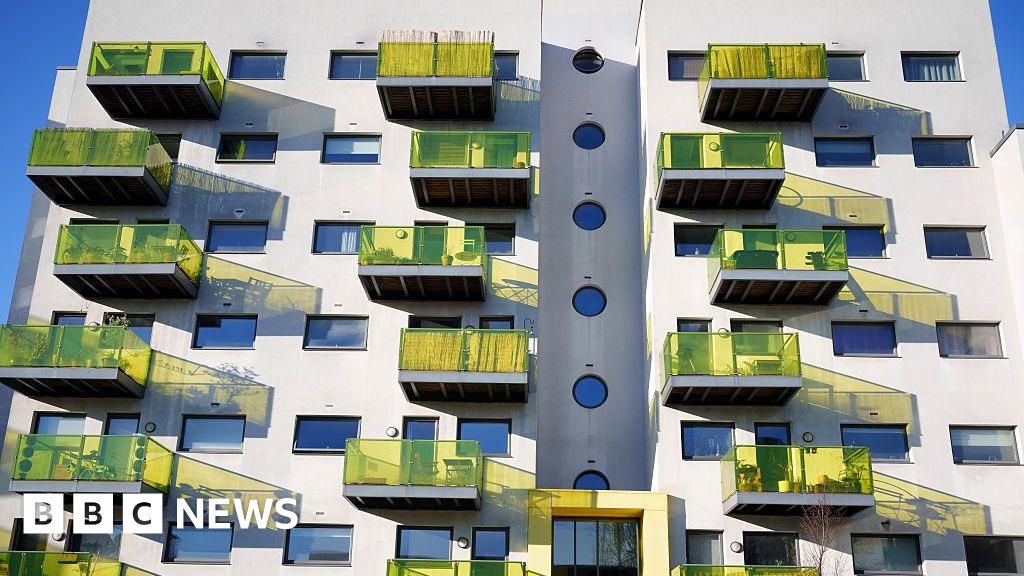
A planned £250 cap on yearly ground rents paid by leaseholders in England and Wales should be introduced more quickly, a committee of MPs has urged.

The government has said it expects the limit on ground rents – an annual fee paid by leaseholders to their freeholder – to come into force in late 2028.

However, a report by the cross-party Housing, Communities and Local Government Committee said this should be brought forward to late 2027, arguing leaseholders have waited too long for successive governments to tackle the issue.

The government said it was bringing forward legislation "as an urgent priority" to bring the leasehold system to an end in this Parliament – which could run until 2029.

There are around five million leasehold homes in England and Wales, where people own the right to occupy a property via a lease for a limited number of years from a freeholder.

As well as capping ground rents, the government's draft Commonhold and Leasehold Reform Bill, which is being scrutinised by the committee before it is introduced to Parliament, would ban the sale of new leasehold flats.

It also aims to make it easier for people to convert to commonhold, where people jointly own and take responsibility for their buildings without an expiring lease.

Ground rents are paid for the right to occupy the land on which a building sits and are separate to service charges, which cover the management and maintenance of a building.

The English Housing Survey estimated that in 2023/24 the average annual ground rent was £304 a year.

However, it is common for ground rents to double or increase by RPI inflation at fixed intervals, which can make it difficult to sell or get a mortgage for a property.

Ground rents were abolished for most new residential leasehold properties in England and Wales in 2022 under the previous Conservative government, but remained for existing leasehold homes.

Under the current draft version of the bill, the £250 cap would come into effect on a date decided by ministers.

The government has said it expects this to be in late 2028, but it could happen sooner if the bill progresses more quickly.

Instead, the committee wants the cap to come into force two months after the bill passes into law, which it said could be in late 2027.

The government is also promising to reduce ground rents to a peppercorn rate – effectively zero – after 40 years.

The committee said it was unclear why this transition period could not be shortened to 20 years.

Some freeholders and investors have argued they need more time to adjust and plan for the change.

But the committee's report said it was not convinced by this argument, given successive governments had indicated their intention to cap ground rents since at least 2017.

The government has argued a 40-year transition is a "balanced, achievable and realistic timeline", with a shorter period carrying a greater risk of legal challenge.

The Residential Freehold Association, which represents professional freeholders, opposes capping ground rents, warning about the impact on the UK's reputation for investors and on pension funds which invest in ground rents.

However, the committee was contacted by thousands of leaseholders who said escalating ground rents had left them struggling to sell their home.

One said their flat had become "effectively worthless" as their ground rent was now more than £500 and increasing every year, leaving them unable to move.

Another said their flat was "unmortgageable and therefore unsaleable" because of the high ground rent, which meant they had to delay starting a family as they could not afford a second mortgage.

Overall, the committee said the government's leasehold bill "would make a significant step towards giving leasehold homeowners greater control of their buildings".

However, it added that "the final bill requires several changes and additions to meet leaseholders' expectations and previous government pledges".

Labour's 2024 general election manifesto promised to "finally bring the feudal leasehold system to an end", ensuring commonhold is the default tenure, while tackling "unregulated and unaffordable" ground rent charges.

Labour MP Florence Eshalomi, who chairs the committee, said leaseholders had been "waiting for too long for successive governments to tackle the unfair leasehold system".

She added: "It is vital the government now recognises this urgency by bringing forward revised legislation to deliver justice for leaseholders as soon as possible."

The committee is calling for the government to introduce the final bill to Parliament in the autumn, so it can become law in mid-2027.

The government has said it expects a new commonhold framework to be operating well before the end of the Parliament.

However, Housing Minister Matthew Pennycook has said the ban on the sale of new leasehold flats is unlikely to come into force until after the next election.

He has argued it would not be feasible to abolish leasehold overnight, as this would involve instantly establishing millions of commonhold associations and would impact the mortgage market.

However, Pennycook has insisted the government is still committed to dismantling the leasehold system by the end of the Parliament, by empowering leaseholders to take control of their buildings and allowing them to convert to commonhold when they choose to.

The committee's report said the government should continue with its aim of introducing the ban "as soon as possible", while minimising unintended impacts on the wider housing market.

The committee also recommends introducing an independent regulator of property management agents, with the power to sanction rogue agents and remove their licence to operate.

Many leaseholders have complained of poor service from their managing agent, including spiralling service charges, which they have no control over.

Meanwhile, the committee's report raised concerns several "vital" recommendations previously made by the Law Commission, which would make it easier for leaseholders to convert to commonhold, were missing from the draft bill.

Sign up for our Politics Essential newsletter to keep up with the inner workings of Westminster and beyond.

📰 மூல செய்தி (Source): https://www.bbc.com/news/articles/cx2111kylgeo?at_medium=RSS&at_campaign=rss

முக்கியச் செய்திகள்

Prosecution opens case against ex-DUP leader Sir Jeffrey Donaldson in sex abuse trial

Published

on

The prosecution has begun opening its case against former Democratic Unionist Party (DUP) leader Sir Jeffrey Donaldson on 18 sex abuse charges.

Crown barrister Rosemary Walsh KC told the jury there are two alleged victims who stepped forward two-and-a-half years ago and told police "about difficult and traumatic incidents they say happened when they were children".

Sir Jeffrey, 63, has pleaded not guilty to all charges, including one count of rape.

His wife, Lady Eleanor Donaldson, faces a trial of the facts on five related charges of aiding and abetting, which she has denied.

The Donaldsons were arrested in their County Down home and charged on 28 March 2024.

He resigned as DUP leader the next day and did not contest his Lagan Valley seat in the general election four months later.

He is accused of rape, four counts of gross indecency and 13 counts of indecent assault.

The offences allegedly occurred between 1985 and 2008.

At Newry Crown Court on Wednesday, the Crown barrister outlined a summary of the case she said the court could expect to hear from Complainant B – the eldest of the two women.

She described an incident in which the complainant alleged Sir Jeffrey "put his hands down her underwear".

Rosemary Walsh KC said the complainant recalled that Sir Jeffrey had put his feet between her feet, pulled her legs apart and sexually assaulted her.

The barrister then outlined a second alleged incident in which Sir Jeffrey followed Complainant B into a room, approached her and "lifted her top up and her bra and started to touch her exposed breasts".

The complainant was said to have remembered Sir Jeffrey "putting his hands down her pants a lot".

The court also heard he would touch her breasts under her top.

Walsh said Complainant B later disclosed to individuals linked to a church that she had been sexually abused as a child.

A meeting was facilitated between Sir Jeffrey and Complainant B who described the meeting as "a bit weird and surreal".

The court heard Sir Jeffrey told her he wanted to apologise for what had been done in the past.

The barrister also gave a summary of the account of Complainant A – the younger of the two women.

Walsh said this complainant had alleged Sir Jeffrey would have been physical with her, putting his hands up her top and touching her chest area.

The court heard that the complainant recalled the accused commenting on the size of her breasts.

This complainant was also said to have reported being kissed inappropriately by Sir Jeffrey – by putting his tongue into her mouth.

When she pushed away, the accused was said to have laughed and said it was a joke.

It wasn't until she was older, the court heard, when she realised it was not normal.

Lady Donaldson will face a trial of the facts after being found unfit for a conventional trial under the Mental Health (Northern Ireland) Order.

Under a trial of the facts, she will not participate in proceedings.

The trial will continue on Thursday when the first witness will be called. That is due to be Complainant A.

Her police interview will be shown to the jury beforehand.

📰 மூல செய்தி (Source): https://www.bbc.com/news/articles/cz922zpe3p9o?at_medium=RSS&at_campaign=rss

Continue Reading

முக்கியச் செய்திகள்

How you can save money on your energy bill

Published

on

During a heatwave the last thing you'll be thinking about is your heating and energy bill.

But energy prices will rise in July and analysts predict bills – driven by the increase in the cost of gas – are likely to remain elevated into the winter.

Experts say action now can save money when the pinch comes, even though people may feel they have already made every saving possible.

Some 22 million people – about 40% of billpayers – have the certainty of fixed tariffs.

In these deals, the cost per unit does not change for the term of the tariff, which is usually a year. The total bill still depends on the amount of energy used.

Options on the market are cheaper than the price cap level. However, if international events do change and prices fall sharply, savings might not be so clear-cut.

Receiving your bill every quarter, rather paying a monthly direct debit, is typically about £140 a year more expensive, says regulator Ofgem.

There are still about seven million of these so-called standard credit accounts. Although some people like the quarterly payment of bills, it is a more expensive option.

The record-breaking May heatwave is not necessarily the time you think about getting your home winter-ready.

But experts say it is the perfect time to check if you can do more to block draughts, change cooking habits, bleed radiators and generally be more energy efficient.

Short shower times can also make a difference, albeit small. There are egg timers and even four-minute songs that can keep time for you.

Millions of pounds goes unclaimed in the benefits system. Pension credit, in particular, is underclaimed and yet it can help older people with financial support as a gateway to other benefits.

Grants for energy efficiency improvements may also available through schemes organised by local councils.

Eligibility criteria, such as income and location, varies. Charities such as Citizens Advice can help people see if they can get assistance.

Collectively people owe £4.5bn in unpaid bills and charges.

Suppliers say they may write off some of that debt, provide payment plans, or help with the cost of white goods – but only if you tell them you're in trouble.

You can check what your supplier offers through various support measures.

📰 மூல செய்தி (Source): https://www.bbc.com/news/articles/cwy2e3wx7xwo?at_medium=RSS&at_campaign=rss

Continue Reading

முக்கியச் செய்திகள்

Fifa ordered to explain World Cup ticket pricing

Published

on

The attorneys general of New York and New Jersey have been at loggerheads with Fifa over ticket pricing and transport costs

Fifa must answer questions after allegations of "artificially inflating prices" and "misleading fans" over the sale of tickets for the 2026 World Cup.

It comes as the attorneys general of New York and New Jersey officially launched an investigation into Fifa's practices.

New Jersey attorney general Jennifer Davenport called the process a "gauntlet of confusion, fake scarcity and impossibly high prices".

She added there would be a "thorough investigation of Fifa's conduct" with world football's governing body subpoenaed to provide information.

A subpoena compels a party to release specified internal documents or information.

Davenport made a joint announcement alongside New York attorney general Letitia James and the New York City department of consumer and worker protection (DCWP).

DCWP commissioner Samuel AA Levine said the body would be taking "allegations of blatantly deceptive conduct very seriously" and would look into allegations of "artificially inflating prices".

In particular, Fifa has been asked to explain why tickets have "exceeded the prices for any previous World Cup tournament".

Fans have reported they were "misled" about the location of seats, including through the creation of more expensive 'front' category tickets released after the initial sales.

It is also alleged variable pricing through various phases had allowed Fifa to raise prices for about 90 of the 104 fixtures by an average of 34%.

The investigation will consider how the ticket release schedule and public statements may have impacted prices.

World Cup transport prices cut after fan backlash

Empty rooms and Fifa cancellations – US hotels fear World Cup washout

'I wouldn't pay it' – Trump on USA ticket price

Fifa has regularly talked up the demand for tickets, with Fifa president Gianni Infantino defending the cost by saying they reflect the public's "absolutely crazy" appetite for the summer tournament.

But as of Wednesday, there were face-value tickets available for 86 of the 104 matches and all but 10 of the group-stage matches, for which the fixtures have long been known.

The attorneys general in particular highlighted the cost of tickets for eight matches, including the final, at the MetLife Stadium in New Jersey.

"Being honest about ticket sales is not complicated," Davenport said. "It's an honour to host the World Cup but the event is not an invitation to exploit our residents and visitors."

James said local residents "deserve a fair shot at affordable tickets".

"No-one should be manipulated into paying sky-high prices for seats and fans should be able to trust that the tickets they purchase will be the ones they receive," James added.

Levine said supporters should expect "transparency and fairness" when buying tickets for the World Cup.

"Reports of Fifa conduct in violation of the city's consumer protection law, including misleading fans about seat locations and artificially inflating prices, are deeply troubling," Levine said.

The investigation comes after California attorney general Rob Bonta sent a letter to Fifa, external raising concerns about "potentially misleading ticketing practices" earlier this month.

Local organisers have been at loggerheads with Fifa for the past few months over high costs.

New Jersey governor Mikie Sherrill previously criticised Fifa's refusal to subsidise transport at the event and insisted local taxpayers would not foot the bill.

After initially announcing a train ticket would cost $150 (£111), earlier this month NJ Transit backtracked and reduced the fare to $98 (£73).

Rail journeys from Penn Station in Manhattan to the venue – a distance of about 18 miles – are normally $12.90 (£9.50) for a return fare.

Everything you need to know about the World Cup

📰 மூல செய்தி (Source): https://www.bbc.com/sport/football/articles/c5yrzl46d4ro?at_medium=RSS&at_campaign=rss

Continue Reading

Trending

Copyright © 2024 by 7Tamil Media, All rights reserved.