Connect with us

முக்கியச் செய்திகள்

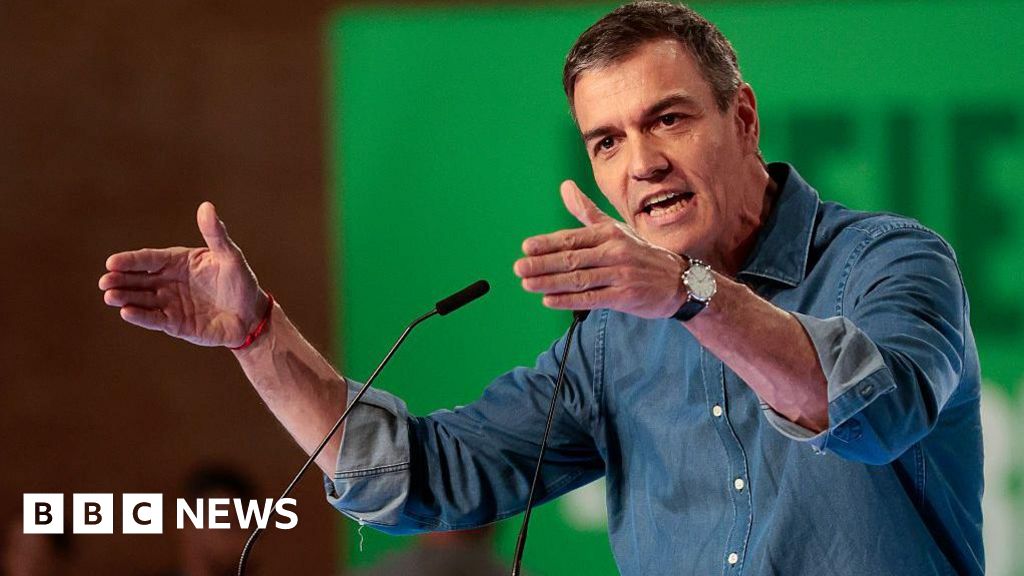
Spain's Sánchez digs in after eight years as PM as wave of scandals threatens survival

Published

on

1 June marks exactly eight years since Pedro Sánchez became prime minister of Spain, but with his government and Socialist Party besieged by corruption investigations he is more likely to be plotting his political survival than celebrating.

His musician brother, David, has just gone on trial accused of influence peddling.

Former Socialist prime minister and close Sánchez ally José Luis Rodriguez Zapatero has been named in an investigation into alleged money laundering.

And police have raided the Socialist headquarters in Madrid as part of a probe into allegations of a dirty tricks campaign that the opposition has dubbed "the Socialists' Watergate".

These probes and others have generated a growing clamour by the opposition for Sánchez's resignation and speculation that his government might soon collapse.

"The accumulation of cases makes clear that these are not isolated episodes or the fruit of dark conspiracies," warned centre-left newspaper El País, traditionally sympathetic to the Socialist Party. "The investigations are linked to the nucleus of power which has governed for the past eight years."

The Socialist Party has been under scrutiny since 2023, when José Luis Ábalos, a former transport minister and deputy party leader, was implicated in an investigation into a network that allegedly received kickbacks from the sale of €50m (£43m) worth of facemasks during the Covid-19 pandemic.

Ábalos, who denies involvement but was expelled from the party, recently went on trial and is awaiting the verdict.

Last year, he was also implicated in a broader kickbacks-for-contracts case, along with Socialist Party number three Santos Cerdán.

That case came as a huge blow to Sánchez, who had vigorously defended Cerdán from allegations in the media until evidence from the probe was made public. "The Socialist Party and I should not have trusted him," the prime minister said.

The case against Zapatero, in which he is accused of using his influence to secure a €53m government bailout of Plus Ultra airline in 2021 and receiving a commission in return, is also extremely damaging for the Socialist Party.

That is in great part because Zapatero is a close Sánchez ally who has commanded enormous respect on the left for reforms he introduced during his 2004-2011 administration, including in areas such as same-sex marriage, historical memory and gender violence.

The separatist group Eta ended its four-decades-long campaign of violence during his tenure.

"Symbolically speaking, this is very significant," said Paco Camas, head of public opinion in Spain for polling firm Ipsos. "The fact that this is the first former prime minister [to be investigated] makes it extremely serious. But also because he has been a moral reference for the party."

Zapatero, who is due to be questioned in court on 17 June, has insisted he has done nothing illegal and for now, at least, he has Sánchez's "full support".

The investigation that led to a 12-hour police raid on Socialist Party HQ in Madrid this week adds an extra dimension to Sánchez's woes.

The allegation is that the party paid member Leire Díez to carry out a campaign to discredit police, judges and prosecutors who were investigating existing cases, such as that affecting Cerdán, who has been named as a suspect in this probe. Díez has denied that she performed this role.

While Sánchez himself has not been directly implicated in any of the investigations, family members have.

The allegations against his brother, David, who went on trial on Thursday, are that he was appointed to a musical post in Badajoz in south-west Spain without undergoing a selection process, and that once in the role he did not carry out his duties.

Also, a judge has been investigating the business affairs of the prime minister's wife, Begoña Gómez, since 2024, and has proposed she go on trial for misuse of funds and influence peddling.

She has been summoned for a preliminary hearing on 9 June.

Pedro Sánchez has criticised the cases against his brother and wife, pointing to the fact that they originated in accusations made by far-right organisations.

So far, at least, Sánchez has not cast in doubt the cases against Zapatero or Leire Díez.

However, his combative transport minister, Óscar Puente, appeared to make a broader point about the investigations cornering the Socialists when he said "there is a government that some want to bring down, not through the ballot box, but with other dark arts, with undemocratic methods".

The leader of the conservative People's Party (PP), Alberto Núñez Feijóo, described the litany of scandals as "a criminal carousel". He called for Sánchez to resign and bring forward next year's general election.

But Sánchez, who has become renowned or infamous for his resilience, has insisted he will see out the parliament's full legislative term.

His minority coalition government has struggled to manage its parliamentary partners – an array of regional nationalist and left-wing parties – preventing it from approving a single new budget this legislature.

The question now is whether the remaining allies will continue to support him.

One of them, the Basque Nationalist Party (PNV), hinted that its patience is wearing thin, suggesting that waiting until 2027 for the next election would be an "irresponsibility".

However, loss of parliamentary support does not necessarily mark the end of the road for Sánchez.

There does not seem to be enough support for the opposition to win a no-confidence vote – which was how Sánchez himself came into power in 2018.

That is partly because parties that want more autonomy for their regions, such as the PNV, fear the centralising intentions of a PP government, possibly in coalition with the far-right Vox.

"I don't see an incentive for the government to call elections, however blocked the situation may be and however much it is affected by scandal," said Paco Camas. "It can dig in."

He believes that, like last year in the wake of the Ábalos-Cerdán kickback scandal, the summer break could provide the government with a badly needed respite, allowing it to recover some political initiative in September.

Another question is whether ill-feeling within Socialist ranks at so much scandal could spread.

The president of the Castilla-La Mancha region, Emiliano García-Page, and former Prime Minister Felipe González, both regular Sánchez critics, have called for early elections.

"There would have to be an internal rebellion of mayors and regional leaders who are concerned that the contagion effect of the reputation of this government could have an impact on the May [2027 local] elections," said Lluís Orriols, a political scientist at Carlos III University.

"But right now we're not seeing that kind of revolt," he said.

Sánchez's future is likely to depend to a great extent on how the investigations develop.

Further explosive cases, or evidence of illegal financing in the Socialist Party, could trigger an exodus of parliamentary partners and make the pressure unbearable, even for the great survivor Sánchez.

"This is a government which has been in a very delicate situation for some time now," said Orriols. "Don't rule out the possibility of it running out of air soon."

📰 மூல செய்தி (Source): https://www.bbc.com/news/articles/c1w21gn340xo?at_medium=RSS&at_campaign=rss

முக்கியச் செய்திகள்

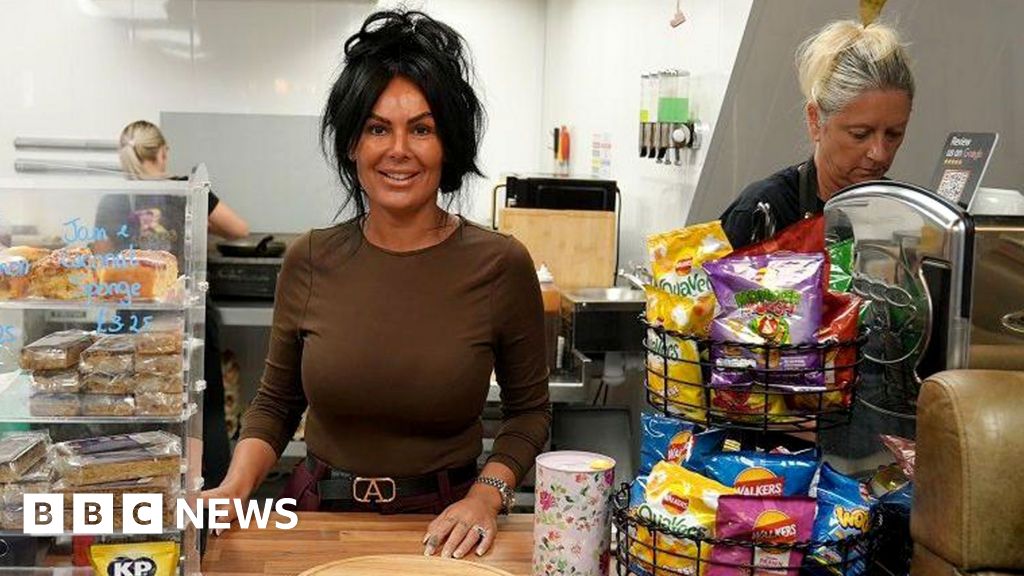
Tickets for festivals are getting more expensive – we compared them

Published

on

You may have noticed ticket prices for your favourite festivals becoming more expensive each year.

Analysis by BBC News has found the cost of entry to the UK's major festivals has surged over the past decade – rising above the rate of inflation.

And fans are being hit in the pocket even more when you factor in the rising cost of food, drink, merchandise and travel.

But the hikes have been uneven, and a variety of factors are at play, our research shows.

Back in 2007, a ticket for Reading and Leeds cost £145. After taking inflation into account, this would be about £245 in today's money.

Entry to the same event in 2025 was £325 – this is £80 more than the adjusted 2007 amount, also known as the "real terms" price.

These real terms price rises differ sharply across the festivals, we have found.

Neither Glastonbury nor Wireless are holding an event this year so we have looked at the change between 2013 and 2025.

Parklife tickets increased by around £69 (71%) in real terms since 2013 – while Reading and Leeds had a much smaller increase, rising by about £40 (14%) over the same period.

Download sits between these groups, with prices rising more gradually through the 2010s and increasing more sharply after the pandemic – rising 26% over the 12 years.

Glastonbury saw the largest pounds and pence increase, with tickets costing around £85 more today – a 30% price hike.

Wireless  follows a very different pattern, with a 10% decrease in ticket prices seen over the same period. From 2012 onwards, its day‑ticket prices fell sharply, dropping from £214 to £98 by 2024, reflecting changes in pricing strategy and format. That trend reversed abruptly in 2025, with a sharp price rise to £157.

The comparison suggests that while inflation explains a substantial share of rising ticket prices, it does not tell the whole story.

Different festivals appear to have adopted markedly different pricing strategies – such as moving to day events or offering less camping – leading to diverging real costs for music lovers across the UK festival circuit.

For fans, the price hikes can mean sacrificing other things.

Katie Scarlett, a 23-year-old festival content creator, attended her first festival in 2019 – and says she is prioritising festivals "instead of going on holiday".

"You're prepared that it's going to be a bit of an investment, but I look at things like train prices and compare it to what I'd be spending on flights," she tells the BBC.

"Some of the money I've put towards festivals this year would be equivalent to a few days in Spain, but festivals are a lot more accessible and a more attractive option when you have so much uncertainty around the cost of flights."

Primary school teacher Russell Akbar agrees. Having attended festivals since the age of 16, the 30-year-old has noticed the price of refreshments at festivals has gone up too – so he's diversifying.

"I've started bringing a lot more of my own food and drink in the last few years," he says.

Akbar says he has been going to smaller events since Covid "as ticket prices are cheaper", and until this year he "hadn't been on a proper holiday abroad for five or six years" as he had prioritised going to festivals.

He says he has been using a payment plan method which allows him to split the cost of a ticket over several months to help him afford to go.

Both Scarlett and Akbar feel festival organisers have been trying more to "pull it out of the bag" with stellar line-ups and huge headliners in recent years to entice fans to fork out for more expensive tickets.

If we zoom in a little closer on each festival, we can see further differences.

For Reading and Leeds, the biggest increases in ticket prices came after the pandemic, rising from £288 in 2021 to £325 in 2025.

For the Somerset extravaganza of Glastonbury, which is in a fallow year this year, ticket prices have risen from £286 in in 2010 to £374 in 2025, following a long period of relatively steady prices through much of the 2010s.

Most of the price rise has come since the pandemic, with tickets climbing from £318 in 2019 to a peak of £374 in 2025.

And for Parklife, ticket prices peaked after the pandemic in 2021 at £192, but have since reduced to about £167 in 2025.

There have been "two big changes" that have affected festival prices in recent years, according to John Rostron, CEO of the Association of Independent Festivals.

"The pandemic and Brexit," he tells the BBC. "During the pandemic, festivals were not open but they had ongoing costs with staff and rescheduling artists – they lost loads of money so had to recoup in different ways.

"And with Brexit it's not necessarily about cheap labour, it's skilled labour – we lost really great backstage crew and technical crews that went back to Europe and haven't come back. So [festival owners] have had to invest in skilling up and training people," he adds.

Despite the price hikes, Rostron says payment plans for ticket purchases have been "the big shift in ticketing" since he came into his role in 2022.

"Now, everybody does it and it's revolutionised things," he adds.

Festival Republic, which runs Reading and Leeds, Wireless and Download, stressed that the tickets "represent significant value for money… particularly compared to other major live events".

The company told us about its upfront costs, which include artist fees, staging, power, fencing, security, medical provision, licensing, welfare, sanitation, transport, insurance, production, staffing and local suppliers.

"Those costs, which are usually fixed or committed well in advance, have risen sharply in the past few years, from labour, fuel, power and transport through to security, production, infrastructure and materials," the firm says.

The BBC reached out to the organisers of Parklife, who declined to comment.

Glastonbury's organisers said they were on a fallow year this year and they maintain that the festival offers "great value for money" with more than 100 stages.

📰 மூல செய்தி (Source): https://www.bbc.com/news/articles/cj9pgmw3yz2o?at_medium=RSS&at_campaign=rss

Continue Reading

முக்கியச் செய்திகள்

Ghana parliament passes anti-LGBTQ+ bill

Published

on

The parliament in Ghana has approved a new bill criminalising homosexuality and the promotion of LGBTQ+ activities.

Identifying as lesbian, gay, bisexual transgender or queer can be punished by up to three years' imprisonment. The bill also introduces a "duty to report" prohibited acts to police.

Religious leaders have pressured President John Dramani Mahama, who still needs to ratify the legislation, to strengthen anti-gay laws since he came to power last year.

The ban has been sharply criticised by international organisations, including Human Rights Watch, which said it placed LGBTQ+ peoples' lives at risk while also "encouraging citizens to surveil and denounce one another".

Same-sex relationships have been banned in Ghana under laws dating from the British colonial era.

In an address to Parliament, the bill's sponsor Reverend John Ntim Fordjour said the bill protected Ghanaian family and cultural values.

He said the new bans would make existing laws "more robust, more encompassing, and more stringent in dealing with the practices of LGBTQI".

Anyone who identifies as an "ally", a general term for a supporter of LGBTQ+ people, could also face a prison sentence.

Exemptions were included for legal, media and healthcare professionals who report on LGBTQ+ issues or provide medical treatment or other services for gay people.

Human Rights Watch recommended the bill be abandoned, in a formal submission to the constitutional and legal affairs committee scrutinising the legislation in the capital Accra.

Ghana passed a similar bill in 2024 but it did not become law after former president Akufo-Addo failed to sign it amid legal challenges.

President Mahama has indicated he would support the bill's passage, saying shortly after he took office that "I believe in the principles and values that only two genders exist – man and woman. And that marriage is between a man and a woman."

Several African countries have cracked down on LGBTQ+ rights in recent years.

Senegal's parliament approved similar legislation in March which prescribes a maximum prison term of 10 years for sexual acts by same-sex couples and criminalising the ''promotion'' of homosexuality.

Uganda introduced a death penalty for certain same-sex acts in 2023.

📰 மூல செய்தி (Source): https://www.bbc.com/news/articles/c5yedendprko?at_medium=RSS&at_campaign=rss

Continue Reading

முக்கியச் செய்திகள்

Ukraine using AI drones to strike vital convoys supplying Russian troops

Published

on

The Ukrainian military is stepping up its campaign to destroy vehicles supplying Russian forces along crucial roads in occupied Ukraine using new AI drone technology, experts say.

BBC Verify has confirmed footage of at least 14 incidents published in the past week of vehicles carrying food, fuel and ammunition being targeted along critical routes connecting Russia to Crimea and other occupied territories in southern Ukraine.

Ukraine is starting to regain more ground than it is losing for the first time since 2023, analysis from the Institute for the Study of War (ISW) indicates. After more than four years of war and increased Russian occupation of eastern and southern Ukraine, neither side has gained any significant ground in recent months.

Experts say recent drone technology advancements, including the AI-enabled Hornet system, have allowed Ukraine to attack Russian targets travelling to the front lines at greater distances and with increased accuracy.

Ukraine's defence minister, Mykhailo Fedorov, said on Wednesday its "logistics lockdown" strategy aims to "increase pressure on the Russian military in the rear and deny the enemy the ability to conduct sustained offensive operations".

Footage analysed by BBC Verify and online by GeoConfirmed open source analysts shows burned-out shells of container lorries and other military vehicles at multiple locations along a key route through southern Ukraine.

At least 10 incidents were recorded between Russia's border and the occupied city of Mariupol, with one strike recorded south-west of the city of Melitopol. The critical route is used by the Russian military to supply their forces on the front line and in Crimea.

Clément Molin, an analyst at think tank Atum Mundi, told BBC Verify he had confirmed the destruction of 150 vehicles more than 20km (12 miles) from the front line, although he said this likely accounted for about half of all incidents.

The strikes mean Russia has been forced to shorten convoys on supply routes as a "quick coping mechanism to reduce potential damage", Cristian Vlas at conflict monitoring group Acled told BBC Verify.

He suggested Ukraine's main objective was not only to strike the assets "important to Russia's image of grand power", but to disrupt key logistical convoys, command posts, and communication towers. These "feed, fuel, and inform Russian units at the front line and form the basis for capacity to fight in the battlefield and launch long-range drone and missile strikes from occupied territories".

Robert Tollast, land warfare expert at the Royal United Service Institute, told BBC Verify that some brigades were estimated to need up to 1,000 tonnes of fuel, food, ammunition and other key supplies every day. He said Ukraine had previously used a long-range strike campaign against Russian air defence units, but the new drone strike ranges "are something else".

"If you are cutting resupply, for example ammunition trucks 100km or more from the front using small drones, and then longer-range drones are going after larger logistical sites, this is a very serious problem for the Russians," he said.

Ukraine's Hornet drones are equipped with an AI-targeting system which has been trained on thousands of hours of videos of Russian military targets gathered over the last four years, Nick Brown, a weapons expert from defence intelligence company Janes, told BBC Verify. They can also access the Starlink satellite network to connect to operators over longer distances, a system that is also more resistant to jamming by Russian forces.

"Ukraine can launch hundreds of these loitering munitions towards a rough target area over 100 miles away and then use AI to detail them on to Russian military targets as they find them," he said.

Ukraine's innovative use of technology means the war is not a stalemate, according to George Barros from the Institute for the Study of War (ISW), and Kyiv is using mechanised equipment in tactical manoeuvres that were impossible 12 months ago.

"Russia's ability to conduct infiltration missions will likely continue to degrade as Ukraine's intermediate-range strike campaign pushes Russia's logistics and forward operating bases further away from the front lines, reducing resourcing to sustain infantry tasked with infiltration missions," he said.

One of Ukraine's specialist drone units, the 412th Nemesis Brigade, said this week that Russian commanders had limited the movement of heavy equipment in southern Ukraine and were attempting to evade drones by using fields and dirt roads.

The Russian-appointed leader of the occupied areas in Ukraine's Kherson region, Vladimir Saldo, has also ordered restrictions on civilian traffic along the route.

Barros said Ukraine's "drone superiority" had even neutralised Russia's attempts to gain an advantage by moving "overwhelming numbers" of troops to the front line, but added that the advantage may be shortlived.

"Russia will very likely eventually develop countermeasures so Ukraine's international partners have a rare and temporary opportunity to exploit favourable battlefield dynamics while Ukraine has the upper hand."

Additional reporting by Kayleen Devlin, Joshua Cheetham and Sherie Ryder, graphics by Tom Shiel.

What do you want BBC Verify to investigate?

📰 மூல செய்தி (Source): https://www.bbc.com/news/articles/cdjp0n7rn41o?at_medium=RSS&at_campaign=rss
Continue Reading

Trending

Copyright © 2024 by 7Tamil Media, All rights reserved.