Connect with us

முக்கியச் செய்திகள்

Southampton expelled from play-offs for spying

Published

on

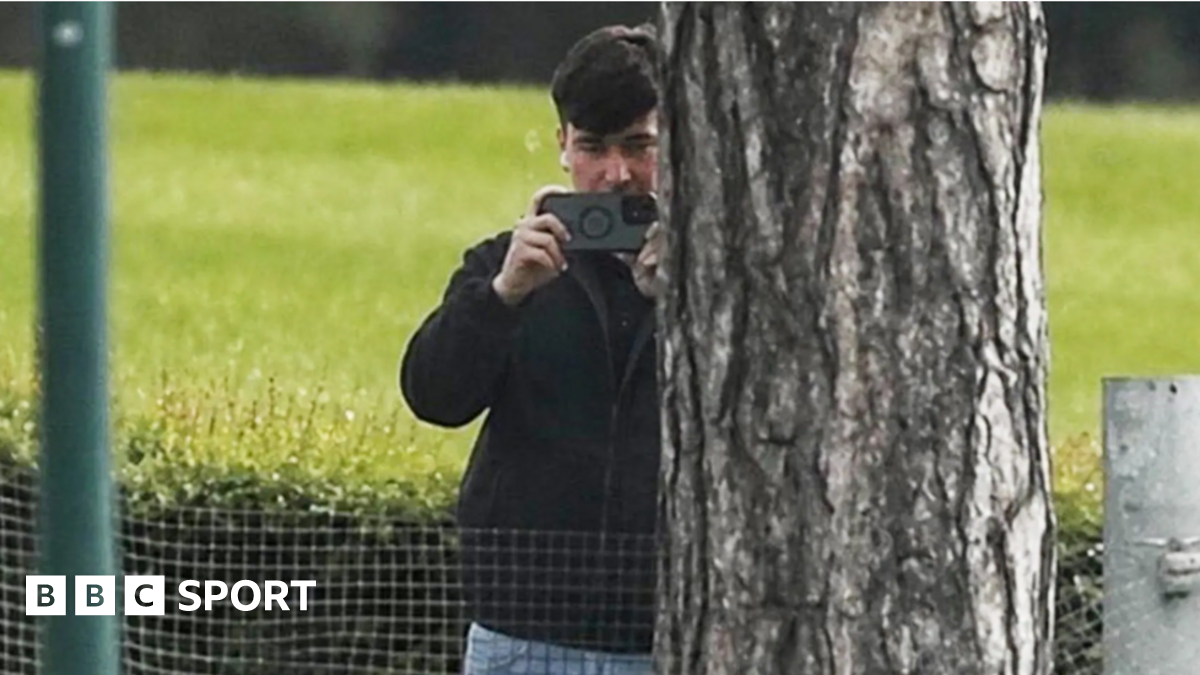
Spygate is alleged to have taken place two days before Middlesbrough play-off semi-final first leg against Southampton

Southampton have been thrown out of the play-offs after admitting they spied on three clubs in the Championship season.

Middlesbrough, beaten by Southampton in the semi-final, have been reinstated and will now play Hull City for a place in the Premier League.

The EFL charged Saints with watching training sessions involving Oxford United and Ipswich Town, in addition to filming Middlesbrough as they prepared for the first leg of their play-off semi-final on 7 May.

The independent disciplinary commission also handed Southampton a four-point deduction in the Championship for next season.

Saints will now miss out on a game dubbed the richest in world football, with the winners of the play-off final guaranteed a minimum £110m in Premier League broadcast revenue.

The final will remain on Saturday at Wembley with the kick-off time to be confirmed.

Southampton admitted to "multiple breaches of EFL regulations related to the unauthorised filming of other clubs' training", the EFL said.

The club have also received a reprimand in respect of all the charges.

Sources have confirmed to BBC Sport that Southampton will lodge an appeal on Wednesday and will argue that the punishment is disproportionate.

The EFL said it would be "working to try and resolve any appeal on Wednesday 20 May".

It added that "subject to the outcome, it could result in a further change to Saturday's fixture".

The appeal will be heard by an Independent League Arbitration panel with three new members.

The EFL said in a statement: "Southampton was first charged on Friday 8 May, with further charges issued on Sunday 17 May in relation to additional breaches during the 2025-26 season.

"Those additional charges arose from matters identified after the initial proceedings involving Middlesbrough were initiated.

"Southampton admitted breaches of regulations requiring clubs to act with the utmost good faith and prohibiting the observation of another club's training session within 72 hours of a scheduled match.

"The admitted breaches concern fixtures against Oxford United in December 2025, Ipswich Town in April 2026 and Middlesbrough in May 2026."

Southampton did not win any of the three games – they lost 2-1 at Oxford, drew 2-2 at home to Ipswich and claimed a 0-0 draw at Boro.

The statement continued: "The EFL is now in discussion with all three clubs regarding the implications of today's decision and will make a further announcement in due course."

Middlesbrough issued a statement which said they "welcome the outcome".

"We believe this sends out a clear message for the future of our game regarding sporting integrity and conduct," it added.

"As a club, we are now focused on our game against Hull City at Wembley on Saturday. Ticket information for our supporters will be available shortly."

Southampton had already sold tickets for Saturday's game, and their supporters will receive a full refund.

They must now wait to see if the Football Association issues any charges for individuals involved in the spying. The EFL can only apply sanctions against its member clubs.

After a spying case at the 2024 Olympic Games, three members of Canada's staff, including the head coach, were banned from all football by Fifa for a year.

Middlesbrough were at their Rockliffe Park training base preparing for the game against Southampton 48 hours later.

The spy, Southampton analyst intern William Salt, is said to have parked at the golf club, then walked a couple of hundred yards down a road which leads to a raised area of ground.

Sources told the BBC that the accused simply stood pointing his mobile at the training session, while wearing in-ear headphones.

Middlesbrough staff believe he may have been live-streaming the session via a video call.

A member of Middlesbrough's staff approached, say BBC sources, but the person would not identify himself. Then, he quickly deleted some content off his phone before running off into the golf club.

He jogged into the toilets, changed his clothes and hurriedly left the site.

Middlesbrough's photographer took photos and matched him to a photo on the Southampton website. One of those pictures was subsequently made public last week.

Boro were furious and quickly reported it to the EFL.

The EFL charged Southampton with breaking two regulations.

EFL Regulation 3.4, which requires clubs to act towards each other with the utmost good faith; and

EFL Regulation 127, which prohibits any club from observing, or attempting to observe, another club's training session within 72 hours of a scheduled match between the two clubs.

Could Southampton be kicked out of play-offs over Spygate?

Boro want Southampton out of play-offs over Spygate

How Southampton allegedly spied on Middlesbrough

📰 மூல செய்தி (Source): https://www.bbc.com/sport/football/articles/cwy2pnpqjl7o?at_medium=RSS&at_campaign=rss

முக்கியச் செய்திகள்

The Papers: 'Violence in Belfast' and Trump's 'war words'

Published

on

Many of the front pages carry a freeze-frame from the graphic video of Monday night's attack in Belfast.

The Guardian leads on the disorder in the city, saying the violence erupted after what it calls "agitators", including Tommy Robinson and Elon Musk, exhorted people to take to the streets.

The Daily Telegraph says a WhatsApp message that was "forwarded many times" predicted a "mad day in Belfast" and urged men aged 18 and over to "wear dark clothing" and "be prepared to fight or be arrested". The i Paper highlights pleas from the police for calm, and says there are fears of further disorder across the UK.

Many of the papers focus on the suspect, who police have said is a Sudanese refugee.

The Daily Mail says Britain has a "gaping back door", raising "grave questions". The Mail's leader column urges the government to face up to what the paper calls "the migrant threat".

The Times believes there will be "renewed scrutiny" of the Common Travel Area, which allows for the free movement of people between the UK and Ireland after police said they believed the suspect had travelled from Dublin to Belfast by bus, before claiming asylum.

The Daily Express praises those who sought to intervene in the stabbing, calling them "the very best of humanity". The Daily Mirror reports that a fundraising campaign has begun to buy a pint for the man who arrived at the scene with a hurling stick. Matt McKiernan is quoted in the Sun saying "instinct took over" and "most people" would have done the same.

And the Daily Telegraph interprets comments by Rachel Reeves at a conference yesterday as a signal that in order to pay for higher defence spending, taxes will need to rise. The chancellor is said to have told an investors' gathering that "despite the pain of higher taxes, better to do that than get into a situation where we were before, with interest rates climbing".

The Times reports that Prime Minister Sir Keir Starmer is preparing to announce the extra defence funding as soon as this week, with discussions going down to the wire.

Sign up for our morning newsletter and get BBC News in your inbox.

📰 மூல செய்தி (Source): https://www.bbc.com/news/articles/c982ddx2zkgo?at_medium=RSS&at_campaign=rss
Continue Reading

முக்கியச் செய்திகள்

Illegal mini-marts to shut for up to 12 months under law change prompted by BBC

Published

on

Illegal mini-marts, barbers and vape shops could be shut for up to a year under new powers announced by the government, following lengthy investigative reporting by BBC News into organised crime on British high streets.

We have exposed drug gangs, child sexual exploitation, money laundering and immigration crime linked to shops selling illegal cigarettes, vapes and drugs.

As the law stands in England and Wales, authorities can only close a shop for three months, with an option to extend closure to six months using anti-social behaviour legislation. The government's planned change will double the potential closure time.

Making the announcement, Home Secretary Shabana Mahmood praised the BBC's reporting, saying that people felt high streets were being taken over by "organised crime [and] immigration criminality". The government was "not prepared to tolerate it", she said.

This type of criminality "makes people lose faith, not just in their local area but in democracy, in what our country is, and we can't let that happen", she added.

The Home Office says the extended closures will give investigators more time to gather evidence, pursue prosecutions and identify business owners, while preventing rogue operators from simply reopening and resuming illegal activity.

The news has been welcomed by Trading Standards officers, who have repeatedly told us they lack the necessary powers to tackle the problem.

"Closure orders are a key enforcement tool… for tackling 'dodgy shops'" says John Herriman, chief executive of the Chartered Trading Standards Institute (CTSI).

There is "almost universal support" from his profession for the new measures, he adds.

Other Trading Standards officers told us it would become less financially viable for unscrupulous business owners to simply sit out closure orders, and it would force landlords to pay more attention to who they are renting to.

For nine months, we have repeatedly asked the home secretary for an interview to discuss what we had found.

Last week, we were invited to join Mahmood on police raids of mini-marts on Soho Road in the Handsworth area of Birmingham – a high street bordering her own constituency.

At one shop, police and Trading Standards officers found illegal cigarettes and snuff (finely ground tobacco). A shopworker was arrested after a makeshift weapon – a plank with a nail – was found under the counter.

The shopworker, who said he was a student from Afghanistan, admitted that he thought selling illegal cigarettes was wrong.

When asked why he was selling them, he replied: "Perhaps you should ask the manager, he's the owner." However, the owner was not about, he said.

Soho Road has recently been the focus of Operation Fearless, a West Midlands Police initiative to tackle street-level crime.

"In all the areas I've worked in… it's by far the worst here," one of the officers involved, PC Victoria Gaunt, told us.

She said police had found shops selling prescription drugs, cocaine, heroin and cannabis. "You name it, you can probably buy it," she told us, and added that she would not feel safe in the area if she was not wearing her uniform and stab vest.

She also said she had seen "people walking around with machetes, chasing people" and witnessed "a huge increase in prostitution and exploitation of girls".

A BBC undercover reporter also visited about a dozen businesses on Soho Road and found counterfeit packs of cigarettes on sale for as little as £3. The average cost of a genuine pack is between £16.50 and £19.50.

Shopworkers also told the reporter there was open drug dealing on the street.

The home secretary told us she understood public feeling and said she and her family were also frustrated at seeing "people who are getting away with breaking our laws, getting away with open criminality".

Over the course of 14 months, BBC News has exposed the shocking reality of organised crime taking over high streets in England and Wales.

We joined the National Crime Agency (NCA) last year as it raided barbers, mini-marts and vape shops, after reports they were being used for money laundering and illegal working.

In the following months, we were shown shops with secret underground tunnels supplying sacks of illegal cigarettes, we exposed asylum seekers buying and selling shops for cash, and exposed a Kurdish organised-crime gang operating the length of Great Britain.

In March this year, we revealed how a senior council worker had repeatedly shared with local authorities reports of children as young as 11 being sexually abused in mini-marts.

Most recently, we went undercover to report how cocaine, cannabis, laughing gas and prescription pills were being offered on a West Midlands street described as "lawless" by an anonymous law enforcement source.

The home secretary said late last year that the BBC's evidence, gathered up until then, proved "the system was broken" and announced an "urgent" investigation led by the NCA, Immigration Enforcement, HMRC and police forces from across England and Wales.

Last month, the government announced a new £30m High Street organised crime unit which it said would deliver new police and Trading Standards officers, tax raids and a crackdown on illegal working.

Asked if the government's intervention was too little, too late, Mahmood told the BBC she believed the latest measures represented a "game-changing national crackdown".

The Home Office says the new extended closure orders should become law by the end of this year, after it lays secondary legislation. The new powers will then come into force in early 2027.

The government says it will be briefing authorities in Northern Ireland and Scotland of the changes to closure orders in England and Wales, as they have different enforcement legislation in place for shutting shops.

Additional reporting: Steve Fildes and Phill Edwards

📰 மூல செய்தி (Source): https://www.bbc.com/news/articles/cqj1rkqqrgro?at_medium=RSS&at_campaign=rss

Continue Reading

முக்கியச் செய்திகள்

Alleged Bondi Beach gunman charged with another 19 offences

Published

on

The man accused of killing fifteen people in an attack on a Jewish festival at Sydney's Bondi Beach in December has been charged with 19 additional offences.

Naveed Akram was already facing 59 charges after the shooting including 15 counts of murder, 40 counts of attempted murder, and one count of committing a terrorist act.

According to court records seen by the BBC, new charges were filed in April but have only now been confirmed by authorities.

The fresh charges are 10 counts of "shoot at with intent to murder", six counts of discharging a firearm with intent to resist arrest, and three counts of causing wounding or grievous bodily harm with intent to murder.

Akram, 24, has made a series of short court appearances but is yet to enter a plea to the charges. He is due back in court in August.

On Wednesday, prosecutors told the court that investigators from the Joint Counter Terrorism Team were "progressing" steadily through the evidence.

It includes 230,000 CCTV images as well as content on several devices belonging to people with alleged links to Akram which need to be translated, prosecutors said.

Outside court, Akram's lawyer Leonie Gittani told the media that the extra charges were not a surprise to her client.

"He was sort of aware of it on the last occasion, but [in] a matter of this magnitude, it's not unusual for additional charges to be laid," she said, according to the national broadcaster ABC.

"It's a process now that we've got to follow."

Asked about the CCTV images, Gittani said: "It's an unprecedented matter and so… there's a lot to come. We've got a job to do, and that's what we intend to do".

Akram's father Sajid Akram, 50 – who was also armed and shot at the crowd on Bondi Beach – was killed by police at the scene of the shooting on 14 December 2025.

The younger Akram was critically injured by police and later transferred from hospital to prison.

Court documents released in late December alleged that the two shooters "meticulously" planned the attack on Bondi Beach for months and visited the location for reconnaissance two days prior.

One video – taken on one of their mobile phones in October – was described as showing the men sitting in front of an image of an Islamic State group (IS) flag.

They could be heard making statements about their motivations for the attack and condemning "the acts of 'Zionists'", police said.

Police said separate footage from October showed the father and son "conducting firearms training in a countryside location", believed to be in New South Wales.

They were seen "firing shotguns and moving in a tactical manner", officials added.

In April, Akram lost a court bid to suppress the identity of his immediate family due to safety concerns.

The attack was Australia's worst mass shooting in almost three decades and prompted sweeping gun law reforms and a crackdown on hate speech.

It led to a royal commission into antisemitism in Australia. which began public hearings in February.

📰 மூல செய்தி (Source): https://www.bbc.com/news/articles/ckg0l7g7n9no?at_medium=RSS&at_campaign=rss
Continue Reading

Trending

Copyright © 2024 by 7Tamil Media, All rights reserved.