Connect with us

முக்கியச் செய்திகள்

'Shocking' rise in school suspensions for racist and homophobic abuse

Published

on

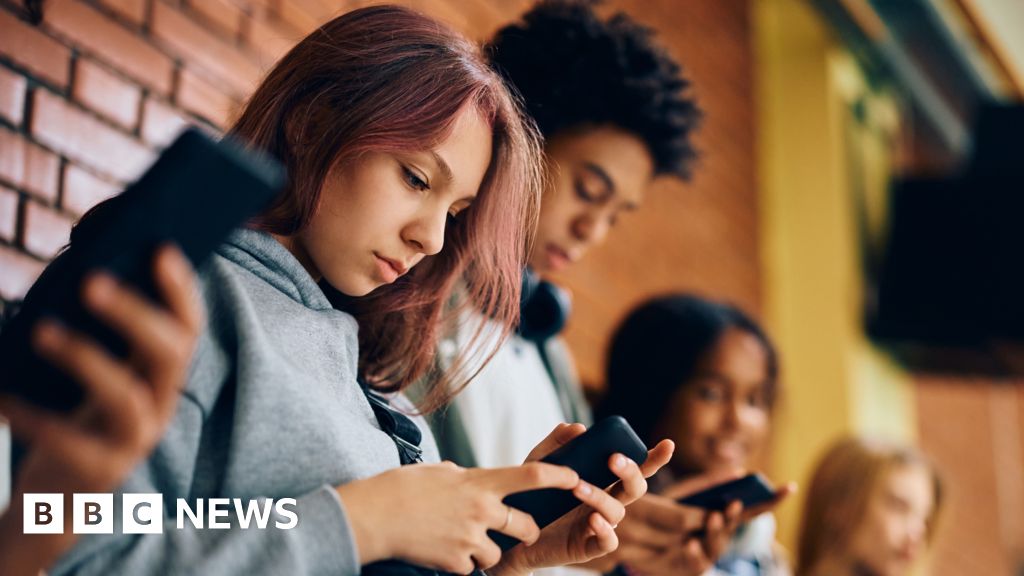
A rise in school suspensions over racist, homophobic and disablist abuse is linked to an erosion in anti-bullying support and wider societal issues, education specialists say.

Between 2020-21 and 2024-25, there were more than 55,000 suspensions linked to racist abuse at English schools.

Department for Education data documenting reasons for suspensions also shows schools logged homophobic or transphobic abuse more than 13,000 times and disablist abuse about 1,600 times in the same period.

A mother who believes bullying contributed to the suicide of her autistic son said the data was "horrifying but not surprising".

Amid calls for a national anti-bullying strategy, the Department for Education described the figures as "shocking" and said it was providing expert support.

Government data documenting reasons for suspensions shows a 68% rise in mentions of prejudicial abuse in fewer than four years.

Because schools can record up to three reasons for each suspension, these figures do not represent individual incidents but show how often different forms of abuse are cited.

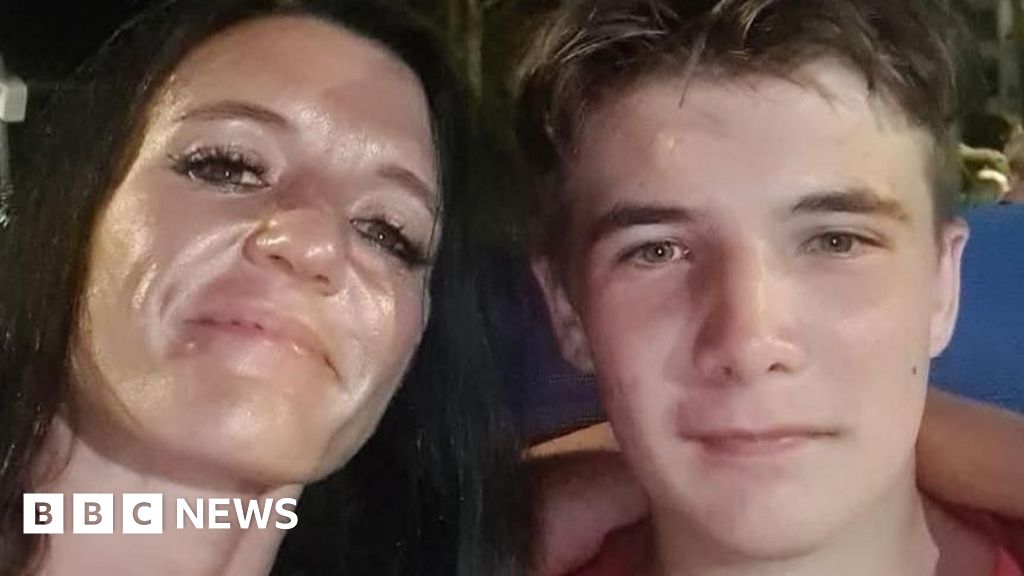
Kirsten Coutts' son Sam Coutts was 18 when he killed himself in the toilets at Darlington's Queen Elizabeth Sixth Form College earlier this year.

He was not bullied there, but she said his state of mind had been shaped irrevocably by disablist abuse he suffered as a schoolboy.

"The die was cast, it pushed him into a headspace where he didn't feel the same as anybody else," she said.

A few days before his death Sam – described by his mother as 'amazing, enigmatic, funny' – opened up about being bullied.

She said the effect of the bullying made Sam feel like he wasn't welcome in society and had to find a way of curing his autism "one way or another".

"He asked how I'd feel if someone said everything about you is wrong, nothing about you is right," Kirsten said.

"It's hard to articulate how any of this feels, there aren't any words – everyone is broken. I'm his mam and it goes against nature's plan."

Kirsten wants schools and parents to work together to tackle bullying, and to control access to phones and social media for children.

"There should be more support for teachers, and parents should have to do more to stop their children behaving like this – it starts at home."

Education specialists told the BBC funding cuts to outreach services, social media harms, divisive politics and a lack of mandatory teacher training were among issues contributing to a growing problem.

Less tolerance of discrimination, heightened awareness and a growth in the use of suspensions overall were also highlighted by charities, unions and teachers.

Pepe Di'lasio, General Secretary of the Association of School and College Leaders (ASCL), said schools only use exclusions as a "last resort" but would not tolerate discriminatory behaviour.

Di'lasio added: "The problems we are seeing are huge societal issues which cannot be solved solely in the classroom.

"It feels as though we are living in an increasingly abrasive era."

Teaching union NASUWT has received "frequent reports" of teachers and pupils receiving prejudicial abuse, general secretary Matt Wrack said.

Wrack warned against "demonising young people" as he said issues in wider society are inevitably reflected in schools.

The union has raised concerns with the DfE over the need to improve the recording and monitoring of bullying.

Despite recommendations from Britain's equality regulator, the Equality and Human Rights Commission (EHRC), it is not mandatory in England for schools to record incidents of bullying.

As such, robust data is lacking – but the Department for Education's statistics show how many times pupils have been suspended for abusing others.

Martha Boateng, director of the Anti-Bullying Alliance (ABA), said cuts to government funding and local authority contracts for outreach work had contributed to a "real reduction in schools' ability to undertake anti-bullying training".

She said the ABA once reached "tens of thousands of teachers" a year with its resources, but now reaches a fraction of that after introducing charging to meet costs.

BBC analysis of Charity Commission data for 15 organisations linked to school outreach work found 12 had faced cuts in central government grants and contracts since 2019 – including Show Racism the Red Card (SRTRC), which delivers anti-racism workshops in schools.

James Kingett, from SRTRC, said the charity had also lost a significant number of local authority contracts after austerity measures saw many councils repurpose funding.

He added that education, rather than "punitive punishment", is the solution to children displaying discriminatory behaviour where it comes from a "lack of understanding and without intention to offend".

Dr Greg Stride from the Local Government Information Unit (LGiU) said central government cuts meant councils had less resource for valuable but non-statutory work like outreach or prevention programmes.

LGBTQ+ charity JustLikeUs relies on donations to run its ambassador programme, which sees young people return to school to share their experiences.

Ambassador Cameron Wright, 21, said the work is vital in raising awareness and highlighting the impact of homophobia.

"I can go in and say I know what it's like, I had a difficult experience, but my life's amazing now."

Wright, who uses they/them pronouns, was left suicidal after being targeted with slurs and threats throughout school.

They said the experience had a lasting impact, adding: "School was consistently difficult and it was difficult because I was gay.

"Teachers couldn't get a handle on what was happening and school went from a safe place to a place I felt really excluded from."

Gypsy leader Billy Welch said his school visits have made a "huge difference" in tackling racism in Darlington as he urged the government and education authorities to support school outreach work.

Recalling a "very offensive" history of prejudice levelled at his community, he said: "Up and down the country, it's terrible, but in Darlington now, they make a space for the Gypsy children.

"I go into schools and talk about where we came from, our culture, our beliefs and traditions – it does so much good.

"The children love it but the ones who get the most out of it are the teachers, who go back with a different understanding and different approach."

A Department for Education spokesman called its data "shocking" and said discrimination had no place in schools, adding: "Every child deserves to learn in a safe and calm classroom."

He said the government is providing support for schools with the biggest behaviour challenges and that free breakfast clubs, improved teacher training and clearer guidance around suspensions would help tackle poor behaviour and ensure teachers have "clarity and confidence" to act swiftly when needed.

The DfE's Preventing and Tackling Bullying guidance says schools are required to have bullying prevention policies in place.

📰 மூல செய்தி (Source): https://www.bbc.com/news/articles/cdjpx7rnredo?at_medium=RSS&at_campaign=rss

முக்கியச் செய்திகள்

Prosecution opens case against ex-DUP leader Sir Jeffrey Donaldson in sex abuse trial

Published

on

The prosecution has begun opening its case against former Democratic Unionist Party (DUP) leader Sir Jeffrey Donaldson on 18 sex abuse charges.

Crown barrister Rosemary Walsh KC told the jury there are two alleged victims who stepped forward two-and-a-half years ago and told police "about difficult and traumatic incidents they say happened when they were children".

Sir Jeffrey, 63, has pleaded not guilty to all charges, including one count of rape.

His wife, Lady Eleanor Donaldson, faces a trial of the facts on five related charges of aiding and abetting, which she has denied.

The Donaldsons were arrested in their County Down home and charged on 28 March 2024.

He resigned as DUP leader the next day and did not contest his Lagan Valley seat in the general election four months later.

He is accused of rape, four counts of gross indecency and 13 counts of indecent assault.

The offences allegedly occurred between 1985 and 2008.

At Newry Crown Court on Wednesday, the Crown barrister outlined a summary of the case she said the court could expect to hear from Complainant B – the eldest of the two women.

She described an incident in which the complainant alleged Sir Jeffrey "put his hands down her underwear".

Rosemary Walsh KC said the complainant recalled that Sir Jeffrey had put his feet between her feet, pulled her legs apart and sexually assaulted her.

The barrister then outlined a second alleged incident in which Sir Jeffrey followed Complainant B into a room, approached her and "lifted her top up and her bra and started to touch her exposed breasts".

The complainant was said to have remembered Sir Jeffrey "putting his hands down her pants a lot".

The court also heard he would touch her breasts under her top.

Walsh said Complainant B later disclosed to individuals linked to a church that she had been sexually abused as a child.

A meeting was facilitated between Sir Jeffrey and Complainant B who described the meeting as "a bit weird and surreal".

The court heard Sir Jeffrey told her he wanted to apologise for what had been done in the past.

The barrister also gave a summary of the account of Complainant A – the younger of the two women.

Walsh said this complainant had alleged Sir Jeffrey would have been physical with her, putting his hands up her top and touching her chest area.

The court heard that the complainant recalled the accused commenting on the size of her breasts.

This complainant was also said to have reported being kissed inappropriately by Sir Jeffrey – by putting his tongue into her mouth.

When she pushed away, the accused was said to have laughed and said it was a joke.

It wasn't until she was older, the court heard, when she realised it was not normal.

Lady Donaldson will face a trial of the facts after being found unfit for a conventional trial under the Mental Health (Northern Ireland) Order.

Under a trial of the facts, she will not participate in proceedings.

The trial will continue on Thursday when the first witness will be called. That is due to be Complainant A.

Her police interview will be shown to the jury beforehand.

📰 மூல செய்தி (Source): https://www.bbc.com/news/articles/cz922zpe3p9o?at_medium=RSS&at_campaign=rss
Continue Reading

முக்கியச் செய்திகள்

How you can save money on your energy bill

Published

on

During a heatwave the last thing you'll be thinking about is your heating and energy bill.

But energy prices will rise in July and analysts predict bills – driven by the increase in the cost of gas – are likely to remain elevated into the winter.

Experts say action now can save money when the pinch comes, even though people may feel they have already made every saving possible.

Some 22 million people – about 40% of billpayers – have the certainty of fixed tariffs.

In these deals, the cost per unit does not change for the term of the tariff, which is usually a year. The total bill still depends on the amount of energy used.

Options on the market are cheaper than the price cap level. However, if international events do change and prices fall sharply, savings might not be so clear-cut.

Receiving your bill every quarter, rather paying a monthly direct debit, is typically about £140 a year more expensive, says regulator Ofgem.

There are still about seven million of these so-called standard credit accounts. Although some people like the quarterly payment of bills, it is a more expensive option.

The record-breaking May heatwave is not necessarily the time you think about getting your home winter-ready.

But experts say it is the perfect time to check if you can do more to block draughts, change cooking habits, bleed radiators and generally be more energy efficient.

Short shower times can also make a difference, albeit small. There are egg timers and even four-minute songs that can keep time for you.

Millions of pounds goes unclaimed in the benefits system. Pension credit, in particular, is underclaimed and yet it can help older people with financial support as a gateway to other benefits.

Grants for energy efficiency improvements may also available through schemes organised by local councils.

Eligibility criteria, such as income and location, varies. Charities such as Citizens Advice can help people see if they can get assistance.

Collectively people owe £4.5bn in unpaid bills and charges.

Suppliers say they may write off some of that debt, provide payment plans, or help with the cost of white goods – but only if you tell them you're in trouble.

You can check what your supplier offers through various support measures.

📰 மூல செய்தி (Source): https://www.bbc.com/news/articles/cwy2e3wx7xwo?at_medium=RSS&at_campaign=rss

Continue Reading

முக்கியச் செய்திகள்

Fifa ordered to explain World Cup ticket pricing

Published

on

The attorneys general of New York and New Jersey have been at loggerheads with Fifa over ticket pricing and transport costs

Fifa must answer questions after allegations of "artificially inflating prices" and "misleading fans" over the sale of tickets for the 2026 World Cup.

It comes as the attorneys general of New York and New Jersey officially launched an investigation into Fifa's practices.

New Jersey attorney general Jennifer Davenport called the process a "gauntlet of confusion, fake scarcity and impossibly high prices".

She added there would be a "thorough investigation of Fifa's conduct" with world football's governing body subpoenaed to provide information.

A subpoena compels a party to release specified internal documents or information.

Davenport made a joint announcement alongside New York attorney general Letitia James and the New York City department of consumer and worker protection (DCWP).

DCWP commissioner Samuel AA Levine said the body would be taking "allegations of blatantly deceptive conduct very seriously" and would look into allegations of "artificially inflating prices".

In particular, Fifa has been asked to explain why tickets have "exceeded the prices for any previous World Cup tournament".

Fans have reported they were "misled" about the location of seats, including through the creation of more expensive 'front' category tickets released after the initial sales.

It is also alleged variable pricing through various phases had allowed Fifa to raise prices for about 90 of the 104 fixtures by an average of 34%.

The investigation will consider how the ticket release schedule and public statements may have impacted prices.

World Cup transport prices cut after fan backlash

Empty rooms and Fifa cancellations – US hotels fear World Cup washout

'I wouldn't pay it' – Trump on USA ticket price

Fifa has regularly talked up the demand for tickets, with Fifa president Gianni Infantino defending the cost by saying they reflect the public's "absolutely crazy" appetite for the summer tournament.

But as of Wednesday, there were face-value tickets available for 86 of the 104 matches and all but 10 of the group-stage matches, for which the fixtures have long been known.

The attorneys general in particular highlighted the cost of tickets for eight matches, including the final, at the MetLife Stadium in New Jersey.

"Being honest about ticket sales is not complicated," Davenport said. "It's an honour to host the World Cup but the event is not an invitation to exploit our residents and visitors."

James said local residents "deserve a fair shot at affordable tickets".

"No-one should be manipulated into paying sky-high prices for seats and fans should be able to trust that the tickets they purchase will be the ones they receive," James added.

Levine said supporters should expect "transparency and fairness" when buying tickets for the World Cup.

"Reports of Fifa conduct in violation of the city's consumer protection law, including misleading fans about seat locations and artificially inflating prices, are deeply troubling," Levine said.

The investigation comes after California attorney general Rob Bonta sent a letter to Fifa, external raising concerns about "potentially misleading ticketing practices" earlier this month.

Local organisers have been at loggerheads with Fifa for the past few months over high costs.

New Jersey governor Mikie Sherrill previously criticised Fifa's refusal to subsidise transport at the event and insisted local taxpayers would not foot the bill.

After initially announcing a train ticket would cost $150 (£111), earlier this month NJ Transit backtracked and reduced the fare to $98 (£73).

Rail journeys from Penn Station in Manhattan to the venue – a distance of about 18 miles – are normally $12.90 (£9.50) for a return fare.

Everything you need to know about the World Cup

📰 மூல செய்தி (Source): https://www.bbc.com/sport/football/articles/c5yrzl46d4ro?at_medium=RSS&at_campaign=rss
Continue Reading

Trending

Copyright © 2024 by 7Tamil Media, All rights reserved.