Connect with us

முக்கியச் செய்திகள்

She was killed by her stalker. Could social media companies have saved her?

Published

on

Warning: This article contains details of domestic violence and violent death that some readers may find distressing

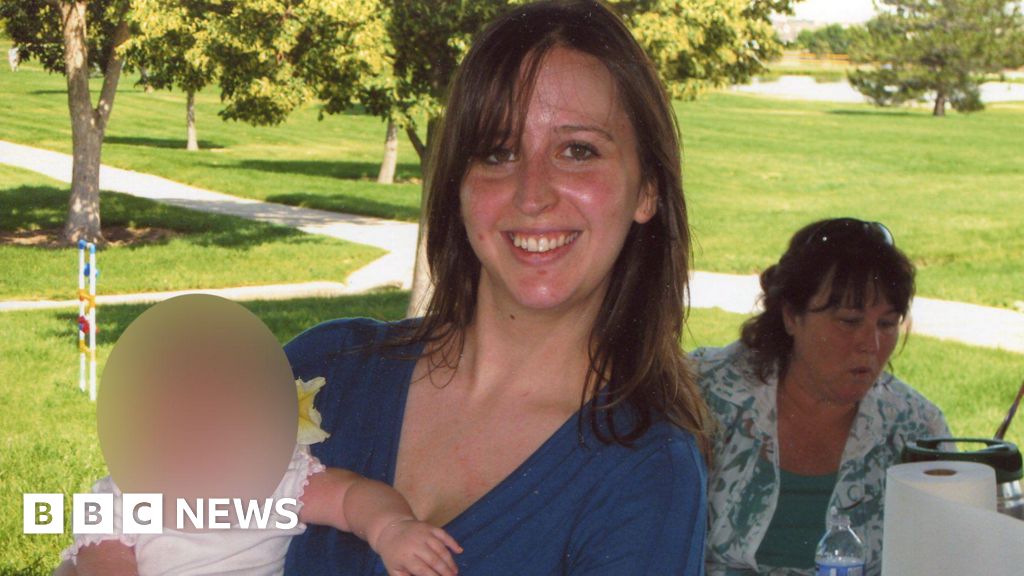
It had been months since married mother-of-three Kristil Krug first started receiving the messages.

The harassment campaign had materialised out of nowhere the autumn of 2023, when a man claiming to be Krug's ex-boyfriend began bombarding her with increasingly threatening texts and emails. The Colorado woman went to the local cops for help; the detective assigned to her case sent warrants to Google and mobile providers, hoping to find the identity of her digital tormentor.

But weeks went by with no response from the tech companies and no sign of who might be sending her those messages – as Krug lived in abject fear, constantly on high alert. When the 43-year-old got out of her car in the garage one morning in December after dropping her children off at school, she was even carrying a gun for self-protection.

But it wasn't enough to save her life. Her attacker surprised Krug from behind before she could make it into the house, fatally smashing her in the skull and stabbing her in the heart.

A call for a wellness check from her husband around noon quickly led to the discovery of her body – and gave police the justification needed to put a rush on the warrant demands.

Within hours, the stalker's identity was revealed: It wasn't her ex-boyfriend. It had been her husband all along.

Daniel Krug was sentenced to life in prison last April after his conviction in Colorado for stalking, murder and criminal impersonation. Her family sat aghast through the trial, trying to absorb not just the enormity of what had happened but also the tragedy of knowing that major companies could have revealed Krug's stalker far earlier.

"I'm confident that she would have been alive today," said Krug's cousin, Rebecca Ivanoff, a former domestic violence prosecutor who lives in Oregon."She would have been in a place to safety plan, and he never would have had the opportunity to get behind her in the way that he did."

So Ivanoff, Kristil's parents and extended family began working to change the law and save other lives. The key, they believed, was to put in place protocols that would require communications companies to respond more quickly to police in cases of stalking or domestic violence.

Everyone they approached, they said – from law enforcement to legislators – considered it "a no-brainer," according to Krug's cousin.

On 1 May, Oregon became the first state to pass Kristil's Law, which gives social media companies 72 hours and communication companies five days to comply with law enforcement warrants in cases of stalking and domestic violence.

Before that, there were no rules about when companies must respond and what would happen if they didn't. Krug's family is hoping the legislation will be passed soon in her native Colorado, other states and even federally.

"This at least helps me have a belief that I don't have to look at her death as just another meaningless statistic … that she's just another victim of domestic violence," said Krug's mother, Linda Grimsrud.

Hearing that the law had passed, she said, was nearly the same as hearing the guilty verdict read at the end of her former son-in-law's trial. But, she says, she and the rest of Krug's family and supporters are just getting started, hoping the law will expand to other states, federally, and even abroad.

The issues prompting the need for Kristil's Law "resonate strongly with challenges we are seeing internationally", said Professor Asher Flynn of the ARC Centre of Excellence for the Elimination of Violence Against Women at Monash University.

In Australia, for example, there is also no statutory requirement for companies' response. As in the US, police can ask for disclosures to be expedited for life-threatening circumstances.

"However, these pathways are discretionary and rely on police identifying and articulating the situation as urgent," she said. "This means that cases may only be escalated to emergency response mechanisms once risk has clearly intensified, rather than at earlier stages of stalking or coercive control."

Nicole Westmarland, criminology professor and director of the UK's Durham Centre for Research into Violence and Abuse, noted how stalking had been "shape-shifting" over the years – calling technology-facilitated abuse a "global public health problem" that law enforcement has struggled to keep up with across the board.

"We used to talk about technology-facilitated violence and abuse; I think that's almost not a useful term anymore, because … it's practically all technology-facilitated," she said. "So it's a massive swing."

Back in Oregon, one of the bill's main sponsors, Rep. Kevin Mannix, had been the author of the state's original anti-stalking law in 1995. He's seen that "shape-shifting" throughout the decades and "immediately recognised the problem" when he heard about Kristil's case.

The "typical time" for companies to process warrants is "in the range of six weeks, because it's sort of first in, first out," he said.

"It became clear that, in Kristil's situation, had the communications companies provided their information immediately, she probably would not have been murdered," he said. "And so looking at that, we realised we needed a special category of warrant which is dedicated to domestic violence and stalking situations."

Mannix, a Republican and long-time legislator, sat down with the communications companies to negotiate.

He said that they "recognised that we were not doing a broad-based warrant – we did a specific warrant for these situations."

A request for comment to Google and the mobile providers who were served search warrants in Krug's case was not immediately answered. In the past, Google has pointed to the large volume of police requests they receive daily, and said they have a team dedicated 24/7 to fulfilling emergency requests.

Krug's mother addressed the delicate dance between privacy and safety when it comes to these types of cases.

"It's a tough topic, right, because it does deal with … freedom of speech and your rights and your freedoms," she said. "But I just don't feel that, especially in this age of technology … people should be able to hide."

Meg Garvin, executive director of the National Crime Victim Law Institute, said she too found the law "definitely a step in the right direction" – though she was also "a little angry that we had to pass a law to try to fill this gap".

She hopes the legislation serves as "kind of a wake-up call".

"Jurisdictions that don't have it, corporations in those jurisdictions should take a hard look at themselves and say: Why wouldn't we automatically prioritise information requests that involve risks to persons?" she said.

Krug's mother has thrown herself into advocacy in her own jurisdiction, visiting legislators in the Colorado Capitol with Kristil's father as they worked to rally support for the law in her name in the state's 2027 legislative session. They're equally focused, meanwhile, on helping raise her children, now 17, 13 and 11.

Krug, always fiercely protective, would want to shield her daughters and son from publicity and any pain – but she'd also be incredibly supportive of the work being done in her honour, her mother said.

"She would be proud of the fact that we can … try to make someone else's family not go through such suffering, or at least make some small ripple in the pool," Grimsrud said of the dancer, beloved friend and sister – a whipsmart mind with a degree in biochemical engineering and keen sense of humour.

"I just feel really strongly that she's there and wanting to see us succeed … if she can do some good for other families, I know that she'd be proud of that."

📰 மூல செய்தி (Source): https://www.bbc.com/news/articles/cx214l1n9xzo?at_medium=RSS&at_campaign=rss

முக்கியச் செய்திகள்

'I wish I had done it sooner': Behind the surge in breast reductions

Published

on

Ranvia is still haunted by the memory of being wolf-whistled at by an ice-cream man when she was just 11 years old.

She'd hit puberty a few years earlier, and it was at that point she says the size of her breasts began to impact how she was perceived – and how she saw herself.

At school, boys would give her nicknames about her boobs, and touch and squeeze them without consent.

"I was still a child," Ranvia says, "but suddenly I had these two body parts that brought attention I was not emotionally ready for."

Growing up in a south Asian family in Leicester, Ranvia remembers the embarrassment she felt at not being able to dress the same way as her high school friends.

"I couldn't wear [certain clothes] because my boobs would stick out," she says, "and my mum would gasp and say, 'You cannot wear that.'"

There was a physical impact, too. Ranvia had back pain, her bra straps would dig into her, and exercise was difficult. Her ADHD also meant the "sensory and emotional intensity of constantly being aware of my body was unbearable".

By the age of 25, weighing 50kg with a 32JJ cup chest, Ranvia reached breaking point.

Her lifeline, she says, was discovering a breast reduction Facebook group with nearly 6,000 members. It was through this group she did the majority of her research into the procedure, while waiting to hear back from her GP about having surgery on the NHS.

"Again and again, I saw women saying the same thing: 'I wish I had done it sooner'," says Ranvia.

Six months after the doctor's appointment, and with no word from the NHS, she decided to go private.

A few months after her surgery, Ranvia was then told she was eligible for the op on the NHS – which only happens in "exceptional circumstances", says breast surgeon Lyndsey Highton – because of her low BMI.

Ranvia is one of thousands of women in the UK who have paid for private breast reductions – an increasingly popular procedure, according to the British Association of Aesthetic Plastic Surgeons (BAAPS).

"When I woke up after surgery and looked down, I could see my stomach for the first time," she says. "I broke down in tears. I had been carrying this physical and emotional weight for so many years – and suddenly I could see myself."

Data from BAAPS in April says for the first time, the number of people having breast reductions and implant removal procedures combined has surpassed those opting for bigger boobs.

The number of breast enlargements in the UK in 2025 was down by 8%.

BAAPS president, Nora Nugent, believes the data reflects "a broader shift away from exaggerated curves towards a more natural silhouette – one that better complements active lifestyles and the continued rise of athleisure fashion".

The rise in weight-loss drugs has also caused "a trend towards much smaller bodies" according to Prof Meredith Jones, presenter of The Beauty Chronicles podcast.

Highton, an NHS breast consultant in Manchester who also conducts private breast surgeries, says this shift is "a little bit" trend driven, but the priority for most women nowadays is function – being able to move and feel confident.

Sue, 54, from Greater Manchester felt she had outgrown her implants – which she had put in after years of breastfeeding.

"They just felt very heavy," Sue says. "I wanted to get back into being fit again, and I felt like these things were just stuck on."

But private breast surgery doesn't come cheap, with prices varying across the country.

In Manchester, Sue paid around £9,500 to have her implants removed in 2025. While Ranvia's reduction surgery cost her roughly £8,000, which she paid in monthly instalments over three years.

The NHS says a private breast reduction procedure in the UK costs "around £6,500", not including consultations or follow-up care. Reduction is considered a cosmetic procedure on the NHS, and while it is available, Highton says it's "almost impossible" to access.

NHS guidelines say you may be eligible for reduction surgery if your breasts are causing health problems, and if other options – like a professionally fitted bra – haven't helped. Your breast size, weight and general health may also be considered.

"The process is just a little bit survival of the fittest," Highton says.

"It's who's pushy enough, educated enough, to see the process through. And then ultimately the answer is generally 'No'."

"There are obviously funding difficulties in the NHS, but I think this is just an easy one to say no to," she adds.

She believes when women suffer from clear physical symptoms as a result of having large breasts, reduction should be recognised as functional surgery, "not dismissed as cosmetic".

The BBC contacted NHS England which declined to comment.

The BBC has been in contact with more than a dozen women who have undergone private breast reduction surgery in the past few years.

The difficulty of accessing breast reduction surgery on the NHS and the price of private treatment have increased the number of women travelling abroad for cheaper procedures, Highton says.

Alex – not her real name – paid £16,500 for her reduction in central London at the end of last year, which removed 4.2kg from her breasts. She thinks her operation was particularly expensive because of the size of her breasts – which were a K cup – and because her surgeon is considered "the Michelangelo of boobs".

Alex had been active on a Facebook group with thousands of women discussing travelling across Europe for the procedure – and had considered going abroad herself.

But while she was tempted by a quote of around £4,000 to have a boob reduction op in Lithuania, she felt "terrified" about the idea of having medical issues on the flight home.

If complications do occur, it often falls on the NHS when people arrive back in the UK, Highton says.

The different ways of accessing breast reduction surgery – whether on the NHS, privately, or abroad – are widely documented across social media.

Alex says she knows of women – friends of friends and others she's seen on viral TikToks – who are desperate for the operation but cannot afford to go private, and have already been rejected on the NHS.

"It is quite frustrating to try and communicate to someone why this is so important and how it's not cosmetic," Alex says. "But if, you know, you have a really painful ankle or really painful arm, if it affects your day-to-day life, it needs operating on."

For Ranvia, who speaks to me after her Monday night gym session – something she never did before her breast reduction – there is a much deeper significance than merely achieving a certain look.

"This is not just a cosmetic trend or a simple before-and-after story," Ranvia says.

"For many women, breast reduction is about reclaiming comfort, safety, confidence and ownership over your own body."

📰 மூல செய்தி (Source): https://www.bbc.com/news/articles/c3d2k4xz42no?at_medium=RSS&at_campaign=rss
Continue Reading

முக்கியச் செய்திகள்

'Speed, money and compassion' – lessons from an Ebola survivor and other experts

Published

on

"I saw the burial team taking eight of them," recalls Ebola survivor Patrick Faley. "They put them into a bag and carried them to the burial. I made new friends although they ended up dying. I was the only person that was left there."

This week's scenes from the Democratic Republic of Congo, where medics are scrambling to respond to an outbreak of Ebola, have brought back haunting memories for those who have lived through similar crises.

A decade ago Faley found himself on the front line of a similar situation in West Africa – the worst recorded outbreak of the disease, which killed more than 11,000 people in two years mostly in Guinea, Liberia and Sierra Leone.

For Faley, the memories of what he lived through, including the death of so many of his friends, raise questions about lessons that can be learned for how to handle the latest outbreak in eastern DR Congo in which the World Health Organization (WHO) says more than 170 people have died.

His story is a reminder of the horrors the virus can cause.

Faley was recruited as a community volunteer by Liberia's Ministry of Health to spread awareness about Ebola. He went from village to village to explain how the virus was spread by contact with bodily fluids and encourage people to stop things like greeting one another by shaking hands.

It also involved dispelling rumours and explaining why traditional mourning practices – such as washing the bodies of the deceased – had to be banned.

He worked within communities near his home in the north of the country – and says it was attending the funeral of a colleague who had died of the disease that changed his life as he himself forgot the advice.

"You have to shake hands; you have to hug people," he tells the BBC. "Forgetting to know that we have a crisis, an emergency crisis in our country."

Three days after the funeral, he fell sick with Ebola, finding himself turning from healthcare worker to patient and ending up in the capital, Monrovia, in an overcrowded ward, filled with the bodies of those who had died.

"We sat in the ambulance," he remembers, "and people were just dying at the front of the hospital."

Faley recovered from the infection but his wife and son later caught the virus as well. His wife got better and made it home. Tragically their four-year-old son Momo did not survive.

The lessons from the West African outbreak a decade ago are helping to shape the response this week to the new surge of cases in DR Congo, with funerals banned for those suspected to have been infected.

This has sparked tension in some communities, with a crowd angrily setting fire to part of a hospital on Thursday near the epicentre in the city of Bunia after being told a body would not be released for burial.

But it is essential to learn lessons from the past and to ensure affected communities are on board, says Dr Patrick Otim, the WHO's area manager for Africa.

"One of the biggest lessons from the West Africa outbreak and previous Ebola outbreaks in DRC is that speed matters," he says.

"Early delays in detecting cases, isolating patients and engaging communities can allow transmission chains to expand very quickly."

Another point, he explains, is that outbreaks cannot be controlled through medical interventions alone.

"Community trust is essential. Safe and dignified burials, local leadership engagement and clear communication are just as important as laboratories and treatment centres."

This outbreak is the 17th to have emerged in DR Congo since Ebola was discovered half a century ago in 1976.

It is only the third worldwide of the rare Bundibugyo species of Ebola, which emerges less often than the more common one known as Zaire.

And while the West African outbreak was curbed, after two years, with vaccines, experts have warned Bundibugyo has no vaccine or known treatment.

"Just because a vaccine works against one particular type of a virus doesn't mean it's going to work against another one," Professor Thomas Geisbert tells me over the phone from his laboratory at the University of Texas Medical Branch in the US.

Geisbet is a leading expert on Ebola, and one of two researchers who invented the first known vaccine for the virus, known as Ervebo.

"That remains currently the only vaccine available in the global stockpile," he says.

Bundibugyo's genetic sequence is different from the Zaire species by about 30%, meaning the existing vaccines are ineffective against it.

The WHO says it could take up to nine months to find an effective vaccine – although scientists at Oxford University in the UK have just announced that they are developing one that could be ready for clinical trials within two to three months.

This is something Prof Geisbet has been working on.

He tells the BBC how he created a similar single-injection vaccine targeting Bundibugyo, using the blueprint of the original Ervebo.

Tests on monkeys showed 83% protection from Bundibugyo but it has yet to progress to human trials.

Geisbet warns that getting a vaccine from the laboratory to rollout, with trials and manufacturing, can cost more than $1bn (£745m).

It is an investment with "a whole bunch of zeros behind the dollars", he says – and one pharmaceutical companies so far have not seen as being profitable.

For Wallace Bulimo, biochemistry professor at Kenya's University of Nairobi, events in DR Congo underscore the need for more investment.

"Why is it that we have not actually done a lot of work on this virus?" he asks. "And yet we knew it was there.

"It was first discovered in 2007, so we should have actually never ignored it."

Faley warns those currently on the front line in eastern DR Congo that there is a risk in warning communities that the current outbreak has no known cure.

"If you're going to tell the community that listens to the radio that Ebola has no cure," he says, people who fall sick will not bother to seek medical help.

"[For them] going to the treatment unit [means] they're just going to die, because there's no treatment."

These mistakes, he argues, could lead to stigma and discouragement within local communities as they feel helpless.

Another lesson he draws from his own experience in Liberia is the rush of foreign organisations to help on the ground.

This week tonnes of aid have been shipped to Ituri, the province in eastern DR Congo at the epicentre of the outbreak, with medical organisations and UN agencies making plans to deploy teams to support local medics.

"A lot of foreigners trooping into their community brings fears," says Faley.

"In Liberia, during the initial stages people were still in denial and left their community because of the influx of NGOs."

Outside organisations, including the WHO, have been clear it is the Congolese government itself that is leading on the response, which is in a historically insecure area where armed groups have operated for years.

"The DRC has some of the most experienced Ebola responders in the world," says Otim.

"Over the past decade, the country has managed multiple Ebola outbreaks and built strong expertise in surveillance, laboratory systems, case management, infection prevention and control, vaccination strategies and outbreak co-ordination."

For him, the challenge is not a lack of experience.

"The challenge is the operational environment, including insecurity, displacement, limited infrastructure and intense population movement, which make outbreak control far more complex."

The immediate goal is to contain the virus before it can spread further – with experts warning that missed chances to spot the outbreak sooner could mean the outbreak is already far bigger than is known.

There are few reasons for optimism, but scientists do point out that Bundibugyo's fatality rate, of 30%, is lower than for other Ebola species.

"On one hand," says Prof Geisbet, "it's good that the mortality rate, historically, for Bundibugyo has been lower."

"But the incubation period," he warns, "could be longer. That mean

📰 மூல செய்தி (Source): https://www.bbc.com/news/articles/cj3p2rdx0l8o?at_medium=RSS&at_campaign=rss

Continue Reading

முக்கியச் செய்திகள்

Race for French presidency sees ex-PM Philippe as early favourite to beat populists

Published

on

A year to go until France chooses its next president, the big question is who can save the election from being a battle of the extremes.

For now, and perhaps only for now, the answer is pretty clear. It is President Emmanuel Macron's former prime minister, Edouard Philippe.

Latest opinion polls concur that the 55-year-old centre-right politician is the only figure capable of beating a hard-right candidate in round two of the vote next May, whether that is Marine Le Pen or her young deputy Jordan Bardella.

In any other polled scenario, the other candidate would lose and France would have a populist-right head of state.

Philippe is also best placed to keep the hard-left candidate Jean-Luc Mélenchon out of the run-off, thus eliminating the scenario – a nightmare for business and France's European partners – of a straight choice between hard left and hard right.

For supporters of Philippe, who heads the small Horizons party, all this should justify his emergence in the coming months as the natural candidate of the French centre-right and set him on course for victory.

They expect other contenders from the same political space to acknowledge Philippe's lead towards the end of the year and step diplomatically from the race.

Those rivals include the former centrist prime minister, Gabriel Attal of Renaissance who declared his candidacy on Friday, and Bruno Retailleau of the conservative Republicans.

In the peculiar French system of voting, everyone knows that having too many players in the multi-candidate first round of the presidential election next April amounts to political suicide.

With several candidates vying for the same slice of the electorate, the vote is divided up and all fall below the qualification mark for round two – in which only the two leaders from round one take part.

This was already true in the old politics, where Socialists and Gaullists used to battle it out. How much more true is it now, when historic formations of right and left are being eclipsed by populist forces on their flanks?

So, with a year to go, Edouard Philippe is cautiously moving his campaign into gear – mindful that being an early favourite in the presidential race is as often a hindrance as an asset.

In a meeting in Reims east of Paris earlier this month, he announced his three campaign directors as well as a distinctly Gaullist election slogan – France Libre (Free France).

Leaning clearly to the right on economic matters, he favours a further pushing back of the age of retirement from its current 64, and a law to enshrine balanced budgets. Both issues could be the subjects of early referendums if he is elected next year.

In June he plans to hit the news with an innovative communications stunt – beaming himself into 1,000 living rooms across France for a mass "apartment meeting". And on 5 July in Paris, he holds his first rally as a candidate.

As Le Monde newspaper said in a profile, Philippe "hopes that a face-off between him and the National Rally (RN) quickly gets accepted as the framework of the election, with himself as the natural barrier to the far-right coming to power".

The problem is, of course, that there are so many imponderables between now and next May, and the interim is unlikely to play out as smoothly as Philippe supporters would like.

First of all, there is no guarantee that his rivals in the centre-right space will do the honourable thing and step aside.

Even if they do, they will probably maintain their campaigns as long as possible, opening up divisions with Philippe that will be exploited by his real opponents.

For now, the challenge from the centre-left – the Socialists and allies – looks minor. They are as divided as ever about who to choose as candidate or candidates, and how to do so. It is quite possible that four or five names could end up on the ballot.

But it is not impossible either that, under threat of a wipe-out, the mainstream left gathers around a single candidate. Someone like MEP Raphael Glucksmann, of the small Place Publique party, could become a rallying point for moderate left-centre voters and draw them away from Philippe.

There is also the small matter of a corruption probe just announced into Philippe in his function as mayor of the northern port city of Le Havre. His team says the accusations of favouritism are untrue and will be fought at every turn, but they cannot be helping.

Most significantly, though, any cold-headed analysis of Philippe's prospects must acknowledge that political momentum in France ahead of next year's elections remains strongest not in his centre ground, but at the extremes – especially on the right.

Anti-elite sentiment, economic insecurity, social tensions and declining public services have prepared the ground for candidates of radical change.

For them, Philippe is an easy target because he is so obviously a figure from the old power system. Prime minister from 2017 to 2020, he is forever branded for his enemies as a Macronite.

On 7 July – two days after Philippe's Paris rally – the big event in France's pre-campaign will take place, when sentence is delivered by an appeal court on the RN's EU money trial and France will learn whether Marine Le Pen is struck with ineligibility and thus unable to run next year.

All the polls suggest that whether she can or cannot makes little difference, because the media-savvy Jordan Bardella scores, if anything, even better than she does.

But will that be borne out when the hard campaigning gets under way?

Philippe is reported to be hoping for a Bardella candidacy, because he reckons the 30-year-old's inexperience will soon begin to tell, whereas Le Pen, 57, is a tough election warrior with a deep rapport with voters across the country.

The RN is a nationalist party which wants to limit immigration, for example by stopping families from joining migrant workers and ending the right to nationality for all born on French soil. Officially at least, the party wants to bring down the age of retirement to 62.

As for the hard-left France Unbowed (LFI), its leader Jean-Luc Mélenchon declared himself a candidate earlier this month, with a promise among his first acts as president to dismantle the media empires of French billionaires like Vincent Bolloré.

Calling for hefty new taxes on big business and an opt-out from EU rules, the 70-year-old former minister has built a formidable support base in the "new France" of the high-immigration banlieues – the suburbs of French cities – and among the prospect-deprived, university-educated young.

As a candidate in 2022, he came within an ace of qualifying for the second round against Emmanuel Macron, and believes his destiny is to face off against the far right. "When the rest are gone, it'll be me and her," he has said.

But in that "battle of the extremes" – populist left versus populist right – for the presidency of the French republic, all polls suggest that there would be one clear winner: and it is not Jean-Luc Mélenchon.

📰 மூல செய்தி (Source): https://www.bbc.com/news/articles/c4g0410gnv5o?at_medium=RSS&at_campaign=rss
Continue Reading

Trending

Copyright © 2024 by 7Tamil Media, All rights reserved.