Connect with us

உலகம்

Rwanda-Russia nuclear deal underscores Africa’s shifting power balance

Published

on

Rwanda turns to Russia for nuclear training and research, advancing ambitions in technology, healthcare and diplomacy.

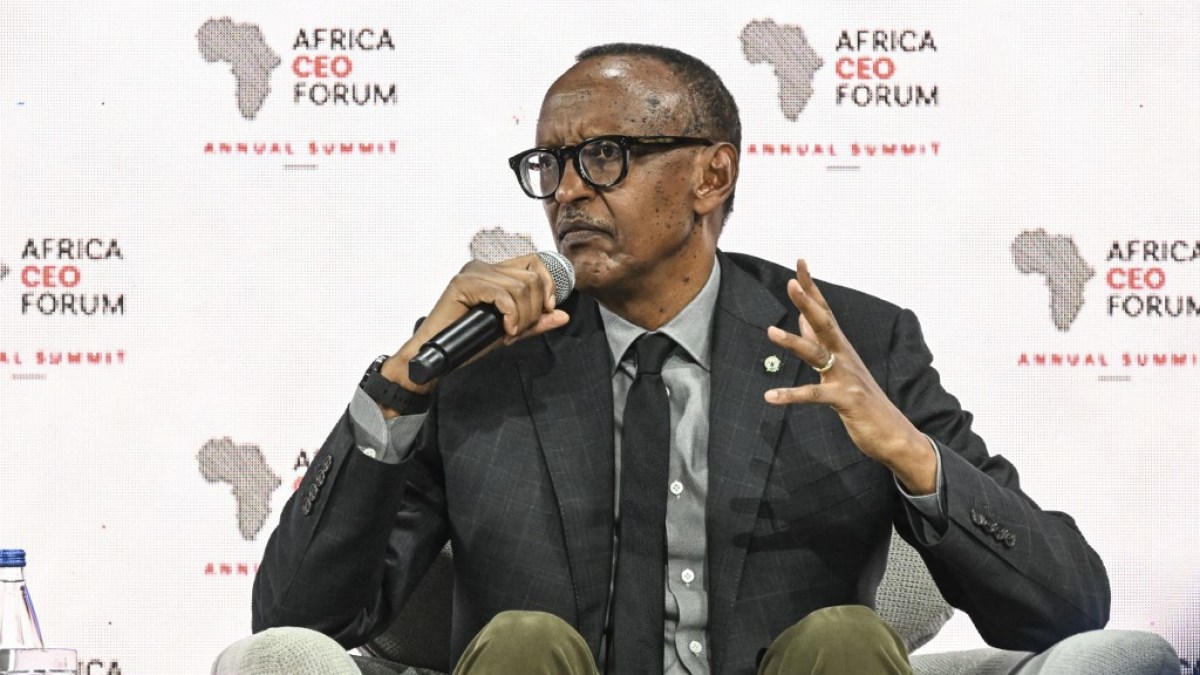
Kigali, Rwanda – Rwanda’s new nuclear cooperation agreement with Russia may look technical on paper, focused on science, nuclear medicine and energy, but it signals a deeper shift in the geopolitical balance across Africa.

While Moscow is deepening its presence on the continent, Washington and other Western powers are increasingly viewed as inconsistent partners, leaving room for countries like Rwanda to explore new alliances.

The agreement was signed on May 19 at the Nuclear Energy Innovation Summit in Kigali, where Rwanda’s government emphasised its ambition to become a regional hub for technology, innovation and advanced healthcare.

The Memorandum of Understanding (MoU) covers nuclear medicine and broader cooperation in health and nuclear science, including potential research reactor projects and training programmes.

Rwandan government spokesperson Yolande Makolo told Al Jazeera that feasibility studies are under way for a small modular reactor (SMR)-based facility and a Centre for Nuclear Science and Technology.

“In addition to Russian company Rosatom, Rwanda also signed MoUs with the US government on civil nuclear cooperation, as well as agreements with firms from South Africa and Austria,” Makolo said, highlighting Kigali’s strategy of engaging multiple international partners.

The proposed centre would eventually host a research reactor, laboratories, training facilities and nuclear medicine infrastructure, though the plan remains in its early stages. For now, Rwanda is sending students to Russia for nuclear engineering programmes, laying the groundwork for domestic technical capacity.

Western influence in Africa, long rooted in aid, development financing and security partnerships, is facing new challenges. Some African governments question whether foreign partners can be relied upon when policy priorities shift between administrations.

Russia has moved quickly to exploit this uncertainty, promoting a policy of noninterference and respect for sovereignty, a message that resonates with leaders frustrated by perceived Western pressure.

“Russia is benefitting from weakening perceptions of Western consistency,” said Professor Macharia Munene, a specialist in diplomacy and international relations. “In the eyes of some African leaders, Moscow’s approach is more predictable: you get investment and training without strings attached.”

Russia’s nuclear outreach is part of a broader strategy to expand its influence on the continent, with agreements reportedly signed in countries such as Egypt, Ethiopia, Nigeria, Ghana and South Africa. Many of these deals involve Rosatom, the state nuclear agency central to Moscow’s technical and diplomatic push.

At the same time, China’s growing economic footprint and the United States’s security partnerships in Kenya, Uganda, Ethiopia, and Djibouti, home to the US’s largest military base in Africa, mean that Africa is increasingly a chessboard of competing powers.

Rwanda has faced criticism over human rights, including accusations of targeting journalists and opposition figures. Relations with the US have been tense, with Washington accusing Kigali of backing the M23 rebel group in the eastern Democratic Republic of the Congo, a key flashpoint in regional power struggles.

Yet, Rwanda frames its engagement with Moscow largely around technology, training and investment rather than politics. The nuclear agreement is not about immediate electricity generation but appears to be focused on long-term capacity building.

“Rwanda will still be able to juggle multiple bilateral partners,” said Beverly Ochieng, senior analyst at Control Risks. “This deal comes alongside a health MoU with Russia and defence talks with France. Rwanda is compartmentalising partnerships to serve its priorities.”

President Paul Kagame’s strategy is clear: maintain strong ties with the US, China, Europe, the Gulf and Russia, without becoming overly dependent on any single partner.

Nuclear projects in Africa often serve dual purposes: technical development and political signalling. A small modular reactor or research facility demonstrates scientific ambition and industrial sophistication, even before any electricity is produced.

“Most of Russia’s nuclear agreements are symbolic,” Ochieng said. “They let Rosatom dominate technical capacity, even under sanctions. It may take a decade before these deals result in operational power plants.”

Experts point out that nuclear programmes are expensive and complex, requiring decades of expertise, regulatory oversight and careful management of international safeguards. Governments must weigh the benefits of training and capacity-building against the long-term financial and technical risks.

Yet, many African nations see nuclear cooperation as an attractive option because it allows them to pursue development pragmatically, rather than committing to a single global power.

“Russia does not pretend to be morally superior,” Munene said. “That honesty, combined with Western double standards, draws African countries to Russia and China.”

In East Africa, nuclear capability is increasingly seen as part of national prestige and economic strategy. Kenya, Uganda, and Ethiopia have all expressed long-term interest in nuclear energy, though progress has been slow. Rwanda’s decision to pursue partnerships with multiple countries, including the US, South Africa, Austria and Russia, reflects both regional ambition and caution.

For Kigali, the nuclear programme is also tied to domestic priorities: improving healthcare through nuclear medicine, training engineers and advancing scientific research. If successful, the centre could make Rwanda a regional hub for nuclear technology and applied science, attracting talent and investment.

The deal also fits into Kagame’s broader vision of transforming Rwanda into a technology-driven economy, leveraging partnerships that blend innovation, investment and diplomacy. However, critics warn that reliance on foreign technology and training could create long-term dependence, especially if global political dynamics shift.

The nuclear cooperation agreement is long-term and incremental. Feasibility studies, student training and infrastructure planning are expected to take several years. Only after these foundations are laid could operational facilities be considered, a process that may span a decade or more.

Rwanda is signalling a strategic approach: diversify partnerships, invest in human capital and use technical agreements as a form of geopolitical leverage.

“Rwanda is showing that it can pursue development and diplomatic objectives simultaneously,” Ochieng said. “By carefully compartmentalising its partnerships, the country hedges against uncertainty while laying the groundwork for advanced scientific capacity.”

📰 மூல செய்தி (Source): https://www.aljazeera.com/news/2026/5/30/rwanda-russia-nuclear-deal-underscores-africas-shifting-power-balance?traffic_source=rss

உலகம்

Ebola treatment centre rebuilt after being torched by protesters in DRC

Published

on

Ebola treatment centre rebuilt after being torched by protesters in DR Congo

Workers in eastern DR Congo are rebuilding an Ebola treatment centre that was burned by protesters earlier this month, as health officials warn misinformation is driving families to hide sick relatives. The Congolese government confirmed over 1,000 suspected cases and at least 220 deaths since the outbreak was declared.

📰 மூல செய்தி (Source): https://www.aljazeera.com/video/newsfeed/2026/5/29/ebola-treatment-centre-rebuilt-after-being-torched-by-protesters-in-drc?traffic_source=rss

Continue Reading

உலகம்

‘Arbitrary measures’: Lula slams US ‘terror’ designation for Brazil gangs

Published

on

Lula warned that labelling Brazil’s criminal networks as ‘terrorists’ could ‘undermine’ local law enforcement efforts.

The president of Brazil, left-wing leader Luiz Inacio Lula da Silva, has denounced a decision by the United States to designate two of the South American country’s criminal networks as “terrorists”, warning that the label could be a “setback” for local law enforcement efforts.

The condemnation came in a 435-word message posted to Lula’s social media platforms on Friday.

In it, Lula drew a line between criminal activities and international terrorism, which is often understood to use violence for political or social aims.

“The terror inflicted by these organisations upon communities seeks to generate profit through crime — specifically through drug and arms trafficking,” Lula wrote.

Those activities, however violent, “must not be conflated with the ideologically, politically, or religiously motivated actions characteristic of international terrorism”, he added.

Lula’s statements came in response to an announcement a day earlier from the administration of US President Donald Trump.

On Thursday, US Secretary of State Marco Rubio revealed that he had designated Brazil’s two largest criminal groups — the Primeiro Comando da Capital (PCC) and the Comando Vermelho (CV) — “specially designated global terrorists”.

He also outlined plans to add the two groups to the list of “foreign terrorist organisations”, effective June 5.

Rumours had swirled for months that the Trump administration would apply the “terrorist” label to the two groups. But Lula and his ministers had pushed back, calling on Trump to hold off.

“Terrorist” designations freeze all US-based assets connected to the targeted groups, but they can also be used to penalise anyone who offers “material support or resources” to them.

Experts warn that such restrictions could potentially affect financial institutions and even the victims of such groups, including businesses and individuals who might be forced to pay extortion.

Lula has also expressed concern that the “terrorist” label could pave the way for US military intervention, a fear he reiterated in Friday’s statement, though he never named Trump outright.

“We remain fully prepared to develop joint solutions that yield mutual benefits for all nations involved,” Lula wrote.

“However, we will not tolerate the imposition of arbitrary measures from abroad, nor will we accept their use as a pretext to undermine our sovereignty or our economy. Unilateral, non-negotiated measures can undermine the fight against criminals and trigger actions that endanger the lives of people who have absolutely no connection to crime.”

A prominent left-wing leader in Latin America, Lula is in the midst of a heated election season, as he seeks a fourth nonconsecutive term as Brazil’s president.

Previously, he served as president from 2003 to 2011, before being re-elected to a third term in 2022.

In that race, he defeated the right-wing incumbent, Jair Bolsonaro, who would later be convicted of attempting to overturn the results of the race. Bolsonaro is currently serving a 27-year prison sentence.

His eldest son, Senator Flavio Bolsonaro, is thought to have been instrumental in Trump’s decision to issue the “terrorist” designations. The senator is currently running against Lula in the 2026 presidential election, and the two have been locked in a tight race.

This week, as he visited the White House, Senator Bolsonaro confirmed to reporters that he intended to seek “terrorist” designations for both the Primeiro Comando da Capital and the Comando Vermelho.

Trump has close ties to the Bolsonaro family, and he has previously intervened in elections around the world on behalf of right-wing candidates.

In Friday’s post, Lula accused Senator Bolsonaro of leveraging his family connections to “petition foreign authorities” for favour.

“It is deplorable that, once again, members of the Bolsonaro family have travelled to the United States to advocate for foreign intervention in Brazil,” Lula wrote.

He pointed to alleged efforts to stop the criminal prosecution of Jair Bolsonaro. Currently, one of the ex-president’s sons, Eduardo Bolsonaro, is facing obstruction charges related to efforts to lobby Trump to intervene in the case.

Trump ultimately did impose steep sanctions against Brazilian products in August 2025, citing the Bolsonaro trial as a reason.

Under Trump, the US has taken an increasingly expansionist view towards the Western Hemisphere, reviving the 19th-century Monroe Doctrine, which described the Americas as Washington’s sphere of influence.

Trump himself has used crime as justification for taking unilateral military action in the region. Since September, his administration has conducted 59 strikes against alleged drug-trafficking boats in the Caribbean Sea and eastern Pacific Ocean, killing at least 196 people.

And on January 3, he launched an early-morning military operation against Venezuela, culminating in the abduction and imprisonment of then-President Nicolas Maduro on drug-trafficking charges.

While the Bolsonaro family has courted Trump in recent months, Lula has criticised those military-led actions as unjustified.

But security is expected to be a dominant issue in October’s presidential race. This week’s “terrorist” designations are likely to put Lula in an awkward position, forcing him to condemn the label without downplaying the extent of the violence.

Lula has attempted to brush off right-wing criticism that he has been lax on crime, pointing to his government’s recent $11bn investment in the “Brazil Against Organized Crime” programme.

That follows a separate $2bn programme in March to bolster the country’s prisons, improve homicide investigations and disrupt arms trafficking and other financial transactions carried out by criminal groups.

Still, Lula and Bolsonaro remain neck and neck in the lead-up to October’s election.

On May 16, the polling firm Datafolha found that both candidates would receive 45 percent of voter support in a one-on-one race, with 9 percent of voters indicating they would cast a null vote.

Another 1 percent identified as undecided.

📰 மூல செய்தி (Source): https://www.aljazeera.com/news/2026/5/29/arbitrary-measures-lula-slams-us-terror-designation-for-brazil-gangs?traffic_source=rss

Continue Reading

உலகம்

ICE agent arrested over shooting of Venezuelan man in US immigration raid

Published

on

The charges stem from the January 14 shooting of Julio Cesar Sosa-Celis in Minneapolis during Operation Metro Surge.

An Immigration and Customs Enforcement (ICE) agent charged with shooting a Venezuelan man during a controversial immigration raid in Minnesota has been arrested in Texas, according to United States authorities.

Agent Christian Castro, 52, was taken into custody on Friday after investigators from Minnesota tracked him down in the southern state, where he was arrested with assistance from the Texas Rangers and the Department of Homeland Security’s (DHS) inspector general’s office. He faces four counts of second-degree assault and one count of falsely reporting a crime.

The charges stem from the non-fatal shooting on January 14 of Julio Cesar Sosa-Celis in Minneapolis during Operation Metro Surge, a large-scale immigration enforcement campaign that drew widespread criticism for its aggressive tactics.

Prosecutors allege Castro fired through the front door of a residence, striking Sosa-Celis in the leg.

“Mr Castro was charged earlier this month with four counts of second-degree assault and one count of falsely reporting a crime for an incident on January 14, 2026, when he discharged his weapon through the front door of a home knowing there were people who had just run inside,” the Hennepin County Attorney’s Office said in a statement.

“The bullet travelled through the door and struck one victim in the leg before making its final impact in the wall of a child’s room.”

Minnesota officials welcomed Castro’s arrest, saying federal agents should be held to the same legal standards as everyone else.

“In Minnesota, we believe in equal justice under the law. That means nobody is above the law, including agents of the federal government,” said Minnesota Attorney General Keith Ellison. “I am pleased to hear Christian Castro has been taken into custody and will stand trial for the crimes he allegedly committed in Minnesota.”

The case became a flashpoint after federal authorities initially claimed Sosa-Celis and another man had assaulted ICE officers.

Those allegations later unravelled when video and other evidence emerged that contradicted agents’ accounts, prompting prosecutors to drop charges against Sosa-Celis and his housemate, Alfredo Aljorna.

The DHS later acknowledged that officers involved in the incident had provided false information about the shooting.

The outgoing director of ICE, Todd Lyons, also indicated a federal investigation was under way. “Lying under oath is a serious federal offense,” he said.

But through a spokesperson, ICE rejected Minnesota’s effort to prosecute the agent involved, calling the case “unlawful” and “a political stunt”.

Castro is the second federal officer charged this year in connection with Operation Metro Surge, an unusual step that reflects growing scrutiny of federal agents’ conduct during the immigration crackdown.

Hennepin County Attorney Mary Moriarty is also pursuing investigations into other incidents linked to the operation.

Operation Metro Surge began in Minnesota in December 2025. By the time Sosa-Celis was shot on January 14, hundreds of federal agents had been deployed across the Minneapolis-St Paul area in what officials described as the largest DHS operation in US history.

The crackdown ultimately prompted intense controversy, particularly after the fatal shootings of two US citizens: Renee Good on January 7 and Alex Pretti on January 24.

Against that backdrop, the investigation into the Sosa-Celis shooting further intensified scrutiny of federal agents’ tactics and conduct during the operation.

📰 மூல செய்தி (Source): https://www.aljazeera.com/news/2026/5/29/ice-agent-arrested-over-shooting-of-venezuelan-man-in-us-immigration-raid?traffic_source=rss

Continue Reading

Trending

Copyright © 2024 by 7Tamil Media, All rights reserved.