In a handful of former mining towns and villages in north-west England, there is a lot of frustration with the state of the UK.
It is common to hear people say "Britain is broken", "we are forgotten", and calls for "change".
This is the Makerfield constituency, where locals are being heard louder than ever before in the most consequential by-election in decades.
A constituency that made up 0.1% of voters at the last general election is not only picking a new MP on 18 June.
Voters here are also potentially choosing the next prime minister.
That is because Labour's candidate, Greater Manchester Mayor Andy Burnham, has said that if elected, he would seek to enter any Labour leadership contest to replace Sir Keir Starmer in Downing Street.
First, Burnham must defeat his main rival in Makerfield, local plumber Robert Kenyon, who is standing for Reform UK, an insurgent party that is also aiming to win power in Westminster.
Britain is "broken", Reform UK claims, while Burnham says the country has been on "the wrong path for 40 years".
But in the dozens of conversations I had with voters, residents, business owners and political campaigners in Makerfield, the mood was more nuanced than the rhetoric suggests.
So what exactly do they want to change – and what are the candidates promising to deliver?
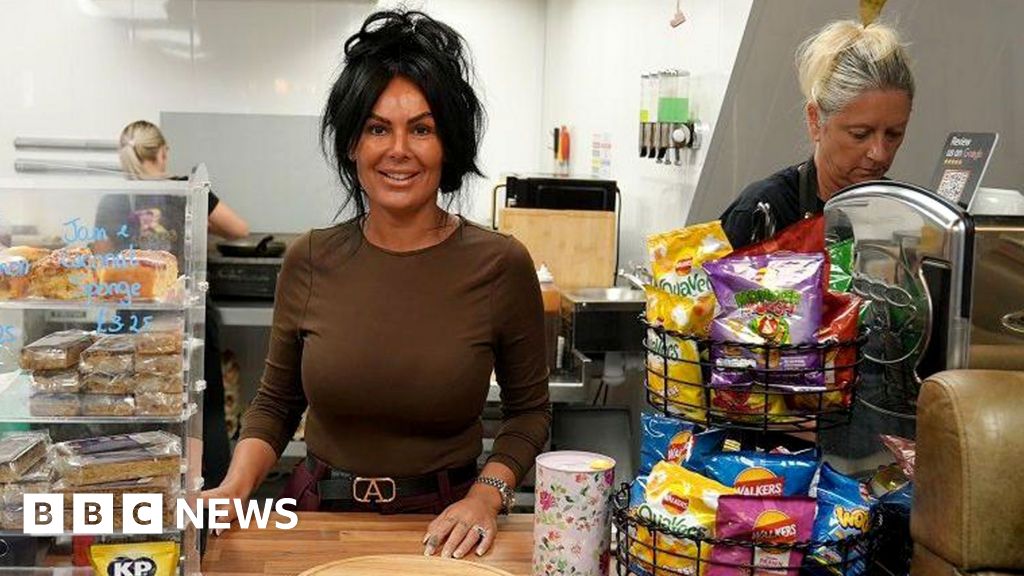
At Rose's Cafe, in Ashton-in-Makerfield, the largest town in the constituency, regulars are munching on their breakfast barms.
In 2023, Yasmin Ratcliffe jumped at the chance to open the cafe here, rather than where she lives, in nearby Leigh.
With the local council spending £6.6m on regenerating the town, Ratcliffe feels it is a good time to expand her business.
"I feel like it's a much better town in Ashton," she tells me. "It's a lot busier than we thought, so the team's growing."
On some indicators Makerfield seems to be doing well, with wages above the national average and high levels of home ownership.
The Greater Manchester region in which Makerfield sits has also been growing, generating a genuine buzz around Manchester as a city. A boom in developments, service industry start-ups and university graduates, among other factors, has driven economic growth.
While Manchester's lure has pulled in many entrepreneurs, Chris Ratcliffe saw potential in Ashton.
In 2019, having worked as an engineer near Manchester for 10 years, he founded Langen, a motorcycle manufacturer, in the town. The company's first line of 100 motorbikes sold out.
"There's an element of me that wants to prove a point that we can do it here," he says.
But Manchester's rising tide has not lifted all boats in Makerfield.
In some ways, the constituency is divided between the better-off neighbourhoods of Ashton, Orrell, and Winstanley in the west, and the more deprived areas of Platt Bridge, Abram and Hindley in the east.
In these latter areas, perceptions of "broken Britain" are easier to find. The problems residents complain about feel more acute and intractable.
Take the notorious illegal dump that has been piling up in the village of Bickershaw since late 2024. Despite several complaints, a fire at the site last summer, and a criminal investigation, the towering mountain of waste remains.
Even at a distance – about a quarter of a mile away – the acrid smell torments my nostrils.
Nicha Rowson, who lives near the tip with her husband and two children, has had to put up with it for almost two years now.
"The rats were a big thing," she says, sitting below what is left of her kitchen ceiling, which was largely removed to deal with the infestation.
It is yet to be fixed – and her neighbours are going through similar ordeals with rats.
She feels the seemingly immovable mess is a symbol of a country that is not working and where "human beings aren't a priority".
I found a similarly damning assessment in Platt Bridge, where residents have suffered severe flooding twice in a decade.
In 2015, Dawn Royds was assured it was a one-off – "an act of God". She believed that until New Year's Day last year, when she woke to blue flashing lights.
"The kids had been playing with some toys the night before and they were just floating about," she says. "That was what got me."
A minister was dispatched to survey the devastation. And since 2024, the government says it has invested £2.65bn in flood defences nationwide – in 2026-27, £329,000 has been allocated to Platt Bridge and nearby areas.
Yet, Dawn is convinced it will happen again. For her, it is one example of why "Britain isn't Great Britain anymore".
More evidence of this attitude can be seen in polls and research. In a report last year, More in Common said "broken" was the most common word Britons used to describe the country.
That has been true of focus groups the think tank organised in Makerfield, too. "They said Britain isn't working," says Luke Tryl, executive director of More in Common. "That the status quo isn't working."
The paradox, Tryl adds, is that people have very high trust in their neighbours and often describe their local area as "good".
Tryl says although it is clear Britain is "creaking at the top", his research on public opinion suggests the foundations of community still appear to be strong.
Even so, Reform UK tells me the "Britain is broken slogan has just cut through across the country".
"It's not something that we need to keep pushing to instil in people's minds," a Reform UK source adds. "Most people just know that Britain is broken."
Instead, the party's candidate, Kenyon, is focusing on hyper-local issues such as opposing new housing developments on green-belt land, pitching himself as a "normal" local lad.
Out on doorsteps, Reform UK is trying to contrast this with what it describes as Burnham using Makerfield as "a stepping stone" to No 10. This is echoed on Ashton High Street by Lewis Ash, who tells me: "I don't want it to be a stepping stone for Andy Burnham."
In the same shopping precinct, Daniel Jones says he is sceptical of every candidate's intentions, saying they have "all [have] got their own agenda… to advance their career".
On the campaign trail, Burnham has been having three simultaneous conversations – one with locals, one with the Labour MPs who could help make him prime minister, and one with the nation as a whole.
The Labour veteran is trying to keep it local in Makerfield, preferring to talk about his ideas to ease the cost of living and linking them to his record as mayor of Greater Manchester – pointing to cheaper bus fares.
Having claimed to have knocked on every door in the constituency several times, as Reform UK has, team Burnham's approach is to send their candidate to speak to undecided voters personally, often about local issues.
His team says he is embracing difficult conversations with voters who are looking for change in a constituency that has elected Labour MPs for 120 years under previous boundaries – but where Reform UK won every ward in May's local elections.
Although I saw mostly Reform UK and Burnham signs and posters adorning the streets I walked, other parties are vying for votes as well.
The Green candidate Sarah Wakefield says she wants to offer more "hope" and "better solutions" to voters in Makerfield.
A former mayor of Wigan, Conservative candidate Michael Winstanley is positioning himself as a community champion, while Jake Austin, who is standing for the Liberal Democrats, claims his party has the best plans for reducing household living costs.
Local campaigners believe the by-election is on a knife edge, not least thanks to Restore Britain, a relatively new party led by former Reform UK MP Rupert Lowe.
In the few constituency opinion polls there have been, which should be treated with caution, Restore sits in third-place and has been buoyed to an extent by support on X from the richest man in the world, Elon Musk.
"People are fed up," says one Restore door-knocker, among a group of six activists wearing matching party-branded caps and T-
📰 மூல செய்தி (Source): https://www.bbc.com/news/articles/ckg4dywykjeo?at_medium=RSS&at_campaign=rss

















 உலகம்9 years ago