Connect with us

உலகம்

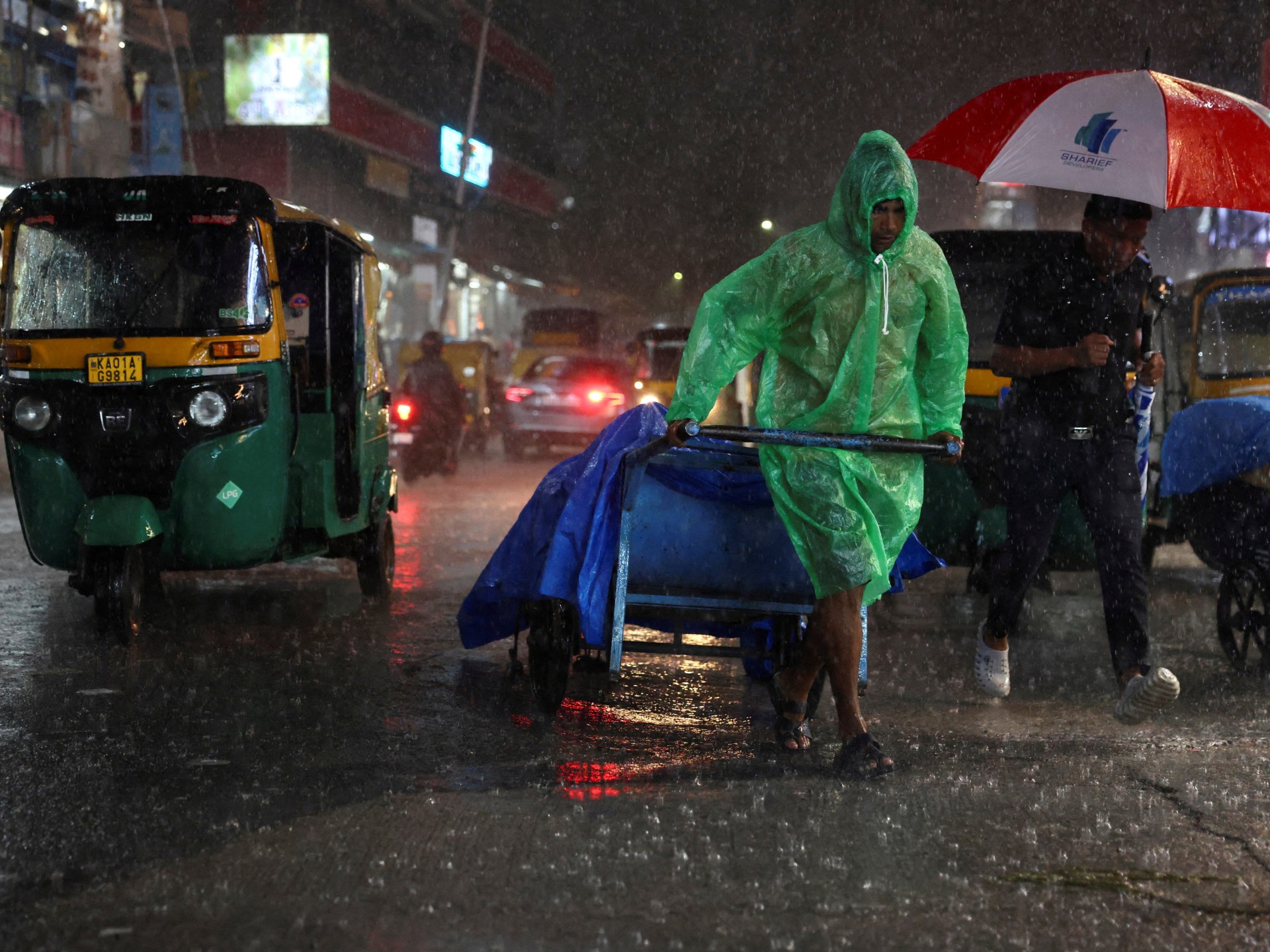
Monsoon rain reaches Kerala 3 days late but on time to save Indian harvests

Published

on

The monsoon rains are essential for driving India’s $4 trillion economy.

Monsoon rains have arrived in India’s southeastern state of Kerala three days late, the Meteorological Department says.

The rains typically arrive on June 1 and are critical to India’s economic health, enabling farmers to plant cotton, soya beans, sugarcane, rice and corn.

India’s economy, which is Asia’s third largest, is valued at $4 trillion and is heavily dependent on the monsoon season, which delivers about 70 percent of the rainfall needed for a good harvest.

Beyond agriculture, the rains also help replenish aquifers and reservoirs across the country.

India’s Meteorological Department said in a statement on Thursday that the “conditions are favourable for further advance of southwest monsoon” into more areas like the central Arabian Sea, Goa, some parts of Maharashtra, Andhra Pradesh and Tamil Nadu over the next two to three days.

Concerns over crops, food prices and economic growth were heightened last month when the Meteorological Department warned that an El Nino-weakened monsoon in 2026 could deliver the driest season the country has seen in 11 years.

The World Meteorological Organization (WMO) said there is an 80 percent likelihood of an El Nino event from June to August.

According to the WMO, the climate phenomenon, which warms surface temperatures in the Pacific Ocean, typically “increases global temperatures and drives more extreme weather and rainfall patterns”.

On Tuesday, United Nations Secretary-General Antonio Guterres said El Nino is “arriving on our doorstep”.

“The world must treat it as the urgent climate warning it is. El Nino conditions will pour fuel on the fire of a warming world,” he warned  in a video message.

📰 மூல செய்தி (Source): https://www.aljazeera.com/news/2026/6/4/monsoon-rain-reaches-kerala-3-days-late-but-on-time-to-save-indian-harvests?traffic_source=rss

உலகம்

US House votes to end Trump’s Iran war: Does it matter?

Published

on

Four Republicans join Democrats in a rare public rebuke of the president. But Congress is still far from being able to stop him from attacking Iran again.

The United States House of Representatives has voted in favour of measures to halt President Donald Trump’s war on Iran as the conflict drags into a fourth month and both sides remain at loggerheads in peace negotiations.

The vote on Wednesday marks the first successful effort by lawmakers to force the US to end a conflict that has had mounting catastrophic effects, from thousands of civilian deaths to global trade disruptions.

It also comes as opposition to the conflict has grown significantly within camps of Trump’s Republican Party due to the effects on Americans themselves and Trump’s failure to swiftly secure a concrete, lasting deal with Iran.

But for now, the vote will remain largely symbolic because of Trump’s own presidential veto power on legislation and because of Republican dominance in the House and Senate – even though it marks a significant reprimand by lawmakers.

Here’s what happened, why it matters and why it doesn’t mean that Trump can’t – or won’t – launch new attacks on Iran:

On Wednesday, lawmakers in the House, led by Democrats, voted to invoke the War Powers Act, which allows Congress to force an end to hostilities if the president does not get its authorisation after entering an armed conflict abroad.

Since the start of the war, Democrats have argued that Congress, not the president, holds the right to declare war. They’ve repeatedly tried to force a stop to the US-Israel war on Iran based on that argument.

However, the Trump administration has countered that the military operations in Iran do not require congressional approval.

The War Powers Act, which has been in force since 1973, requires the president to seek lawmakers’ approval before entering armed conflict.

Only imminent attacks on the US allow the president to unilaterally deploy troops. In such an instance, the president must inform Congress within 48 hours.

If Congress fails to declare war afterwards, the president must withdraw troops within 60 days of entering the war.

In the case of the war on Iran, critics argued that the US was not under any imminent threat: The US and Israel struck first.

Trump also failed to withdraw thousands of US troops deployed to fight the war at its 60-day mark: around April 29.

House Democrats, who hold a minority of seats in the House, have tried to invoke the act three times since the US and Israel ignited the war on February 28. However, all previous attempts had failed.

Wednesday’s vote count was 215 in favour of the resolution to restrain Trump and 208 against.

The success for Democrats came after four Republicans switched sides in what appeared to be a public rebuke of Trump’s policies.

While Republicans staunchly supported the war in public at its start, the mood has noticeably shifted as the US economy and global trade have been badly hit. Trump’s approval ratings have also dropped drastically.

Republican lawmakers Tom Barrett of Michigan, Warren Davidson of Ohio and Thomas Massie of Kentucky broke party lines two weeks ago when the last vote was held. On Wednesday, Brian Fitzpatrick of Pennsylvania joined them.

Not necessarily. At this point, the yes vote is largely symbolic.

The Senate needs to pass the resolution as well, but Republicans also hold a slim majority in the upper chamber.

While Senate Democrats have been forcing votes to kick-start the process that would force a US halt to the war, Senate Republicans have so far mustered enough votes to reject the proposals.

The latest vote to advance exit procedures was held two weeks ago with a 50-47 tally in the 100-member Senate. Four Republicans joined Democrats in voting in favour while Senator John Fetterman of Pennsylvania was the only Democrat to vote against the measure.

While the results reflected growing disapproval from Republican senators, the count was not enough.

Even if the Senate follows the House in invoking limits on Trump’s war on Iran, Trump could veto the resolution.

In that instance, Congress would have to pass the measure by a two-thirds majority to override the president’s veto. That’s not impossible. However, it could be unrealistic in the current climate: Some Republicans are unhappy, but the majority still publicly support Trump.

Then there’s the question of whether the US is even at war right now and if the resolution applies at all.

A ceasefire between the US and Iran has been in place since April 8, even if it’s fragile. The Trump administration argues that this means the US is technically not at war at the moment.

On May 1, Trump declared the ceasefire meant a “termination” of hostilities, even though the US has continued a blockade of Iran’s ports and has hit Iranian ships. Tehran too has continued blocking the Strait of Hormuz.

US Secretary of State Marco Rubio raised that argument when he faced lawmakers in a series of hearings on Tuesday and Wednesday regarding the war. The lawmakers invited him to submit more information about the US plans to exit the conflict in Iran as well as to detail plans for Venezuela, where the US abducted President Nicolas Maduro in January.

In a sharp exchange with Senator Cory Booker, a Democrat, Rubio declared: “The [Iran] war is over.”

However, Senator Jeanne Shaheen, a Democrat on the Senate Foreign Relations Committee, accused Rubio of lacking accountability and failing to provide Congress with the right information.

“You sent Congress a war powers notification, saying we are not in active hostilities with Iran while the US was conducting strikes against Iran and Iran was bombing US embassies and bases throughout the Middle East,” she said.

“That was not consultation; it was an attempt to ‌avoid answering ⁠to this committee and this Congress about this war.”

Some officials in Trump’s cabinet believe so.

Defense Secretary Pete Hegseth claimed on May 12 that the 60-day allowance given to the president to deploy troops under the War Powers Act means the administration may begin striking Iran again without lawmakers’ approval.

Hegseth, in testimony to the Senate Appropriations Committee, essentially argued that the April 8 ceasefire reset the original timelines.

“Should the president make the decision to recommence [the war on Iran], we would have all of the authorities necessary to do so,” he said.

📰 மூல செய்தி (Source): https://www.aljazeera.com/news/2026/6/4/us-house-votes-to-end-trumps-iran-war-does-it-matter?traffic_source=rss

Continue Reading

உலகம்

Israel and Lebanon agree on ceasefire framework in US-led talks

Published

on

Israel and Lebanon agree on ceasefire framework in US-led talks

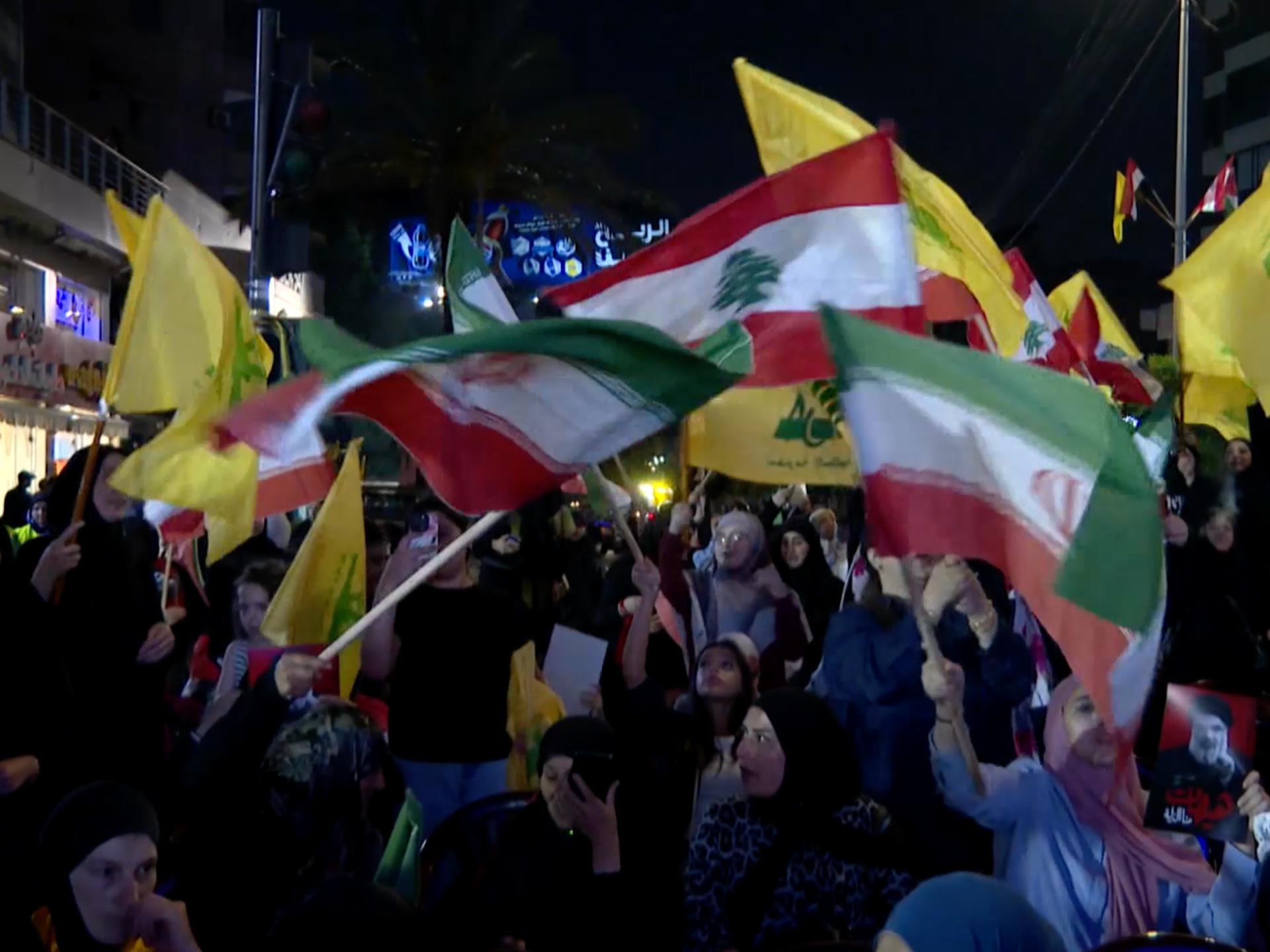
The US announced a ceasefire framework between Israel and Lebanon, which includes expanded Lebanese army control and a halt to Hezbollah attacks. Al Jazeera’s Manuel Rapalo explains how Hezbollah’s rejection of the talks leaves enforcement uncertain.

📰 மூல செய்தி (Source): https://www.aljazeera.com/video/newsfeed/2026/6/4/israel-and-lebanon-agree-on-ceasefire-framework-in-us-led-talks?traffic_source=rss

Continue Reading

உலகம்

Ireland’s Black community opens up about racism after ‘George Floyd moment’

Published

on

In the wake of Yves Sakila’s death following a violent restraint, many say racism in Ireland is an overlooked scourge.

Last month, 40-year-old Emer O’Neill, a Black Irish woman, was racially insulted three times.

Teenagers in her town south of Dublin shouted, “Go back to your country!” at her, she was rudely asked by a man whether she spoke English, and she was called the n-word at a local pub – all in the space of two weeks.

“I don’t have another country to go to. This is my country,” said O’Neill, an activist and broadcaster who in recent years has presented Dublin’s St Patrick’s Day parade for Ireland’s national television channel, RTE.

Days later, she found herself shaking with emotion while singing at an event to remember Yves Sakila, a 35-year-old who was killed on May 15 outside Arnotts, a department store in central Dublin. In video footage by bystanders, the shop’s security guards who restrained him appear to have placed their knees on his neck for more than four minutes.

Sakila, an Irish national, immigrated from the Democratic Republic of the Congo (DRC) when he was 13. The death has been dubbed Ireland’s George Floyd moment, reminiscent of the 2020 killing of the 46-year-old Black man in the US state of Minnesota at the hands of white police that set off mass antiracism protests.

Sakila was allegedly suspected of shoplifting and is said to have accidentally knocked down a man when rushing out of the department store. Police arrived and handcuffed him. They performed cardiopulmonary resuscitation (CPR) when they saw he was unwell, but he was later pronounced dead at Dublin’s Mater Hospital.

As a teenager, he struggled when his adoptive parents separated, and at the time of his death, he had been living on the streets.

“He landed in care services at 16, but he never got back to normal. Even though his adopted mother wanted to bring him home, he wanted freedom,” said Lassane Ouedraogo of Africa Solidarity Centre, who first met him five years ago. Like other homeless people, Sakila was being supported by the diaspora-led organisation.

Ouedraogo described him as a “gentleman” with whom he had “lovely conversations”. “He needed help, not a death sentence.”

No arrests have been made over his death.

“We don’t need specialists to see the video and understand how he died,” Ouedraogo said.

In the wake of the incident, members of Ireland’s minority communities have described a sense of denial about racism in a country known for an anticolonial spirit.

Days before Sakila died, Bertie Ahern, Ireland’s former taoiseach (prime minister), was filmed saying, “We can’t be taking in people from the Congo and all these places,” while canvassing for his centre-right Fianna Fail party for a local by-election. Incumbent Taoiseach Micheal Martin – also from Fianna Fail – said while he did not approve of Ahern’s comments, his party cannot stop people from canvassing.

Sandrine Ndahiro, a literary critic of Black and postcolonial literature and culture at Maynooth University, said she cried for the duration of a prayer vigil outside the Arnotts store last month.

“The shop stayed open for business. People were going in and out, as if nothing had happened. They would have shut if a white person had died,” she said.

Zainab Obasuyi, a PhD researcher at Technological University Dublin, said she has also experienced racism. In high school, her classmates chanted “Ebola la la” upon seeing her.

“Every time I speak about racism, I’m told, ‘You are too sensitive, you are overreacting, you are misinterpreting.’ Irish society is too scared to be called racist because it’s viewed as a moral failing, and hence they throw these words as a defence,” said Obasuyi, now 24. She is part of Black and Irish, a nonprofit advocacy group coordinating a coalition to memorialise Sakila.

For Jackie McCarthy O’Brien, who represented Ireland in international football and rugby in the 1980s and 90s, becoming the first Black woman in Ireland to play both sports, the fields felt freer.

“The only way people wouldn’t question my Irish identity was if I wore the green jersey,” she said. “I was a giant on the pitch. Off the pitch, I was the Black kid with the giant head. The 90 minutes of the game was pure freedom. But when you speak up, you are deemed the angry Black woman and an aggressor who rocks the boat.”

Although O’Brien is well-known across Ireland, the comments she faces are still upsetting. “People have told me, ‘You are not really Black,’ or ‘I don’t see colour.’ But why can’t they see my colour when I see their white skin?”

O’Neill said unconscious bias and stereotyping are difficult to digest because they contradict what Ireland is known for, such as its solidarity with Palestine and South Africa in the past.

“Smaller Irish towns have banners everywhere saying Ireland is only for the Irish. The racism is no longer subtle,” said Ndahiro, the literary critic.

In some Irish news outlets, Sakila, a naturalised citizen, has been referred to as a “Congolese man”.

“A Black migrant is expected to demonstrate excellence and win medals to be deemed Irish. Sakila’s Irishness got stripped away immediately,” Ndahiro said. “How can you write about feminism, human rights and racism but not show up for protests? Irish people whose timelines are all about Palestine online have not uttered a single word about Sakila’s death.”

At a recent antiracism demonstration outside Leinster House, the Irish parliament, a smaller group of counter-protesters called on “foreigners” to leave Ireland.

A Central Statistics Office survey in 2025 found that 49 percent of “Black Irish, Black African and other Black backgrounds” had experienced discrimination.

Mamobo Ogoro, a sociocultural psychologist, believes the election of United States President Donald Trump has “bolstered the arrogance of the far right, as they question migration into Ireland”.

Along with protests outside Arnotts, flowers continue to be placed at a lamp-post where Sakila was restrained.

An initial autopsy was inconclusive, and toxicology reports might take weeks. A second autopsy will take place by an independent forensic pathologist. The national police have referred the case to the ombudsman.

Ebun Joseph, Ireland’s special rapporteur on racism and racial equality, has called for an independent investigation.

Arnotts issued a statement that it was cooperating with the national police but had not released the security camera footage to Sakila’s lawyer.

DRC Foreign Minister Therese Kayikwamba Wagner met Irish President Catherine Connolly, as well as the ministers for foreign affairs and justice.

But Ahern has not apologised for his words.

“If people in power don’t apologise, how can you expect a racist neighbour to apologise?” said Ndahiro.

📰 மூல செய்தி (Source): https://www.aljazeera.com/news/2026/6/4/irelands-black-community-opens-up-about-racism-after-george-floyd-moment?traffic_source=rss

Continue Reading

Trending

Copyright © 2024 by 7Tamil Media, All rights reserved.