Connect with us

முக்கியச் செய்திகள்

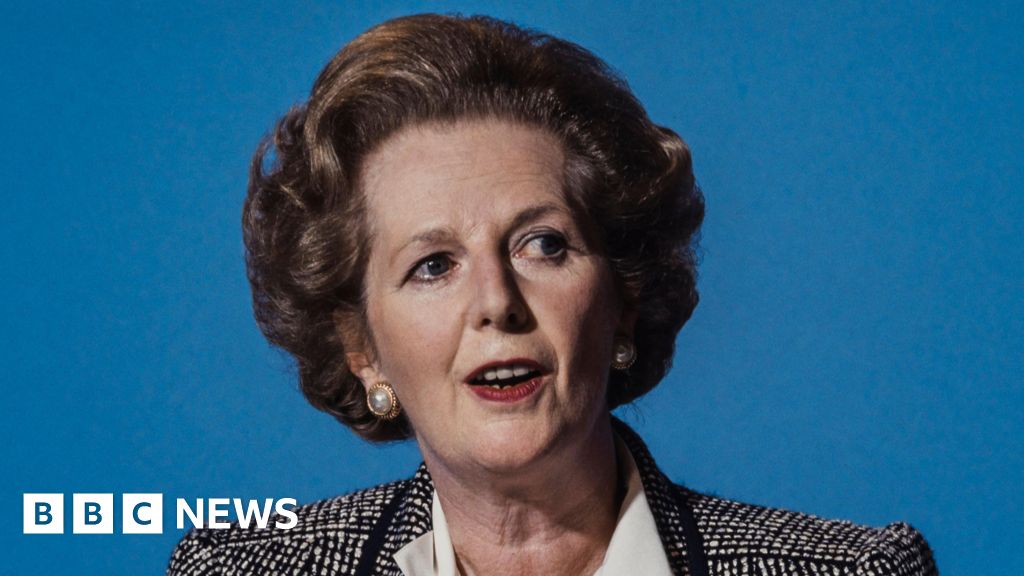
Margaret Thatcher assassination story by Hilary Mantel gets stage premiere in Liverpool

Published

on

A story called The Assassination of Margaret Thatcher, in which award-winning author Dame Hilary Mantel imagined a plot to kill the 1980s prime minister, was controversial when it was published, and has now had its stage premiere in Liverpool.

The title was designed to grab attention – and divide opinion – but the new play's makers say it explores some serious and very current issues, including violence against politicians, the actions of angry and disenfranchised young men, and how people could and should resolve their differences.

When Dame Hilary published her original short story in 2014, its title was meant to provoke a reaction, according to playwright Alexandra Wood.

"Hilary Mantel, from what I've heard about her, was mischievous and she knew what she was doing and she was being provocative," Wood says.

"But the play doesn't deliver on that simplicity of the title."

Wood's adaptation of The Assassination of Margaret Thatcher has just opened at the Liverpool Everyman theatre.

Animosity towards Lady Thatcher still smoulders in the city, which largely blamed her for its industrial decline, unemployment and neglect in the 80s.

But Wood says the play isn't as simple as providing wish fulfilment for opponents of the divisive former PM.

"We give those people maybe 30 seconds worth of that, and actually the rest of the play is complicating it in a hopefully complex way," she says.

Set in 1983, The Assassination of Margaret Thatcher tells the fictional story of a sniper from Liverpool who plots to murder the then-PM.

He lies in wait for her at a window in Windsor, after being let into a flat by a woman who thinks he's the plumber.

Dame Hilary got the idea after she happened to spot Thatcher from the window of her own flat in Windsor as the prime minister emerged from a nearby hospital after an eye operation.

The writer realised how easy it could have been to have taken a shot. "I thought, if I wasn't me, if I was someone else, she'd be dead," she told the Guardian.

Dame Hilary spoke of her own "boiling detestation" for Lady Thatcher, but said she was "a fantastic character" and "the very stuff of drama".

The author set her short story a year before a very real assassination attempt, when the IRA bombed the hotel that was hosting the Conservative Party conference in Brighton.

The story angered Lady Thatcher's supporters, with former cabinet minister Lord Tebbit – whose wife was paralysed by the Brighton bomb – describing it in 2014 as a "sick book from a sick mind", and her ex-press secretary Bernard Ingham calling it "vindictive".

Lady Thatcher herself died in 2013 after suffering a stroke.

Dame Hilary, who was best known for Wolf Hall and twice won the Booker Prize, died in 2022.

Jade Marsden, a former Conservative candidate for mayor of the Liverpool City Region, believes the Everyman is wrong to now put on the stage version.

"I recognise that we shouldn't be afraid to have debate and controversial plays in the arts," she says.

"However, I think given the political tensions in the world and the increase in violence towards politicians, albeit that Margaret Thatcher has already passed, I don't think it should be encouraged."

Wood says the drama is "not inciting violence in any way".

"The play in no way advocates assassinating our political leaders, or anyone," the writer stresses.

The use of violence is among the questions that are debated as assassin Brendan waits at the window for Thatcher to come into view.

He holds Caroline, the character who lives in the Windsor flat, captive and the pair get into a discussion about his motives, the political backdrop of the day, and their contrasting backgrounds.

The fictional marksman claims to be acting primarily in the Irish Republican cause, and also rails against Thatcher's treatment of Liverpool.

In the play, Caroline is no fan of Thatcher either, but she tells Brendan violence isn't the answer.

Through the pair's conversations, the play tries to examine "what politics is and how we can disagree with one another – and that's OK, it doesn't mean you need to resort to violence", Wood says.

The question of how different people respond to "feeling powerless and being unable to change the way things are" is central to the drama, she adds.

"This act of terrorism feels like an act of desperation to be heard and to mean something and to matter and to have some kind of impact on the world.

"Caroline is someone who is fairly passive until she encounters this man who has such strong convictions that he's willing to murder someone for them.

"I'm interested in those two ends of the spectrum, and where and how they might influence one another."

Since the story's original publication, the dangers of violence against politicians have only grown, with a string of attacks in both the US and UK.

Most recently, a man has been charged with attempting to assassinate US President Donald Trump at last month's White House Correspondents' Dinner. Wood and the play's director John Young are speaking before that incident, which was the third assassination attempt against Trump.

Young says: "Since this short story was written, politicians in our own country have been murdered on the streets.

"The idea of an individual who feels so disenfranchised and so disconnected to a society, and so angry and so passionate that they think killing a politician is an answer to that problem – that happens and continues to happen, and that threat looms over us.

"So the idea of the play feels relevant in that way."

While politics in the 80s could be fiery, the play highlights the extreme divisions in our modern climate, the director says.

"We live in a world now where there isn't the space for people to actually have conversations and debate.

"I think we have got very good at tearing each other down very quickly and making quite fast assumptions, and [putting] targets on people in a way that doesn't promote conversation and debate politically.

"We are so far away from respecting the idea that it's OK to think differently to somebody else."

Lady Thatcher and her assassin are "the entrance point" to that issue, he says. "But actually this play feels like it's so much more than just about shooting Thatcher."

The Assassination of Margaret Thatcher is at Liverpool Everyman theatre until 23 May.

📰 மூல செய்தி (Source): https://www.bbc.com/news/articles/cz908vyvwpqo?at_medium=RSS&at_campaign=rss

முக்கியச் செய்திகள்

The Papers: 'Labour's historic battering' and 'Vernon and Tess split'

Published

on

Sign up for our morning newsletter and get BBC News in your inbox.

Copyright 2026 BBC. All rights reserved. The BBC is not responsible for the content of external sites. Read about our approach to external linking.

📰 மூல செய்தி (Source): https://www.bbc.com/news/articles/cp8pvj9mzjdo?at_medium=RSS&at_campaign=rss

Continue Reading

முக்கியச் செய்திகள்

Is hojicha the next matcha? The Japanese tea creeping onto menus

Published

on

Browsing through the menu in a London cafe, Ana Costa wasn't sure what drink she was in the mood for. She didn't fancy a coffee and was considering a matcha latte, when hojicha caught her eye.

A Japanese drink made from green tea, hojicha is dry-roasted at high temperatures to produce a distinctive aroma and nutty flavour. It's less bitter than green tea, with a low caffeine content – and it's creeping onto café menus.

Hojicha tea has always been on the menu, in its traditional form, at chef Shuko Oda's Koya restaurant in London.

"Traditionally, we don't put milk or any sugar or sweetenings in with hojicha," Oda says. "It's meant to be a brown, clear tea that is very much an every and any time of the day type of hot drink."

But Oda says she's seeing the drink pop up more and more across the UK, largely in milky hojicha lattes and desserts, and even added hojicha ice cream to her own restaurant's menu earlier this year.

At matcha chain Jenki, iced hojicha latte sales were 55% higher across its six London cafes between January and April than during the same time period the previous year.

Meanwhile Rashique Siddique, director of How Matcha, says hojicha latte sales have "grown significantly" over the past year, with How Matcha now selling one or two cups for every five matcha lattes it sells.

"Hojicha feels like where matcha was two or three years ago," Siddique says, "it's moving from niche to mainstream quite quickly."

The tea even hit the menu for the first time at east London coffee roasters Grind this summer, in the form of a black sesame hojicha. Head of coffee Howey Gill says it added the drink after keeping an eye on Japanese food and drink trends spreading to the UK – though he acknowledges the brown colour is "not as sexy as matcha".

Ana, 21, says her hojicha latte from How Matcha – served iced with oat milk and a pump of vanilla syrup – is definitely "less Instagrammable" than matcha, but she enjoys the flavour and says the appearance doesn't matter to her.

Shoppers carrying cups of bright green matcha have become ubiquitous in town centres across the UK. As of February, even Greggs is selling it.

And increasing numbers of people are buying the powder to prepare at home, too.

The quantity of powdered matcha sold at UK supermarkets and convenience stores has grown more than fourfold over the past year, with shoppers spending nearly £9m on it over the last 12 months, according to data from research company Nielsen IQ.

Sipping matchas in the sun, Anjani, 28, says she feels the drink is still "very trendy". Her friend Abeer, 28, agrees, but adds that she thinks the majority of people drink it "for the vibes" rather than because they like the flavour.

Mike Turner, founder of speciality tea shop Bird & Blend, says matcha sales are "sustaining pretty well" and that he expects the market to continue growing, but thinks the hype could die down as the novelty wears off.

Drinking her hojicha, Ana says she likes the taste of matcha and drinks it twice a week, but feels that a lot of UK coffee shops have "warped" it to make it trendy with too many syrups and flavourings.

"The drinks become less about the quality and taste of the matcha" and more about highlighting unique flavour combinations, she says. "You often aren't able to actually taste the matcha."

Isabel MacNeaney, 23, a barista in a Japanese cafe in London, agrees. She says some of her customers change their mind about buying a drink when they discover the cafe doesn't serve matcha with syrups or sweeteners, or complain it tastes too bitter.

"Some people truly do like matcha," Isabel says, "but for a lot of people it's trendy and they can hide the taste with syrups so they can still have a pretty drink."

But for others – regardless of how eye-catching or how many syrups have been added, they will never enjoy the taste of matcha.

"I've tried to like it. It's gross," says Liv Dyer, 31, who'd much rather have a coffee, English breakfast tea or green tea. "It tastes like a muddy puddle."

Matcha mania may have been sweeping the world, but Nielsen IQ data shows sales of other types of tea – including green tea, kombucha and cold carbonated tea – are all rising, too.

Twinings, for example, branched out into selling sparkling fruity tea in cans in 2024, while kombucha is now available in some supermarket meal deals.

At Bird & Blend, black tea – which includes flavours like chocolate digestive and violet cream – is lined up alongside rooibos, chai, matcha and other teas. Annual sales of chai grew 38% in the year to April.

"I have been saying chai will be the next thing for a few years," says Bird & Blend's Turner, but he adds, "I don't think it will explode to the same extent that matcha has."

A sweeter, milder western version in the form of a chai latte already features on the menu of most major coffee chains, but there's growing interest in karak chai, a sweet, milky Indian tea spiced with ginger, cardamom and cinnamon, according to Chaiiwala founder Sohail Alimohamed.

Chaiiwala, which sells Indian street food and hot and iced drinks, sells around half a million cups of karak chai every month.

Its cafes are open late – some beyond midnight at the weekend – and Alimohamed says in recent months he's been contacted by universities interested in opening stores on their campuses for students who don't drink alcohol.

This is in part why friends Anjani and Abeer tell me they enjoy matcha and chai cafes so much.

Neither like coffee, and both say going to cafes with a wide range of other hot – or iced – drinks offers a great alternative to socialising at the pub.

Vibrantly-coloured drinks made with ube, or purple yam, have also been added to Costa Coffee and Starbucks menus this summer, with marketing materials heavily promoting ube's lilac hues.

But on a sunny Spring day when I ask people in a London park what tea trends they've got their eyes on, it's not ube that keeps coming up – it's mate.

A bitter, caffeinated tea from South America, it's traditionally served hot with a straw, but is also available chilled.

"I think mate is gonna be the next thing," says Adam Leahy, 23, highlighting its taste and high caffeine content.

Despite Adam's prediction, there's no knowing for sure what the next big trend will be, and cafe owners and businesses I spoke to certainly don't seem to be anticipating that hojicha – or any other teas – will explode in quite the same way matcha did.

But more fun new flavours are coming on to the market, and the rise of the sober-curious movement and interest in drinks with functional benefits are helping shape trends.

As Bird & Blend's Turner says: "It's an exciting time for tea."

📰 மூல செய்தி (Source): https://www.bbc.com/news/articles/c232kzgm175o?at_medium=RSS&at_campaign=rss

Continue Reading

முக்கியச் செய்திகள்

The UK is set for a staycation summer – and there are plenty of hidden gems

Published

on

Summer holidays might look different for some people this year as the war in Iran disrupts travel across the Middle East and pushes up prices for flights and package deals to European hotspots.

Prime Minister Sir Keir Starmer warned last week "people might change where they go on holiday this year," and while the government insists there is no need to cancel flights some Brits are deciding to stay put.

Booking.com and Airbnb both told the BBC they were already seeing an increase in demand for domestic bookings, with searches for May half-term UK holidays up 20% on Booking.com compared with last year, and searches for UK stays for the May bank holidays up 15% on Airbnb.

But many seasoned staycationers are already aware of all the UK has to offer and some have told BBC News what they love about exploring the British Isles.

Travel and lifestyle content creator Eboni Dixon says many UK beaches rival the beauty you'd find abroad.

"We are literally surrounded by coastlines," she says, "and there are so many stunning ones I haven't even got to yet."

The 34-year-old shares hidden gems on her social media channels.

"The Isle of Wight is absolutely unreal – my photos look like I could have been in Croatia," she says after a three-day wellness retreat that included activities like yoga and paddleboarding.

Other top spots for Eboni include Alton in Hampshire where she saw fields of lavender and Hastings where she visited a vineyard, Hever Castle and heritage funicular railway East and West Hill Lifts.

"Folkestone in Kent is really up and coming, the harbour looks like you could be abroad," she says.

"When a lot of people think of a holiday immediately you think of going abroad and you have to get on a plane for it to be a holiday," she says.

"For me, it doesn't really matter where in the world I am as long as there's interesting things on offer. If you like a holiday that's just lying on a beach and not really doing much, you might as well lie on a beach in the UK.

"If you go to Spain or whatever, you're surrounded by Brits anyway!"

Want to head to the Isle of Wight? Here's how to do it: Access is by ferry only, with Wightlink from Lymington to Yarmouth and Portsmouth to Fishbourne with cars, or Portsmouth to Ryde for foot passengers; Red Funnel from Southampton to West Cowes and East Cowes; and Hovercraft from Southsea to Ryde.

David Land and his wife Barbara, who live in the north east of England, were due to go on holiday to the Maldives this summer, flying there via Dubai.

The UK Foreign Office is advising against all but essential travel to the UAE.

When the couple's travel operator gave them the option to postpone or cancel they decided to get a refund and instead booked a trip to Northumberland in June.

"The coastline is idyllic, it's just not got the temperatures," David says. "But as long as you take a big coat and a T-shirt, you'll be fine."

He says they are looking forward to taking in walks, pubs and restaurants as well as some history.

David and Barbara are no stranger to a staycation. As well as travelling abroad they've visited Cornwall, North Wales, Norfolk and the Peak District and have also enjoyed city breaks in Manchester, Leeds and London.

"It's a completely different type of holiday," says David. "If you just want to lie on a sunbed and have a dip in the pool then you'd go to Spain, but if you want to keep a family entertained for a day there's a lot more [in the UK] than we give it credit for."

He hopes they will also get to go to Portugal this year and noted prices for a week in Europe compared to the UK could be quite similar.

Want to head to Northumberland? Here's how to do it: By car, the A1 from the south, A697 and A68 from the north, and A69 from the west are the main routes. By train, the East Coast Main Line (ECML) has stations at Morpeth, Alnwick and Berwick-upon-Tweed. Newcastle is the closest major city to Northumberland and Newcastle International airport is on the southern border.

Lizzy Stroud and her husband Dave run self-catering accommodation in converted train carriages at stations on the Great Western Railway main line at St Germans and Harvey of Hayle, near St Ives in Cornwall.

"We are right beside the railway line so people can watch trains, get around by trains and have a car-free holiday," Lizzy says – something she thinks people are drawn to after the war in Iran pushed petrol and diesel prices up.

"Our area of Cornwall is off the beaten tourist track," she adds, "and there are beautiful beaches but they're not busy and the landscape here is really lovely."

"There's no sense in thinking abroad when there's so much to see on your own doorstep," she says. "There are lots of places offering really different and quirky places to stay, so a UK holiday can be really special."

Lizzy adds that she and her husband "almost always" holiday in the UK – and it's usually within 20 miles of their home in St Germans, near Looe.

"We don't really want a great long journey and tend to camp or cycle," says Lizzy.

"People are completely missing a trick by going abroad. There are some great places to go in the UK where you'll say, 'Wow I didn't know this existed!'"

Want to head to Cornwall? Here's how to do it: By car, the A303, past Stonehenge, remains a popular choice for those coming from the South East. Penzance and Truro have direct trains from London, Bristol, Manchester, Edinburgh and Aberdeen. There are regular flights to/from Aberdeen, Belfast, Edinburgh, Glasgow, Guernsey, Humberside, London Gatwick, Manchester and the Isles of Scilly to Newquay Airport.

Lash and nail technician Lexie McGaughey is no stranger to staycations, having been to Newquay in Cornwall and Croyde in Devon with her family over the years.

More recently the 20-year-old from Rugby, in Warwickshire, went glamping in Lincolnshire with her boyfriend, Evan.

"We thought it would be easier to drive to a location," Lexie says, "rather than spending half the day travelling to a different country."

During their three-night trip, they visited a spa and an arcade, took long walks on the beach, went swimming, and had a movie night.

"It was really nice – we got quite lucky with the weather, it was sunny on two days and rainy on one, but it didn't really bother me as it wasn't a holiday where the weather was a priority."

However, she says the cost of staying in the UK and going abroad felt comparable, and admits she won't be giving up her package holidays abroad altogether.

"With the price of shopping, food and fuel, maybe going abroad would've been cheaper," Lexie says, "but since it was only three to four days it didn't make sense to go abroad."

What is glamping? The term "glamping" entered the Oxford English Dictionary in 2016 and has since become a huge trend. It's all the fun of camping – sleeping under the stars, waking up to beautiful views and toasting marshmallows round an open fire – but with creature comforts.

Additional reporting by Lizzie Asante and James Graham

📰 மூல செய்தி (Source): https://www.bbc.com/news/articles/cgjpv9pdnpwo?at_medium=RSS&at_campaign=rss

Continue Reading

Trending

Copyright © 2024 by 7Tamil Media, All rights reserved.