Connect with us

முக்கியச் செய்திகள்

Man admits rape and religiously aggravated abuse of Sikh woman

Published

on

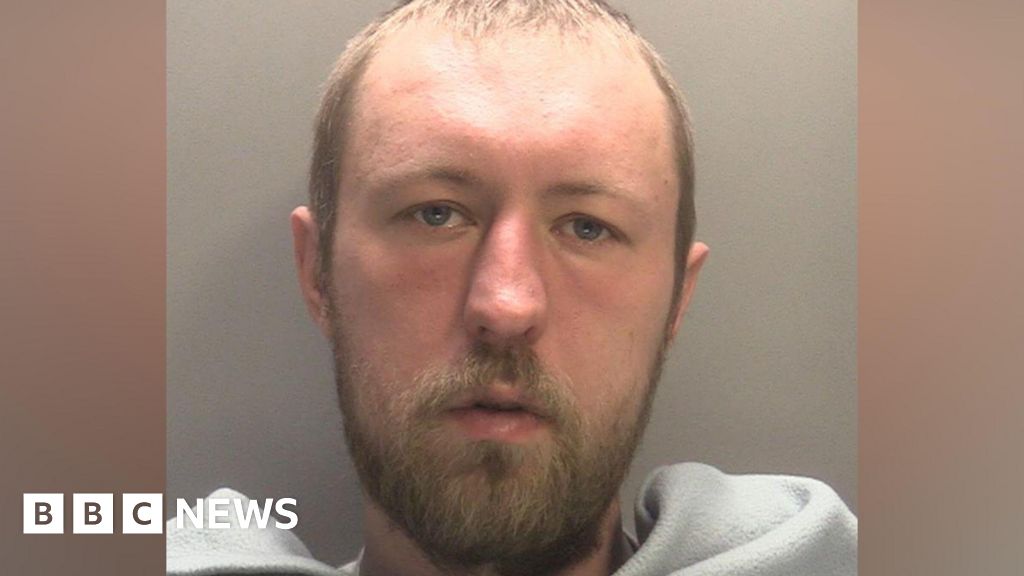
A man has admitted he raped a Sikh woman in her home while subjecting her to a tirade of religiously aggravated abuse, changing his plea on the second day of his trial after facing verbal abuse in the dock.

The hearing for John Ashby, 32, of no fixed address, began at Birmingham Crown Court on Monday.

He had denied the charges against him, but on Tuesday admitted he was responsible for the attack in Walsall in October 2025. He asked to speak to his barrister about an hour after proceedings were interrupted by a member of the public who approached the dock and swore at the accused.

The outburst came after Ashby started mumbling during the Crown's evidence over the attack.

The woman's ordeal began last autumn when Ashby followed her as she got off a bus. Unbeknownst to her, he entered her property armed with a two-foot stick he had picked up from the ground.

At the opening of the case, the jury was told how on hearing a noise inside her home, the woman – a stranger to Ashby – tried to lock herself in the bathroom, but he barged his way in and went on to rape her.

"Once inside the bathroom he turned the light off, telling her that he was 'here to have fun'," prosecutor Phil Bradley KC said.

The court heard that during the attack, Ashby subjected his victim to a tirade of anti-Muslim abuse, wrongly believing her to be of that faith.

Ashby was arrested in the Perry Barr area of Birmingham two days later.

During a police interview, when shown a photograph of the victim and asked whether he knew her, he asked why she was not wearing a hijab, the jury was told on Monday.

When booked into custody in a police station in Perry Barr, he stated "you never see any Englishmen in Perry Barr anymore", the court heard.

Recounting the woman's ordeal on Monday, Bradley said: "Despite her screams, he told her to take her clothes off, he struck her with the stick, and he put his hands around her neck to strangle her and demanded that she climb into the bathtub.

"He turned on the hot water tap and began pouring water over her, telling her to say 'hallelujah' as he did so."

The court heard that Ashby told the woman his name was John and demanded she repeat "his mantra that he was 'the master'."

The prosecution said that after raping the woman, Ashby instructed her to go into the bedroom and lie on the bed, saying again he was there "to have fun" while referring to his private parts as being white British.

The court heard the attack only came to an end because Ashby was "evidently spooked by a noise outside" and ran away, taking the victim's jewellery and a mobile phone.

The jury was told that the woman raised the alarm and police arrived within minutes.

The woman picked Ashby out as her attacker at an identity parade days later, the court heard.

Ashby on Tuesday admitted charges of rape, robbery, intentional strangulation and religiously aggravated assault.

The incident in court between Ashby and a member of the public happened after Ashby appeared to swear under his breath.

A man, believed to be a member of the Sikh community with an interest in the case, who was not known to the victim, walked calmly to within three feet of the dock and swore back.

A court usher was praised by judge Justice Pepperall for his calmness as he responded to the situation.

Ashby is due to be sentenced on Friday, and the judge warned him that he was considering a life sentence.

"It seems to me that a stranger who breaks into a woman's house, who commits these offences and does so expressing hostility to her on the basis of her presumed religion is a dangerous person," he said.

Follow BBC Birmingham on BBC Sounds, Facebook, X and Instagram.

📰 மூல செய்தி (Source): https://www.bbc.com/news/articles/cdxd05gd12eo?at_medium=RSS&at_campaign=rss

முக்கியச் செய்திகள்

Israeli soldiers punished over vandalism of Jesus statue in Lebanon

Published

on

The Israeli soldier who hit a statue of Jesus with a sledgehammer in Lebanon and the soldier who photographed the incident will receive 30 days of military detention, the Israel Defense Forces (IDF) has said.

The IDF also said the two soldiers – who have not been named – would be "removed from combat duty" following an inquiry.

Another six soldiers who were at the scene and failed to intervene or report the incident will be dealt with separately, it added.

The incident in the village of Debel in southern Lebanon prompted widespread condemnation after an image of it was widely shared online this week. Israel's Prime Minister Benjamin Netanyahu said he was "stunned and saddened" by what happened.

In its statement on Tuesday, the IDF said an inquiry into the incident had "determined that the soldiers' conduct completely deviated from IDF orders and values" and expressed "deep regret over the incident".

It also said IDF troops had replaced the damaged statue "in full co-ordination with the local community" a short while ago.

It stressed that its operations in Lebanon were directed "solely" against the Iran-backed group Hezbollah "and other terrorist groups, and not against Lebanese civilians".

Locals had said the statue was on a crucifix outside a family home on the edge of Debel, one of the few villages where residents have remained during Israel's war with Hezbollah.

The head of Debel's congregation, Father Fadi Flaifel, told the BBC after the incident: "We totally reject the desecration of the cross, our sacred symbol, and all religious symbols.

"It goes against the declaration of human rights, and it doesn't reflect civility."

He claimed similar incidents had happened before.

Among those to condemn the incident was the US Ambassador to Israel Mike Huckabee – the representative of Israel's most important ally – who called on Monday for "swift, severe, and public consequences" following the "outrageous act".

Netanyahu had expressed regret for the incident "and for any hurt this has caused to believers in Lebanon and around the world".

Thousands of Israeli troops continue to occupy a wide area of southern Lebanon after a US-brokered ceasefire came into force between Israel and Lebanon on Friday.

The ceasefire has paused six weeks of fighting between the IDF and the Shia Muslim armed group Hezbollah, although both sides have accused each other of violations.

Hezbollah began firing rockets at Israel in support of Iran two days after Israel and the US launched a war on Tehran on 28 February.

Israel began a military campaign in Lebanon on 2 March in which more than a million people have been displaced and more than 2,290 have been killed, including 177 children and 100 healthcare workers, Lebanese authorities say.

Israeli officials say that 13 Israeli soldiers and two civilians have been killed by Hezbollah attacks in the same period.

📰 மூல செய்தி (Source): https://www.bbc.com/news/articles/cew790ppn8jo?at_medium=RSS&at_campaign=rss

Continue Reading

முக்கியச் செய்திகள்

Teacher 'had dark thoughts about abused baby'

Published

on

A former high school teacher accused of the sexual abuse and murder of an adopted baby boy told a friend he had "dark thoughts" about the child, a court has heard.

Jamie Varley, 37, is accused of the murder of 13-month-old Preston Davey, along with 25 other charges relating to his sexual and physical mistreatment.

His partner John McGowan-Fazakerley, 32, is accused of causing or allowing the death of the child and four other offences including sexual assault and cruelty.

Both men deny all charges, said to have been committed between March and 27 July 2023.

In the just under four months the child was in their care, he had been routinely ill-treated, had indecent images and videos taken of him, was sexually abused and physically assaulted, and suffered 40 traumatic injuries, Preston Crown Court has heard.

On the second day of the trial, which is predicted to last up to six weeks, Peter Wright KC, prosecuting, told the jury that Varley, who had worked as a head of year at a high school in Blackpool, had visited a work colleague with the baby.

During the visit, a month before the child's death, Varley had "unburdened" himself about not "bonding" with Preston and struggling with the demands of looking after a baby.

This included having "dark thoughts" towards the child, who he had renamed Elijah, during the adoption process, Wright told the jury.

"He disclosed to her that he had harmful thoughts towards Elijah and had thoughts of drowning him or of suffocating him but that he would never carry them out," Wright said.

Varley told the woman he had disclosed this as part of welfare checks involving his employer and social workers involved in the adoption of Preston.

It was only after the child's death that the former work colleague approached police with the information, the court heard.

Preston was born on 16 June 2022 and taken into care by Oldham Council before being placed with foster parents.

The defendants had applied to Adoption Now, an organisation that handles adoption for local authorities in north-west England.

They were approved for adoption and, aged nine months in April 2023, Preston was placed with the defendants for them to adopt, living at their home on Staining Road, Blackpool.

But he was admitted to hospital with injuries three times in just under four months after being adopted, before his death on 27 July 2023.

On that day, while Varley was home alone with Preston he recorded a video of the child on his phone.

The child, wearing a babygrow and lying on a double bed, appears to have suffered a collapse and is in recovery from a period of not breathing.

His lips had a bluish hue, which a consultant concluded was the tell-tale sign of a respiratory failure.

Varley remains silent through the video clip and did not try to get any help or assist the child, the jury was told.

Less than two hours later, at about 18:30 BST, shortly after McGowan-Fazakerley returned to the house from work, the defendants brought Preston to the Accident and Emergency Department of Blackpool Victoria Hospital.

He was unconscious and in a state of cardiac arrest and medics could not revive him.

Varley claimed he had put the child in a baby chair in the bath, then left him for about four minutes and when he returned the child was drowning.

Varley was "hysterical" and blaming himself for what had happened, but this was all a "cover-up" act, Wright said.

Preston was in fact dry, had dry hair and did not appear to have swallowed any water.

A Home Office post-mortem examination found a series of non-accidental, internal and external injuries, the court heard.

There were bruises and grazes to his head, face and mouth, upper limbs, chest, back and left thigh.

Preston also had injuries to his mouth, throat and bottom.

There was no evidence to support natural disease or drowning as the cause of death and the internal injuries were caused shortly before death.

The post-mortem gave the cause of his death to be acute upper airways obstruction, a result either of a smothering most likely with a hand or soft fabric or by the insertion of an object or objects into his mouth.

Wright told jurors both defendants had a "sexual interest" in the child and while Varley is accused of being responsible for the murder, his co-accused could and should have protected the child and stopped the sexual assaults and cruelty which were becoming increasingly serious.

Varley denies murder, manslaughter, two counts of assault by penetration, five counts of cruelty to a child, grievous bodily harm, sexual assault of a child, 13 counts of taking indecent photos or videos of a child, one of distributing an indecent photo of a child to his co-accused, and one of making an indecent photo.

McGowan-Fazakerley denies allowing the death of a child, three counts of child cruelty and one count of the sexual assault of a child.

Listen to the best of BBC Radio Lancashire on BBC Sounds and follow BBC Lancashire on Facebook, X and Instagram and watch BBC North West Tonight on BBC iPlayer. You can also send story ideas via Whatsapp to 0808 100 2230.

📰 மூல செய்தி (Source): https://www.bbc.com/news/articles/cr41v6gwzr2o?at_medium=RSS&at_campaign=rss
Continue Reading

முக்கியச் செய்திகள்

Court challenge over Met Police's use of live facial recognition lost

Published

on

Privacy campaigners have lost a High Court challenge aimed at limiting the Metropolitan Police's use of live facial recognition technology.

Youth worker Shaun Thompson, and Silkie Carlo, director of campaign group Big Brother Watch, brought the challenge over concerns that facial recognition could be used arbitrarily or in a discriminatory way.

In a major victory for the continued roll-out of the technology, the High Court rejected claims that the Met Police had broken human rights and privacy law by scanning faces in public.

The force will continue to use the technology, with commissioner Sir Mark Rowley calling the ruling an "important victory for public safety".

Shaun Thompson has said he intends to appeal the decision.

Policing Minister Sarah Jones said: "I welcome today's ruling because there can be no true liberty when people live in fear of crime in their communities."

She added that facial recognition technology would be rolled out across the country with "record investment".

Law-abiding citizens have "nothing to fear" as the technology "only locates specifically wanted people", Jones said.

Scotland Yard deploys identifiable live facial recognition vans to selected locations around the capital.

Once set up – and marked with signage – the cameras are turned on and scan people walking through the chosen area, such as a busy high street. The images are instantly compared to a database of wanted criminals or missing people.

If a face does not match anyone on the database, the system deletes the image instantly.

If it finds a possible match, it alerts officers who then double-check the hit before deciding whether to stop the individual.

One of the claimants, Thompson, was misidentified by live facial recognition technology.

In February 2024, he was stopped, detained and questioned by police in London after being matched by the technology with his brother, who, at the time, was on bail for a suspected violent offence.

Thompson said the experience was "shocking and unfair".

In their challenge, Thompson and Carlo argued that the use of the technology breaches the right to privacy outlined in the European Convention of Human Rights.

They argued that the rights to freedom of expression and freedom of assembly are also being breached, claiming that the "excessively broad" discretion afforded to officers had a "chilling effect" on the ability to protest.

Lawyers argued that the plans to mount permanent installations in the capital would make it "impossible" for Londoners to travel without their biometric data being taken and processed.

The team taking the challenge against live facial recognition had raised concerns that the technology would be deployed disproportionally "in areas of London which are lived in by ethnic minority communities".

Lord Justice Holgate and Mrs Justice Farbey said in the 74-page ruling that the "risk and potential scope for discrimination on grounds of race was no more than faintly asserted".

The judgment also stated that Thompson and Carlo's human rights had not been breached.

Met Police commissioner, Sir Mark Rowley, said the High Court ruling was a "significant and important victory for public safety".

He added: "The courts have confirmed our approach is lawful. The public supports its use. It works. And it helps us keep Londoners safe.

"The question is no longer whether we should use live facial recognition, it's why we would choose not to."

In response to the ruling, Thompson said: "No one should be treated like a criminal due to a computer error.

"I was compliant with the police but my bank cards and passport weren't enough to convince the police the facial recognition tech was wrong.

"It's like stop and search on steroids. It's clear the more widely this is used, the more innocent people like me risk being criminalised."

Plans set out by the Home Office in January will increase the number of vans from 10 to 50 and make them available to all forces across England and Wales.

According to the Met Police, 2,100 arrests have been made since the start of 2024 using the technology.

Last year, more than three million faces walked past the live facial recognition cameras and 12 false alerts were logged, with none leading to an arrest.

Listen to the best of BBC Radio London on Sounds and follow BBC London on Facebook, X and Instagram. Send your story ideas to hello.bbclondon@bbc.co.uk

📰 மூல செய்தி (Source): https://www.bbc.com/news/articles/cq59x4vv954o?at_medium=RSS&at_campaign=rss

Continue Reading

Trending

Copyright © 2024 by 7Tamil Media, All rights reserved.