Connect with us

உலகம்

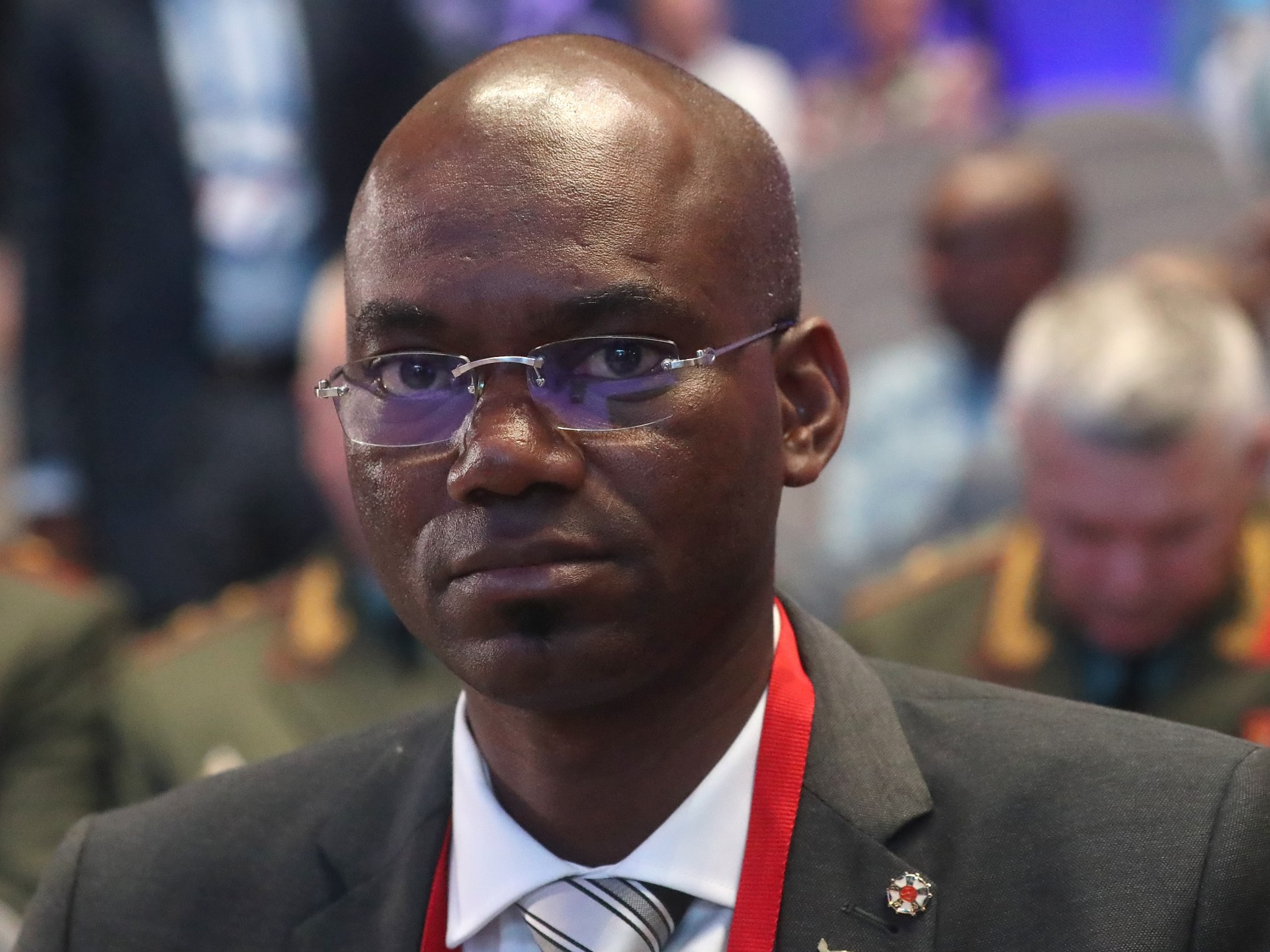
Mali’s Defence Minister Sadio Camara killed amid coordinated attacks

Published

on

Camara’s house in the garrison town of Kati came under attack amid simultaneous attacks across the country.

Mali’s Defence Minister General Sadio Camara has been killed amid coordinated attacks on military sites across the country, sources told Al Jazeera.

The news on Sunday came a day after his residence in the garrison town of Kati came under attack during the simultaneous attacks launched by an al-Qaeda affiliate and Tuareg rebels on Saturday.

Camara was a central figure in the military government that seized power after back-to-back coups in 2020 and 2021.

“He was one of the most influential figures within the ruling military leadership and had been seen by some as a possible future leader of Mali,” said Al Jazeera’s Nicolas Haque, who has reported extensively from Mali.

“His death is a major blow to the country’s armed forces.”

Haque said attackers carried out a suicide car bomb assault on Camara’s residence in Kati, a heavily fortified military town about 15km (9 miles) northwest of the capital, Bamako.

“Kati is considered one of the most secure locations in the country, yet fighters from the al-Qaeda-linked Jama’at Nusrat al-Islam wal-Muslimin, along with Tuareg fighters from the Liberation Front of Azawad, were able to launch the attack,” he said.

Armed men also attacked several other locations across Mali, including Bamako, as well as Gao and Kidal in the north, and the central city of Sevare.

“As we speak, people in the garrison town of Kidal can still hear heavy gunfire and loud explosions,” Haque added. “This remains an ongoing operation more than 24 hours after it began.”

Interim President Assimi Goita has come under pressure since the offensive, with analysts saying the authorities appeared to have been caught off guard by the latest wave of violence.

Haque said Goita was “alive and well in a secure location”.

“When the attack took place, he was moved to safety, so he remains in command of the military,” he said.

The African Union, the secretary-general of the Organisation of Islamic Cooperation and the United States Bureau of African Affairs condemned the attacks across Mali.

📰 மூல செய்தி (Source): https://www.aljazeera.com/news/2026/4/26/malis-defence-minister-sadio-camara-killed-amid-coordinated-attacks?traffic_source=rss

உலகம்

What are Lebanon’s most important political parties?

Published

on

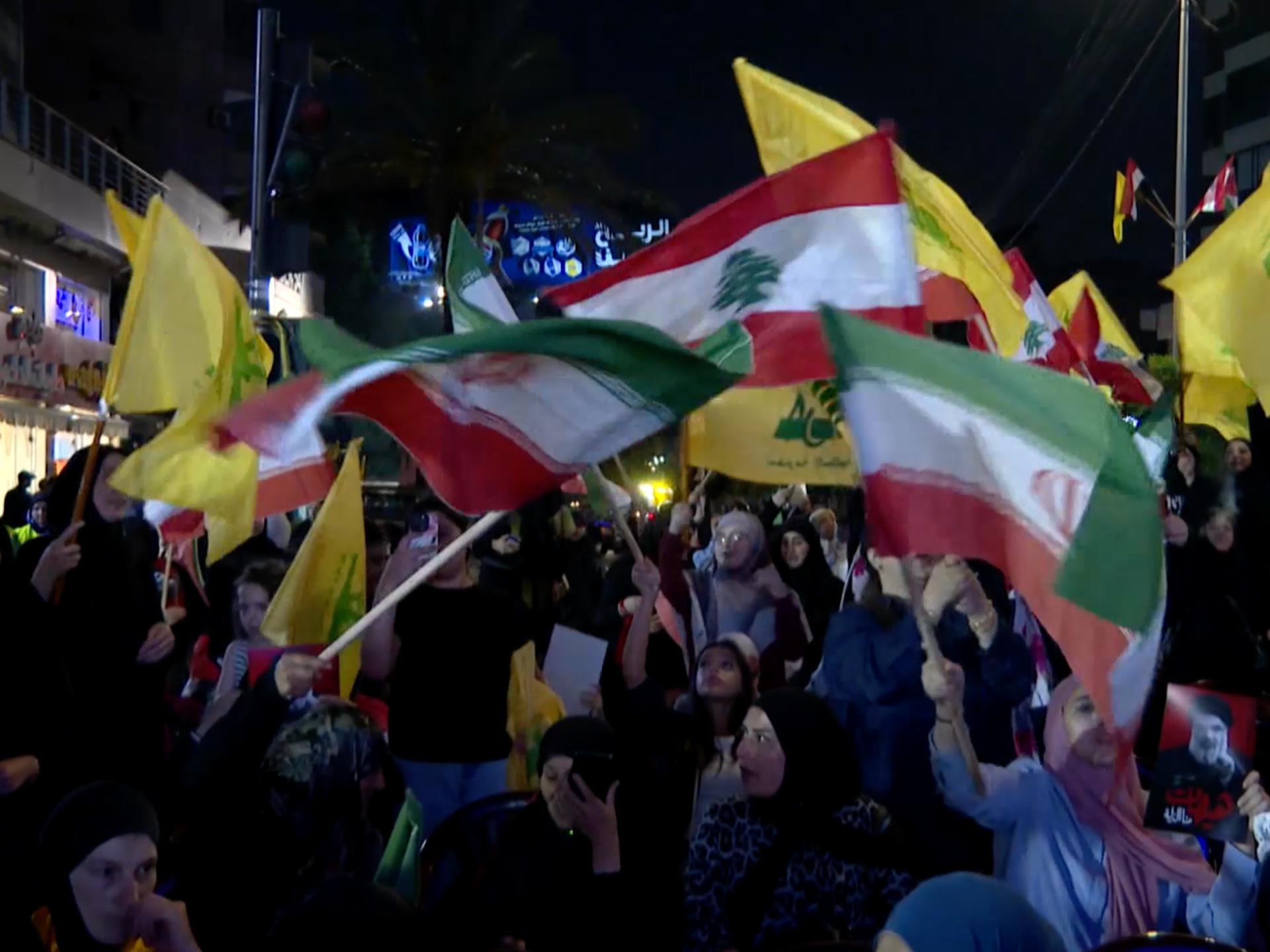
Lebanon’s many powerful parties reflect the country’s social, sectarian, and political divides.

Hezbollah is the most prominent of Lebanon’s political movements, and has long been the most powerful in the country.

Its current battle with Israel means it has a huge say in the future of the country, but also places it at the centre of a debate with other political groups in Lebanon, many of whom feel that Hezbollah should be subservient to the state.

Lebanon’s sectarian divides are reflected in the large number of political movements it harbours, and the difficulty any government has in forming a strong power centre that will enable the country to overcome the various political, security, and economic crises it faces.

Here is a closer look at some of Lebanon’s most important political movements.

Led by Secretary-General Naim Qassem, Hezbollah was formed in 1982 during the Lebanese Civil War (1975-1990) and subsequent Israeli occupation of southern Lebanon (1982-2000). Since its inception, Hezbollah has been funded by the Islamic Republic of Iran and has close ties to the Islamic Revolutionary Guard Corps (IRGC).

Originally an offshoot of the Amal Movement, Hezbollah grew to become the most powerful party – politically and militarily – in Lebanon. It is a religiously conservative Shia Muslim party that, like many parties or political leaders, also provides social services in the absence of the Lebanese state.

Hezbollah was the only militia not to officially disarm at the end of the civil war, arguing that it needed to maintain arms to oppose Israel’s then occupation of southern Lebanon. In 2000, it secured its most important win, as it was a key actor in expelling Israel from Lebanese territory.

But Hezbollah retained its weapons and fought a notable war against Israel in 2006, as well as since October 2023, when it launched attacks in solidarity with Palestinians in Gaza.

After an Israeli intensification in 2024 that killed much of Hezbollah’s military leadership, including its longtime leader Hassan Nasrallah, and the fall of the group’s ally Bashar al-Assad in Syria, Hezbollah was widely considered weakened, and the Lebanese government began efforts to disarm Hezbollah, aiming to establish a monopoly on arms in the country. Hezbollah has resisted, saying it needs to continue to defend Lebanon from Israel.

After the conclusion of the civil war, Hezbollah entered politics, with members running for office in Parliament. It has had spells in Parliament in both as part of a majority government and as the opposition, but it has also used its power to secure influence within Lebanon’s security apparatus.

The Lebanese Forces (LF) is currently the largest Christian party in Lebanon’s parliament.

A right-wing nationalist Christian party, the Lebanese Forces formed during the country’s civil war under Bashir Gemayel. Gemayel was controversially elected Lebanon’s president in 1982, but was assassinated before he could take office.

The LF emerged from the Kataeb Party, founded by Gemayel’s father, Pierre. Today, the Kataeb still exists and is led by another member of the Gemayel family, Samy. While the LF has overtaken the Kataeb as the more significant political player, the two parties still collaborate and are fairly closely aligned politically.

Today, the LF is one of Hezbollah’s staunchest critics and adamantly opposes the group’s arms and war against Israel.

The party’s leader is Samir Geagea, who made his name as a militia leader during the civil war. He went on to spend 11 years in solitary confinement and was only released after the end of the Syrian occupation of Lebanon (1976-2005).

The LF was a key member of the pro-West March 14 bloc, named for the day of the largest protests in 2005 against Syrian occupation in Lebanon. It currently has four ministers in the Lebanese government.

Founded as a coalition in 1995 by the assassinated Prime Minister Rafik Hariri, the Future Movement became an actual party in 2007, two years after Hariri’s death.

At its peak, the Future Movement was also a multiconfessional bloc comprising mostly Sunni Muslims and Christians of different denominations, and was the heart of the pro-West and pro-United States March 14 bloc with the Lebanese Forces. In recent years, it has lost members and is now considered a predominantly Sunni party.

The party is today led by Hariri’s son, Saad, who is also a former prime minister.

Hariri had withdrawn from politics in 2022, and the Future Movement didn’t officially run any candidates that year. But in 2026, Saad announced that the Future Movement would return to politics whenever the next parliamentary elections take place.

The Future Movement’s base is largely in Sunni populations in the major coastal cities, such as Sidon and Beirut. It also has support in Sunni-majority areas of northern Lebanon outside Tripoli, such as Akkar.

A key Hezbollah ally, the Amal Movement is also a predominantly Shia Muslim party and, along with Hezbollah, makes up what is known locally as the Shia Duo. The party, however, has a less overtly religious identity.

Amal was cofounded by Musa Sadr, a revolutionary Iranian-born Shia leader, and Hussein al-Husseini, a former Lebanese speaker of parliament, as the Movement of the Deprived. Amal, which means hope in Arabic, was the acronym of the Movement’s militia name in Arabic, the Lebanese Resistance Regiments.

Since 1980, the group has been led by Nabih Berri, who is also the country’s parliament speaker since 1992. Berri is often seen as a conduit to Hezbollah. Countries that do not have relations with Hezbollah reportedly pass messages through Berri.

At 88, Berri has been rumoured to be ill for years, and the question about his successor and the future of the Amal Movement, which has no stated successor, is unclear.

The party, which is popular in parts of Beirut, its southern suburbs, the southern city of Tyre, and other parts of the south and Bekaa Valley, currently has two ministers in government.

The Free Patriotic Movement (FPM) was founded in 1994 by former President and Lebanese Army Chief Michel Aoun, while he was in exile in Paris.

Aoun returned to Lebanon in 2005 after the end of the Syrian occupation and soon after allied with Hezbollah and Amal to form the March 8 Alliance. At its peak, the FPM had a strong multiconfessional parliamentary presence.

However, in recent years, the FPM has lost support and has become a predominantly Christian party.

After Aoun took over the Lebanese presidency in 2016, his son-in-law, Gebran Bassil, took over leadership of the party. Bassil is currently under US sanctions for corruption.

The FPM currently has members in Parliament but no ministers in government, though it has taken part in many past governments. It currently considers itself as an opposition voice to the current government.

Founded by Kamal Jumblatt in 1949, the Progressive Socialist Party is a predominantly Druze party and was a key participant in the Lebanese Civil War.

Jumblatt was a key figure in the Lebanese National Movement, a left-wing and pro-Palestinian movement, prior to the civil war and advocated for a secular society. Jumblatt was reportedly assassinated in 1977 on the orders of Hafez al-Assad, then president of Syria. Jumblatt was succeeded by his son Walid as leader of the party and the group’s militia.

Walid led the party until 2023, when he handed power over to his own son, Taymour. Walid, however, is still regularly visited and consulted by political contacts and international diplomats.

Under Walid, the party has, at times, come into alliance with Hezbollah, but has also aligned with the pro-West March 14 bloc.

The party currently has two ministers in government. Its support is mostly found in Druze villages in Mount Lebanon.

📰 மூல செய்தி (Source): https://www.aljazeera.com/news/2026/6/10/lebanon-parties-what-are?traffic_source=rss

Continue Reading

உலகம்

The myth of white Argentina still shapes the nation

Published

on

Milei is carrying forward a state tradition that has long equated whiteness with progress.

Founder and President, Diáspora Africana de la Argentina (DIAFAR).

In late March, the United Nations General Assembly adopted a landmark resolution, spearheaded by Ghana and backed by the African Union and the Caribbean Community (CARICOM), recognising the transatlantic slave trade and chattel slavery as the gravest crime against humanity and calling for concrete steps towards reparations. A total of 123 member states backed the initiative. Most former European colonial powers abstained. Only three countries voted against it: the United States, Israel and Argentina under President Javier Milei.

While a large majority of countries acknowledged the need to address the contemporary consequences of slavery and colonialism, a smaller bloc of governments moved to defend an international order shaped by those very same experiences. Argentina’s vote defined which side the current government has chosen to be on. That decision, however, reflects a deep historical continuity. Argentina’s rejection of reparations is part of a state-sponsored tradition that has organised the nation, since its independence, based on specific racial hierarchies. The vote against the UN resolution projected onto the international stage an architecture of power that has structured Argentinian history since the 19th century.

The formation of the Argentinian state was marked by its elites’ explicit project of demographic and cultural whitening. Their vision framed European immigration as a privileged vehicle of civilisation and progress. Juan Bautista Alberdi, the main intellectual architect of the 1853 Constitution, summed it up in the phrase “to govern is to populate”. This logic was embedded in Article 25 of the Constitution, which instructed the state to actively promote European immigration. The clause has, since then, survived every constitutional reform. Neither the 1949 social constitution nor the democratic reform of 1994 altered the principle that associated Europe with the nation’s desirable horizon.

This institutional architecture consolidated one of Latin America’s most enduring national narratives, that Argentina is a white and European society. The myth that Argentinians “descended from the ships” shaped public policy, school discourse and knowledge production, while Indigenous and Afro-descendant populations were pushed to the margins. The result was a distinctive form of racial denial. The Argentinian state constructed a national identity that erased and denied large segments of its own population, elevating whiteness into the universal representation of the nation. Even today, a country composed largely of racialised majorities continues to be described institutionally as a homogeneous European society.

The erasure of Afro-Argentines is one of the clearest expressions of this process. In the early 19th century, people of African descent made up roughly a third of the population and played a decisive role in the country’s economic, social, cultural and military structures. Yet school discourse, censuses and mainstream historiography promoted the idea of their natural disappearance, transforming a history of exclusion into demographic inevitability. Indigenous peoples underwent a parallel process, portrayed as residual minorities despite their continued demographic, territorial and cultural relevance. Argentinian racial denial thus systematically minoritised Indigenous peoples and erased Afro-Argentinians from the national narrative.

The current libertarian administration has deepened this tradition through the dismantling of state structures aimed at recognition and redress. The closure of the National Institute Against Discrimination, Xenophobia and Racism (INADI) eliminated one of the few institutional spaces dedicated to antiracist public policy: the Commission for the Historical Recognition of the Afro-Argentine Community. This commission was created to promote measures of recognition and repair for a population historically excluded from full citizenship**, and** its significance extended beyond Argentina. The Inter-American Commission on Human Rights (IACHR) and its Special Rapporteurship on Economic, Social, Cultural and Environmental Rights (REDESCA) had identified its creation as an important institutional advance. Its dismantling reflects a political decision to undo some of the limited institutional tools built over decades of Afro-Argentine activism.

In recent decades, Western governments, monarchies and institutions have increasingly acknowledged historical crimes through symbolic gestures. This regime of symbolic recognition often functions as a form of what can be called a liturgy of forgiveness: it acknowledges historical injustice, condemns its most extreme expressions, but leaves intact the material architecture that produced its benefits. Reparations disrupt this boundary by shifting the debate from memory to the contemporary distribution of wealth, power and citizenship. In this context, Javier Milei has aligned Argentina with a political bloc articulated around the leadership of Donald Trump and Benjamin Netanyahu, who won’t even discuss symbolism. This convergence goes beyond diplomatic affinity. It reflects a shared understanding of the international order, in which the defence of historical hierarchies — racial, geopolitical and economic — plays a central role. It is no coincidence that these leaders repeatedly invoke “the West” as a civilisation under threat that must be defended. Within this framework, demands for reparations for chattel slavery and colonialism appear less as an expansion of historical justice than as a challenge to the symbolic foundations upon which Western moral authority has been built.

The March vote reveals a historical continuity that extends beyond Milei himself. As the international community moves towards a new consensus on the contemporary legacies of slavery, the Argentinian state continues to act through a tradition that equates the nation with whiteness and renders its racialised majorities invisible. This is the deeper logic of Argentinian racial denial: a form of power that continues to speak in the name of a European Argentina that exists far more strongly in the state’s imagination than in the social reality of its people.

The views expressed in this article are the author’s own and do not necessarily reflect Al Jazeera’s editorial stance.

📰 மூல செய்தி (Source): https://www.aljazeera.com/opinions/2026/6/10/the-myth-of-white-argentina-still-shapes-the-nation?traffic_source=rss

Continue Reading

உலகம்

Sanctions on settlers not enough: Target Israeli gov’t, say campaigners

Published

on

Campaigners argue that sanctions reflect a need to manage public anger rather than a genuine shift in state policy.

Israeli settlers and far-right ministers have been slapped with new Western sanctions. But human rights groups and Palestinian campaigners say the measures fail to address systemic state complicity in the occupation of Palestinian territories.

While the latest actions have been framed as a decisive stand against settler violence, political analysts and legal experts argue that isolating individual actors serves to deflect from the lack of broader institutional penalties against the Israeli government itself.

On June 9, 2026, the United Kingdom, alongside Australia, Canada, France, New Zealand, and Norway, announced coordinated sanctions against networks financing and executing settler violence. The UK targeted six entities and one individual, while France banned Israeli Finance Minister Bezalel Smotrich, three settler group leaders, and 21 settlers from entering the country.

Smotrich and far-right National Security Minister Itamar Ben-Gvir have been censored by several European countries previously for their rhetoric against Palestinians and support for settler violence.

Critics point out that the limited scope of the sanctions does not match the scale of the crisis.

Jennifer Larbie, Christian Aid’s head of UK influencing, described the decision to sanction so few entities as “derisory” and a clear example of the UK government doing “too little too late” while Palestinians are forced from their land.

This sentiment was echoed by Mustafa Barghouti, secretary-general of the Palestinian National Initiative. He told Al Jazeera Arabic that Western leaders are facing unprecedented public backlash for their ties to Israel.

“These governments are trying to cover up their shortcomings with low-value measures,” Barghouti said, arguing that the sanctions reflect a need to manage public anger rather than a genuine shift in state policy.

He stressed that the Israeli government itself is the entity that plans, funds, and executes settlement expansion.

Israel has undermined the Oslo Accords, which called for the freezing of settlements. At the time of the Oslo Accords in the early 1990s, some 250,000 settlers lived in the occupied West Bank and East Jerusalem. The settlement population has now grown to more than 700,000, while some three million Palestinians live in the Israeli-occupied West Bank and East Jerusalem.

Despite international legal obligations – and a July 2024 International Court of Justice (ICJ) advisory opinion explicitly stating that all states are under an obligation not to recognise or assist Israel’s illegal occupation – the European Union has largely failed to implement a blanket ban on trade with settlement-based entities.

While EU guidelines state that agreements with Israel do not apply to the occupied territories, member states have routinely stopped short of imposing binding economic embargoes, allowing goods produced on stolen Palestinian land to continually enter European markets.

Products such as Medjool dates, avocados, wines and cosmetics, among others produced in the occupied West Bank settlements, are exported to Europe.

By focusing on individual settler outposts or far-right figures like Israeli ministers Smotrich and Ben-Gvir, Western states risk creating a false distinction between “extremist” settlers and the Israeli state apparatus.

Kristyan Benedict, Amnesty International UK’s crisis response manager, stated that targeting settler financing networks while ignoring the ministers who are running settler campaigns is not meaningful accountability.

“It leaves the architects untouched,” Benedict said, calling on the UK to sanction Prime Minister Benjamin Netanyahu, former Defence Minister Yoav Gallant, and other senior officials. Netanyahu and Gallant face International Criminal Court (ICC) warrants for war crimes.

An inquiry by the United Nations has previously found that Israeli authorities were directly involved in settler attacks that have killed, injured, and displaced Palestinians, with Israeli forces actively providing protection.

Both Ben-Gvir and Smotrich have long track records of inciting violence and expanding the occupation. Following a deadly settler rampage in the Palestinian town of Huwara in early 2023, Smotrich notoriously declared that the village should be “wiped out” by the Israeli state.

Furthermore, Smotrich has used his dual role in the Defence Ministry to quietly transfer administrative powers over the West Bank from the military to civilian control, a move legal experts describe as de facto annexation. Meanwhile, Ben-Gvir has personally distributed thousands of assault rifles to settler “national guard” members, and has frequently praised settlers accused of murdering Palestinians, portraying them as heroes defending Israel.

Mohanad Mustafa, an academic and expert on Israeli affairs, noted that figures like Smotrich and Ben-Gvir do not regularly travel to Europe and rely primarily on political and financial ties with the United States.

“These sanctions do not target the Israeli government,” Mustafa told Al Jazeera Arabic, explaining that the measures inadvertently create a comfortable narrative for Israel by portraying the extremism as isolated to specific ministers rather than a state-sponsored enterprise.

For its part, Israel swiftly rejected the sanctions.

Ministry of Foreign Affairs spokesman Oren Marmorstein called them “disgraceful measures” and an attempt to impose a political stance regarding the “right of Jews to settle in the Land of Israel”. Under international law, Israel’s settlements built on Palestinian lands are illegal. A UN resolution in September 2024 called for an end to the occupation within a year, but Israel has failed to comply. In fact, it has doubled down and announced more settlements.

Israel routinely denies that its troops protect violent settlers, claiming such acts are rogue incidents that violate military protocol. But numerous reports by media and rights groups show Israeli forces’ complicity in attacks on Palestinians. Thousands of Palestinians have been jailed without trial, and Palestinians have recounted horrific abuse inside Israeli custody.

Campaigners point out that Western countries’ actions come as they continue to sell arms and engage in free trade with Israel, which faces a case of genocide at the ICJ. Most rights organisations and genocide scholars have said that Israeli actions in Gaza do constitute genocide.

The UK government recently updated its business guidance to explicitly advise against economic activity in illegal settlements, but it stressed that it continues to support trade with Israel within its 1967 borders.

Larbie called it “pathetic merely to ‘advise’ British businesses against activity in illegal Israeli settlements when there are no real consequences for them”, urging a complete ban on trade and investment with settlements.

Former UK Member of Parliament Claudia Webbe highlighted this contradiction, noting that Western countries themselves have enabled Israel’s long-standing impunity.

“What is the point of imposing sanctions on five settlement organisations? They must impose sanctions on the entire state, not the settlement,” Webbe said, emphasising that the UK and EU remain complicit by continuing to arm and fund Israel.

While the UK under Prime Minister Keir Starmer has paused free trade talks with Israel and suspended some arms export licences, critics demand a total halt.

Despite suspending about 30 out of 350 arms export licences in late 2024, the UK continues to sell components for F-35 fighter jets and other critical military hardware to Israel.

Domestically, the UK government has cracked down on pro-Palestine solidarity, utilising sweeping public order laws to arrest activists and restrict mass demonstrations.

Other European powers have also maintained close defence ties with Israel. Germa

📰 மூல செய்தி (Source): https://www.aljazeera.com/news/2026/6/10/sanctions-on-settlers-not-enough-target-israeli-govt-say-campaigners?traffic_source=rss

Continue Reading

Trending

Copyright © 2024 by 7Tamil Media, All rights reserved.