Connect with us

முக்கியச் செய்திகள்

London mayor warning over northern Olympic bid

Published

on

North of England Olympic bid for 2040s being assessed

London Mayor Sir Sadiq Khan has criticised the government's plans for a possible north of England bid for the Olympics and Paralympics, saying that excluding the capital city would be "a missed opportunity".

Ministers have commissioned UK Sport to conduct an "initial strategic assessment" into whether the region could host the Games in the 2040s.

The funding agency would examine the potential cost of staging the event for the first time since London 2012, as well as socio-economic benefit and any bid's chance of success.

Culture Secretary Lisa Nandy said the government was "starting the firing gun on the project."

But in response, a spokesperson for Sir Sadiq said: "London is the sporting capital of the world and the Mayor has openly expressed his ambition for the capital to be part of a future Olympic and Paralympic Games.

"Sadiq believes that a potential country-wide bid, using all the assets we have in the UK, including the publicly-owned London Stadium would deliver the very best possible Olympics.

"Using London's existing world-class infrastructure would help deliver the greenest and most sustainable Games, as well as unlocking huge economic growth both here in London and around the country.

"Not including the capital in an Olympics bid would be a missed opportunity, and mean our country fails to unleash the full benefits of a UK-wide games."

Earlier, Nandy said, "For too long we have been told the Olympics is simply too big and too important to be hosted in the north.

"Not any more. It's time the Olympics came north and we showed what we can offer to the world.

"We know that we can pull off the most incredible, not just bid, but Olympics. So we're kick-starting that with a phase-one study about the investment, the resources, the infrastructure, the transport that we're going to need."

The findings of UK Sport's study will determine whether to proceed with a more detailed "technical feasibility study", with a final decision on any bid resting with the British Olympic Association (BOA).

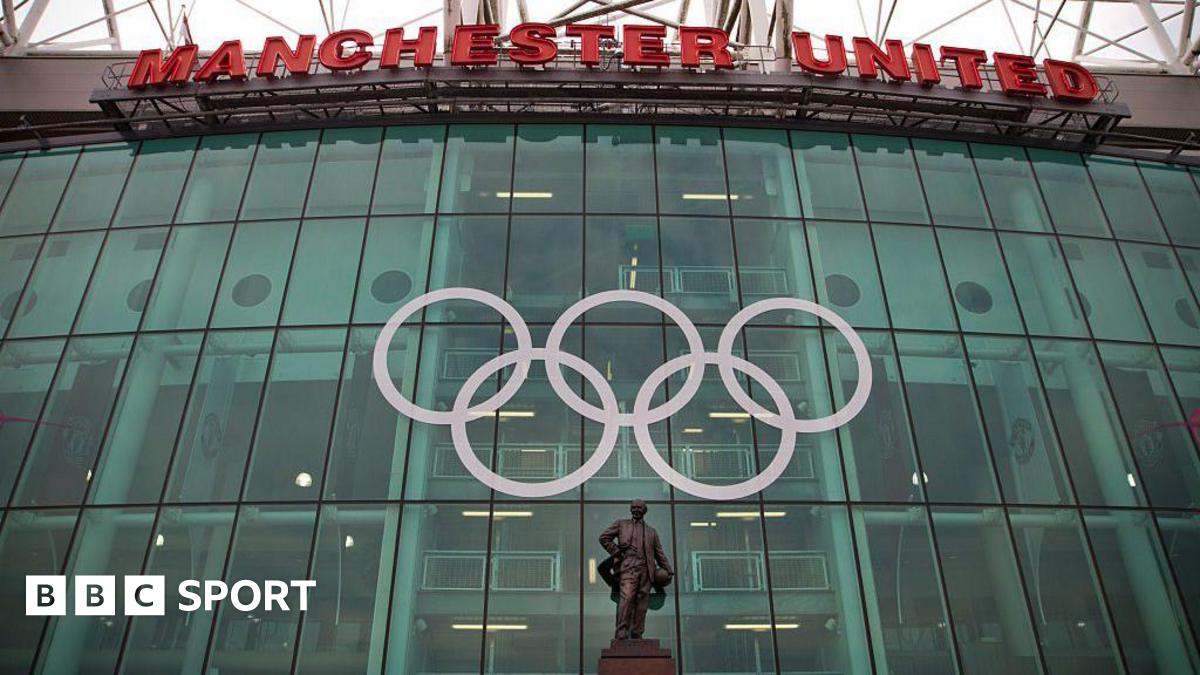
Manchester United's Old Trafford was a host of the Olympic football matches at the London 2012 games

In February, a group of northern political leaders urged the government to ensure any future Olympic bid would be based in the region, claiming there was a "compelling" case, and that it "already has many of the foundations in place to deliver a world-class Games, including elite sporting venues, major stadia and arenas".

North East Mayor Kim McGuinness said: "I'm delighted ministers and sporting bodies are now exploring how we could turn this ambition into a reality. We stand ready to work together to develop a credible, deliverable vision that can make the case to the International Olympic Committee (IOC)."

More than two-thirds of the UK public felt the £8.77bn cost of London 2012 was worth the money, according to a survey conducted the following year, despite it being three times more than the original budget.

The event was also credited with helping to regenerate east London and boosting the economy. However, it also failed to deliver the increase in sporting participation that organisers had hoped for.

"It was incredible for the country", said Nandy. "It brought in significant amounts of investment… it brought the whole nation together."

Manchester failed with bids for the 1996 and 2000 Olympics, but went on to successfully host the 2002 Commonwealth Games, with the City of Manchester Stadium used as the athletics venue. It was then converted into a football arena for Manchester City, since renamed Etihad Stadium, one of a number of major sporting venues across the region.

Manchester is also home to the national velodrome and an aquatics centre. It has previously been suggested that Liverpool's Albert Dock and River Mersey could host sailing events, with the Lake District potentially used for open-water swimming.

Manchester United have said they are aiming to have a new 100,000 seater stadium ready by 2035. Leeds United also have plans to develop Elland Road.

When asked which stadium might form the centrepiece of any northern Olympic bid, Nandy said, "the study will look at identifying all of the potential sites that we're going to need…there are particular challenges around some of the athletics facilities, but actually these are things that any government should be addressing anyway, and an Olympic bid gives us the opportunity to do that."

"The reality of the current financial context is that we want to work with what infrastructure already exists", said Nandy. "There is good infrastructure across the north of England, but it needs to be upgraded…You only need to look at some of the amazing infrastructure that we're building, like the new Everton stadium, to see exactly what we can do here."

In an effort to reduce costs and the need for spending on new infrastructure, the International Olympic Committee (IOC) is known to be more open to multi-city or regional bids.

"We've got to prove to them that we can do this in the north of England" said Nandy. "I believe that we can, though, and we're deadly serious about making it happen."

The government also announced the launch of the 'Stadium Regeneration Accelerator'. The project will see it working with sports bodies like the Premier League and English Football League on infrastructure development projects, such as stadiums, "that have the potential to regenerate their surrounding areas."

📰 மூல செய்தி (Source): https://www.bbc.com/sport/olympics/articles/clypl9pzy6jo?at_medium=RSS&at_campaign=rss

முக்கியச் செய்திகள்

UAE reports strike near Abu Dhabi nuclear power plant

Published

on

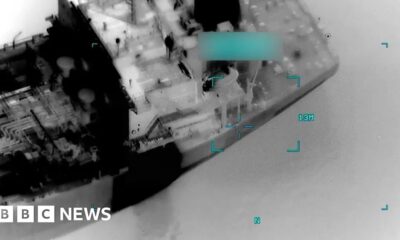
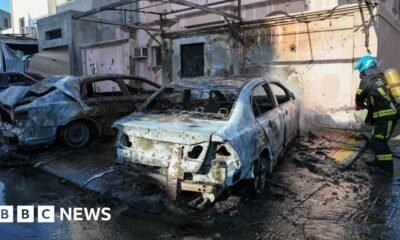
The United Arab Emirates said a drone strike had triggered a fire near its nuclear power station on Sunday, calling the incident a "dangerous escalation".

Officials are investigating the source of the strike. The country's defence ministry said three drones had entered the UAE from the "western border direction".

While two were intercepted, the third drone struck an electrical generator "outside the inner perimeter" of the Barakah Nuclear Power Plant in Abu Dhabi, sparking a fire.

No injuries were reported and there was no impact on radiological safety levels, local authorities said.

The UAE's foreign ministry called the strike an "unacceptable act of aggression" and said it had the right to respond to any hostilities.

It added that "the targeting of peaceful nuclear energy facilities is a flagrant violation of international law, the UN charter, and the principles of humanitarian law".

The country's defence ministry meanwhile said it would "firmly confront any attempts to undermine the country's security".

Officials have not said from where the drone was launched. The UAE has previously accused Iran of being behind attacks on its energy and economic infrastructure since war broke out in the region in February.

The Abu Dhabi Media Office said the fire "broke out in an electric generator" and confirmed precautionary measures had been taken at the plant, which is operating as normal.

The UN's nuclear watchdog said it was monitoring the situation closely and that its director general Rafael Grossi expressed "grave concern" about the incident.

Grossi said "military activity that threatens nuclear safety is unacceptable", according to a statement shared by the International Atomic Energy Agency on X, and called for "maximum military restraint".

Tehran began launching strikes across the region in retaliation to the US and Israel's attacks against Iran on February 28.

It has since accused the UAE and other American allies in the Gulf of allowing the US to carry out attacks from their territory.

At the same time, the UAE has denied Iranian claims that it has actively carried out attacks of its own.

The US and Iran agreed a ceasefire in April, but sporadic exchanges of fire have continued.

President Donald Trump said the truce was on "massive life support" on Monday, after rejecting Iran's demands to end the war and reopen the Strait of Hormuz – a crucial shipping lane which has been effectively closed since the war began.

📰 மூல செய்தி (Source): https://www.bbc.com/news/articles/cwy27pkj1l1o?at_medium=RSS&at_campaign=rss
Continue Reading

முக்கியச் செய்திகள்

How worrying is the Ebola outbreak in DR Congo?

Published

on

The outbreak of Ebola in the Democratic Republic of Congo is concerning.

It has been spreading for weeks undetected in a part of the world where civil war makes getting on top of the virus difficult, and the species of Ebola involved is rare, so there are fewer tools to stop a virus that kills around a third of people infected.

This is a critical moment in an outbreak where there is uncertainty about how far it has spread, but there are already almost 250 suspected cases and 80 deaths.

Most Ebola outbreaks tend to be small, but specialists are haunted by the 2014-16 outbreak. Then, 28,600 people in West Africa were infected in the largest ever outbreak of the disease.

The declaration of a public health emergency of international concern by the World Health Organization (WHO) does not mean we are in the early stages of a Covid-style pandemic.

The risk Ebola poses to the whole world remains tiny. Even in the 2014-16 outbreak, there were only three cases in the UK and all were healthcare workers who had volunteered to help.

"But it does reflect that the situation is complex enough to require international coordination," says Dr Amanda Rojek, from the Pandemic Sciences Institute at the University of Oxford.

After all, there is still a significant threat to neighbouring countries like Uganda, South Sudan and Rwanda, considered high risk because of close trade and travel links.

Two people have already been confirmed to have the virus in Uganda, of whom one has died.

Ebola is a severe and deadly disease, although it is thankfully rare. Ebola viruses naturally infect animals – mainly fruit bats – but people can become infected if they come into close contact.

This outbreak is being caused by the Bundibugyo species of Ebola – it is one of three species known to cause outbreaks but is relatively unfamiliar.

Bundibugyo has caused only two outbreaks before – in 2007 and 2012 – where it killed around 30% of people infected.

Bundibugyo poses a series of challenges. There are no approved vaccines or drug treatments for Bundibugyo, although there are some experimental ones, unlike other species of Ebola virus.

And tests to determine whether somebody has the infection do not appear to work well. Initial results in the outbreak were negative for Ebola virus, and more sophisticated laboratory tools were required to confirm Bundibugyo was involved.

Dealing with Bundibugyo is "one of the most significant concerns" in this outbreak, says Prof Trudie Lang from the University of Oxford.

Symptoms are thought to appear between two and 21 days after somebody is infected.

Initially they are like developing the flu – fever, headache and tiredness. But as Ebola progresses, it leads to vomiting, diarrhoea, and the body's organs not working. Some patients develop internal and external bleeding.

With no approved drugs designed to target Bundibugyo virus, treatment relies on "optimised supportive care" including managing pain, other infections, fluids and nutrition. Early care improves the odds of surviving.

Ebola spreads through infected bodily fluids such as blood and vomit, although this does not normally occur until symptoms have appeared.

The first known case was a nurse who developed symptoms on April 24. It has since taken three weeks to confirm an outbreak is happening.

"Ongoing transmission has occurred for several weeks, and the outbreak has been detected very late, which is concerning," said Dr Anne Cori from Imperial College London.

It means health officials are behind where they would like to be in stopping the outbreak, which the WHO says points towards a "potentially much larger outbreak than what is currently being detected and reported".

The main method will be rapidly identifying who is infected, and to whom they may have passed the virus.

There will also be efforts to prevent Ebola spreading through hospitals and other treatment centres, which will be dealing with patients when they are most infectious. And to ensure anyone who dies and whose body remains infectious has a safe burial.

This will be a challenge due to the number already infected, and made worse as it is taking place in a conflict-torn part of DR Congo that has more than 250,000 people displaced from their homes.

"Many of the affected areas are mining towns with highly mobile and transient populations. This mobility increases risk as people move between communities and across borders," says Lang.

However, DR Congo does have extensive experience in dealing with Ebola outbreaks and the response is "significantly stronger today than it was a decade ago", says Dr Daniela Manno from the London School of Hygiene & Tropical Medicine.

Whether this outbreak can be quickly contained or spirals into a repeat of what happened just over a decade ago will be determined by the response now.

📰 மூல செய்தி (Source): https://www.bbc.com/news/articles/c9q311nj5r3o?at_medium=RSS&at_campaign=rss

Continue Reading

முக்கியச் செய்திகள்

England see off spirited France to clinch Six Nations

Published

on

England lift the 6 nations achieving the grand slam and beating out France

Tries: Bourdon Sansus (2), Grando, Bourdon Cons: Arbez (4)

Tries: Bern, Kildunne (2), Breach (2), Cokayne Cons: Harrison (5) Pens: Harrison

England combined nerve and accuracy to overcome France and a raucous record crowd to clinch their eighth successive Women's Six Nations title in Bordeaux.

The visitors seemed to have the contest under control when a Zoe Harrison penalty shortly after half-time put them 29-7 clear.

But France, who had scored the first try of the match, found a second wind that threatened to carry them all the way to victory.

Tries from Anais Grando and Pauline Bourdon Sansus cut the favourites' lead to eight points as the volume rose in Stade Atlantique.

However a well-worked try from Jess Breach, the sin-binning of France's replacement scrum-half Alexandra Chambon and a strong performance by England's replacements quelled the danger.

Amy Cokayne crowned victory with a 76th-minute try, throwing the ball into the stands in celebration, triggering a chorus of jeers.

The Red Roses' run in the tournament surpasses their own record of seven titles in a row between 2006 and 2012 and takes them to five straight Grand Slams and 38 successive Test victories.

France had to settle with a new home Women's Six Nations attendance record, with 35,062 fans beating a figure of 28,000 at this fixture in 2024.

Although it did not match the drama of the meeting between the two countries at the conclusion of the men's Six Nations two months ago – few matches do – it provided an enthralling, high-quality conclusion to a tournament that has attracted more people and attention than ever before.

'Grand Slam baby!' – reaction as England celebrate eighth successive Women's Six Nations title

'it came from desire from Meg Jones' as Kildunne put England ahead

France have grown formidably over the past six weeks and belief that they could end a17-match losing streak against England was evident in the volume of the anthem and the tears streaking down number eight's Lea Campon's face as it died away.

The fired-up hosts flooded into the England 22m in the opening two minutes, with forwards Axelle Berthoumieu and Madoussou Fall Raclot trampling over white shirts.

Cokayne's brave turnover, clamping down in the shadow of her own posts, repelled that attack. But the early storm was far from over.

After turning the screw at the scrum, England seemed have wrestled their way into the ascendancy, only for France to strip the ball from MacKenzie Carson deep in their own half and launch a spectacular coast-to-coast effort to strike first on the scoreboard.

Wing Lea Murie shrugged off Sadia Kabeya and Lucy Packer, fed inside to Campon, who in turn released scrum-half Bourdon Sansus, the only survivor from the France team that last beat England back in 2018, to gleefully splash over.

But an England side missing a clutch of frontline stars who won the Rugby World Cup in September, showed the depth of their squad and togetherness.

Prop Sarah Bern muscled her way over to level the scores on 20 minutes, before Meg Jones hacked on a loose ball and Ellie Kildunne gathered to stretch away on the half hour.

Five minutes later, Breach's neat stop-go spurt of speed took her into the corner and, with the clock in the red, Helena Rowland launched a long pass wide for Kildunne to walk in her second after good work by Maddie Feaunati and Abi Burton.

With Harrison maintaining her high standard off the tee, England's execution had earned them a slightly flattering 26-7 half-time lead.

England recognised it themselves. A minute into the second half, from close to the French posts, Harrison opt to kick a penalty to push the visitors' advantage out to beyond three scores.

'Straight of the training park' as Breach runs home a key try

France roared back into the contest with Grando scooting into the corner after England's defence had been sucked in tight and then Bourdon Sansus darting off the back a scrum and between Packer and Harrison to score.

Eight points adrift, but with momentum and more than 20 minutes on the clock, a France comeback loomed ominously.

But a well-worked wrap-around move off first-phase ball, levered open a corridor of space for Breach to streak away to score and suck the life out the stadium.

France, who have finished strongly throughout the tournament, rallied again, with huge hits levelling Kildunne and Claudia MacDonald Moloney. However the referee ruled that Chambon had strayed high in the latter collision, reducing France to 14 for the remainder of the match.

England, who had been politely welcomed to Bordeaux over the tannoy before kick-off, were offered less kind words from the stands as teenage replacement Demelza Short verbally shot back at a pair of French players and then Cokayne's pointed celebration drew more ire.

Rose Bernadou barged over late on to turn the home jeers to cheers, but, by then, England already had completed a triumph that has forced them deep into their well of talent and togetherness.

Bourdon Sansus' opening try was one of the scores of the tournament, sweeping from one end to the other

Captain Meg Jones (centre) stepped into the role at the start of this year with the pregnant Zoe Stratford sitting out the tournament

France: Barrat; Grando, Rousset, T Feleu, Murie; Arbez, Bourdon Sansus; Mwayembe, Lazarko, Khalfaoui, Soqueta, Fall Raclot, Berthoumieu, M Feleu (c), Champon

Replacements: Riffonneau, Brousseau, Bernadou, Zago, Correa, Escudero, Chambon, Queyroi

England: Kildunne; Breach, Jones (capt), Rowland, Moloney-MacDonald; Harrison, L Packer; Carson, Cokayne, Bern, Ives Campion, Burns, Burton, Kabeya, Feaunati.

Replacements: Powell, Crake, Muir, Short, M Packer, Robinson, Aitchison, Sing.

Assistant referees: Aimee Barrett-Theron (South Africa) and Amber Stamp-Dunstan (Wales)

Foul Play Review Officer (FPRO): Leo Colgan (Ireland)

Italy condemn Wales to another Six Nations Wooden Spoon

Ireland thrash Scotland in front of record crowd

📰 மூல செய்தி (Source): https://www.bbc.com/sport/rugby-union/articles/c62x0np51y6o?at_medium=RSS&at_campaign=rss
Continue Reading

Trending

Copyright © 2024 by 7Tamil Media, All rights reserved.