Connect with us

உலகம்

Japan builds up its ‘southern shield’ as faith in US security cover falters

Published

on

Japan is pushing the legal limit of ‘defence’ as it faces its ‘most severe and complex security environment’ since 1945.

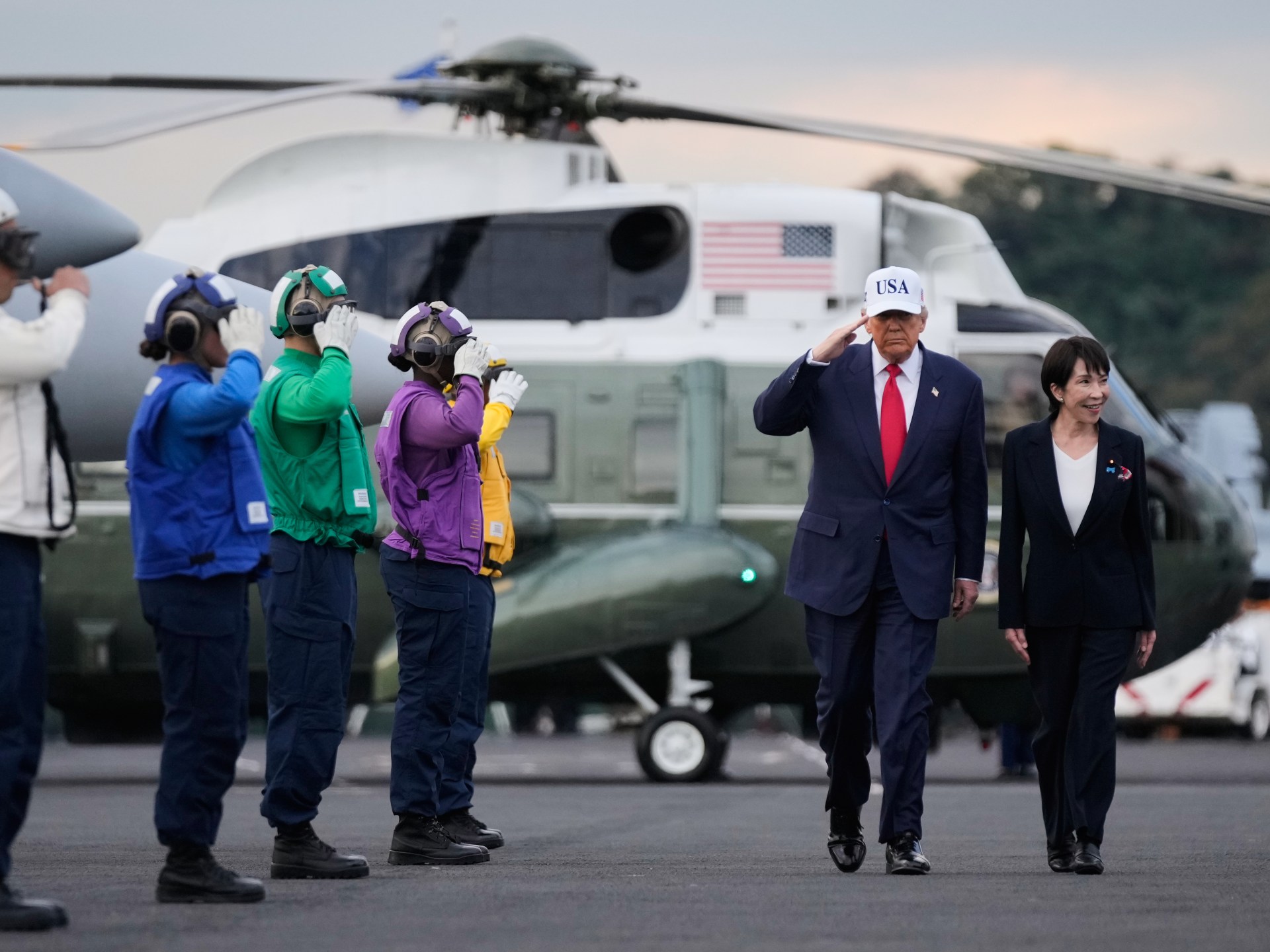
Taipei, Taiwan — Japan’s southern island of Kyushu is known for its volcanic landscape and tonkatsu ramen, but the popular tourist destination is ground zero for one of the greatest shifts in Japan’s defence strategy since 1947, when it formally renounced the use of war to settle international disputes.

In late March, Japan deployed long-range missiles to Kumamoto Prefecture on the island’s southwest coast. Unlike previous defence installations, these missiles could hit China, reflecting the fact that Beijing has ranked as Japan’s top national security threat above North Korea and Russia since 2019.

Defence Minister Shinjiro Koizumi told reporters at the time that “Japan faces the most severe and complex security environment in the post-war era” and the country must strengthen its “deterrence and responsiveness”.

Known as the “southern shield,” the new front in Japan’s defence strategy has seen the Japan Self-Defense Forces (JSDF), as the country’s military is formally known, deploy a range of weapons platforms as well as electronic warfare and air assets in southern Japan and its southwest outlying islands.

“The balance is changing. The defence posture has completely shifted towards the southwest, so the north is much less prioritised,” Kazuto Suzuki, director of the Institute of Geoeconomics, an independent think tank in Tokyo, said.

Much of Japan’s growing defence budget, which hit a record $58bn for the fiscal year 2026, has been allocated towards this build-up, he said. The strategy focuses heavily on the Nansei or Ryukyu Islands, which run from Kyushu to within 100km (62 miles) of Taiwan.

These islands form a natural barrier dividing the East China Sea from the Philippine Sea, and are a critical part of the United States-led “First Island Chain” maritime defence strategy, which aims to keep Chinese forces out of the Pacific.

While the “First Island Chain” strategy has its roots in the Cold War, Tokyo is worried about increased Chinese military activity in the Indo-Pacific, including the East China Sea and the Taiwan Strait.

The “southern shield” aims to create “anti-access or area-denial layers along the First Island Chain, complicating potential Chinese operations near Taiwan or in the East China Sea,” said Jonathan Ping, a political economist whose work focuses on statecraft at Australia’s Bond University.

It also incorporates a major shift in Japan’s defence policy towards acquiring “counterstrike capability” that would allow the JSDF to hit back if attacked, stretching the legal definition of what constitutes “self-defence”. These kinds of contradictions define the modern JSDF, which is a military in all but name and ranks alongside South Korea and France in the 2026 Global Firepower Index.

The JSDF emerged from Japan’s post-war police, at a time when Japan was reckoning with the Imperial Army’s brutal wartime atrocities during the US occupation, according to Soyoung Kim, an assistant professor who researches Japan’s post-war security policy at Nagoya University.

JSDF members are legally classified as “special national government employees,” and until the end of the Cold War, focused largely on humanitarian and disaster relief. Their role began to change after the Gulf War, when Japanese politicians felt humiliated by their inability to offer military support to the US-led coalition, Kim said.

In the decades since, public attitudes about the role of the JSDF have begun to shift, Kim said, amid Japan’s ongoing territorial dispute with China over the Senkaku or Diaoyu Islands. The Japanese public also regularly receives alerts each time North Korea test-fires a missile, as a reminder that Pyongyang still poses a major threat to Japan.

“There is increasingly greater acceptance or perhaps resignation to greater mission capability of the SDF,” Kim told Al Jazeera.

Over the past decade, the Japanese government has slowly moved the needle on what the JSDF can legally do, starting with a 2014 constitutional ruling that found Japan could participate in the “collective self-defence” of its allies.

“Japan has largely avoided formal amendments, choosing instead to ‘reinterpret’ the text. This makes Japan unique not just for its pacifism, but for the ‘legal gymnastics’ required to maintain a modern military under a constitution that explicitly forbids one,” said Taniguchi Tomohiko, who served as a special adviser to the cabinet of Prime Minister Shinzo Abe.

In 2022, Japan’s national security strategy was expanded to include “counterstrike capabilities,” which means it can hit back if attacked. As part of this strategy, Japan is due to acquire 400 US-made Tomahawk missiles, which can be launched from submarines and naval vessels.

Tokyo will release the next phase of its national security strategy later this year, covering 2026 to 2030. The document is expected to incorporate lessons from Ukraine and Iran about drones and supply chain chokepoints, according to Suzuki at the Institute of Geoeconomics. In its latest legal backflip, Japan separately approved the export of lethal weapons this month as it moves to build up a domestic drone industry.

While some of these changes are a response to the rise of neighbouring China, they also reflect growing concern in Tokyo about its longtime ally, the US, and its ability or willingness to defend its allies, say analysts.

Japan has historically fallen under the protection of Washington’s nuclear umbrella, but China’s rapid military and nuclear expansion has “reduced the credibility of the US extended deterrence,” according to Kei Koga, an expert in East Asian security and the US-Japan alliance, at Nanyang Technological University in Singapore.

“Japan wants to play a more kind of active role to compensate for the relative gains of China,” he said, which includes a second-strike nuclear capability – the ability to retaliate after a nuclear attack. China’s close ties to Russia and North Korea have raised the stakes further, he said.

Japanese politicians are also worried about the long-running question of whether a conflict will break out over Taiwan, a self-ruled democracy of 23 million people. China claims Taiwan as a province and has pledged to annex it by peace or by force.

US military assessments state it will likely be capable of doing so by next year. Japanese Prime Minister Sanae Takaichi said in December that a Taiwan conflict could prove to be a “survival-threatening situation” for Japan, which hosts multiple US military bases.

Some of Japan’s outlying islands also lie closer to Taiwan than the Japanese mainland. And under US President Donald Trump, many of the longstanding assumptions about the US commitment to defend allies like Japan are changing.

Whether Trump would intervene to help Taiwan is even less certain. Washington does not formally recognise Taipei, although it has pledged to help Taiwan defend itself under the 1979 Taiwan Relations Act. Known as “strategic ambiguity,” the policy stops short of committing US forces, but it has long been seen as a credible enough threat to deter China from moving on the much smaller island.

Trump’s shift towards an “America First” policy and combative relationship with longtime allies in Europe has worried Japan. A 2025 survey by Japan’s Asahi Shimbun indicated that 77 percent of respondents doubt that the US would protect Japan in a military crisis.

“Everything is focused on the American interest and American defence, so defending other countries is not the priority,” Suzuki told Al Jazeera.

Growing US scepticism in Japan has pushed Tokyo to shore up alliances with other US allies like the Philippines and Australia, while also dimming some of the public criticism about Japan’s military build-up.

“For many years, the opposition assumed that the United States would come and rescue Japan, and therefore we don’t need t

📰 மூல செய்தி (Source): https://www.aljazeera.com/news/2026/4/24/japan-builds-up-its-southern-shield-as-faith-in-us-security-cover-falters?traffic_source=rss

உலகம்

US Jewish leader, Israel advocate Abe Foxman dies at 86

Published

on

Israeli officials hail Foxman, who led the ADL advocacy group for nearly three decades, as warm and passionate.

Prominent Jewish American leader and Israel defender Abraham “Abe” Foxman has died at age 86.

The Anti-Defamation League, the advocacy group he led for 28 years, confirmed his death on Sunday, calling him an “outspoken, passionate, and tireless advocate for the Jewish people and Israel“.

A Holocaust survivor, Foxman helped shape the conversation around Israel and anti-Semitism in the US for decades.

ADL Board Chair Nicole Munchnik said Foxman helped build the “modern liberal era of America”, describing him as a “longtime adviser” to US presidents and world leaders.

“To those of us who knew him, Abe was a warm friend, adviser, spirited antagonist and hugger – all over lunch,” Munchnik said.

Foxman joined the ADL in 1965 and served as the group’s national director from 1987 to 2015.

Under his leadership, the group – which presents itself as an anti-hate watchdog – became one of the most influential advocacy organisations in the country.

Palestinian rights advocates have long condemned the ADL, accusing it of demonising pro-Palestine activists and conflating criticism of Israel with anti-Semitism.

Since the start of the genocidal war on Gaza, the ADL – under Foxman’s successor Jonathan Greenblatt – has intensified its campaign against Israel’s critics.

Greenblatt, who has supported laws to penalise boycotts of Israel, compared the Palestinian keffiyeh to the Nazi swastika last year.

Foxman also remained a staunch supporter of Israel and defended its conduct during the genocidal war on Gaza.

“What is happening in Gaza is tragic. But it is not Genocide. And it is not illegal,” he wrote on X in July 2025 as Israel imposed a hunger crisis on the territory.

“War is hell and inhumane, destructive and ugly. And nations must take all possible care to avoid civilian harm. And Israel has and is doing that. Having said this, Israel still needs to act with all deliberate speed and skill to provide maximum humanitarian aid to lessen the loss of innocent civilian lives.”

Weeks before his death, Foxman backed the US-Israel war on Iran, voicing gratitude to US President Donald Trump and Israeli Prime Minister Benjamin Netanyahu for attacking the country.

“Thank you President Trump and Prime Minister Netanyahu for standing up to evil and jihadist extremism. The world hopefully will be a better and safer place in the future,” he said in a social media post on February 28 after the war broke out.

In March, Foxman warned about what he described as the rise of anti-Semitism on the right and left of the political spectrum in the US, hitting out at liberal politicians publicly distancing themselves from the American Israel Public Affairs Committee (AIPAC).

“If a politician doesn’t want to take money from AIPAC, don’t take money from AIPAC, but don’t make taking money from AIPAC a morality test – because that continues to build the conspiracy theory that there is a Jewish lobby that controls America,” he told the Jewish Standard.

AIPAC, which backs the war on Iran, has been spending millions of dollars on ad campaigns to defeat Israel’s critics in US elections.

Last year, Foxman sounded the alarm about the dwindling support for Israel in the US, underscoring the importance of the alliance between the two countries for Israel.

“We’re in a propaganda war, and to an extent, we’re losing the propaganda war, and I worry about losing America,” Foxman told Times of Israel.

“It’s scary, looking at the polls, the Sunday television shows, the major newspapers – there is so much out there that is anti-Israel.”

Despite his assertion, rights advocates often decry the absence of Palestinian perspectives on TV shows in the US media.

In 2021, Foxman announced that he was cancelling his New York Times subscription after the newspaper published a front page featuring the photos of dozens of Palestinian children killed by Israel in Gaza.

“Today’s blood libel of Israel and the Jewish people on the front page is enough,” he said at that time.

Tributes in Israel and the US poured in for Foxman on Sunday.

Israeli Foreign Minister Gideon Saar said he was “deeply saddened” by the death of Foxman.

“A towering voice against antisemitism, Abe devoted his life to defending the Jewish people and strengthening the bond between Israel and Jewish communities worldwide,” Saar said on X.

Israel’s President Isaac Herzog also called Foxman a “legendary leader of the Jewish people”.

“He was a passionate Zionist, a humanist, and an outspoken, wise friend,” Herzog said.

📰 மூல செய்தி (Source): https://www.aljazeera.com/news/2026/5/10/us-jewish-leader-israel-advocate-abe-foxman-dies-at-86?traffic_source=rss

Continue Reading

உலகம்

Israeli weapon fires tiny metal cubes into people in Lebanon, like Gaza

Published

on

Israeli weapon fires tiny metal cubes into people in Lebanon, like Gaza

The same tiny tungsten cubes that spray out of Israeli bombs, causing devastating internal injuries to people in Gaza are being found in wounded civilians in Lebanon, war surgeon Dr Tahir Mohammed says. He draws parallels between what Israel is doing in both places and describes the weapons as “indiscriminate”.

📰 மூல செய்தி (Source): https://www.aljazeera.com/video/newsfeed/2026/5/10/israeli-weapon-fires-tiny-metal-cubes-into-people-in-lebanon-like-gaza?traffic_source=rss

Continue Reading

உலகம்

Trump to discuss Iran with Xi Jinping during China visit: Officials

Published

on

Official says US president will likely ‘apply pressure’ on China over Beijing’s purchase of Iranian oil amid war.

Donald Trump is set to arrive in Beijing on Wednesday evening to discuss the Iran war and other issues with his Chinese counterpart President Xi Jinping.

White House Principal Deputy Press Secretary Anna Kelly said an opening ceremony and meeting will be on Thursday morning, and the trip will conclude on Friday. The US plans to host the Chinese leader during a reciprocal visit later this year.

Kelly said that this week’s trip would be of “tremendous symbolic significance” and focus on “rebalancing the relationship with China and prioritising reciprocity and fairness to restore American economic independence”.

Trump’s visit, initially scheduled for earlier this year but postponed in March due to the US-Israel war on Iran, comes as the US president struggles to contain the fallout from the war, both at home and abroad.

A senior administration official told news outlets in an anonymous briefing on Sunday that Trump could “apply pressure” to China on Iran in areas such as oil sales and Tehran’s purchase of potential dual-role military-civilian goods.

US Treasury Secretary Scott Bessent last week accused China of “funding” Iran.

“Iran is the largest state sponsor of terrorism, and China has been buying 90 percent of their energy, so they are funding the largest state sponsor of terrorism,” Bessent told Fox News.

Iran closed the Strait of Hormuz in response to US-Israeli attacks, restricting passage through a key artery of global energy transport.

China has said that it wants to see the war end and hosted Iranian Foreign Minister Abbas Arraghchi last week. At the same time, Beijing has refused to recognise Washington’s “unilateral” sanctions on Iran’s oil sector.

Disruptions stemming from the war have disrupted the global economy, with Asian states that depend on imports from the Middle East especially hard hit.

Trump could also bring up China’s support for Russia during the talks, along with trade and rare earth minerals, a vital resource for the US tech sector. Business executives from aerospace manufacturer Boeing and a handful of agricultural companies are set to travel with the US delegation.

The anonymous administration official said that no change was expected regarding the US stance on Taiwan, a main sticking point in relations between Washington and Beijing. China considers the self-ruling island a part of its territory, but the US has deep security and economic commitments to Taiwan.

📰 மூல செய்தி (Source): https://www.aljazeera.com/news/2026/5/10/trump-to-discuss-iran-with-xi-jinping-during-china-visit-officials?traffic_source=rss

Continue Reading

Trending

Copyright © 2024 by 7Tamil Media, All rights reserved.