Connect with us

உலகம்

Israeli attacks kill several over two days in Gaza despite ‘ceasefire’

Published

on

As Gaza violence continues, activist says Israeli settlers torch vehicles, attack Palestinian homes in occupied West Bank.

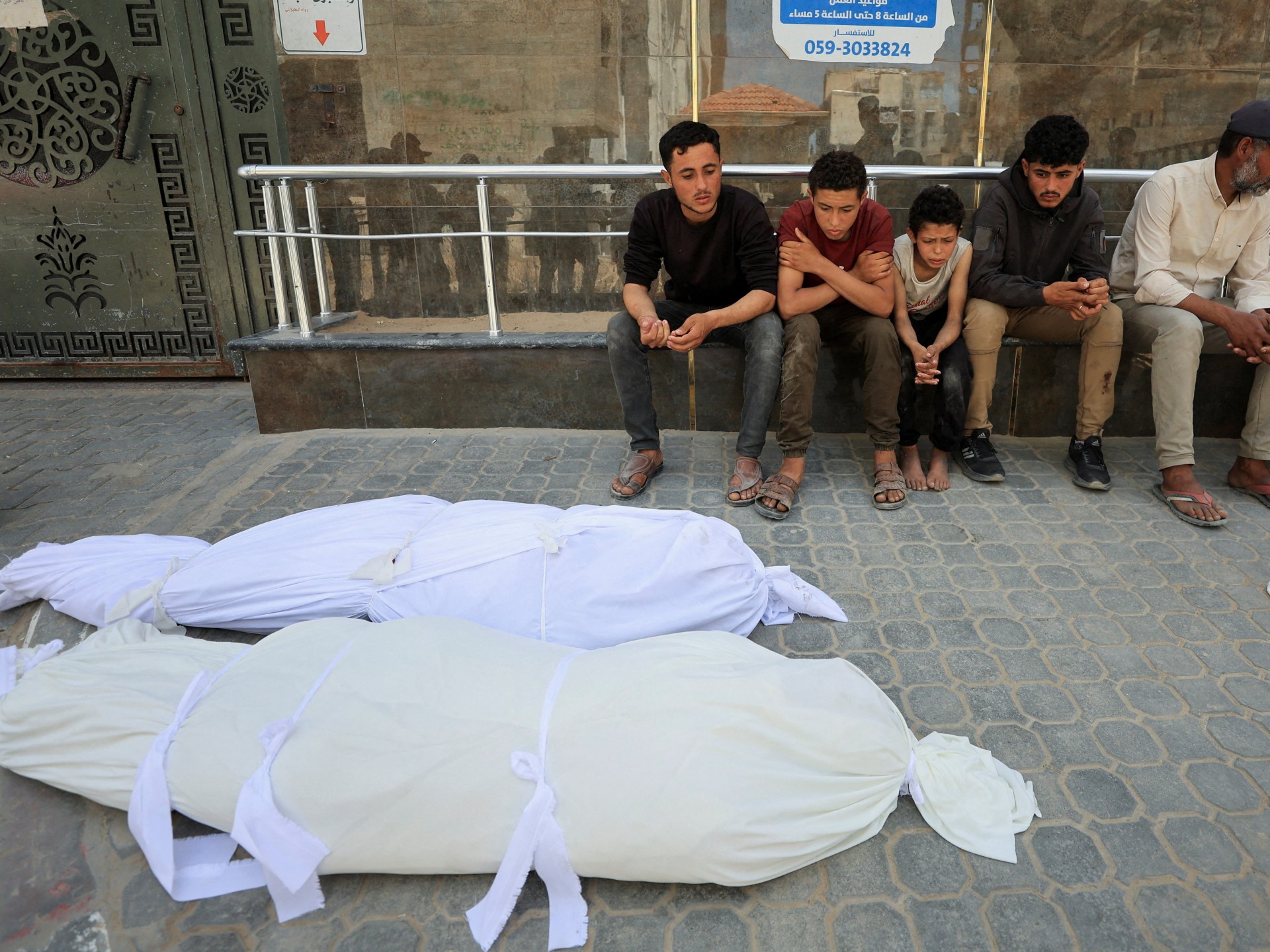
Several Palestinians have been killed in two days of separate Israeli attacks on the Gaza Strip, despite the so-called “ceasefire” that is now in its seventh month, as raids and assaults continue in the occupied West Bank.

Brothers Abdelmalek and Abdel Sattar al-Attar were killed after an Israeli drone struck Beit Lahiya in northern Gaza on Thursday, in an area witnesses said fell outside the zone under Israeli control under the “ceasefire”, Mahmoud Bassal, spokesman for the Palestinian Civil Defence, told the AFP news agency.

Nine-year-old Saleh Badawi was shot dead by Israeli forces in the Zeitoun neighbourhood east of Gaza City later that day and Mohsen al-Dabbari, 38, was killed by Israeli fire south of Khan Younis, Bassal said.

Three others were wounded, including a teenage boy, after Israeli forces fired towards homes and tents sheltering displaced people east of Maghazi refugee camp, according to a witness speaking to Anadolu agency.

On Friday, three more Palestinians were killed. Brothers Mohammed and Eid Abu Warda were shot dead on Mansoura Street in the Shujayea neighbourhood east of Gaza City while transporting water by vehicle, with a third brother wounded with moderate injuries, medical sources told Anadolu.

An Israeli drone separately struck a water desalination facility in the same neighbourhood, killing one Palestinian and wounding several others, according to Wafa news agency.

Gaza’s Government Media Office said Israel has committed 2,400 violations of the “ceasefire”, which began between Israel and Hamas in October. These include killings, arrests, blockades and starvation policies.

Israel’s genocidal war on Gaza has killed more than 72,340 people since October 2023, according to the Gaza Ministry of Health, including at least 765 since the “ceasefire” took effect. At least 32 of those deaths have occurred since the start of April alone, among them Al Jazeera journalist Mohammed Wishah, who was killed in a drone strike west of Gaza City on April 8.

On Friday, UN Women said an average of at least 47 women and girls were ⁠killed each day ⁠during the war in Gaza, with more than 38,000 killed between October 2023 and December 2025.

“Women and girls accounted for a proportion of deaths far higher than those observed in previous conflicts in Gaza,” Sofia Calltorp, the agency’s humanitarian action head, told reporters. The agency that focuses on gender equality expressed concern that the violence has continued since the ceasefire.

Meanwhile, in the occupied West Bank, Friday’s predawn hours brought raids and attacks across multiple governorates.

Israeli settlers set fire to two vehicles during an attack on Palestinian homes in the southern West Bank, according to a local activist.

Osama Makhmara told Anadolu that a group of armed Israeli occupiers infiltrated from the illegal settlement of Otniel into the Majd al-Ba’a area west of Yatta, south of Hebron, where they attacked Palestinian homes and burned two vehicles belonging to brothers Khaled and Yasser Abu Ali. The fire destroyed both vehicles, he added.

Israeli forces also stormed ar-Ram town north of Jerusalem, breaking into homes and arresting a number of Palestinians; and in Nablus, soldiers ransacked houses and detained about a dozen people in total across both governorates, according to Wafa.

The raids require no search warrant, conducted under Israeli military law, granting army commanders full authority over three million Palestinians who have no say in how the law is exercised.

According to Addameer, the Palestinian Prisoner Support and Human Rights Association, 9,600 Palestinian political prisoners are in Israeli prisons and detention centres, including 342 children and 84 women. Of these, 3,532 are held under administrative detention imprisonment without charge or trial, for renewable intervals of three to six months, based on undisclosed evidence that even the prisoner’s lawyer is barred from viewing.

United Nations experts this week described the displacement being driven by Israeli forces and state-backed settler activity as “ethnically cleansing the West Bank through daily attacks resulting in killing, injury, and harassment of women and children, and the widespread destruction of Palestinian homes, farmland and livelihoods”.

📰 மூல செய்தி (Source): https://www.aljazeera.com/news/2026/4/17/israeli-attacks-kill-several-over-two-days-in-gaza-despite-ceasefire?traffic_source=rss

உலகம்

Lebanese return to devastated south as fragile 10-day truce takes hold

Published

on

Hezbollah warns it has its ‘finger on the trigger’ in case of Israeli violations of the temporary ceasefire.

Displaced Lebanese have begun cautiously returning to their homes in the south after Lebanon and Israel agreed to a 10-day truce, even as the Lebanese army calls on residents to delay their return and Hezbollah warns it has its “finger on the trigger” in case of Israeli violations.

Tens of thousands of people poured into areas of southern Lebanon on Friday morning hours after the truce went into effect, many heading back to homes and villages battered by more than a month of Israeli attacks.

“People just couldn’t wait,” reported Al Jazeera’s Zeina Khodr from Nabatieh, one of the hardest hit areas.

“Even if it’s 10 days, they want to return to their homes. Some of them are just coming to see what remains of their homes, what remains of their lives.

“They want to show that they don’t want to give up their lands,” added Khodr.

While the ceasefire largely appeared to hold, Lebanon’s army accused Israel of several early violations on Friday, including intermittent shelling of ‌southern Lebanese villages.

Lebanon’s National News Agency also reported that unexploded ordnance killed a boy in the town of Majdal Selem, while rescuers uncovered the bodies of at least 13 people killed in attacks shortly before the ceasefire in Tyre.

French President Emmanuel Macron warned that the ceasefire “may already be undermined by ongoing military operations” and called for “the safety of civilians on both sides of the border”.

Hezbollah said its fighters “will keep their finger on the trigger because they are wary of the enemy’s treachery”.

Israeli air strikes and a ground invasion of parts of southern Lebanon have killed more than 2,100 people and displaced some 1.2 million in the latest round of fighting, according to Lebanese authorities.

Hezbollah attacks, meanwhile, killed two Israeli civilians, while 13 Israeli soldiers were killed in Lebanon, according to Israel.

Israeli Defence Minister Israel Katz said the ceasefire did not mean Israel’s campaign against Hezbollah was over, and that the group’s fighters would have to be disarmed one way or another – either through diplomacy or military force after the truce.

He also said Israel’s military would continue to hold all positions it has “cleared and captured”, warning that if fighting resumed, Lebanese returning to the south would have to flee yet again.

As residents assessed the damage to their hometowns, some pledged to stay, while others – finding nothing to return to or fearing the fragile truce could collapse – said they would leave again.

“There’s destruction and it’s unliveable. Unliveable. We’re taking our things and leaving again,” said Fadel Badreddine, who returned to Nabatieh with his young son and wife. “May God grant us relief and end this whole thing permanently – not temporarily – so we can return to our homes and lands.”

Al Jazeera’s Khodr said “wherever you look you see damage, destruction” in Nabatieh. “So much has been lost in this conflict in the past 46 days.”

If the ceasefire holds, it could ease one of the main points of tension in US-Iran negotiations. Iran and mediator Pakistan had maintained that Lebanon should be covered in a separate US-Iran ceasefire framework, while Israel claimed it was not part of that deal and continued its attacks.

Ali Akbar Dareini, a researcher at Iran’s Center for Strategic Studies, said the Israel-Lebanon ceasefire had removed one obstacle to wider negotiations between the US and Iran because Tehran views the regional conflict as interconnected, describing this as a “unity of fronts”.

Pakistani Prime Minister Shehbaz Sharif, whose country hosted last week’s ceasefire talks between the US and Iran, welcomed the Israel-Lebanon truce on Friday and expressed “hope that it will pave the way for sustainable peace”.

He also praised the mediation role of US President Donald Trump, who has invited Israeli Prime Minister Benjamin Netanyahu and Lebanese President Joseph Aoun to the White House for “meaningful talks”.

Aoun on Friday said direct negotiations with Israel would be “crucial” and that the government hoped to secure Israel’s withdrawal from southern Lebanon, recover prisoners and resolve bolder disputes.

“A ceasefire is the gateway to proceeding with negotiations,” Aoun added in a statement shared by the presidency.

📰 மூல செய்தி (Source): https://www.aljazeera.com/news/2026/4/17/lebanese-return-to-devastated-south-as-fragile-10-day-truce-takes-hold?traffic_source=rss

Continue Reading

உலகம்

What we know about the Israel-Lebanon ceasefire

Published

on

US President Donald Trump announced the 10-day ceasefire between the two countries.

Israel and Lebanon have announced a 10-day ceasefire to allow negotiations for a more permanent security and peace agreement to continue.

The truce was announced by United States President Donald Trump on Thursday and came into effect at 21:00 GMT.

The ceasefire follows six weeks of fighting between Israel and the Iran-backed Lebanese group, Hezbollah. In its war on Lebanon, Israel has killed at least 2,196 people and displaced more than one million.

But on Friday morning, Lebanon’s army reported several ceasefire violations by Israeli forces.

Will the ceasefire last? What are its terms? Here’s what we know:

Announcing the ceasefire on Thursday, Trump called it a “historic day”.

In a post on Truth Social, he said, “May have been a historic day for Lebanon. Good things are happening.”

According to a statement released by the US State Department on Thursday, under the terms of the ceasefire agreement, Israel will “preserve its right to take all necessary measures in self-defence”, while not carrying out “any offensive military operations”.

The statement suggested that Israel can also exercise this right “at any time, against planned, imminent, or ongoing attacks”.

“This shall not be impeded by the cessation of hostilities,” it added.

Trump said that the 10-day truce includes Hezbollah.

“I hope Hezbollah acts nicely and well during this important period of time. It will be an GREAT moment for them if they do,” Trump wrote in his Truth Social post.

“No more killing. Must finally have PEACE!”

The direct negotiations to discuss a truce between Israeli and Lebanese officials in Washington on Tuesday did not include Hezbollah, however. The Lebanese armed group had opposed the ceasefire talks.

On Thursday, Ali Fayyad, a Hezbollah politician, told Al Jazeera Arabic that the group will approach the newly announced ceasefire with “caution and vigilance” and any targeting of Lebanese sites by Israeli forces will constitute a breach of the truce.

“The next phase is thorny and fraught with pitfalls and challenges,” Fayyad said, adding that the “worst-case scenario” for Lebanon would be the resumption of civil strife.

Israel has demanded that the Lebanese government disarm Hezbollah, which refuses to give up its arms as long as Israeli forces remain on the ground in Lebanon and pose a threat to the country.

Late on Thursday, Israel’s Prime Minister Benjamin Netanyahu said his government now has the opportunity to “make a historic deal” with Beirut.

He said that Israel had “agreed” to the temporary, 10-day ceasefire but its forces would remain in Lebanon with an “extensive” security zone up to the Syrian border.

He highlighted that Israel’s key demand remains the disarmament of Hezbollah and said that Israel would not agree to Hezbollah’s request that it withdraw troops beyond its border.

Former Israeli diplomat Alon Pinkas dismissed the Israeli government’s framing of the deal, telling Al Jazeera: “Netanyahu says a lot of things. I wouldn’t take him at face value. He’s saying this because he was coerced into this by President Trump. This is not a ceasefire that he wanted.”

On Netanyahu’s suggestion that the truce could pave the way for a historic peace deal, Pinkas pointed to repeated failed efforts in the past.

“I think Netanyahu failed … he failed in his stated objective of disarming Hezbollah,” he said, adding: “I honestly cannot see any peace agreement being signed between Israel and Lebanon, with Hezbollah still armed.”

Yair Lapid, Israel’s opposition leader,  also slammed the ceasefire between Lebanon and Israel announced by Trump.

“Not for the first time, all the promises of this [Netanyahu] government are crashing against the ground of reality. The confrontation in Lebanon can only end in one way: the permanent removal of the threat to the northern settlements,” Lapid said in a post on X.

“In this government, it will no longer happen; we will do it in the next government,” he added.

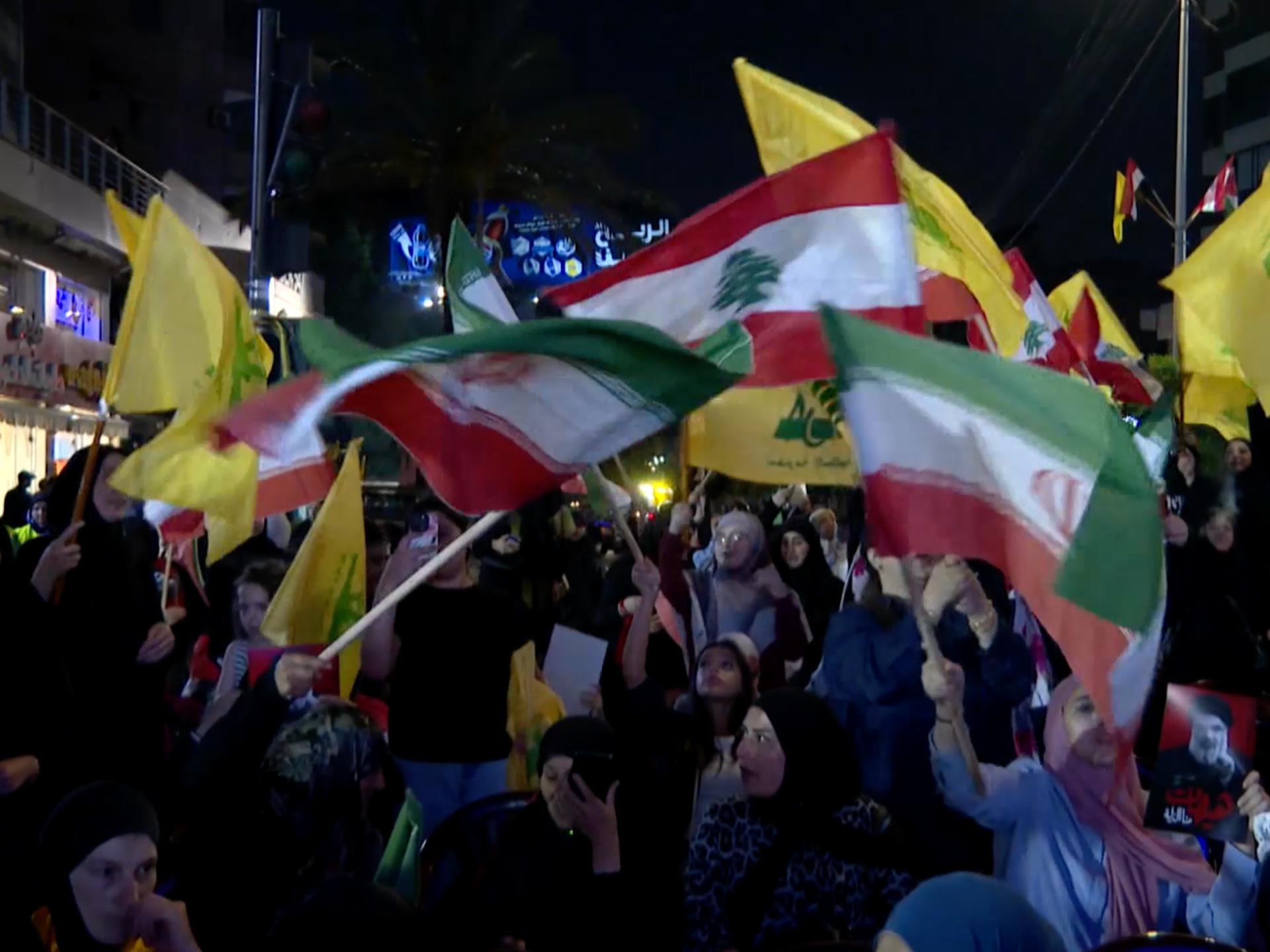
After the ceasefire was announced on Thursday, celebratory gunfire was heard in Beirut as the truce began.

But displaced people in downtown Beirut told Al Jazeera they didn’t trust the Israelis to uphold the ceasefire and would wait before returning to their homes – if they have homes to return to at all.

On Friday, the Lebanese military said there had already been a number of ceasefire violations, “with several Israeli attacks recorded, in addition to intermittent shelling targeting a number of villages”.

In a post on X, the Lebanese army also renewed its call for citizens to “exercise caution in returning to southern villages and towns” as the ceasefire takes effect in Lebanon.

The Lebanon 24 media outlet has reported that Israeli forces fired a machinegun and an artillery shell towards an ambulance team affiliated with the Islamic Health Authority in Kunin in the Nabatieh Governorate of Southern Lebanon. The news outlet said casualties have been reported.

Earlier, Israeli military spokesperson Avichay Adraee issued an “urgent message” to the residents of southern Lebanon , warning them to remain north of the Litani River despite the commencement of the ceasefire.

In a statement on X, Adraee said that while the ceasefire agreement has entered its implementation phase, Israeli forces are maintaining their current positions to counter what he described as “ongoing terrorist activities” by Hezbollah.

“Until further notice, you are requested not to move south of the Litani River,” he said.

In a statement carried by Lebanon’s National News Agency on Thursday, Hezbollah had also urged displaced people to remain cautious amid uncertainty over the truce.

“With the announcement of the ceasefire, and in the face of a treacherous enemy that is accustomed to breaking covenants and agreements, we call on you to be patient and not to head to the targeted areas in the South, the Bekaa and the southern suburbs of Beirut, until the course of events becomes fully clear,” it said.

Pinkas told Al Jazeera that despite a ceasefire, key details in the agreement remain unresolved, particularly in southern Lebanon.

“There is a Hezbollah kill zone in the south of Lebanon, and it’s not at all clear that the ceasefire will include that area. And once the ceasefire becomes partial, it ceases to be a ceasefire,” he said.

But people are eager to return to their homes in the south despite the ceasefire violations.

Reporting from Nabatieh in southern Lebanon, Al Jazeera’s Zeina Khodr said people returning don’t want to give up their land.

“There is a lot of anger. But at the same time, people here tell you that they have managed to remain steadfast,” she said.

On Thursday night, in the run-up to the ceasefire, Hezbollah said its fighters had launched 38 attacks on Israeli forces inside Lebanese territory and 37 attacks in northern Israel.

On Friday morning, however, sirens which sound before a missile strike remained silent across Israel.

But leaders of regional councils in northern Israeli regions, which include the worst-hit areas from the fighting between Israel and Hezbollah, expressed unhappiness with the ceasefire.

Moshe Davidovich, head of the Mateh Asher Regional Council in the western Galilee of northern Israel, told local media in a statement that the ceasefire and the establishment of a security zone up to the Litani River “is not a diplomatic achievement” but risks further violence.

“The residents of the north are not mere statistics in a show of international public relations,” he added.

Shimon Guetta, head of the Ma’ale Yosef Regional Council, also in northern Israel, rejected outside influence over Israel’s security policy, and demanded that any agreement must guarantee “complete disarmament of Hezbollah” and “absolute security” for northern communities, adding that “agreements on paper are meaningless” without clear enforcement.

Political commentator Abed Abou Sh

📰 மூல செய்தி (Source): https://www.aljazeera.com/news/2026/4/17/what-we-know-about-the-israel-lebanon-ceasefire?traffic_source=rss

Continue Reading

உலகம்

Lebanese celebrate return to homes as 10-day ceasefire begins

Published

on

Lebanese celebrate return to homes as 10-day ceasefire begins

A 10-day ceasefire between Israel and Lebanon has come into effect, as displaced families begin returning to southern areas despite official warnings.

📰 மூல செய்தி (Source): https://www.aljazeera.com/video/newsfeed/2026/4/17/lebanese-celebrate-return-to-homes-as-10-day-ceasefire-begins?traffic_source=rss

Continue Reading

Trending

Copyright © 2024 by 7Tamil Media, All rights reserved.